Sport · Soccer · World Cup
Eight days before the FIFA U-17 World Cup kicks off in Qatar, the United States has withdrawn its men’s under-17 team, telling players and their families by letter on November 11 that the State Department’s Level 3 travel warning and the war risk across the Gulf make it impossible to take part. FIFA confirmed the withdrawal on November 12, said its own security assessments are unchanged, and is going ahead with the 48-team tournament without them.
Track it live: Middle East war tracker
CHICAGO, November 15, 2026 — The letter reached the players and their families on Wednesday, November 11, and it ended a World Cup before it began. U.S. Soccer informed its men’s under-17 national team that the United States would not take part in the 2026 FIFA U-17 World Cup in Qatar — the U-17 World Cup Qatar 2026, a 48-team tournament that kicks off on November 19 and runs to December 13 — and cancelled the team’s pre-tournament training camp. The reason, set out in the federation’s own words as reported by Goal.com and AfricaSoccer.com, was not form, funding or football. It was the war: “We are extremely proud of the preparations our players and coaches have made to represent the United States at the World Cup. Unfortunately, under the current circumstances, including the US State Department’s Level Three travel warning for Qatar and the guidance relating to embassy staff and their families, we are no longer able to take part in the tournament.”
FIFA published its response the next day. On November 12, world football’s governing body acknowledged that it had been informed of the withdrawal, stated that its own security assessments for the event remain unchanged, and confirmed that the tournament will proceed, with the relevant competition regulations to be applied. Two institutions looked at the same country, the same dates and the same threat picture, and reached opposite conclusions — and the distance between those conclusions is where this story lives. As of the latest reporting, on November 15, FIFA has not announced a replacement team, a schedule change or any sanction, and this article does not state otherwise.
What U.S. Soccer decided, and when
The sequence matters, because it shows a decision taken at the last responsible moment rather than the last possible one. The withdrawal was communicated to players and families by letter on Wednesday, November 11 — not announced at a set-piece press conference — eight days before the tournament’s opening match. The pre-tournament training camp was cancelled; the camp, according to reporting carried by the TalkNaija chain, had already been moved from Qatar to the national training centre near Atlanta, a detail this article carries as reported rather than confirmed. And in the sharpest illustration of how late the decision came, FIFA had published its official squad lists for all 48 teams on November 11 itself, with the United States still included. On paper, on the day the letter went out, the U.S. U-17 World Cup squad existed in full: names, numbers, a place in Group J. By the end of that day, it was a team that would never assemble.
The story was first reported on November 11 by The Athletic and the US Soccer Collective, and was carried by Reuters, the Associated Press and USA Today, with AFP seeking comment from U.S. Soccer. The draw had placed the United States in Group J alongside Montenegro, Chile and Algeria, and the Americans were scheduled to open against Montenegro on November 21 in Al Rayyan. Those three opponents now prepare for a group whose shape FIFA has yet to explain: whether a replacement team inherits the slot and the schedule, or whether Group J proceeds with three teams, is the tournament’s first unanswered question.
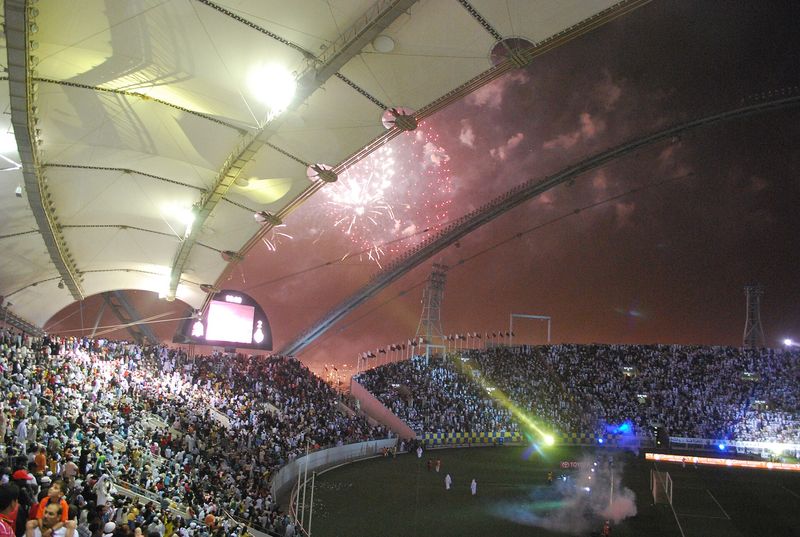
Why Qatar is flagged: the Level 3 advisory and the Gulf war
The document at the centre of the decision is the U.S. State Department’s travel advisory for Qatar: Level 3, “Reconsider Travel” — the second-highest of the department’s four levels. The advisory has been in place since August 28, 2026 and was updated on October 23, and it cites the risk of armed conflict, including Houthi attacks on Saudi Arabia’s civilian airports and critical infrastructure, alongside related guidance for embassy staff and their families. Two precision points follow from that history, and both cut against the simplest version of the story. First, this was not a brand-new warning issued in a panic days before the tournament: the advisory predates the withdrawal by months, and the U.S. squad was selected, and its camp planned, while it was already in force. Second, what changed was not the document but the environment it describes — and the judgement, taken somewhere inside U.S. Soccer with that document in hand, that a risk tolerable for a federation’s planning was not tolerable for a plane full of 15-to-17-year-olds.
The environment is the regional war that began in February 2026 with joint U.S.–Israeli strikes on Iran, which retaliated against Gulf states allied with Washington. Houthi forces in Yemen have repeatedly attacked Saudi targets, including King Khalid International Airport in Riyadh — a campaign Signal Post News has covered in detail, most recently in its reporting on Saudi Arabia’s interception of Houthi missiles over Riyadh. Qatar is not a battlefield in that war. But it is a small peninsula in a narrow gulf, hosting the region’s largest U.S. military presence, surrounded by states that have been struck — and a Level 3 advisory is the State Department’s formal way of saying that the distance between “not a battlefield” and “safe for your children” is a distance it is no longer prepared to certify.
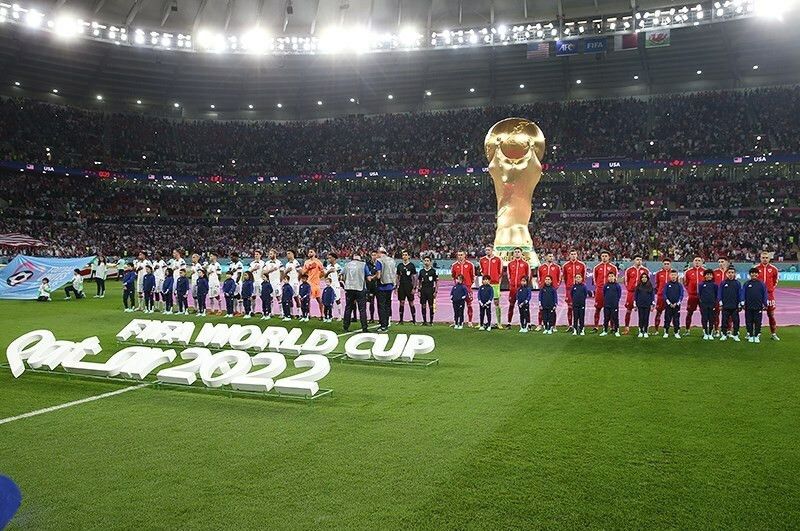
For the families who received that letter, the abstraction of advisories and assessments resolves into something much simpler: a son who was going to a World Cup, and now is not. U-17 squads are built over years — identification camps, regional training centres, qualifying tournaments — and the players named on FIFA’s November 11 squad list had, in most cases, been working toward Qatar since they were 13 or 14. U.S. Soccer’s letter, to its credit, led with them rather than with itself: the pride in the preparations came before the circumstances. But pride is not a tournament, and no federation statement can give a 17-year-old back the month in which his age group’s world championship was played without him. Whatever the rights of the decision — and this article has argued the duty-of-care case is strong — its cost is carried by the people with the least say in it.
FIFA’s position: assessments unchanged, regulations applied
FIFA’s November 12 statement is a study in institutional composure. It acknowledged the withdrawal, it stated that its own security assessments for the event remain unchanged, and it confirmed that the tournament will proceed and that the relevant regulations will be applied. It did not criticise U.S. Soccer, announce a replacement, adjust the schedule or confirm a sanction — and as of November 15, none of those things has been announced. What the regulations themselves provide is narrower than the speculation around them: a federation withdrawing within 30 days of its first match faces a minimum fine of 20,000 Swiss francs — about $24,000 — under FIFA’s competition regulations, and FIFA may name a replacement team from regional qualifying. The fine is a provision in a rulebook, not a penalty confirmed as imposed, and the replacement is a power FIFA holds, not a decision it has announced. Both distinctions matter, and this article holds them.
Behind the composure sits a structural fact: Qatar is not a one-off host. Under its current arrangement, Qatar stages the boys’ U-17 World Cup every year from 2025 through 2029 — a five-year residency that makes the tournament a fixture of the Qatari sporting calendar and a showcase the host has built infrastructure and reputation around. A withdrawal on security grounds, by the United States of all federations, is therefore not only a 2026 problem. It is a question mark placed next to four future editions, in a region where the security environment that produced a Level 3 advisory shows no sign of resolving before the next one.

Why this matters: duty of care against the host-security calculus
National teams have withdrawn from tournaments before, and wars have emptied stadiums before. What makes the U.S. U-17 withdrawal a landmark is the combination of who is withdrawing, from what, and on whose authority. This is the United States — a co-host of the 2026 senior World Cup, the most powerful commercial federation in its confederation — pulling out of a FIFA world championship not because of anything that happened at the tournament, but because its own government’s standing travel advice made the trip indefensible for minors. Youth football operates on the lowest risk tolerance in all of sport, and for an obvious reason: the travellers are children, travelling with the consent of parents who were promised a duty of care. A senior professional can be asked to accept a risk, and can refuse. A 16-year-old in a national academy system cannot meaningfully do either. U.S. Soccer’s letter is what it looks like when that duty of care is priced honestly against a Level 3 advisory — and found to outweigh a World Cup.
FIFA’s calculus is different, and it is not dishonest merely for differing. A governing body that cancelled or moved a tournament every time a host’s region carried an elevated advisory would hold very few tournaments in very few places; its security assessments are built on venue-level and event-level judgements, not on any single government’s travel advice to its own citizens. Both positions are internally coherent. They are also, in Qatar in November 2026, irreconcilable — and the gap between them will now be tested by 47 other federations making the same judgement U.S. Soccer made, each with its own government’s advice in hand. The most consequential sentence in FIFA’s statement may prove to be the calmest one: that its assessments remain unchanged. Everything now depends on whether the rest of the field agrees.
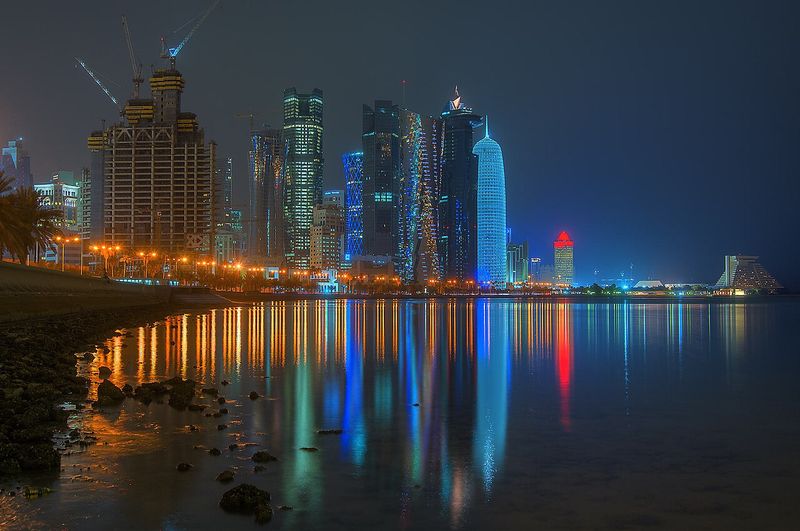
Who loses, who gains
The losers are, first and most simply, the players: a U.S. under-17 squad that loses the defining showcase of its age group — a World Cup played in front of the scouts and academy directors who decide which teenagers become professionals — through no failure of its own. Some of these players will get another cycle; for the oldest of them, this was the cycle. Group J’s other teams lose certainty: Montenegro, Chile and Algeria have prepared for a four-team group and a November 21 opener that may now change shape beneath them. The gainers are hypothetical but real. A replacement team drawn from CONCACAF qualifying, if FIFA names one, would inherit a World Cup place it did not earn on the pitch — the opportunity of a generation for some smaller federation’s teenagers. And there is a colder contrast running through the same week: Portugal’s under-17s, Cristiano Ronaldo Jr among them, are playing European qualifying matches at home this week, in a Portugal still drying out from Storm Charles. One country’s teenagers play on. Another country’s stay home. The difference is not football. It is geography, and a war.
What happens next
Three decisions now sit with FIFA, all of them on a deadline the calendar imposes. The first is the replacement question: whether a team is invited to take the United States’ place in Group J before the tournament opens on November 19, and if so, which one, and on what notice. The second is the regulatory question: whether the late-withdrawal provisions — the minimum 20,000 Swiss franc fine and any further measures the regulations allow — are applied to U.S. Soccer, waived, or left in deliberate silence. The third is the contagion question, the one no statement can answer: whether any other federation, reading the same advisories, follows the United States out. The tournament will begin on November 19 with or without answers to the first two. The third will be answered by the team sheets. Either the U.S. withdrawal stands as a singular act of caution by the one federation whose government’s warning named the risk most plainly — or November 11 becomes the date the Gulf war stopped being background noise for world football and started selecting its participants.
Related reading: Saudi Intercepts Houthi Missiles Over Riyadh, Aramco Tower Damaged · The Day Has Come: Ronaldo Hands Back Portugal’s Number 7
Sources
FIFA statement, November 12, 2026 — acknowledging it had been informed of the U.S. withdrawal, stating that its security assessments for the event remain unchanged, that the tournament will proceed and that the relevant tournament regulations will be applied. U.S. Soccer letter to players and families, November 11, 2026, as reported by Goal.com and AfricaSoccer.com (the letter text quoted in this article) and by Shorty News, updated November 15 (no replacement or group adjustment announced as of the latest public information). First reported November 11 by The Athletic and the US Soccer Collective; carried by Reuters, the Associated Press and USA Today, as reported by The Traveler, November 13 (withdrawal, FIFA’s November 12 statement, the Group J draw, the squad lists and the fine provision). Ghanaian Times, November 13, via AFP (players informed November 11; Group J; tournament dates; war background). Athlon Sports, November 12 (the State Department advisory: Level 3, in place since August 28, updated October 23, citing Houthi attacks on Saudi airports). Trends News Stories, NewsGuru and TalkNaija chains (the training camp’s reported move to Atlanta). The camp detail is carried as reported; FIFA has announced no replacement team, schedule change or sanction as of November 15, and the 20,000 Swiss franc figure is the regulatory minimum for a late withdrawal, not a fine confirmed as imposed. Photographs are file photos credited in their captions, via Wikimedia Commons.