Sport · Football · Portugal
Cristiano Ronaldo, 41, announced his retirement from international football on Thursday in a video letter to the Portuguese people — closing a 23-year Portugal career of 234 caps and 146 goals, both world records. He is not retiring from football: the Al-Nassr chapter, and the chase for 1,000 career goals, goes on.
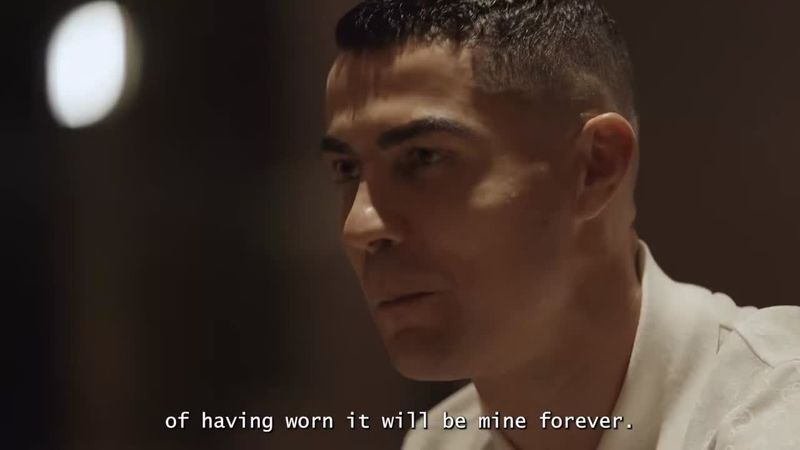
LISBON, November 5, 2026 — It began, as his career so often has, with Ronaldo speaking directly to the camera and to his country. Sitting on a couch with the letter in his hands, Cristiano Ronaldo read the words that end the longest and most productive international career football has ever seen: “To the Portuguese people, the day has come for me to hand back the number 7 shirt of our national team.” The video letter, posted to his social media accounts on Thursday, November 5, announces his retirement from international football at 41 — from Portugal, and only from Portugal. He remains an Al-Nassr player, and he was careful, in the days of speculation before the announcement, about the distinction that matters most to his legacy’s final chapter: the shirt goes back; the career does not stop.
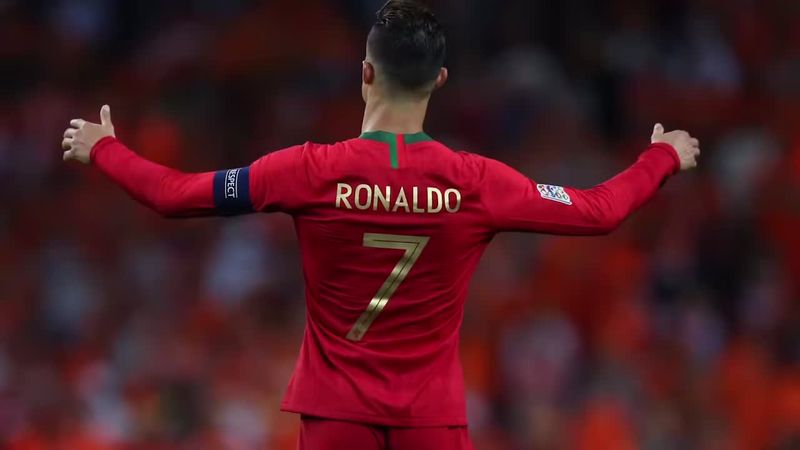
The film he released is built like the career it closes — a montage of the boy from Madeira, the fans who grew up wearing his name, the stadiums and the trophies, intercut with the man reading alone in a quiet room. “It was not an easy decision,” he says. “A journey that began in August 2003, and changed my life forever, has come to an end.” Near the close he looks up from the page: “The number 7 shirt will remain. But the pride of having worn it will be mine forever. Portugal will always be a part of me.” Then he signs the letter the way he has signed a thousand shirts: “Cristiano Ronaldo.”
The records that may never fall
Start with the numbers, because in international football there has never been a set like them. Ronaldo retires with 234 caps and 146 international goals. Both are world records in the men’s game, and not narrowly: he passed the previous caps mark years ago and kept going, and his goals total stands so far beyond every other player in history that the record is less a target than a monument. He made his debut in August 2003, in a friendly against Kazakhstan, a skinny 18-year-old winger from Sporting. He has captained Portugal since 2008 — seventeen years with the armband, spanning four head coaches’ eras before the current one, five World Cups and six European Championships.
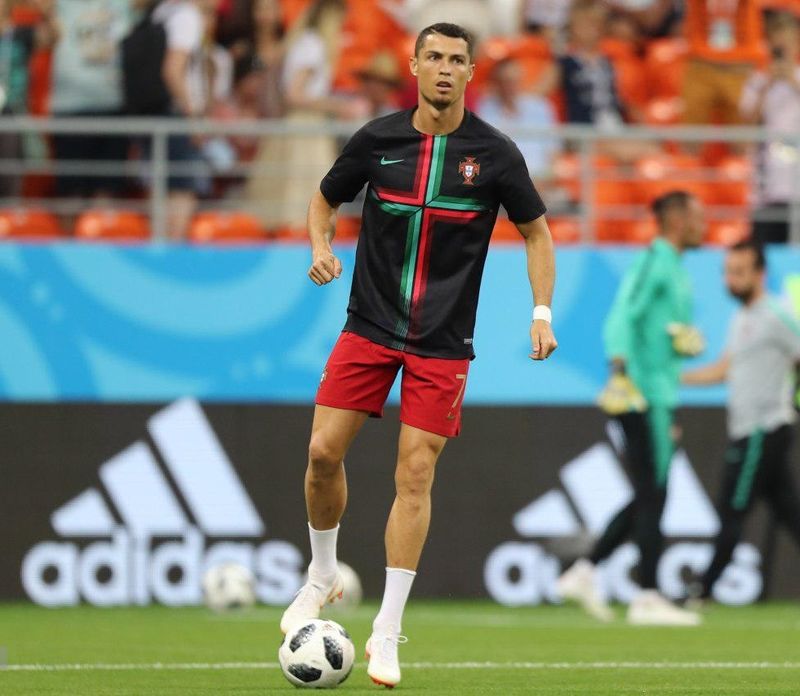
Longevity is the statistic underneath all the others. International careers at the top level usually last a decade; the very greatest stretch to fifteen years. Ronaldo’s ran for twenty-three, and it did not fade quietly into ceremonial appearances — he was still Portugal’s starting centre-forward, still taking the penalties, still the first name sponsors and broadcasters built around, into his forties. Sports science will study how. Portugal will simply have to learn how to play without him, something no Portuguese coach has had to plan for since 2003.
Put the two headline records in context and they become stranger still. The caps record measures survival: to reach 234 international appearances, a player must be selected, fit and motivated across parts of four different decades, through changes of coach, system and generation. Ronaldo was the first man in history to reach 200 caps, in 2023, and then added another thirty-four. The goals record measures something else — not endurance but relentless output, in an era of deep defensive systems and congested calendars, against the best-organised defences in world football. Strikers who define eras usually finish with international totals in the seventies, eighties, perhaps just past a hundred. Ronaldo’s 146 is not an improvement on that scale; it is a different scale. Any honest projection of when either record falls starts from the same premise: the player who breaks them probably has not made his debut yet.
The trophies: a small country, carried
Before Ronaldo, Portugal’s honours list at senior level was empty — a proud football nation famous for beautiful losers, for Eusébio’s third place in 1966 and a lost home final in 2004, the night a 19-year-old Ronaldo cried on the pitch in Lisbon. He spent the rest of his career answering that night. In 2016, in Paris, Portugal beat France in the European Championship final; Ronaldo, injured early and forced off, spent the last hour coaching from the touchline in a tracksuit, and lifted the trophy — the country’s first major title. In 2019 he captained Portugal to the inaugural Nations League title on home soil. In 2025, at 40, he did it again, a second Nations League. Three trophies for a nation of ten million people, all of them with the same captain.
That is the context in which Thursday’s letter lands. For two decades, Portuguese children have grown up in a country where winning was normal, and the farewell film is full of them — toddlers in replica shirts with his name, doing his celebration in living rooms. The federation understands what it is losing, and said so within hours.
The ending nobody scripted: the rift
The farewell film is serene. The six weeks before it were not, and the full record of this retirement has to include them. In September, Portugal coach Jorge Jesus left Ronaldo out of the starting side for the match against Norway. Ronaldo’s response was to leave the national team camp altogether, on September 30. The Portuguese Football Federation (FPF) suspended him for 30 days and fined him €255 — a nominal sum that carried a formal message: no player, not even this one, walks out of camp unpunished. On October 6, Ronaldo answered with a long public statement accusing Jesus of “broken promises” — his words, and his version of the dispute.
Jesus, for his part, gave his account on Thursday, after the announcement: the retirement was Ronaldo’s own decision, the coach said, and he had wanted the captain to keep playing. Both accounts now sit on the record. What is not in dispute is the sequence — benching, walkout, suspension, accusation, retirement — and that Ronaldo’s last appearance in the shirt came on September 24, a 1–0 Nations League win over Wales, before any of it. The greatest international career in history ended not with a farewell match but with a dispute, a fine smaller than a team dinner, and a letter read from a couch. Supporters will argue for years about who bears responsibility for that. The federation, notably, declined to argue at all.
Why now
The timing, on examination, is overdetermined — almost every road in Portuguese football led to this announcement arriving about now. The 30-day suspension imposed in October would have hung over the November international window regardless: the captain was either returning to camp under a disciplinary cloud, to work for the coach he had publicly accused, or he was not returning at all. A negotiated peace was theoretically possible, but it would have required one of the two proudest figures in the Portuguese game to climb down in public, and neither showed any sign of it. Retirement converts an institutional crisis into a farewell. It lets the federation pivot, within a single news cycle, from discipline to gratitude — which is precisely what its tribute statement did — and it lets Ronaldo choose the words, the images and the hour of his own ending, which he did, in the most controlled format a modern athlete owns: a film on his own channels, released on his own schedule, with no press conference and no questions.
There is also the arithmetic of age. At 41, Ronaldo had already outlasted every precedent for an elite international forward; each additional camp carried more risk — of injury, of diminishing performances, of the public image curdling from legend to obstacle — than it offered reward. What was left to win with Portugal that he had not won? The honest answer, after three trophies, is nothing that November friendlies and qualifiers could provide. Retiring now, with the records untouchable and the body still capable of the 1,000-goal chase in club football, is the first decision of his career that looks less like ambition and more like curation. The letter is full of it: a man arranging his own legacy on the page, handing back the shirt before anyone could take it.
The tribute, and the fixtures that frame it
The FPF’s statement on Thursday was pointed in the other direction: it “refuses to let this farewell take place without due tribute,” and a formal tribute is being planned. Portugal’s calendar gives it natural stages. The national team plays Denmark on November 14 and Wales — the opponents of Ronaldo’s final appearance — on November 17, both in the Nations League. Whether the tribute attaches to one of those nights or becomes an occasion of its own is the federation’s to decide; that it intends a public goodbye, on a pitch, in front of the fans in the film, is now official. A planned farewell match or ceremony would also give the story the ending the walkout denied it — Ronaldo in a stadium, applauded, on Portugal’s terms as well as his own.
What continues: Riyadh, and the road to 1,000
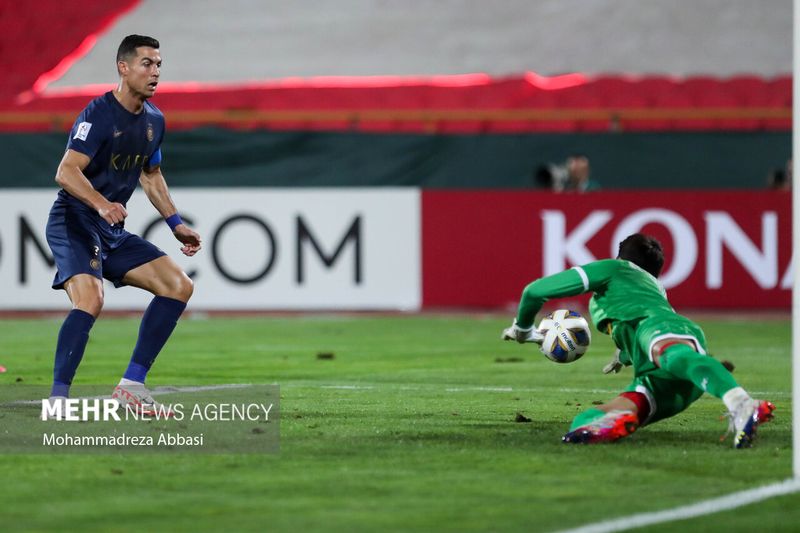
Nothing about Thursday changes the other half of Ronaldo’s working life. He continues at Al-Nassr in the Saudi Pro League, where he remains the division’s biggest draw and its most prolific scorer. And he carries with him the one number his whole late career now orbits: 985 career goals. Fifteen more for a thousand — a landmark no official count has ever recorded a footballer reaching, and the obvious final line of the record book he has been writing since 2002. Freed of international breaks, training camps and federation politics, his calendar now serves a single project. Expect the countdown to dominate his season, and expect him, characteristically, to treat 1,000 not as a farewell lap but as a target to be chased at full speed.
The era, closed
There is a wider frame, and Thursday snapped it shut. Earlier this year, Lionel Messi retired from Argentina duty. Now Ronaldo has followed. The two players who divided football between them for twenty years — every Ballon d’Or argument, every Champions League night, every World Cup cycle from 2006 onward — have both played their last international matches. International football does not merely lose its most-capped and highest-scoring player; it loses the second half of the rivalry that defined it for a generation, months after losing the first. What remains is club football’s long goodbye, played out in Riyadh and wherever Messi finishes, and then the permanent argument about who was greater — an argument that now, finally, has all of its evidence in.
What happens next
Three threads run from Thursday. First, the tribute: its date and form will tell Portugal how the federation wants this remembered — and whether coach and captain appear together, which would close the rift in public. Second, the succession: Portugal’s squad for the Denmark and Wales fixtures will be the first of the new era, and every striker in it will be measured against an impossible standard; the number 7 shirt itself, which Ronaldo noted “will remain,” will be handed to someone, and that handover will be a story in itself. Third, the countdown: 985 to 1,000, at Al-Nassr, with the world watching a 41-year-old chase the last round number left. The international story ended on a couch, with a letter. The final chapter of the career runs on a pitch in Riyadh — and on the evidence of twenty-three years, it would be unwise to bet against him finishing it exactly as he intends.
Sources: Cristiano Ronaldo’s announcement video and letter (November 5, 2026); CNN, Reuters, The Times, USA Today and NBC News reporting on the announcement (November 5, 2026); Jorge Jesus’s comments of November 5, 2026; the Portuguese Football Federation statement of November 5, 2026; FPF disciplinary record (30-day suspension and €255 fine, October 2026); Ronaldo’s public statement of October 6, 2026.