Business · Technology · Markets
The Megaspeed probe began in 2024, long before the Singapore firm became the most argued-over name in the AI-chip world. On Monday the Commerce and Justice Departments did something they almost never do — they narrated an open investigation in public, step by step: a file opened on proactive monitoring, a records request to Nvidia in May 2025, a “no sell” listing and an on-site check in Singapore that June, and a criminal inquiry now led by the Justice Department. What the statement did not contain matters just as much: no charges, and no finding that any export-control breach occurred.
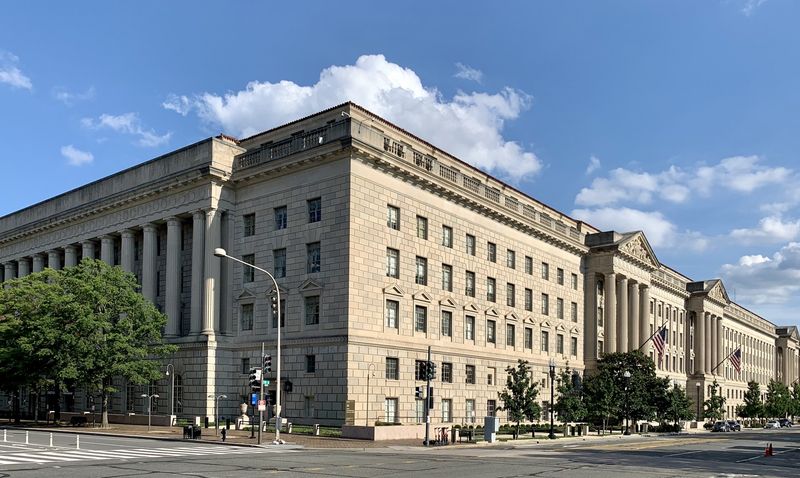
WASHINGTON, November 16, 2026 — The Megaspeed probe began in 2024. That single sentence, delivered on Monday in a joint statement by the US Departments of Commerce and Justice and reported by Reuters, rearranges the public understanding of the autumn’s defining chip scandal. Until Monday, the investigation into Megaspeed — the Singapore-based firm that became Nvidia’s best-known Asia-Pacific partner and then the centre of diversion and espionage allegations — existed in public mostly as fragments: a blacklist argument inside the administration, a Singapore police inquiry, a resignation at Nvidia that the company has never tied to it. The joint statement replaces fragments with a chronology, and the chronology starts earlier than almost anyone outside the government knew. Commerce, the agencies said, initiated its investigation in 2024, after proactive monitoring identified suspicious activity around the potential diversion of sensitive semiconductors, and it examined the firm for potential export-control violations. In May 2025, Commerce investigators asked Nvidia for records of its direct and indirect sales to Megaspeed. In June 2025, Nvidia placed Megaspeed on its “no sell” list, and American agents, working with Singaporean law enforcement, carried out an on-site, in-person end-use check at Megaspeed in Singapore and interviewed Alice Huang, then its chief executive. After that enforcement action, the Justice Department took the lead role in a criminal investigation. The agencies acknowledged that they typically do not comment on ongoing investigations, and said they were doing so here in the public interest.
Track it live: https://signalpostnews.com/tracker/markets — follow chip stocks, export-control headlines and the Megaspeed file as it develops.
Two limits on Monday’s disclosure must be stated plainly at the outset, because everything else in this article is read through them. First: no charges have been filed, and the joint statement announced no finding that an export-control breach occurred. The investigation concerns potential violations and potential diversion; suspicion, however formally documented, is not a verdict. Second: the espionage allegations that have attached themselves to Alice Huang in recent reporting remain unverified. Reuters reported that it has not been able to verify the allegations about Huang’s suspected espionage, that US intelligence is still determining her relationship, if any, with China’s Ministry of State Security, and that two sources describe the evidence so far as indicating she was probably — in their assessment — an intelligence asset rather than a fully trained spy. That is a reported assessment by two sources, not a finding by any government, and Beijing has rejected the allegations that she is a spy. This article treats those claims accordingly throughout: as allegations under examination, never as established fact.
What we know
- The start: the Commerce Department initiated its investigation into Singapore-based Megaspeed in 2024, after proactive monitoring identified suspicious activity around potential sensitive semiconductor diversion, examining potential export-control violations, according to the joint Commerce and Justice statement reported by Reuters on Monday.
- May 2025: Commerce investigators requested records from Nvidia covering its direct and indirect sales to Megaspeed.
- June 2025: Nvidia placed Megaspeed on its “no sell” list. US agents, alongside Singaporean law enforcement, conducted an on-site, in-person end-use check at Megaspeed in Singapore and interviewed Alice Huang, then the firm’s chief executive. Nvidia did not immediately respond to a Reuters request for comment outside regular hours.
- The handover: following that enforcement action, the Justice Department took the lead role in a criminal investigation. The agencies said they were describing an ongoing investigation publicly, exceptionally, in the public interest.
- The limits: no charges have been filed, and Monday’s statement announced no finding that an export-control breach occurred.
- Megaspeed’s position: the company said on Sunday that Alice Huang officially left on August 30, 2025, and that it conducted a “legitimate and lawful business.”
- Singapore’s position: Singapore said on Monday it had agreed to continue discussions with Washington about Megaspeed. Its own, separate investigation found insufficient evidence that Huang committed offences relating to suspected false declarations over server purchases; she was warned for knowingly providing inaccurate information that played down her role, and has been barred from re-entering Singapore, while Singapore’s investigations into Megaspeed and six other individuals continue.
- The espionage claims: unverified. Reuters could not verify the espionage allegations; the description of Huang as likely an intelligence asset is a reported assessment by two sources, not a finding; Beijing rejects the spy allegations.
The timeline Washington chose to publish
Read the chronology slowly, because each step answers an accusation that has been levelled at the administration this autumn — and raises a fresh question of its own. The first step is the date. A probe opened in 2024, on the government’s own account, predates the public scandal by well over a year: it predates the newspaper reporting about Huang, the congressional letters, the cabinet-level argument over blacklisting and the collapse of Jensen Huang’s tenure at Nvidia. Whatever else is true of the Commerce Department’s handling of Megaspeed, the statement establishes that its investigators were watching the firm, on their own initiative, while the relationship between Nvidia and its Singapore partner was still being celebrated as a triumph of the region’s data-center boom. Proactive monitoring is the phrase the agencies used, and it is doing real work in the sentence: this was not, on Washington’s telling, a file opened because a journalist or a rival agency forced the issue. It was opened because the monitoring system that is supposed to catch semiconductor diversion flagged suspicious activity around exactly that risk.
The second step is the paper trail. In May 2025, Commerce investigators requested records from Nvidia on its direct or indirect sales to Megaspeed. The wording matters. A records request to the chipmaker — rather than, at that stage, a public action against the Singapore firm — is how export-control investigations are built: from the seller’s side, establishing what was sold, to whom, through which intermediaries, and on what stated end use. The phrase “direct or indirect” signals that investigators were mapping not only Nvidia’s own shipments to Megaspeed but the routes around them, the distributors and resellers through which controlled hardware so often travels before it reaches the customer of concern. Nvidia’s position in the chronology is therefore double-edged, and the statement leaves it carefully unresolved. The company was asked for its records in May; by June it had cut Megaspeed off. Whether that sequence reflects a supplier cooperating its way out of trouble, a supplier warned into compliance, or a supplier that reached its own conclusions, Monday’s statement does not say — and Nvidia, asked by Reuters outside regular hours, did not immediately respond.
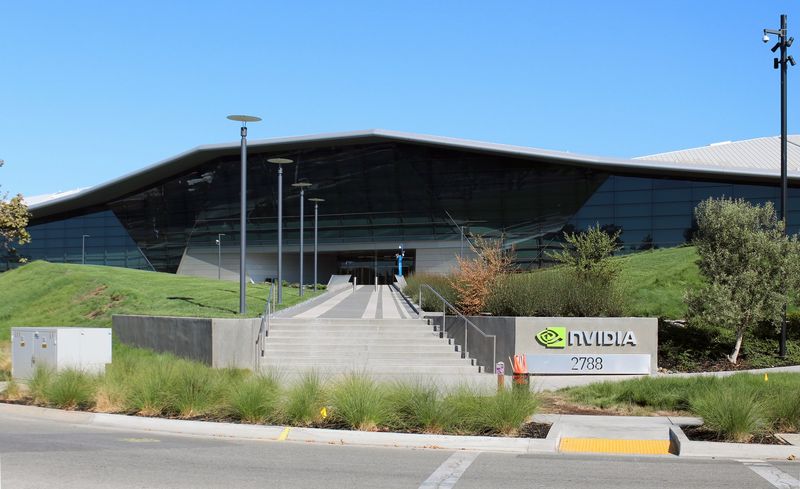
The third step is the one that lifts the file out of the ordinary run of export-control inquiries. In June 2025, American agents travelled to Singapore and, with Singaporean law enforcement, conducted what the statement calls an “on-site, in-person, end-use check at Megaspeed” — and interviewed Alice Huang herself, then the company’s chief executive. End-use checks are the physical conscience of the export-control system: inspectors verifying that controlled goods are where their paperwork says they are, doing what their licences say they should do. They are routine in volume and unremarkable individually, but an end-use check that ends with the chief executive interviewed and a criminal department taking the lead is not routine in outcome. Singapore’s own account, summarised by Unite.ai from the home affairs ministry’s November 12 statement, dates the visit to June 24, 2025, and describes it as a voluntary post-shipment verification by the US Bureau of Industry and Security with Huang present — a framing worth holding alongside Washington’s: the same visit, described by the host as cooperation and by the visitor as an enforcement action. Both descriptions can be accurate. What neither government disputes is that it happened, that Huang faced the investigators in person, and that the file changed character afterwards.
The fourth step is the handover. Following the Singapore enforcement action, the agencies said, the Department of Justice took the lead role in a criminal investigation. That sentence marks the boundary between an administrative export-control inquiry — the kind that ends in fines, licence conditions or a place on the Entity List — and a criminal case, the kind that can end in indictments. It is also, for now, the last step in the published chronology, and its open-endedness is the point the agencies themselves underlined: investigations of this kind are not normally narrated at all. The decision to narrate this one, in the public interest, is a fact about Washington’s politics as much as about Megaspeed’s paperwork, and it is examined below.
What the statement does not say
An official timeline is an argument as well as a record, and the silences in Monday’s are as instructive as its dates. The statement does not say that any chip was diverted. It does not say that any export-control law was broken. It does not announce charges against Megaspeed, against Alice Huang or against anyone else, and it does not describe a conclusion of any kind. The operative words are “potential” and “suspicious” — potential diversion, potential violations, suspicious activity identified by monitoring. Those words are the vocabulary of an investigation at the stage of questions, and no honest reading of Monday’s document can promote them into findings. Readers who have followed the louder coverage of this affair — in which diversion is sometimes treated as proven and espionage as established — should measure that coverage against the government’s own verbs. The United States government, speaking formally and jointly through the two departments that own the case, has alleged a chronology. It has not alleged a completed crime.
The espionage thread requires the same discipline, applied even more strictly. Reporting in the New York Times and other outlets has raised suspicions about Huang’s relationship with Chinese intelligence. Reuters, in the very report that carried Monday’s timeline, stated that it has not been able to verify any of those allegations. US intelligence, Reuters reported, is still determining what Huang’s relationship with China’s Ministry of State Security actually is; two sources say the evidence so far indicates she was probably an intelligence asset rather than a fully trained spy. Signal Post News reports that exactly as Reuters framed it: a reported assessment by two sources, offered while the intelligence question remains formally undetermined — not a finding, not a charge, and not a fact this newsroom can state in its own voice. Beijing has rejected the allegations that Huang is a spy. Huang herself is no longer at Megaspeed — the company says she officially left on August 30, 2025 — and, as the next section sets out, Singapore’s authorities have reached their own, narrower conclusions about her conduct under Singapore law. None of those conclusions is a conclusion about espionage.
Singapore’s separate track
It would be easy, and wrong, to fold Singapore’s proceedings into Washington’s. They are separate investigations, run by separate sovereigns under separate law, and they have reached different kinds of answers. Singapore’s government said on Monday that it had agreed to continue discussions with Washington about Megaspeed — cooperation, continuing, between the two capitals. But Singapore’s own enforcement track, described by its home affairs ministry, began independently: the Singapore Police Force and Singapore Customs opened their own investigation in February 2025 into several companies and key officers, including Megaspeed, over potentially false declarations connected to server purchases. Last week, Singapore said, Huang had been Megaspeed’s chief executive, chairperson and a key controller of the company. Its police concluded — in February 2026, on the ministry’s account as summarised by Unite.ai — that there was insufficient evidence that she had committed offences relating to the suspected false declarations over server purchases. Separately, Singapore assessed that she had knowingly provided inaccurate information that played down her role at Megaspeed, and she was warned for that. She has been barred from re-entering Singapore. And Singapore’s investigations into Megaspeed itself and six other individuals remain ongoing.
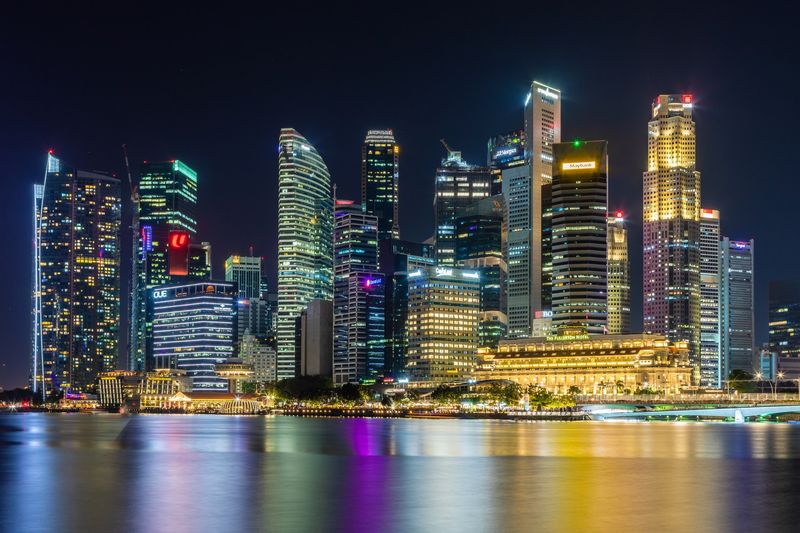
Hold the two tracks side by side and the distinction is structural, not cosmetic. The American criminal investigation, now led by the Justice Department, asks whether US export-control law was violated in the movement and use of American semiconductors. The Singapore investigation asks whether Singapore law was violated in declarations made to Singapore authorities about server purchases, and in the accuracy of what a company officer told Singapore officials about her own role. A person can be warned in one jurisdiction for understating her position while remaining uncharged in the other; a company can be cleared of one evidentiary charge — insufficient evidence is a conclusion about proof, note, not a declaration of innocence — while remaining under investigation on both sides of the Pacific. Singapore’s “insufficient evidence” finding answers a Singapore question. It neither convicts nor acquits anyone of the American one, and Monday’s agreement to continue discussions is best read as the two systems acknowledging exactly that: parallel files, shared facts, separate law.
Why narrate an open investigation?
The most revealing sentence in Monday’s statement may be the one about the statement itself: the agencies said they typically do not comment on ongoing investigations, but were doing so here in the public interest. Governments break that rule when silence has become more costly than speech, and the costs of silence on the Megaspeed file had been itemised in public for days. On Monday, Reuters reported that Treasury Secretary Scott Bessent had said the Treasury, the Pentagon, the State Department and the US Trade Representative had favoured blacklisting Megaspeed for months, while the Commerce Department — which owns the Entity List — had not acted; CNN’s analysis added that Commerce had, in the account of people familiar with the matter, dragged its feet on the listing despite Secretary Howard Lutnick having been briefed months earlier about the Huang relationship, a characterisation Signal Post News attributes to CNN and its sources. Senator Maria Cantwell had written to Lutnick accusing the department of failing to stem the flow of AI chips to China. Signal Post News set out that cabinet-level breach in Bessent’s charge that Commerce held the pen on Megaspeed and failed to use it. Against that backdrop, a timeline that begins in 2024 is not merely information. It is Commerce’s defence, entered into the record in documentary form: we were not asleep; we were investigating, proactively, a year before the scandal broke — and the reason there is no blacklist entry to show for it is that the file graduated, in June 2025, from an administrative track to a criminal one, where public designations can complicate prosecutions.
The defence cuts both ways, and the department’s critics will not miss the reverse edge. A probe opened in 2024 that had produced, by the autumn of 2026, no charges, no breach finding and no Entity List designation is also a two-year chronology of process without public consequence, during which — on the estimate of some analysts, reported by CNN — Megaspeed purchased more than $4 billion worth of Nvidia chips. That figure is an analyst estimate, not an audited total, and it is reported here as such; but even as an estimate it frames the scale question that hangs over the whole affair. Four billion dollars of the most controlled hardware on earth, bought by a single Singapore intermediary, while the exporting government’s monitoring system was — by its own account — already suspicious. The timeline proves attention. Whether attention without interruption was enough is the argument the timeline cannot settle, and it is the argument that will follow the Entity List decision, which remains outstanding, into the winter.
There is also a plainer institutional reading. Monday was not a quiet day on which to bury a statement. It was the day President Trump departed for Asia, the day Washington’s new AI-chip cloud controls landed — the interim final rule licensing remote access to advanced American chips abroad, which Signal Post News examined in the closing of the AI chip cloud loophole — and three days before Trump, Xi and Putin meet in Shenzhen. A joint Commerce–Justice chronology of a China-diversion investigation, published into that news cycle, speaks to several audiences at once: to Congress, as a rebuttal; to Beijing, as a signal that the diversion file is documented and dated; to Singapore, as a public acknowledgement of cooperation on the eve of further discussions; and to the industry, as notice that end-use checks on foreign soil, with chief executives interviewed in person, are an operating feature of the controls regime and not a theoretical one. Statements issued “in the public interest” usually are. This one simply makes the interests easier to enumerate than most.
The company, the chipmaker and the woman who left
Megaspeed’s own voice entered the record a day before Washington’s. On Sunday the company said that Alice Huang had officially left on August 30, 2025, and that it had conducted a “legitimate and lawful business.” CNN reported that the company has an internal counsel review under way; between that review, Singapore’s continuing investigation into the firm and six other individuals, and the Justice Department’s criminal lead, Megaspeed now sits at the intersection of three separate processes, in two countries, none of which has produced a charge or a finding against it. Its denial is on the record and is reported here in its own terms. So is the arithmetic that made it prominent: more than $4 billion in Nvidia chip purchases, on some analysts’ estimates — a figure that would make Megaspeed one of the largest single conduits of advanced American silicon into Southeast Asia’s data-center boom, and therefore, in the logic of export controls, one of the conduits most worth watching. Watching, Monday’s statement establishes, is what the US government says it was doing from 2024. What the watching found is what the statement, scrupulously or conveniently, does not say.
Nvidia’s place in the chronology deserves a final, careful paragraph of its own, because the company now exists in two stories that must not be merged. In this story — the Megaspeed investigation — Nvidia is the records-holder and the supplier that cut the customer off: asked for its sales records in May 2025, it placed Megaspeed on its “no sell” list in June 2025, and it offered no immediate comment when Reuters asked about Monday’s statement. In the other story — the collapse of its founding chief executive’s tenure — Jensen Huang resigned on November 12 amid affair reporting and a board investigation, threads that are separate from this probe and that no agency statement has connected to it. The board’s refusal, reported the same Monday, even to consider restoring him is covered in the Nvidia board’s ruling out of a Jensen Huang return. The two stories share a company, a city and a disastrous season. They do not share a causal chain that any verified reporting has established, and this article does not invent one: the affair reports, the board investigation, the resignation and the Megaspeed probe are separate threads, and they are kept separate here.
What happens next
Three clocks now run on the Megaspeed file, and Monday’s statement started none of them — it merely made them visible. The first is administrative: the Entity List decision that Bessent and four agencies favoured and Commerce has not taken remains outstanding, and the published timeline will be Exhibit A for both sides of that argument — proof of diligence for the department, proof of delay for its critics. The second is criminal: a Justice Department-led investigation, publicly acknowledged, with no charges announced and no breach finding made. Criminal export-control cases are built slowly and land suddenly; the next public fact in that track is likely to be either an indictment or a very long silence, and Monday’s statement gives no basis for predicting which. The third is Singapore’s: discussions with Washington continuing, a domestic investigation into Megaspeed and six other individuals still open, and a former chief executive warned, barred from re-entering, and — on the espionage question that made her name — the subject of allegations that Reuters could not verify, that two sources assess in one direction, that Beijing rejects, and that no government has converted into a finding.
Beyond the file itself sits the week’s larger room. On Thursday, November 19, the presidents of the United States, China and Russia meet in Shenzhen, with trade and technology at the centre of the agenda. Whether Megaspeed is named there — as grievance, as evidence or as bargaining material — is unknowable on Monday night. What is knowable is that Washington chose this week to put its chronology on the record, dated, sequenced and signed by two departments. A government that intended to let the Megaspeed affair fade does not publish the dates on which it began watching. The probe began in 2024. On Monday, the watching became a matter of public record — and the record, for now, is all there is: no charges, no finding, and an investigation that two governments are still running on opposite sides of the Pacific.
Sources
- Reuters, November 16, 2026 — “US releases details of Megaspeed probe, says investigation began in 2024” (Kanishka Singh, Washington) (primary source for the joint-statement timeline): the Commerce and Justice Departments’ joint statement that Commerce initiated an investigation into Singapore-based Megaspeed in 2024 after proactive monitoring identified suspicious activity around potential sensitive semiconductor diversion, for potential export control violations; the May 2025 request by Commerce investigators for Nvidia records on direct or indirect sales to Megaspeed; Nvidia’s June 2025 placement of Megaspeed on its “no sell” list, and Nvidia’s lack of an immediate response to Reuters outside regular hours; the June 2025 on-site, in-person end-use check at Megaspeed conducted by US agents with Singaporean law enforcement, at which Alice Huang, then chief executive, was interviewed; the Justice Department’s assumption of the lead role in a criminal investigation following that enforcement action; the agencies’ statement that they typically do not comment on ongoing investigations but did so in the public interest; Megaspeed’s Sunday statement that Alice Huang officially left on August 30, 2025 and that it conducted a “legitimate and lawful business”; Singapore’s Monday statement that it agreed to continue discussions with Washington about Megaspeed; Singapore’s account that Huang had been chief executive, chairperson and a key controller, that police found insufficient evidence she committed offences relating to suspected false declarations over server purchases, that she was warned for knowingly providing inaccurate information that played down her role, and that she has been barred from re-entering while investigations into Megaspeed and six other individuals continue; and Reuters’ statement that it has not been able to verify the espionage allegations, that US intelligence is still determining Huang’s relationship with China’s Ministry of State Security, that two sources assess the evidence so far as indicating she was probably an intelligence asset rather than a fully trained spy — a reported assessment, not a finding — and that Beijing has rejected the spy allegations. No charges were announced and no finding of an export-control breach was made in the joint statement.
- CNN, November 16, 2026 — tech analysis, “Lies, spies and sex are just one part of the Nvidia story” (independent family): confirmation of the joint statement’s core timeline, including the 2024 start and the June 2025 on-site check with Singaporean law enforcement at which Huang was interviewed; the account, attributed to people familiar with the matter, that Commerce dragged its feet on placing Megaspeed on the Entity List despite Secretary Lutnick having been briefed months earlier about the Huang relationship; Megaspeed’s internal counsel review; and the estimate by some analysts that Megaspeed purchased more than $4 billion worth of Nvidia chips — an analyst estimate, attributed as such throughout this article.
- Unite.ai, November 16–17, 2026 — corroboration of the joint-statement timeline and of Singapore’s separate track: the Singapore home affairs ministry’s November 12 statement that the Singapore Police Force and Singapore Customs opened an independent investigation in February 2025 into several companies and key officers including Megaspeed over potentially false declarations connected to server purchases; Singapore’s dating of the US Bureau of Industry and Security visit to June 24, 2025, as a voluntary post-shipment verification with Huang present; and the February 2026 conclusion of insufficient evidence on the declaration offences, alongside the separate assessment that Huang knowingly supplied inaccurate information downplaying her role, with Singapore’s investigations into Megaspeed and six others ongoing.
- Signal Post News, related coverage: Bessent Blames Commerce for Megaspeed Blacklist Delay; US Closes AI Chip Cloud Loophole With New China Rule; Nvidia Board Rules Out Jensen Huang Return Despite Trump.
- Photos: the Herbert C. Hoover Building, US Department of Commerce, Washington, APK via Wikimedia Commons (CC BY-SA 4.0); Nvidia headquarters entrance, Santa Clara, California, Coolcaesar via Wikimedia Commons (CC BY-SA 4.0); Singapore central business district across Marina Bay at night, Bijay Chaurasia via Wikimedia Commons (CC BY-SA 4.0) — each credited in its caption. All are file photos; none depicts the events of 2024–2026 described in this article.