Business · Markets · European Banking
The UniCredit Commerzbank takeover — a hostile, roughly €45 billion share-exchange bid on Reuters’ valuation — cleared its two biggest regulatory hurdles on a single day: unconditional approval from the European Commission and approval from the U.S. Federal Reserve. The deal is approved, not completed. One signature, from Poland’s financial supervisor, still stands between Andrea Orcel and control of Commerzbank.
Track it live: Follow UniCredit, Commerzbank and European bank shares on the Signal Post News live markets tracker
BRUSSELS / MILAN, November 16, 2026 — The UniCredit Commerzbank takeover moved from contested ambition to near-certainty on Monday, as the European Commission granted unconditional approval for UniCredit’s proposed acquisition of control of Commerzbank and UniCredit announced that the U.S. Federal Reserve had approved the deal as well. The Commission, ruling under the EU Merger Regulation in case M.12405, concluded that the transaction raises no competition concerns in the European Economic Area. Two approvals in one day would normally end a takeover story. This one has a final chapter, and it is written in Warsaw: Polish authorisation is still outstanding, because Commerzbank controls Poland’s mBank, and UniCredit chief executive Andrea Orcel expects that last decision by the end of November. Until it arrives, UniCredit has permission — not possession.
That distinction is the discipline this article keeps from the first paragraph to the last. UniCredit does not yet control Commerzbank. Its shareholders have tendered shares, its regulators have largely said yes, and its chief executive has spent more than two years building this position share by share. But a hostile takeover is only finished when the conditions are met and the offer settles, and one condition — Poland — remains open. Everything else about Monday is momentum, and the momentum is now formidable: Brussels imposed no remedies, Washington raised no objection, and Frankfurt’s prudential supervisor had already cleared the ownership question in October. What follows is what was decided, how a two-year raid reached this point, why Brussels wanted to say yes, who wins and who pays, what the numbers actually say, and what happens in the next two weeks.
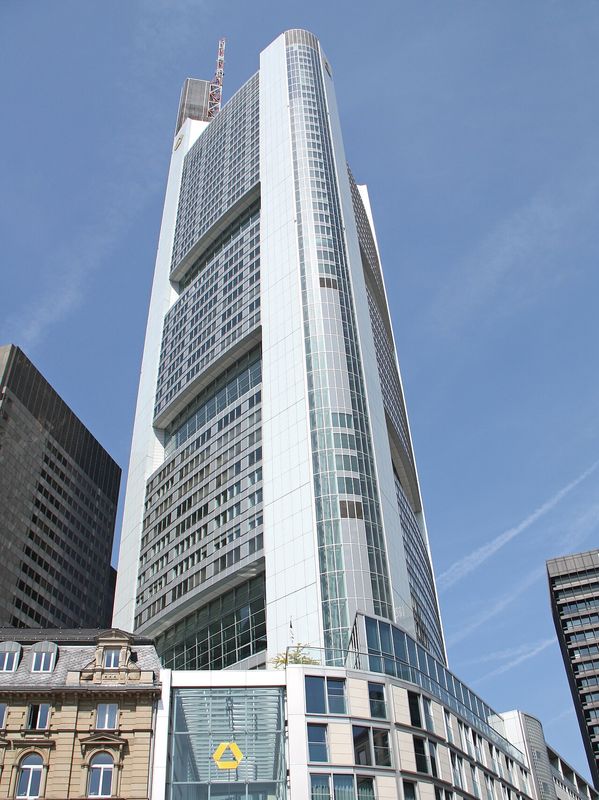
What was decided on November 16
The European Commission’s decision is the centrepiece. UniCredit’s proposed acquisition of control of Commerzbank was notified to the Commission on October 9, 2026, and on Monday the Commission granted unconditional approval under the EU Merger Regulation, concluding that the transaction raises no competition concerns in the European Economic Area. “Unconditional” is the operative word. Merger clearances for deals of this scale often arrive with remedies attached — branch sales, portfolio disposals, behavioural commitments. This one, on the Commission’s assessment, needed none, because the competitive overlap it examined did not reach the threshold that would require them.
The review focused where the overlap actually lives: banking-services markets in Germany, the one country where both groups already operate at scale, because UniCredit owns HypoVereinsbank, the Munich-based lender it acquired two decades ago. The Commission assessed the combined market shares of the merged group as moderate — its word, and the only characterisation of those shares this article will use, because the Commission did not rest its clearance on a larger claim. Within that broadly comfortable picture, the assessment noted a single area of relative strength: trade finance and documentary credit, the letters-of-credit business that underwrites German exporters’ trade. Even there, the conclusion was clearance without conditions. A deal that Brussels could have slowed, conditioned or challenged was instead waved through whole.
Competition Commissioner Teresa Ribera framed the decision in terms that reached well beyond one case file. “Our approval of UniCredit’s acquisition of Commerzbank shows that it is possible to support a stronger European banking sector while safeguarding competition and choice,” she said, in remarks reported by Reuters. Read that sentence as the policy statement it is: the Commission is presenting this clearance not as a reluctant concession but as a demonstration — proof, in its telling, that consolidation and competition can be made to coexist, and that Europe’s answer to the scale of American banking does not have to come at the expense of the customers the rules exist to protect.
The second approval of the day came from across the Atlantic, and it is easy to underestimate. UniCredit announced that the U.S. Federal Reserve had also approved the transaction. The Fed’s Board of Governors took its decision on November 12 and notified UniCredit on November 13, clearing the purchase of additional Commerzbank shares and the resulting increase in UniCredit’s indirect interest in Commerz Markets LLC, Commerzbank’s U.S. business, under the framework of the Dodd-Frank Act. A German bank with American operations cannot change owners without Washington’s consent, and Washington has now given it. The third regulator in the sequence had, in fact, already moved: on October 15 the European Central Bank authorised UniCredit to cross the 30 percent ownership threshold in Commerzbank and to increase its stake further without an upper limit. Prudential ownership, American control and European competition — three different legal questions, asked by three different authorities — have now all been answered in UniCredit’s favour. Only the fourth remains.
The two-year hostile raid
None of this began as a friendly conversation, and the timeline is the story’s spine. In September 2024, UniCredit revealed that it had quietly built a substantial stake in Commerzbank — a surprise accumulation that landed in Frankfurt and Berlin as an ambush, because it was one. Stake-building of that kind is legal, disclosed at the required thresholds and entirely within the rules of public markets; it is also, by design, a way of presenting a target’s board and its government with a fact before they have had a chance to organise against it. Commerzbank’s management had not invited UniCredit in. Germany’s political establishment had not been consulted. The bid was hostile from its first headline, and it has stayed hostile through every subsequent stage.
What followed was the slow, public grind of a contested cross-border bid. UniCredit converted and enlarged its position, pressed its case to shareholders over the heads of a resistant board, and in the spring of 2026 launched a public share-exchange offer — an offer, that is, in which Commerzbank shareholders are paid not in cash but in UniCredit shares, making them owners of the combined group rather than sellers exiting it. The acceptance period closed on July 3 with shareholders having tendered 17.6 percent of Commerzbank’s then-outstanding shares. That figure needs careful reading. It is not the whole of UniCredit’s position — the bank’s stake-building and its other holdings sit alongside the tendered shares — and UniCredit expects to hold roughly half the voting rights once the offer completes. A bidder that began by buying quietly in the market ends, if Poland agrees, holding effective control of Germany’s second-largest listed bank without ever having won its board’s blessing.
Reuters values the share-exchange offer at about €45 billion, and that is the figure attached to the deal throughout this article — attributed, as it should be, because an exchange offer’s value moves with the bidder’s share price and is an estimate of what is being offered, not a cash price written on a cheque. €45 billion nonetheless does real work as a scale marker. It makes this, by value, one of the largest European banking transactions of the modern era, and by far the largest hostile one of the post-financial-crisis period — a period in which European bank mergers were supposed to happen, when they happened at all, between willing partners inside single countries, blessed in advance by their governments. Orcel’s bid broke every clause of that convention at once: cross-border, unsolicited, and pursued against the stated discomfort of the target’s home government.

Why Brussels wanted to say yes
A decade of banking-union talk, answered by a merger
Europe has been promising itself a banking union for more than a decade, and the promise has a specific embarrassment at its centre: the continent’s banks remained stubbornly national long after its currency, its central bank and its prudential supervisor became European. The result is a structural gap that every European finance ministry can recite. Europe’s largest banks are a fraction of the size of the biggest American institutions, earn less, trade at lower valuations, and — in the argument Brussels now makes openly — cannot finance the continent’s ambitions in defence, energy transition and technology at the scale those ambitions require. Cross-border mergers were always the obvious answer and always the impossible one, blocked by national supervisors protecting national champions, by deposit-guarantee politics, and by governments that treated their banks as instruments of state.
That is why Monday’s decision matters beyond its case number. This is the first true cross-border megamerger of the banking-union era, and Brussels approved it with no remedies at all. A clearance with conditions would have said: consolidation is tolerable where it is trimmed. An unconditional clearance says something stronger — that a merger creating a genuinely pan-European group, spanning Italy, Germany and, through mBank, Poland, is not merely acceptable to the European project but an instance of it. The Commission supports cross-border mergers to build European banking champions able to compete with U.S. giants and finance the economy, and on Monday it acted on that support in the hardest case available to it: a hostile bid, opposed at home, for a bank part-owned by a member-state government. If this deal could be cleared clean, the signal to every other European banking chief executive is unmistakable.
The government in the shareholder register
The awkward fact inside the deal is a shareholding. Germany’s federal government still holds slightly more than 13 percent of Commerzbank — a residue, as the next section explains, of the bank’s rescue during the financial crisis — and that stake makes Berlin a key political player in the outcome whatever the regulators say. A government shareholder cannot block a merger clearance in Brussels, and it has not. But a government holding roughly one share in eight is a constituency no bidder can ignore: it can hold, sell or tender, and its choice will be read as the German state’s final verdict on a transaction many of its own politicians have criticised. Monday’s approvals therefore settle the regulatory question while leaving the political one conspicuously open — and in hostile takeovers, the political question is often the one that decides how gracefully the ending goes.
The bank, the rescuer and the dealmaker
Commerzbank’s modern history explains both its vulnerability and the emotion around its fate. During the financial crisis of 2008–09, the bank — weakened by its acquisition of Dresdner Bank at the worst possible moment — was rescued by the German state, which took a major shareholding to keep it standing. The state has sold that holding down over the years, but it never fully left: slightly more than 13 percent remains in federal hands today. For Commerzbank’s defenders, that history cuts both ways. The bank survived because Germany stood behind it, and it rebuilt itself — through years of restructuring, cost-cutting and a return to its historic franchise serving the Mittelstand, the small and mid-sized industrial companies that form the backbone of the German economy — into a profitable, independent institution. To hand that institution to a foreign acquirer, its critics argue, is to spend a rescue the taxpayer funded on a conclusion the taxpayer never chose.
The Mittelstand point is not decorative; it is the emotional and political core of the resistance. Commerzbank is the house bank of a large share of Germany’s exporting Mittelstand, and in German public life that relationship carries an almost constitutional weight. A takeover by an Italian group — one that already owns HypoVereinsbank, with an overlapping German branch and client footprint — raises the questions German politicians and unions have pressed for two years: whose branches close when two German networks become one, whose lending officers decide a Mittelstand firm’s credit line, and whether a group headquartered in Milan will treat German industrial lending as a core commitment or as a portfolio to be optimised. UniCredit’s answer, implicit in the Commission’s moderate-shares finding, is that the combined German presence is far from dominant. The resistance’s answer is that market-share arithmetic is not the same thing as trust, and that the bank being acquired was never merely a market share.
Across the table sits one of the most recognisable dealmakers in European finance. Andrea Orcel built his reputation across decades of advising on, and then leading, the continent’s defining bank transactions, and his tenure at UniCredit has been marked by exactly the discipline on display here: build the position, secure the regulatory path step by step, and let arithmetic — the tendered shares, the expected voting control, the sequence of approvals — make the argument that rhetoric cannot. The Commerzbank campaign is the purest expression of that method. There was no agreed deal to announce, no merger of equals to dress up, and no moment at which the outcome was presented as anything other than what it is: an acquisition, pursued patiently, through every regulatory door in the correct order. October’s ECB authorisation, November’s Fed decision, Monday’s Commission clearance and — if Orcel’s own expectation holds — Poland’s decision by the end of November are less a lucky streak than a checklist being completed in public.

Who gains, who pays, and what could still go wrong
The winners
UniCredit’s shareholders are the clearest winners on paper: they gain, on completion, a transformed group with a commanding position in Europe’s largest economy, built at an exchange-offer price rather than a cash premium the bank had to fund. Brussels’ champions agenda wins something less tangible and arguably larger — a precedent. Every future cross-border proposal will now be argued against November 16: if a hostile bid for a part-state-owned German bank could clear unconditionally, on moderate combined shares, then the burden of proof in the next case shifts to whoever wants to stop it. And Commerzbank shareholders who tendered win the thing tendering shareholders usually want: an exit, or rather a conversion, into paper of a larger and more highly valued group, at terms they accepted voluntarily by July 3.
The exposed
The risks sit where they usually sit in bank mergers — with the people inside the overlap. Commerzbank staff face a combination with HypoVereinsbank in the one market where the two groups genuinely duplicate each other, and German unions’ fear of overlap-driven job cuts is the human form of the Commission’s moderate-shares analysis: shares can be moderate nationally while two head offices, two branch networks and two back offices in the same country still contain more capacity than one group needs. Germany’s political establishment, meanwhile, absorbs a defeat it could describe but not prevent: a flagship bank, rescued by the state and still part-owned by it, passing into foreign control over domestic objections. And in Poland, mBank’s minority shareholders are caught in a fight not of their making — their bank changes ultimate control as a side effect of a German transaction, under a Polish supervisor whose decision now carries the weight of the entire deal’s timetable.
The critics’ case, stated fairly
The strongest counter-argument deserves to be put as its critics put it, as argument rather than fact: a bigger bank is not automatically a safer bank, a more competitive bank or a better lender. Scale can entrench as easily as it can empower; a combined group can harvest cost synergies while leaving customers with fewer real choices in the specific local markets where they actually bank; and the too-big-to-fail problem that the financial crisis burned into European memory is not answered by creating larger institutions, merely relocated into them. The Commission’s answer is embedded in its decision — combined shares it assessed as moderate, competition and choice explicitly safeguarded in Ribera’s framing, and a single noted area of strength in trade finance that it nonetheless cleared. Readers should hold both: the clearance is a considered regulatory judgment, not a proof, and the proof will be supplied, or not, by the combined bank’s behaviour in the German and Polish markets over the years after completion — if completion comes.
The numbers, kept honest
Four figures carry this story, and each carries its sourcing with it. First, the value: about €45 billion, Reuters’ valuation of UniCredit’s share-exchange offer — a market-priced estimate of a paper bid, not a cash price. Second, the tender: 17.6 percent of Commerzbank’s then-outstanding shares were tendered by the end of the acceptance period on July 3 — the measured, completed fact of the offer so far. Third, the expectation: UniCredit expects roughly half the voting rights once the offer completes — the bidder’s own projection, which the tendered shares alone do not establish and which depends on the position it has assembled around the offer. Fourth, the state: slightly more than 13 percent of Commerzbank remains in the German federal government’s hands, the stake that makes Berlin a player in an outcome it does not control.
Set against Commerzbank’s own history, the €45 billion valuation tells a recovery story as much as a takeover story. This is a bank that required a state rescue within living memory, spent years as the problem case of German banking, and rebuilt its market standing to the point where a foreign peer values control of it in the tens of billions and its own shareholders could be persuaded to tender into paper rather than demand cash. The Commission’s contribution to the numbers is deliberately a word rather than a figure: moderate. In a merger review, that word is a conclusion — that the combined group’s shares in the German banking-services markets examined, with the single noted strength in trade finance and documentary credit, do not add up to a competition problem requiring remedies. Anyone offering a more precise combined share in either direction is going beyond what the regulator itself said, and this article does not.
The wider market context of the day is worth one paragraph, because takeovers are priced by markets that have their own weather. Monday was a bruising session for equities generally — our report on the stock market on November 16, when the Nasdaq fell into correction, sets out how risk came off across the board — and European bank shares trade inside that same sentiment, just as they trade inside the rate expectations traced in our coverage of the Bank of England’s return to rate rises. None of that changes Monday’s regulatory facts. It does mean the €45 billion Reuters valuation is a moving number in a moving market, which is one more reason to keep its attribution attached. For the operational end of banking, meanwhile, our report on Monday’s online-banking outages at Chase, Bank of America and Wells Fargo is a useful reminder of the American scale Brussels wants its champions to match: institutions so large that a bad technology morning is itself national news.
What happens next: Warsaw decides
The remaining sequence is short, dated and almost entirely Polish. The one outstanding approval is authorisation from Poland’s KNF, required because Commerzbank controls mBank — together with mBank Hipoteczny, mTFI and mElements — so completion of the German takeover would hand UniCredit indirect control of one of Poland’s major banks. Polish supervisors are entitled to ask their own questions about that change of control, and they are asking them on their own clock. Orcel’s expectation, stated by UniCredit, is that the final approval arrives by the end of November. Once UniCredit announces that all non-waived conditions of the offer are met, the offer terms provide for settlement within 10 business days — which is to say, the distance between the last signature and actual control is now measured in weeks, not in the years this campaign has already consumed.
Three scenarios cover the realistic endings. The first is clean completion: the KNF approves without material conditions, UniCredit declares the conditions met, settlement follows within the 10-business-day window, and Europe wakes up with a new cross-border banking group and a new precedent. The second is a Polish-conditioned completion: Warsaw attaches terms concerning mBank — its governance, its listing, its minority shareholders or its place in the Polish market — and the deal completes with a Polish annex that future bidders for banks with Polish subsidiaries will study as carefully as the clearance itself. The third is political friction at the finish line: not a regulatory block, which Monday made hard to construct, but resistance expressed through the shareholder register and German politics — a government deciding what to do with its 13 percent, a board negotiating the terms of a surrender it never sought, a workforce demanding commitments as the price of peace. None of those can now easily stop the transaction. All of them can shape what the combined bank is allowed to become.
And then there is the question every other European banking chief executive will ask on Tuesday morning: was November 16 a door opening, or a door that opened once? The Commission’s language — stronger European banking sector, competition and choice safeguarded, champions able to compete with U.S. giants — was written to be quoted in the next boardroom that debates a cross-border bid, and it will be. Whether a next bid follows depends on the unglamorous variables that decided this one: a bidder with the balance sheet to build a stake in secret, the patience to run a two-year regulatory checklist in the right order, and a target whose shares the market will tender. Orcel has supplied the template. Poland holds the pen for its final line. Until Warsaw signs, the correct headline remains the one this article has kept throughout: approved — twice, emphatically, and without conditions — but not yet complete.
Sources
- Reuters, November 16, 2026 — “UniCredit wins EU approval for Commerzbank acquisition”: the European Commission’s unconditional approval of the UniCredit Commerzbank takeover; Competition Commissioner Teresa Ribera’s statement that the approval “shows that it is possible to support a stronger European banking sector while safeguarding competition and choice”; the hostile share-exchange offer valued by Reuters at about €45 billion; the September 2024 stake-building origin of the bid and the spring 2026 public exchange offer; and the European Central Bank’s October 15 authorisation for UniCredit to cross the 30 percent threshold. The €45 billion figure is Reuters’ valuation and is attributed to Reuters throughout this article.
- European Commission statement, November 16, 2026 (case M.12405, via Industry Europe): unconditional approval under the EU Merger Regulation for UniCredit’s proposed acquisition of control of Commerzbank; the conclusion that the transaction raises no competition concerns in the European Economic Area; notification of the transaction on October 9, 2026; the review’s focus on German banking-services markets, where UniCredit operates through HypoVereinsbank; combined market shares assessed as moderate, with a single noted area of strength in trade finance and documentary credit (letters of credit). No combined market-share figure beyond the Commission’s “moderate” characterisation is stated in this article.
- UniCredit Group press release, Milan, November 16, 2026: the announcement of U.S. Federal Reserve approval alongside the Commission’s clearance; the outstanding Polish (KNF) authorisation as the final remaining approval, required because Commerzbank controls Poland’s mBank (with mBank Hipoteczny, mTFI and mElements); chief executive Andrea Orcel’s expectation of final approval by the end of November; and the offer term providing for settlement within 10 business days after UniCredit announces that all non-waived conditions are met.
- Poland Insight / ManagerPlus, November 16, 2026: the Federal Reserve Board of Governors’ decision of November 12, notified to UniCredit on November 13, clearing the purchase of additional Commerzbank shares and the resulting increase in UniCredit’s indirect interest in Commerz Markets LLC under the Dodd-Frank Act framework; the European Central Bank’s October 15 authorisation to cross 30 percent with no upper limit; and the close of the acceptance period on July 3 with 17.6 percent of Commerzbank’s then-outstanding shares tendered, against UniCredit’s expectation of roughly half the voting rights on completion.
- tagesschau (via Europa Morgenpost), November 16, 2026, and Delano, November 16, 2026: the Polish approval as the final outstanding step; the German federal government’s residual stake of slightly more than 13 percent of Commerzbank and its position as a key political player in the outcome; and Brussels’ framing of the clearance as support for cross-border mergers to build European banking champions able to compete with U.S. giants.
- Signal Post News, related coverage: Stock Market Today, Nov. 16: Nasdaq Falls 2.5% Into Correction as Chip Rout Deepens Before Nvidia Earnings; Bank of England Raises Rates to 4% — and Warns Another May Follow; Chase, Bank of America and Wells Fargo Hit by Online Banking Outages on Monday.
- Photos: file photos via Wikimedia Commons — the Commerzbank Tower at Kaiserplatz, Frankfurt; the UniCredit Tower and Porta Nuova business district in Milan by night; and the European Central Bank headquarters in Frankfurt. None depicts the November 16, 2026 decisions.