Ukraine war day 1694: Kyiv's energy facilities were hit for a third consecutive morning, more than 600,000 people were left without power, and at least six people were killed across Ukraine — on the day President Volodymyr Zelenskyy takes his case to London.
Day 1694 / Russia hits Kyiv's energy grid for a third straight morning
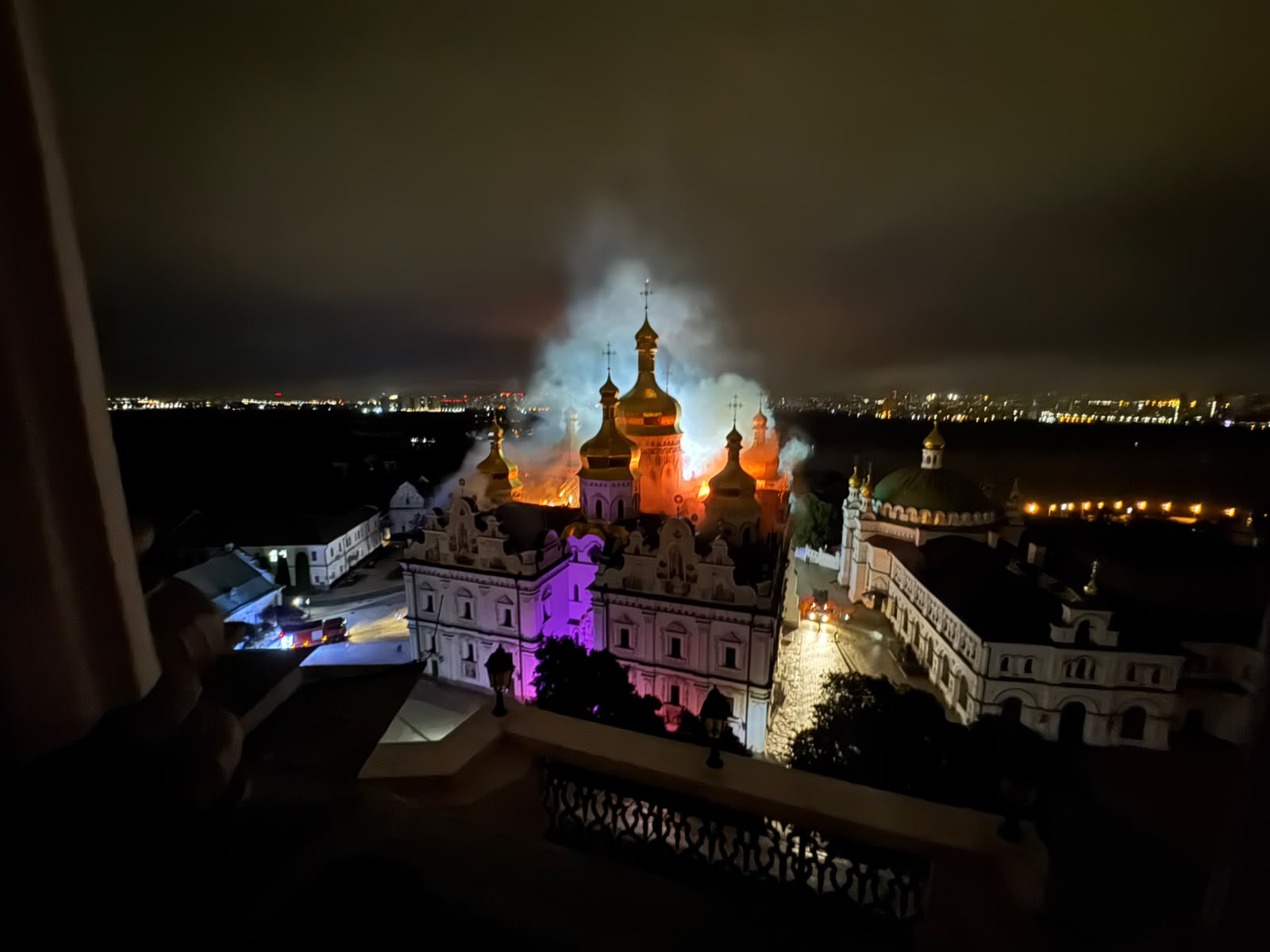
The war's 1,694th day began the way the previous two had: with explosions over Kyiv. A fresh wave of ballistic missiles struck the capital's energy facilities on Wednesday morning, Mayor Vitali Klitschko said — the third consecutive morning of attacks on the grid since President Donald Trump announced an "energy ceasefire" at the weekend that Moscow never confirmed. One person was killed and one injured in the capital in the morning wave, and the wider overnight toll across Ukraine reached at least six killed, according to AFP reporting carried by France 24. In Balakovo, on Russia's Volga, a drone attack the same morning killed one person and damaged houses. Our full report on the night's strikes is here; this briefing pulls the day together.
Track it live: live war tracker and conflict map
Overnight developments
The Wednesday wave was still under way during the morning hours, Klitschko said, with Reuters witnesses in Kyiv hearing multiple explosions as air defences engaged. It followed a grim rhythm set earlier in the week: on Monday evening a strike on a 25-storey residential building in the capital killed one person and injured 11, and on Tuesday evening ballistic missiles hit the Darnytska CHPP-4 heat and power plant and a nine-storey apartment block, killing two and injuring 21. Wednesday's target set was again the energy system — the infrastructure the announced ceasefire was specifically supposed to protect — arriving just as temperatures fall and the heating season approaches, when damage to power and heating plants costs residents the most.
Developing this morning: CNN reported Zelenskyy putting the overnight wave at more than 120 drones and 39 ballistic missiles aimed at Kyiv and Kharkiv, with significant damage also to oil and gas facilities. Russia's defence ministry, via Interfax, claimed its forces downed 902 drones overnight — a Russian claim, not independently verified. Zelenskyy also said Russia was preparing further ballistic launches. Those figures postdate our strikes report and are still being confirmed.
The night's other strike ran in the opposite direction. In Balakovo, a Volga River town in Russia's Saratov region, drones killed one person and damaged several residential buildings, Governor Roman Busargin said on Telegram, in an attack Reuters attributed to Ukraine. Balakovo sits beside a nuclear power plant with four operating reactors and a hydropower dam; no source reported either facility being struck or damaged, and there was no Ukrainian claim of responsibility or official comment in the sources checked. That distinction matters, and we state it plainly.
The energy front in numbers
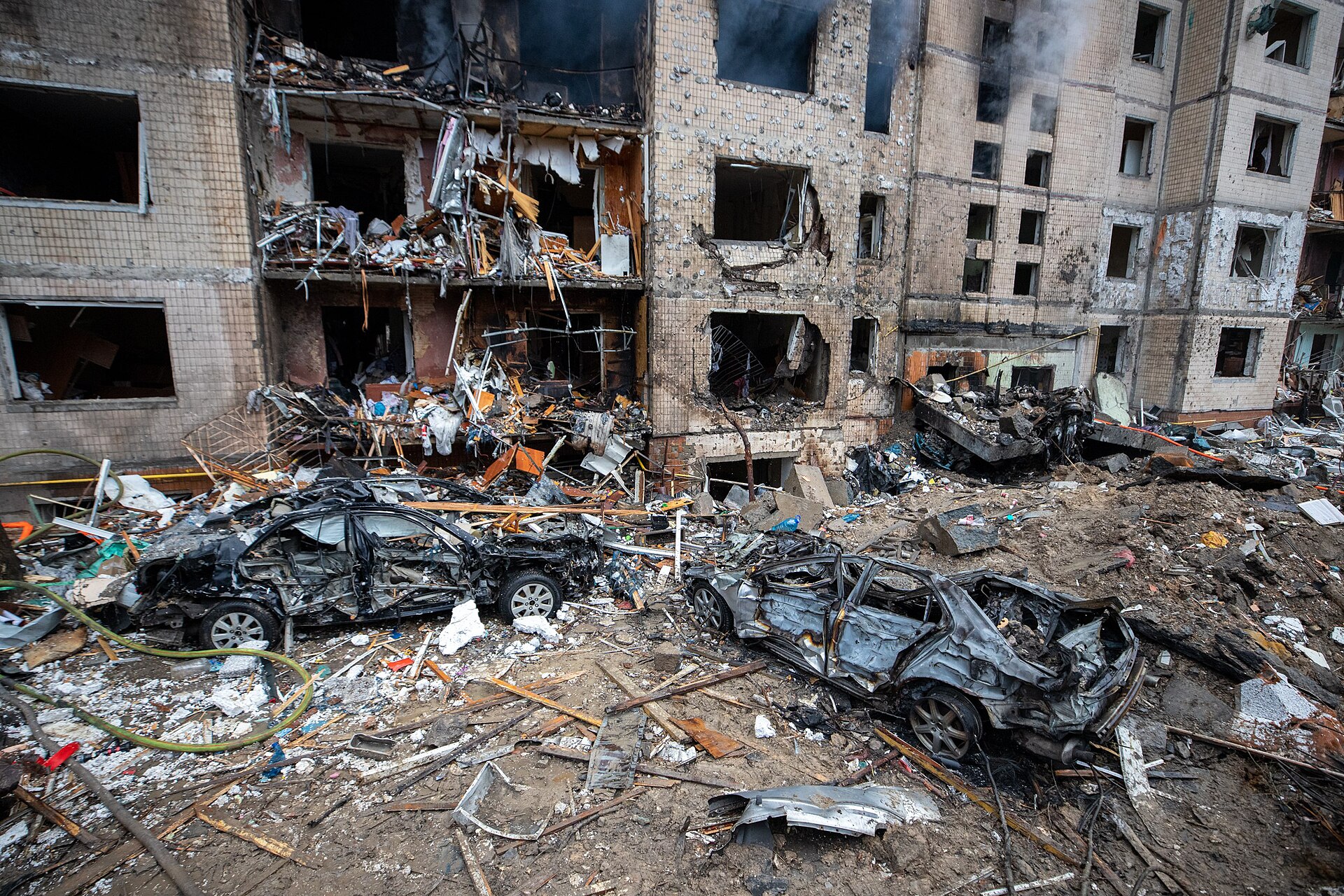
The headline figure is power. Zelenskyy said the strikes left more than 600,000 people without electricity — the number carried by France 24 and reported by Sky News on Wednesday morning. In Kyiv, DTEK imposed emergency cuts in five of the capital's ten districts: Darnytskyi, Dniprovskyi, Pecherskyi and Solomianskyi, and part of Holosiivskyi. The grid operator Ukrenergo announced consumption restrictions for October 14 because of the damage to energy infrastructure. Emergency outages, rather than a single national restoration timetable, were the confirmed picture on Wednesday morning.
The human toll, by the component figures officials released: in Kyiv, Klitschko's updated count put the combined Tuesday-evening and Wednesday-morning toll at three killed and 22 injured. In Kharkiv, a strike destroyed a residential building in the Kholodnohirskyi district and killed four people; Zelenskyy said 41 were wounded in the city over the evening. In the Fastiv district of Kyiv region, one person was killed and at least two hurt, the regional administration said. In Rivne, in the northwest, a drone struck an educational institution and wounded 14. AFP's nationwide count stands at at least six killed; the regional figures sum higher, and the briefing carries both rather than picking one — the discrepancy is in the official numbers themselves, and later updates usually reconcile them upward.
The warning dispute
Running underneath the damage reports is the week's sharpest argument between Kyiv and Washington. Zelenskyy says Ukraine received no early warning from its partners before the ballistic strikes — for two days running — and that air defences detected Tuesday's missiles only when they were already virtually on approach to Kyiv. Partner intelligence normally supplies launcher locations and trajectory data; without it, interceptors, sirens and grid operators all lose minutes. Zelenskyy called the situation absolutely unjust and appealed for the world not to stay silent. His adviser Dmytro Lytvyn and Ukraine's Air Force said no alerts were received on either day.
Reporting around the dispute describes a pressure campaign behind it: Trump's envoys Steve Witkoff and Jared Kushner are reported to have warned Ukrainian officials in Miami last Friday that intelligence sharing — and European purchases of US weapons for Ukraine — could be suspended if Kyiv does not halt its deep strikes on Russian energy facilities, with a similar warning given to European allies last weekend. That is reporting, attributed and unconfirmed, and the denial carries equal weight: Trump said on Tuesday that the United States is helping Ukraine and sharing intelligence, and is working with both sides to end the war. A White House spokeswoman, asked directly whether sharing had stopped, declined to confirm or deny. Our companion analysis works through what early warning is worth and what happens next: Zelenskyy says Ukraine got no early warning.
The Starlink disruption
The same complaint — decisions taken elsewhere, felt in Ukraine first — arrived from a second direction on Wednesday. SpaceX has introduced a limit stopping its military-grade Starshield service from operating above 160 km/h (100 mph) over Ukraine, disrupting combat missions, according to presidential adviser Serhiy Beskrestnov. Ukraine's defence forces received no warning, he wrote on Telegram, and several missions were disrupted; a source in the 7th Rapid Reaction Corps on the southeastern front confirmed the disruption to Reuters. The ceiling sits inside the cruise-speed band of Ukraine's own long-range strike drones, which is why it bites the defender as well as any Russian user. It is also the second Starlink speed limit of the war — but the first, a 75–90 km/h cap earlier this year, was imposed at Kyiv's own request against Russian drones, and was praised by the same adviser. No statement from SpaceX or Elon Musk, and no stated reason for the new limit, had appeared in Wednesday's reporting. Full story: SpaceX's Starlink speed limit disrupts Ukrainian missions.
Diplomacy today
Zelenskyy spends Wednesday in London, meeting Prime Minister Andy Burnham at Downing Street — his first visit to a European capital since Washington's diesel deal with Moscow split Ukraine's allies. Britain is putting a £45 million surface-to-air missile package on the table, £10 million of it fast-tracked, alongside accelerated deliveries of more than 5,000 Lightweight Multirole Missiles backed by £1.6 billion, and a push for allies to ban the maritime services behind Russian liquefied natural gas exports. Burnham's message, issued ahead of the meeting, was that Britain stands with Ukraine for as long as it takes. What to measure is delivery dates and allied signatures, not statements: Zelenskyy in London.
On the war's other front — procedure — Ukraine moved two steps closer to the European Union on Tuesday, when the EU opened accession negotiations on the internal market and competitiveness clusters at a conference in Luxembourg, taking the total to four of six clusters open. Hungary dropped its veto after Kyiv's parliament passed a minority-language education law expanding schooling rights for Hungarian speakers and other minorities. Zelenskyy urged the bloc to open the remaining two clusters by the end of the year. The story: EU opens Ukraine accession clusters after Hungary steps aside.
And a quieter pressure point went public on Wednesday: the American Chamber of Commerce in Ukraine told CNN that Russian missiles and drones have damaged facilities belonging to Coca-Cola, PepsiCo, McDonald's and Mondelez, among others, over the past several months — and that the White House has not responded. Chamber president Andy Hunder said a request last month to meet Witkoff and Kushner went unanswered. A White House official told CNN the president wants the war to stop entirely; the official did not address the individual strikes on American facilities. Our report: Russia is hitting American businesses in Ukraine.
What to watch today
Four things will set the tone for Day 1695. First, London: whether the Burnham meeting produces a firm delivery date for the missile package, allied names on the LNG services ban, and any answer to Zelenskyy's warning question. Second, the warning chain itself: whether alerts precede the next ballistic attack — Zelenskyy says intelligence points to further launches being prepared — will say more than any statement from either capital. Third, the power: how fast DTEK and Ukrenergo can lift the emergency cuts in Kyiv's five affected districts, and whether Ukrenergo's restrictions hold for a day or extend. Fourth, a fourth morning: whether Russia's energy campaign continues on Thursday, and whether Ukraine says anything official about Balakovo. Signal Post News will carry the day's developments as they are confirmed, and this briefing returns tomorrow for Day 1695.
Related coverage: Russian strikes on Kyiv's energy grid and the Balakovo drone attack · Zelenskyy says Ukraine got no early warning · Starlink speed limit disrupts Ukrainian missions · Zelenskyy in London: Burnham pledges missiles · EU opens Ukraine accession clusters · Russia hits American businesses in Ukraine
Sources: Reuters, CNN, France 24 (AFP), Sky News.