Ukraine no early warning: President Volodymyr Zelenskyy says Kyiv received no advance warning from its partners before ballistic strikes on the capital — and President Donald Trump says American intelligence sharing never stopped.
No warning / Zelenskyy says partners gave no early warning of Kyiv strikes; Trump denies intel cutoff
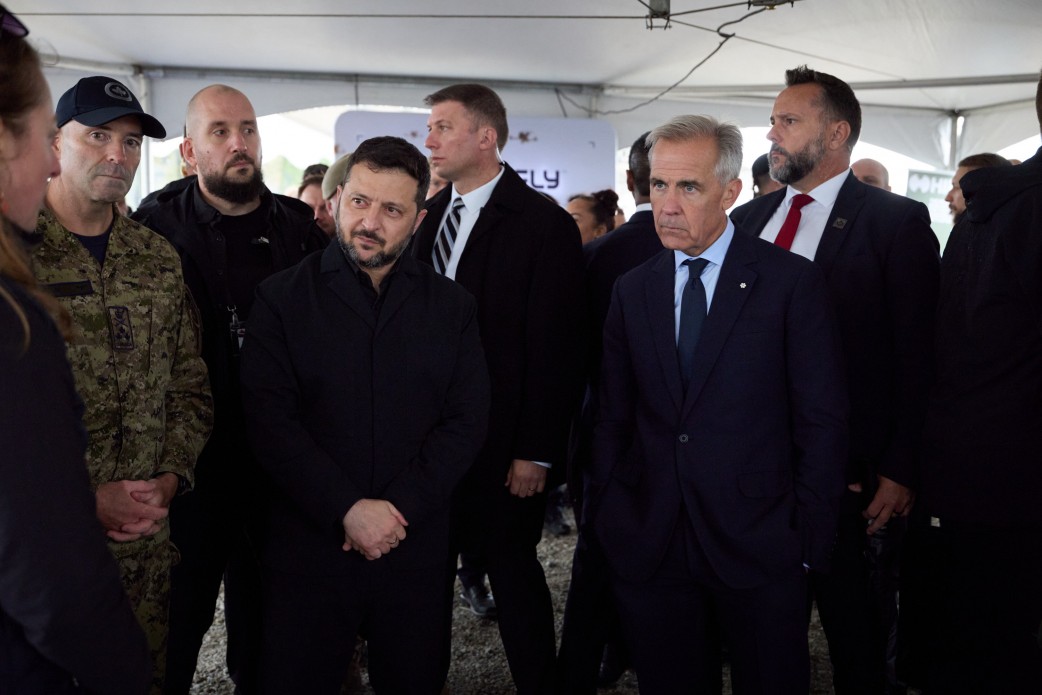
Hours after President Volodymyr Zelenskyy had appealed publicly for early-warning support, Russia's attack early on Wednesday struck the very energy infrastructure covered by the "energy ceasefire" President Donald Trump had announced last weekend — an attack this site reported in full and which Zelenskyy said left more than 600,000 people without power. But Zelenskyy's sharpest complaint was not about the strike itself. It was about the silence before it. Ukraine, he said, had received no early warning from its partners before Tuesday's deadly ballistic attack on Kyiv either — its air defences, in his account, detected the incoming missiles only when they were already virtually on approach to the capital.
Track it live: live war tracker and conflict map
Zelenskyy called the situation absolutely unjust: Russia was destroying Ukraine's energy infrastructure, he said, while Ukraine was not even receiving early warnings about ballistic missile launches. He appealed for the world not to stay silent, and for the United States to really see what was happening and who was responsible for the war continuing. His presidential adviser Dmytro Lytvyn and Ukraine's Air Force said the same: no alerts were received on either day. Trump, asked about it on Tuesday, denied the premise. The United States was helping Ukraine and sharing intelligence, he said, and wanted the war to end — which was why Washington was working with both Kyiv and Moscow to end it.
Why minutes of warning are worth so much
To understand why a missing warning can become a presidential grievance, start with the physics. A ballistic missile fired at Kyiv from Russian or occupied territory covers the distance in minutes. There is no leisurely detection window in which a city can be alerted by its own radars alone: ground-based sensors see a missile late, when it rises above their horizon or enters their coverage, and by then much of the flight — and most of the time available to react — is gone. Zelenskyy's phrase for Tuesday's attack, that the missiles were detected only when virtually on approach, describes what a defence looks like when it is working from its own sensors alone.
Partner intelligence changes that arithmetic at both ends of the problem. As CNN's account sets out, intelligence provided by the United States and other partners normally helps Ukraine defend against ballistic attacks by supplying the locations of missile launchers and data on where strikes are heading and when. Detection at launch — the moment of firing, picked up by space-based infrared systems that watch for the heat of a launch — converts minutes of reaction time into the maximum the physics allows. Air-defence crews can ready interceptors and choose engagements instead of reacting to tracks that appear already inbound; air-raid alerts can sound while there is still time for people to reach shelter; grid operators can brace a power network for a blow they know is coming. A missile expert at the Norwegian Institute for Defence Studies, Fabian Hoffmann, put the dependency bluntly in The Times' reporting: Ukraine relies on the American space-based infrared system, which he described as second to none — and only the United States can provide it. European allies, he said, have very limited ability to replace it.
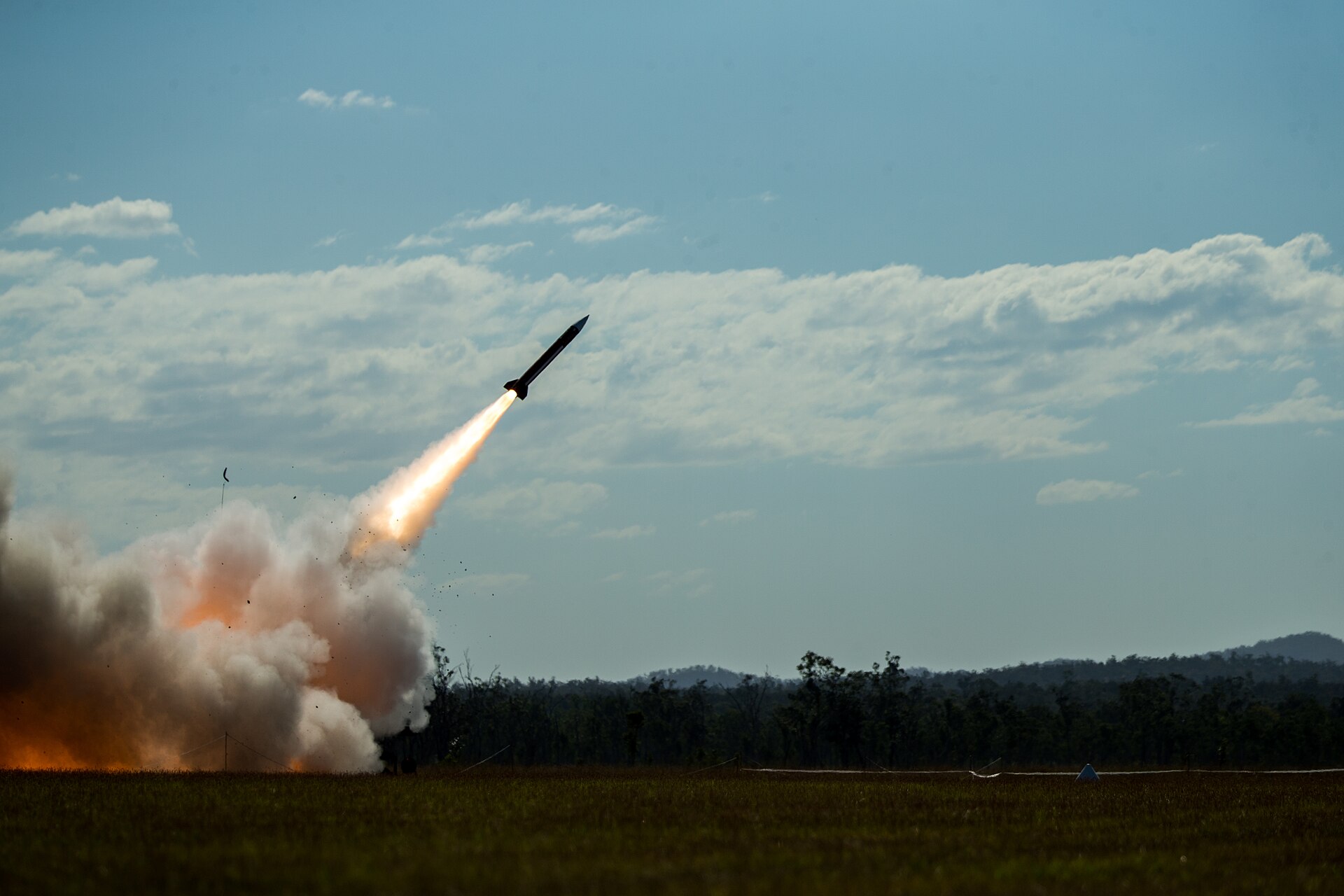
That is the sense in which early warning is a civilian-protection system as much as a military one. It does not shoot anything down. It buys the minutes in which everything else — interceptors, sirens, shelters, shutdowns — can happen. Which is why Kyiv frames its absence so morally: on Zelenskyy's account, the missing warnings were not a technical footnote to the strikes but a failure that left a capital exposed to weapons it could not see coming.
The reported backdrop: a warning in Miami
Kyiv's complaint did not emerge from a clear sky, and the reporting around it — which must be handled as reporting, attributed and unconfirmed — describes a pressure campaign building for days. According to EA WorldView, citing reports, Trump's envoys Steve Witkoff and Jared Kushner warned Ukrainian officials in Miami last Friday that American intelligence sharing could be suspended, and European purchases of American weapons for Ukraine halted, if Kyiv does not stop its deep strikes on Russian energy facilities. CNN reported that the administration gave allies in Europe a similar warning last weekend. The Times, relaying Ukrainian officials' accounts of the Miami talks, described the same threat tied to the same demand: halt the attacks on Russian oil refineries.
The demand has a logic of its own, visible in the week's other events. Ukraine's long-range campaign against Russian refineries and energy export infrastructure is one of Kyiv's few tools for imposing costs deep inside Russia — and, on the reported American account, one of the obstacles to the settlement Washington is pursuing, as well as a factor in fuel prices the administration is watching. The reported instruments match the reported goal precisely: intelligence sharing is the support Ukraine can least replace, and the European weapons-purchase channel is the funding mechanism Kyiv's partners built when direct American supply slowed. To threaten those two things is to reach for the strongest levers Washington holds.
Against all of this stands the denial, and it must be given its full weight. Trump said on Tuesday that the United States is helping Ukraine and sharing intelligence, and framed the effort as working with both sides to end the war. Other American voices were less committal: asked at a White House briefing whether the United States had stopped sharing intelligence with Kyiv, the President's spokeswoman said she would have to get back to the questioner — neither a confirmation nor a denial. And there is a third possibility that neither capital's rhetoric excludes: that the failures were technical or procedural rather than a deliberate shut-off. The Times noted that Ukraine's Air Force itself has acknowledged warning systems malfunctioning in the past. Zelenskyy, notably, stopped short of directly accusing Washington of cutting the warnings; his complaint named "our partners" collectively and its sharpest edge was aimed at the injustice of the outcome. That restraint, from a president not known for understatement this week, may itself be information.
The ceasefire that frames the dispute
The intelligence row unfolded inside a stranger diplomatic event: a ceasefire that only one side ever announced. On October 11, Trump declared an energy ceasefire between Russia and Ukraine, saying both parties had agreed to halt attacks on energy infrastructure. Zelenskyy expressed surprise — Kyiv, he indicated, had learned of it much as the public had — and said Ukraine would back the arrangement if Moscow did. Russia never formally confirmed acceptance. The Wednesday strikes then hit exactly the category of targets the announced ceasefire was supposed to protect, which is why Zelenskyy's two complaints fused into one message: the strikes were a breach of a deal Moscow never admitted signing, and the missing warnings left Ukraine blind to them.
For Kyiv, the sequence makes a coherent accusation without needing to allege a conspiracy: Washington pressed Ukraine to stop striking Russian energy sites; Washington announced a ceasefire Kyiv had not negotiated; Russia, which never confirmed it, kept striking Ukraine's grid; and the warnings that might have blunted those strikes did not arrive. For Washington, an equally coherent counter-account exists: the administration says intelligence sharing continues, ceasefire diplomacy requires pressure on both sides, and a president trying to end a war will sometimes announce frameworks before every capital has signed the same page. Both accounts fit the public facts. They cannot both be the whole story — and the one document that could settle it, the actual flow of warnings on Monday and Tuesday nights, sits in classified channels neither side has opened.
Leverage, argued from both capitals
Strip the week's events to their strategic skeleton and each side is running a recognisable play. Washington's reported position treats support as a portfolio to be conditioned: intelligence and weapons flows are the consideration Ukraine receives, and restraint on refinery strikes — plus movement toward a settlement — is the consideration Washington wants in return. From the administration's stated point of view, that is not abandonment but negotiation, and Trump's public line supports the framing: help continues, sharing continues, and the object of the exercise is ending the war. Ukraine's Foreign Minister Andrii Sybiha even found a boast inside the pressure, arguing that being told to stop playing its cards showed how much stronger Kyiv's hand had become since the days it was told it had none.
Kyiv's counter-argument is categorical rather than transactional: early warning, it says, is not a bargaining chip of the same kind as offensive support. Warning of ballistic launches is defensive in the purest sense — it protects civilians in their homes and crews at their posts, and withholding it does not pressure a government so much as expose a population. On that argument, conditioning warning is different in kind from conditioning the intelligence Ukraine uses to aim its own long-range strikes, and Kyiv has been careful to aim its public complaint at the defensive function specifically. There is also a hard military logic under the diplomacy: Ukraine's refinery campaign is one of the few pressures Kyiv can apply unilaterally, and surrendering it in exchange for a ceasefire the other side has not confirmed would trade a real capability for a paper one.
The risk of arguing in public
There is a cost to this dispute being conducted on the record, and it is worth naming, because both capitals are paying it. A public Ukrainian statement that ballistic warnings did not arrive tells Moscow something it would otherwise have to guess: that on two consecutive nights, a gap existed — whether technical, procedural or political — in the warning chain over Kyiv. A public American denial, if the underlying facts are more complicated, spends credibility Kyiv may need to draw on later. And a public argument between a supplier and a recipient, in the middle of a war, is itself a signal to every other capital watching — in Europe, which funds the weapons channel the reported threat named, and in Moscow, which prices Western cohesion into its own decisions.
Kyiv plainly judged the silence worse than the signal. Zelenskyy's appeal was framed as a demand that the world not stay silent — an attempt to make the missing warnings politically expensive enough that they resume, whatever their cause. That is a gamble of a specific kind: it works if the gap was a decision that embarrassment can reverse, and it fails if the gap was a capability problem embarrassment cannot fix. The fact that Ukraine's own Air Force confirmed the absence of alerts, through official channels rather than anonymous briefings, suggests a government that wants the fact established beyond dispute while the cause is negotiated. Facts first, attribution later — that sequencing is itself a diplomatic instrument.
What happens next
The dispute now has three observable tests. The first is the warning chain itself: whether alerts precede the next ballistic attack on Kyiv, as they routinely did before this week, will tell both capitals — and Moscow — more than any statement. The second is the refinery campaign: whether Ukraine's deep strikes pause, continue at tempo, or quietly change targets will show how Kyiv has priced the reported Miami warning against Trump's public denial. The third is the diplomatic track: Zelenskyy has sent proposals for new meetings in the coming days with Witkoff and Kushner, saying Ukraine is ready for meetings and wants to work for peace — a track covered in a companion piece in this batch — and whether those meetings happen, and what is said after them about intelligence, will mark whether this week's rupture was a negotiation tactic or a turning point.
Underneath all three tests sits the question this week actually posed. Ukraine's war effort runs on things it does not control — a commercial satellite network whose settings changed the same week without warning, and a warning system owned by a partner whose president denies anything changed while his envoys are reported to have threatened exactly that change. Kyiv's complaint, in both cases, is the same sentence in different uniforms: tell us before it happens. Whether Washington hears that as an ally's reasonable demand or as pressure to be resisted will shape more than the next night's air defence. It will shape what Ukraine believes its partnerships are worth — and belief, in a war of endurance, is a material fact.
Related coverage: Russian strikes on Kyiv's energy grid and the Balakovo drone attack · Zelenskyy seeks new talks with Witkoff and Kushner · SpaceX's Starlink speed limit disrupts Ukrainian drone missions
Sources: CNN, EA WorldView, The Times, Reuters via Devdiscourse, Livemint.