Starlink speed limit Ukraine: SpaceX has stopped its military-grade Starshield service from operating above 160 km/h over Ukraine, disrupting combat missions — and a presidential adviser says Kyiv's forces were never warned.
Starlink / SpaceX speed limit disrupts Ukrainian drone missions, Kyiv says

SpaceX has introduced a limit on some Starlink services in Ukraine, stopping the operation of its military-grade version, Starshield, above 100 miles per hour (160 km/h) and disrupting combat missions, presidential adviser Serhiy Beskrestnov said on Wednesday. "Our defence forces did not receive a warning about this limitation, and this led to the disruption of several missions," Beskrestnov, an adviser on defence technology, wrote on Telegram. A source in the 7th Rapid Reaction Corps, deployed on the southeastern front line, confirmed the disruptions to Starlink operations, Reuters reported.
Track it live: live war tracker and conflict map
Independent frontline reporting pointed the same way: drone operators and the analyst Serhii Sternenko reported connectivity on Ukrainian-registered Starshield terminals dropping overnight above about 160 km/h, with critical missions disrupted. No statement from SpaceX or its founder, Elon Musk, had appeared in any reporting published by Wednesday — and no source has stated why the limit was imposed. That unanswered question sits at the centre of this story.
What happened on Wednesday
The established facts are narrow, and they matter precisely because so much around them is unknown. A speed ceiling now applies to Starshield over Ukraine: move faster than 160 km/h and the connection stops. Starshield is not the consumer Starlink service — it is SpaceX's military-grade offering, built for government and defence users, with the security and priority features front-line units depend on for communications and for guiding unmanned systems. A limit on that service lands directly on military operations, not on civilian internet users.
Beskrestnov's account adds three specifics. First, the limit arrived without warning to the forces using it. Second, the disruption was operational, not theoretical: several missions were disrupted. Third, the confirmation did not rest on one official's post alone — a source inside the 7th Rapid Reaction Corps, fighting on the southeastern front, confirmed that Starlink operations had been disrupted. What has not been specified publicly is which missions, flown by which systems, over what period — the kind of detail Kyiv rarely publishes while operations are live, and which may only emerge later, if at all.
Also unclear is the limit's full reach: frontline reporting noted it was not yet known whether the same restriction applies to terminals used by Russian forces, including terminals registered through intermediaries. That distinction decides whether Wednesday's change reads as an anti-drone measure with collateral damage, or as something that fell on one side's military network alone.
Why this matters
Starlink is not one tool among many for Ukraine's military; after more than four years of full-scale war it is load-bearing infrastructure. It carries front-line communications where radio and fibre fail, connects headquarters to units in the field, and provides the beyond-line-of-sight link that lets operators fly drones deep into contested territory and watch what they find in real time. When a setting changes in that network, the effect is not an inconvenience. It is felt, within hours, in what a brigade can and cannot do.
Wednesday's episode exposes the structural fact underneath the technology: the settings are not Kyiv's to control. A private company, headquartered in the United States and led by a founder who has publicly argued with governments — including, at times, Ukraine's — can alter the operating conditions of a sovereign state's war effort unilaterally, instantly, and, on Kyiv's account, silently. Ukraine has lived with that dependence since 2022 because the alternative was worse. But each episode like this one reprices the bargain, and Wednesday's repricing came mid-mission rather than in a negotiation.
The timing sharpens it. The limit landed in the same week Kyiv complained of receiving no early warning from its partners before Russian ballistic strikes on the capital — a dispute covered in a companion piece in this batch. Two systems, one commercial and one governmental, produced the same complaint within days: decisions taken elsewhere, felt in Ukraine first, explained later or not at all. No reporting establishes that the two episodes are connected — but the pattern is now the story Kyiv is telling its partners, in public.
Two episodes, two very different speed limits
To understand why Wednesday's limit stings in Kyiv, it helps to be precise about the first one — because on the surface the two look similar, and in every way that matters they are opposites.
Earlier in 2026, according to DroneXL's and other open-source reporting at the time, SpaceX introduced an emergency speed cap of roughly 75–90 km/h on Starlink terminals in Ukraine. That measure was taken at the request of Ukraine's defence ministry, and its target was Russian, not Ukrainian, hardware. Russian forces had begun mounting smuggled commercial Starlink terminals on long-range strike drones — the Molniya and Italmas types and Starlink-guided variants of the Shahed — giving operators inside Russia a live, jam-resistant control link deep over Ukrainian territory. A terminal that goes dark above 90 km/h cannot guide a fast fixed-wing strike drone. Slower Ukrainian first-person-view drones, flying below the threshold, were largely unaffected.
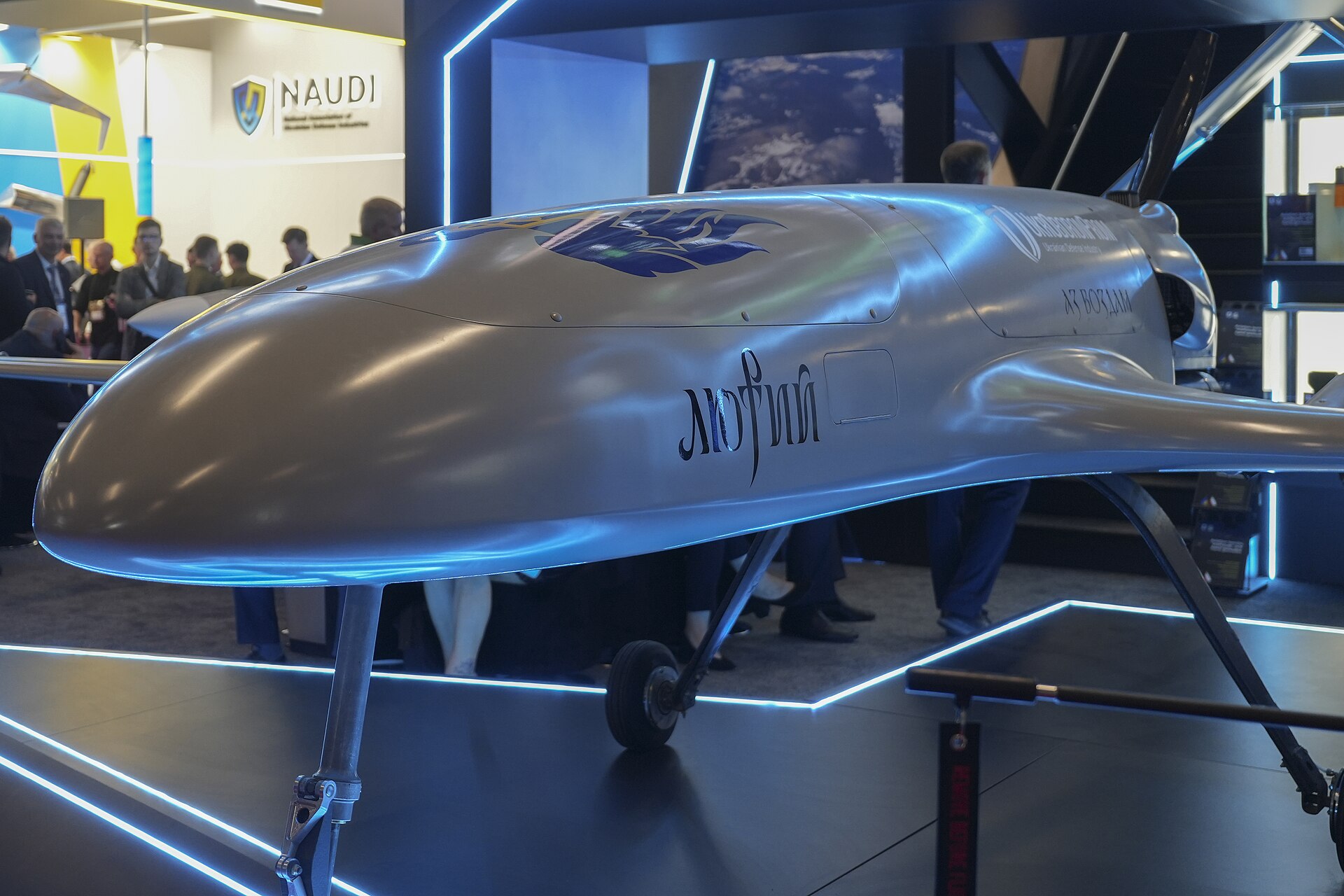
The speed cap was only the first phase. It was followed by a registration regime — a whitelist — under which Starlink terminals in Ukraine had to be registered to verified users, and unregistered terminals went dark. Russian military channels then reported exactly the effect Kyiv wanted: front-line communications built on smuggled terminals collapsed, and units scrambled for alternatives. Beskrestnov, the same adviser who complained on Wednesday, publicly praised those measures at the time, describing the enemy's situation in terms close to catastrophe. The episode was held up, including by Ukraine's own officials, as the model of how the SpaceX relationship was supposed to work: Kyiv identified a threat, asked for a specific technical fix, and got one within days.
Now set Wednesday beside it. Episode one: a cap of 75–90 km/h, on commercial terminals, requested by Kyiv, aimed at Russian drones, followed by a whitelist Kyiv helped design. Episode two: a cap of 160 km/h, on the military-grade Starshield service, which on Kyiv's account arrived with no request and no warning, and whose first reported casualties were Ukrainian missions. The number is higher and the target is different — and the difference in process is the whole point of Beskrestnov's complaint. Ukraine did not object on Wednesday to speed limits as a concept. It objected to learning about one from its effects.
Why a 160 km/h ceiling bites the defender too
A speed limit is a blunt instrument: a terminal cannot tell whose drone it is riding on. It knows only how fast it is moving. Set the ceiling low, at 75–90 km/h, and it mostly catches fast fixed-wing strike drones while sparing the slow, short-range aircraft both sides use at the front. Raise the ceiling to 160 km/h and apply it to the military network, and the geometry changes — because Ukraine's own long-range strike fleet lives at exactly those speeds.
Ukraine's deep-strike campaign — the campaign against Russian refineries, depots and airfields that has become central to Kyiv's war strategy — is flown by fixed-wing drones travelling hundreds of kilometres. Reporting on the first aircraft affected on Wednesday put the cruise speeds of Ukraine's FP-1 and FP-2 strike drones at roughly 140 to 180 km/h: a band that straddles the new ceiling. Aircraft of the AN-196 Liutyi class, built for long-range strikes, cruise faster still than the slow tactical drones the first cap was designed to spare. A satellite link that dies at 160 km/h does not merely inconvenience such a mission. For a drone using that link for guidance, navigation updates or live video, crossing the threshold mid-flight can end the mission outright — which is what "disrupted" means in Beskrestnov's post, and what the 7th Rapid Reaction Corps source confirmed on the front line.
The asymmetry is worth spelling out. Russia's Starlink-guided strike drones were the target of episode one, and episode one's tools — the low cap plus the whitelist — were built to distinguish friend from foe by registration, not just by speed. A Ukrainian-registered Starshield terminal on a Ukrainian drone is, by the logic of the system Kyiv and SpaceX built together earlier this year, exactly the user the network is supposed to serve. A speed ceiling that reaches into that registered military service therefore cuts against the architecture of the earlier fix. It applies a blunt test — how fast are you moving — to the one class of user the registration regime was created to exempt from blunt tests.
The question nobody has answered: why?
As of Wednesday's reporting, SpaceX had offered no public explanation for the new limit, and neither had Musk. That silence needs to be handled carefully, because the space where an explanation should be is exactly where speculation rushes in. It would be possible to construct motives — technical, commercial, political — from the week's other events, from the Washington-Kyiv dispute over refinery strikes to Musk's long record of public interventions in this war. No reporting published by Wednesday supports any of them. No source states why the limit was imposed, when the decision was taken, whether it is temporary, or whether Kyiv's complaint has been answered privately. This article therefore records the motive as what it is: unknown.
What can be said on the record is procedural. A change with immediate battlefield effects was, on the account of the adviser Kyiv uses for defence-technology announcements, communicated to the affected military not at all. In episode one, by contrast, the change was coordinated, announced by Ukrainian officials and praised by them. The contrast does not prove intent. It establishes that a working channel between SpaceX and Kyiv's defence establishment exists, was used before, and — on Wednesday's evidence — was not used this time. For a military that plans missions around a network it does not own, that channel's reliability is not a courtesy. It is an operational requirement.
A pattern of no warning
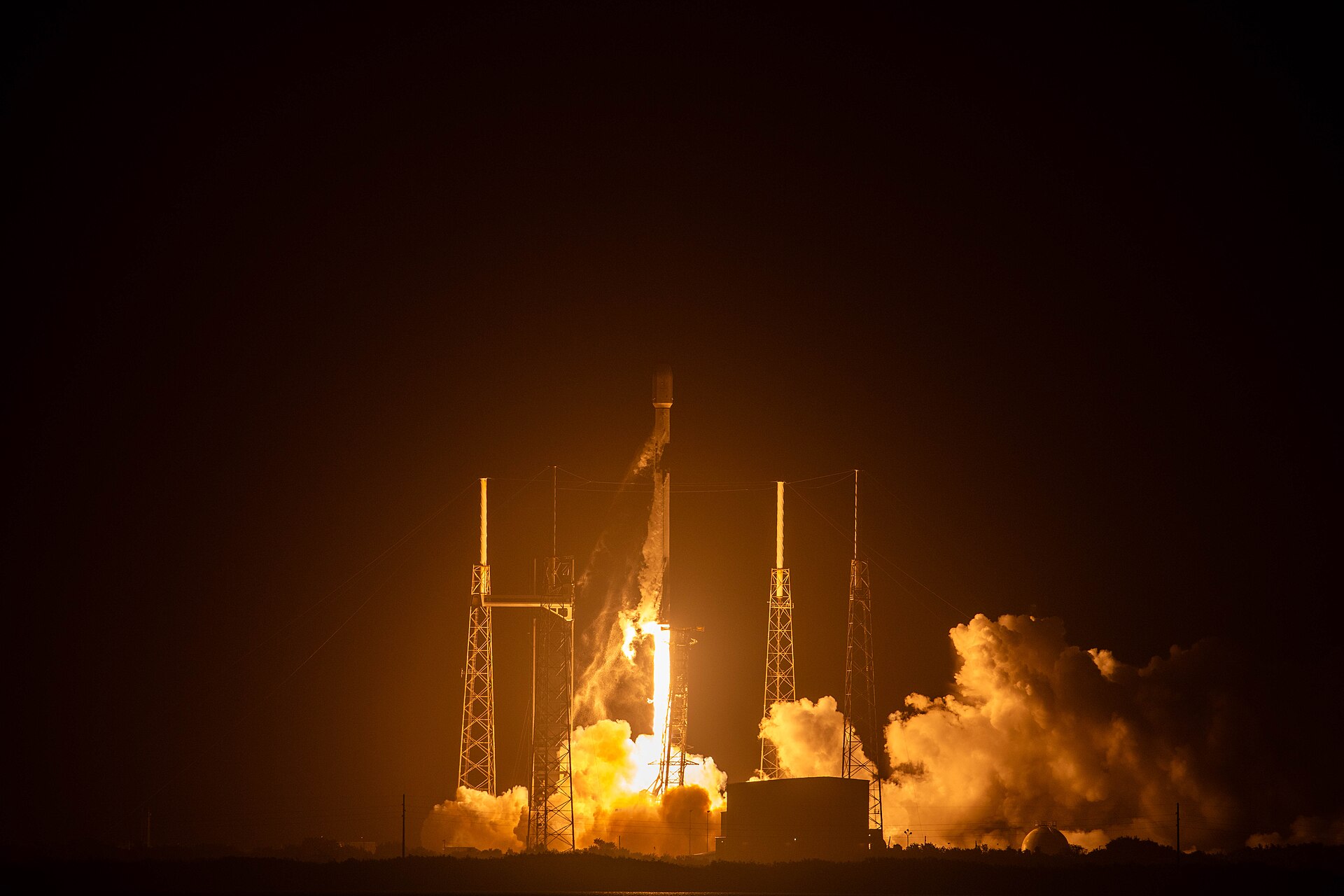
Wednesday's complaint did not arrive in isolation. In The Times' account of the parallel intelligence dispute, Kyiv's grievance is framed the same way: systems Ukraine depends on, decisions taken elsewhere, and a Ukrainian government that says it learned of the consequences when the consequences arrived. The two cases differ in kind — one involves a commercial setting changed by a company, the other early-warning intelligence shared between governments — and no reporting links the decisions themselves. But their collision in a single week sharpens the political question underneath both: how much of Ukraine's war effort runs on infrastructure and information whose providers can change the terms without notice, and what notice is owed when they do?
For SpaceX, the underlying question is not new. Access to Starlink has been contested throughout the war — over where the service may be used, for what operations, and on whose authority — and each dispute has ended with the same structural answer: the network is private, the terms are the company's, and Ukraine's dependence is the price of a capability no ally has replicated at scale. Wednesday adds a variant: previous arguments were about what Starlink would not do. This one is about what it did — to the service its own military customer was using, mid-mission, without a word in advance.
What fixes are on the table
The remedies analysts point to are mostly extensions of tools this war has already produced, and they are worth listing as options — raised in discussion around the episode, not announced policy. The first is airframe-level whitelisting: extending the registration logic of episode one so that terminals fitted to verified Ukrainian military aircraft are exempt from speed ceilings altogether, wherever they fly. The second is geofenced differentiation — different rules for terminals over Ukrainian-held territory, contested zones and deep-strike corridors — so a blunt global ceiling is replaced by rules that follow the mission. The third is the simplest and, after Wednesday, perhaps the most demanded in Kyiv: a notice protocol, under which changes affecting military service are communicated to Ukraine's defence ministry before they take effect, with enough lead time to re-plan missions around them.
Each option carries the trade-off that has shadowed Starlink policy since 2022. Every exemption for legitimate military use is a gap an adversary will probe — Russia's forces used the same terminals through intermediaries, which is why the blunt instruments existed. And every safeguard requiring SpaceX to coordinate changes with a customer government moves a private network closer to being treated as what, in Ukraine, it functionally is: critical defence infrastructure. Wednesday's disruption does not settle that argument. It gives Kyiv a fresh, concrete case to make it with.
What happens next
Four things will show how deep this episode cuts. First, whether SpaceX or Musk responds — an explanation, a reversal or a restatement would each reset the story; continued silence leaves Beskrestnov's account as the only one on record. Second, whether Kyiv's diplomacy moves the limit: the same direct channel that produced episode one could yield an exemption or a notice protocol — or nothing, which would say as much about the relationship. Third, whether the restriction also applies to Russian-used terminals; if it does, Kyiv may yet reframe the episode as a clumsily rolled-out anti-drone measure, and if it does not, the asymmetry hardens into the story. Fourth, whether Ukrainian units can adapt around it, and at what cost to the deep-strike campaign.
Starlink's speed limits have now twice changed what is possible in the skies over Ukraine. The first time, they were a weapon Kyiv asked for, aimed at the drones hunting its cities, and they worked in public view. The second time, on Kyiv's account, the weapon fired without warning and the missions it stopped were Ukraine's own. The technology did not change between the two episodes. The process did — and in a war run on borrowed infrastructure, process is not a detail. It is the difference between a partner and a single point of failure.
Related coverage: Zelenskyy says Ukraine got no early warning — the intelligence dispute with Washington · Russian strikes on Kyiv's energy grid and the Balakovo drone attack
Sources: Reuters, Malcontent News, DroneXL, The Times.