Russian strikes Kyiv energy facilities: a fresh wave of ballistic missiles hit the capital's energy sites on Wednesday morning, October 14 in Kyiv, killing one person in the capital that morning — part of an overnight wave that killed at least six people across Ukraine — and a drone attack on Balakovo in Russia killed one person the same morning.
Kyiv Hit for a Third Morning as Overnight Strikes Kill at Least Six Across Ukraine
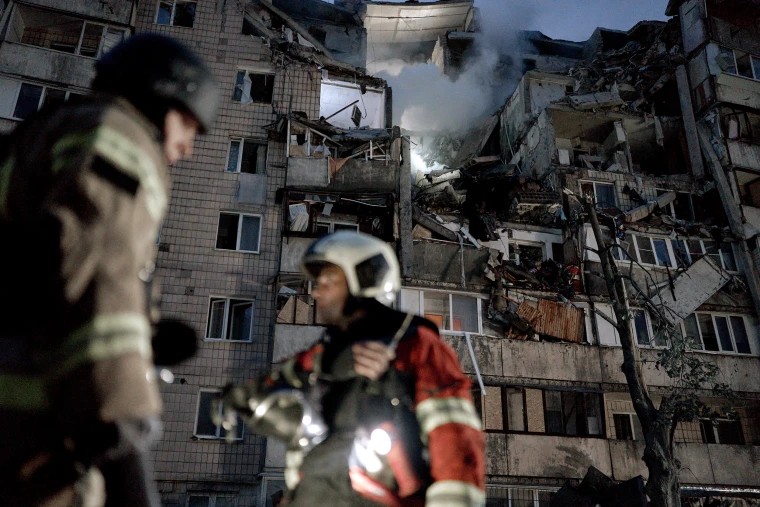
The ballistic missile attack on Kyiv was still under way during the morning hours on Wednesday, Klitschko said, as Reuters witnesses in the capital heard multiple explosions and air defences engaged the overnight attacks. The mayor said one person was killed and one injured, and that energy facilities were hit. It was the third morning in a row that Russian strikes had reached the capital's energy infrastructure: on Monday evening a strike on a 25-storey residential building killed one person and injured 11, and on Tuesday evening ballistic missiles struck the Darnytska CHPP-4 heat and power plant and a nine-storey apartment block, killing two people and injuring 21 — the attack covered in our report on the CHPP-4 strike and the second night without a partner warning. Wednesday's wave arrived as temperatures fall and the heating season approaches, the point in the year when damage to power and heating plants costs residents the most.
Track it live: Ukraine war map · Live Global Wars tracker
Update: the overnight toll across Ukraine rises to at least six killed
Updated October 14: figures published on Wednesday widened the night's toll well beyond the capital. AFP, in live coverage carried by France 24, reported that the heavy overnight strikes killed at least six people across Ukraine, and the regional counts released by Ukrainian officials add up higher still. In Kharkiv, Ukraine's second city, a strike destroyed a residential building in the Kholodnohirskyi district and killed four people; President Volodymyr Zelenskyy said 41 people were wounded in the city over the course of the evening. In Kyiv, Mayor Klitschko's updated count put the combined toll of Tuesday evening's and Wednesday morning's waves at three killed and 22 injured — two of the dead in the Desnianskyi apartment building, one in the Holosiivskyi district on Wednesday morning, and one more person injured in Darnytskyi. In the Fastiv district of Kyiv region, one person was killed and at least two were hurt, the head of the regional military administration, Tymur Tkachenko, said. In Rivne, in the northwest, a drone struck an educational institution and wounded 14 people, officials said. On the power grid, the confirmed picture on Wednesday morning was emergency outages rather than a single national total: DTEK imposed emergency cuts in five of Kyiv's ten districts — Darnytskyi, Dniprovskyi, Pecherskyi and Solomianskyi, and part of Holosiivskyi — and the grid operator Ukrenergo announced consumption restrictions for October 14 because of the damage to energy infrastructure. President Zelenskyy said the strikes had left some 600,000 people without power — the figure carried in France 24's headline on the strikes and reported by Sky News on Wednesday morning.
One killed in Balakovo, on the Volga
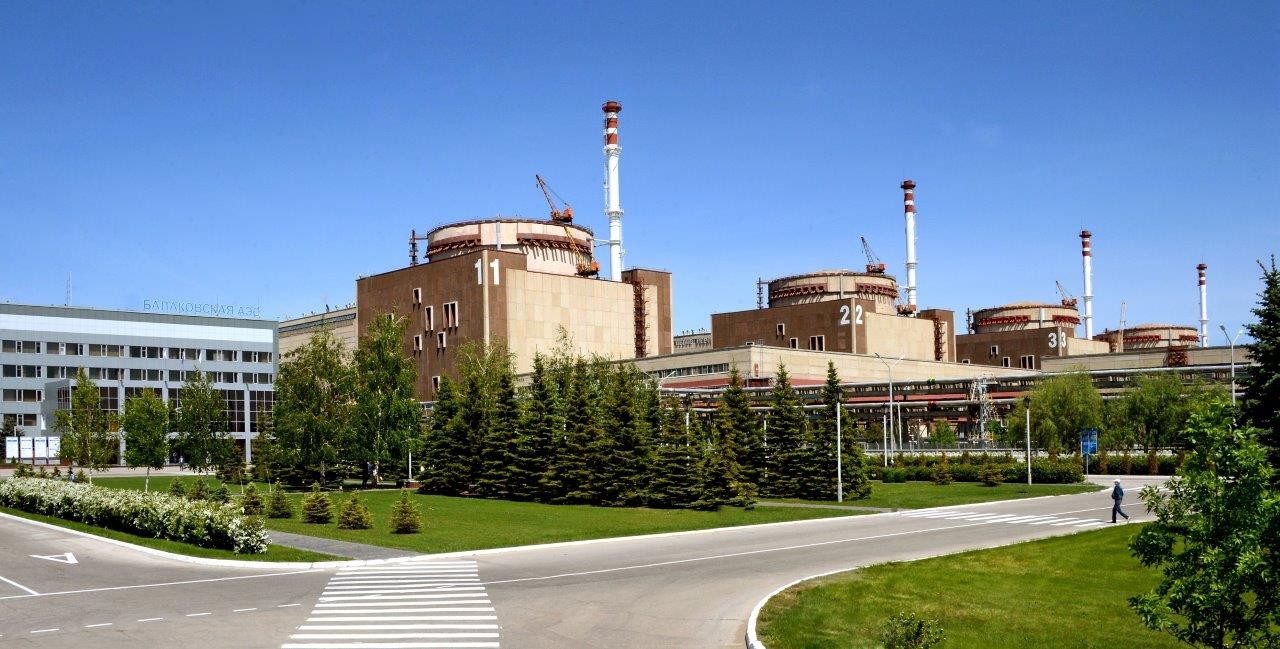
The same morning brought a lethal strike in the other direction. In Balakovo, a town on the Volga River in Russia's Saratov region, a drone attack killed one person and damaged houses, Governor Roman Busargin said on Telegram, according to Reuters, which attributed the attack to Ukraine. Russian state news agency RIA Novosti, reporting the governor's statement the same morning, said several residential buildings in Balakovo were damaged and that preliminary reports indicated one person had died. Balakovo is best known outside Russia for what sits beside it: a nuclear power plant with four operating reactors and a hydropower station whose dam spans the Volga. No source checked for this report said either facility was struck or damaged — the reported damage was to houses in the town — and that distinction matters, because a strike on a nuclear plant would be an escalation of a different order. There was no Ukrainian claim of responsibility or official comment on the Balakovo attack in the sources checked, and no Russian Defence Ministry statement on the Wednesday strikes on Kyiv had been published in those sources either.
Why this matters
Three mornings is a pattern, and the pattern is the story. A single strike on a power plant can be repaired around; a strike every morning, sustained across the week an energy ceasefire was supposed to begin, tests whether Kyiv's repair crews, interceptor stocks and warning systems can hold a rhythm rather than survive an incident. The ceasefire in question was announced on Sunday by US President Donald Trump, who said Russia and Ukraine had agreed to stop attacking each other's energy infrastructure. Moscow never confirmed the arrangement in those terms. Ukraine's President Volodymyr Zelenskyy said Kyiv had observed it — his government says Ukraine has not targeted Russian refineries since the announcement — and that Russian forces had not. Wednesday's two death tolls, one in Kyiv and one in Balakovo, land on opposite sides of that argument: if the Balakovo drones were Ukrainian, as Reuters reported, Kyiv's claim to be holding a one-sided pause on energy-adjacent targets becomes harder to state cleanly, even though houses in a town that hosts a nuclear plant are not the plant itself; and if Russia's strikes on Kyiv's energy facilities continue each morning, the ceasefire Trump announced exists, at present, mainly as an announcement. Both governments have reason to describe the same week differently, and readers should hold the verified core — the strikes happened, on both sides of the border, and people were killed in both places — apart from each side's framing of who broke what first.
The warning question hangs over the third morning
Wednesday's attack also extends the week's most sensitive dispute. After Monday's and Tuesday's strikes, Zelenskyy said Ukraine had received no advance warning of ballistic launches from its partners — the early-warning intelligence he has described as critical because it helps save lives — and he stopped short of saying who was responsible for the failure. A senior Ukrainian official, speaking anonymously, described the lapse to reporters as a failure possibly linked to circumstances such as weather. Trump, asked about it on Tuesday, said Washington was still sharing intelligence with Ukraine and was working with both sides to end the war; he did not say whether Russia had violated the ceasefire. Reporting by Reuters and other outlets has said US officials had earlier threatened to curtail intelligence sharing and weapons purchases channelled through allies unless Ukraine halted its strikes on Russian refineries — a claim Washington has not confirmed. Whether Wednesday's incoming missiles were warned about in advance had not been reported by the time this article was published. That answer, when it comes, will matter almost as much as the damage assessment: two unwarned mornings can be a malfunction; three begins to look like a policy, whichever capital's policy it is.
What the numbers say, and what happens next
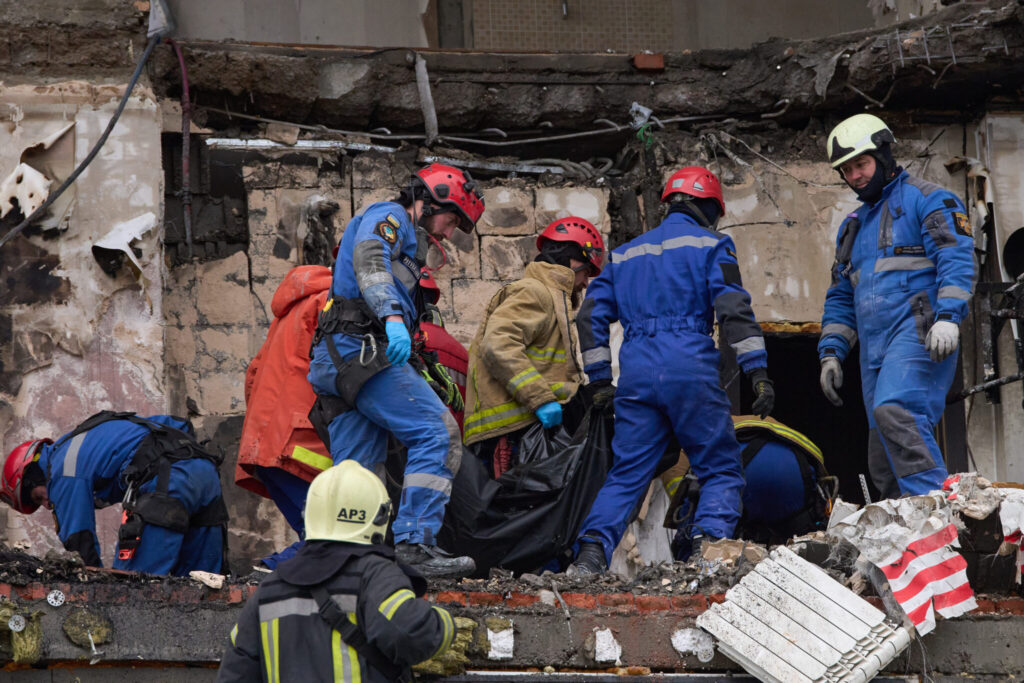
The week's Kyiv toll now stands, by the mayors' and officials' own running counts, at four people killed in the capital across three mornings — one on Monday, two on Tuesday, one on Wednesday — alongside one killed in Balakovo. Beyond the capital, the same night brought four killed in Kharkiv and one in Kyiv region's Fastiv district, taking the overnight nationwide toll to at least six by AFP's count and eight by the regional figures — a reminder that this energy campaign is national in reach even when Kyiv holds the headlines. Set against the scale of this war those are small numbers, and that is precisely the analytical trap: the strategic weight of this campaign is not in any single morning's toll but in the accumulation of damage to generation and heating capacity at the start of the cold season, and in the interceptor arithmetic it forces. Ballistic missiles are the hardest class of weapon for Ukraine to stop, its stock of suitable interceptors is limited, and every morning of launches spends more of them. Zelenskyy spends Wednesday in London, where Prime Minister Andy Burnham is expected to accelerate British military support and press a maritime-services ban aimed at Russian liquefied natural gas — the visit covered in our report on Zelenskyy's London talks and the British missile package. Watch three things next: whether a fourth morning brings another wave, and whether Kyiv says a warning arrived this time; the first official damage assessment for Wednesday's energy hits, which will show whether capacity or only distribution was struck; and any Ukrainian statement on Balakovo, which would clarify whether Kyiv is resuming cross-border drone operations openly after the pause Zelenskyy described. Signal Post News will update this story as those confirmations arrive. Sources: Reuters, October 14, 2026; The Times, October 14, 2026; France 24 (AFP), October 14, 2026; The Independent, October 14, 2026; Sky News, October 14, 2026 (600,000-without-power figure, attributed to President Zelenskyy); RIA Novosti via NAMPA, October 14, 2026; CNN, October 13, 2026. Related coverage: the first no-warning strike and the energy ceasefire dispute.