Russia daylong drone strikes Ukraine
Russia daylong drone strikes UkraineKyiv drone strikes September 27Ukraine strikes kill eight September 2026Kyivstar headquarters drone strikeOdesa cargo ship struck dronesLavrov rejects Germany de-escalation callSumy glide bomb attack family centreKharkiv drone strike car driver killedRussia strikes Ukrainian data centresUNGA Lavrov German minister meeting
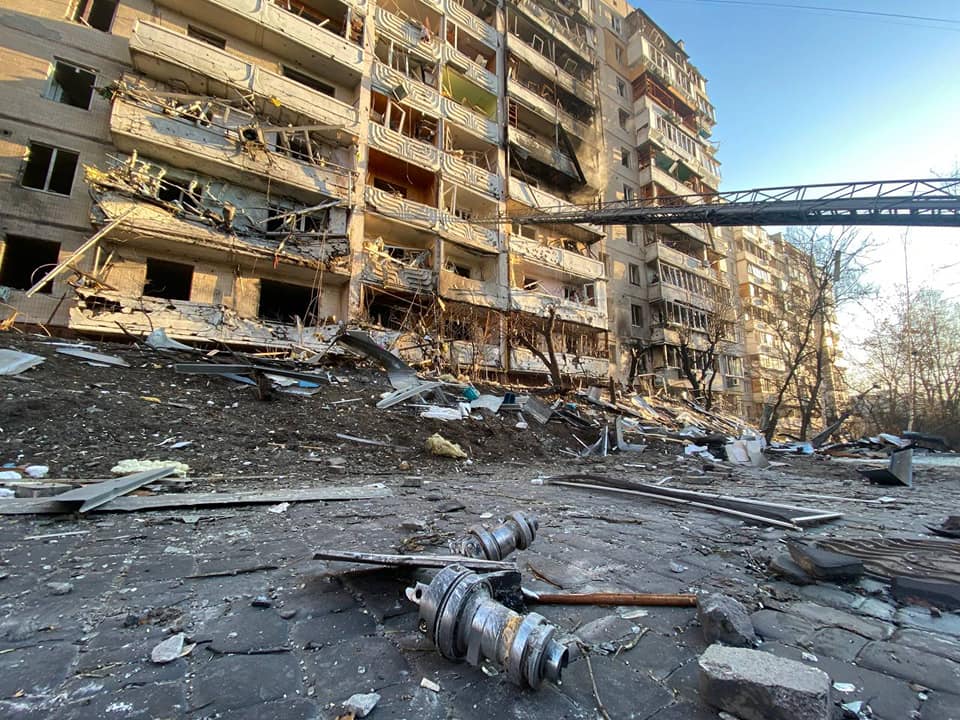
In the latest Russia daylong drone strikes Ukraine escalation, Russia and Ukraine traded strikes overnight and through Sunday, September 27, 2026, killing at least eight people in Ukraine and one in Russia, according to the Associated Press — the first major exchange to stretch across an entire Sunday since Moscow’s top diplomat publicly rejected German calls to ease the pressure.
The day’s toll was still being counted as the attacks continued into Sunday evening. In Kyiv, a man was found dead after a Russian drone hit a non-residential building overnight, the emergency service said. Later Sunday, drone strikes on the outskirts of the capital killed one person and wounded at least five, according to local administration head Tymur Tkachenko, while a drone slammed into a nine-story apartment block inside the city, wounding at least one woman and triggering a fire that emergency crews later extinguished. Mayor Vitali Klitschko reported drone impacts near a kindergarten and a playground in two districts, with damage across others but no casualties there.
Why this matters
The significance of Sunday’s strikes is not the raw casualty count — grim but small by this war’s standards — it is the tempo. Russia has long staged its heaviest attacks at night, but in recent weeks Ukrainian officials say the strikes have stretched “almost continuously throughout the day,” as Reuters put it. That shift turns a war of nightly waves into a war of permanent alert: air-defence crews, emergency services and ordinary residents never get to stand down. It is a deliberate pressure campaign on the infrastructure of daily life — the telecom network, the ports, the buildings people sleep in — designed to make the cost of endurance unbearable long before it is decisive.
The diplomatic backdrop makes the timing pointed. The strikes came hours after Foreign Minister Sergei Lavrov brushed off what is believed to be the first face-to-face meeting with his German counterpart since Russia’s full-scale invasion began in 2022, held on the sidelines of the UN General Assembly. Germany had asked Moscow to pull back from its escalation toward NATO; Moscow declined. The message, delivered in bombs over Kyiv, was unmistakable: the aerial campaign answers to no negotiating table.
What actually happened on Sunday
Three separate cities reported deaths by midday, per Reuters. In Sumy, near the Russian border, three glide bombs fell near a family-support centre, killing two people, regional governor Oleh Hryhorov wrote on Telegram. Russia has long said it intends to turn parts of the Sumy region into a “buffer zone.” In Kharkiv, Ukraine’s second-largest city, a drone struck a car and killed the driver, prosecutors said. In Kyiv, officials said more than 16 sites were damaged across the city and its suburbs — 12 private houses, a warehouse and a production facility among them — while a “massive strike” on the Odesa region killed one more person and damaged a residential building, a medical institution, a hotel, a shop and a grain-storage warehouse.
Moscow, for its part, said its forces hit logistics centres, port and transport infrastructure, communications facilities and vessels it described as linked to the Ukrainian military. Its claimed targets included a data centre in Kyiv, logistics hubs in the Kyiv and Odesa regions, two drone storages in Mykolaiv, the headquarters of a naval base and of the State Border Guard Service, military stores at Kiliya port, and a cargo ship carrying military and dual-use goods to Odesa. A second daytime wave, Moscow said, hit two more Kyiv data centres, another Odesa logistics hub and a second cargo vessel headed for Odesa. Reuters reported that it could not independently verify those claims.
One confirmed target was civilian-adjacent: Kyivstar, Ukraine’s largest mobile operator, told local media its head office had been struck but that there were no casualties. And in Russian-occupied Enerhodar — the town housing Europe’s largest nuclear plant — the Kremlin-installed mayor Maxim Pukhov said a Ukrainian drone strike killed a civilian woman and wounded two others. Both sides deny targeting civilians, and independent verification remains difficult during active attacks.
The diplomatic rupture behind the bombs
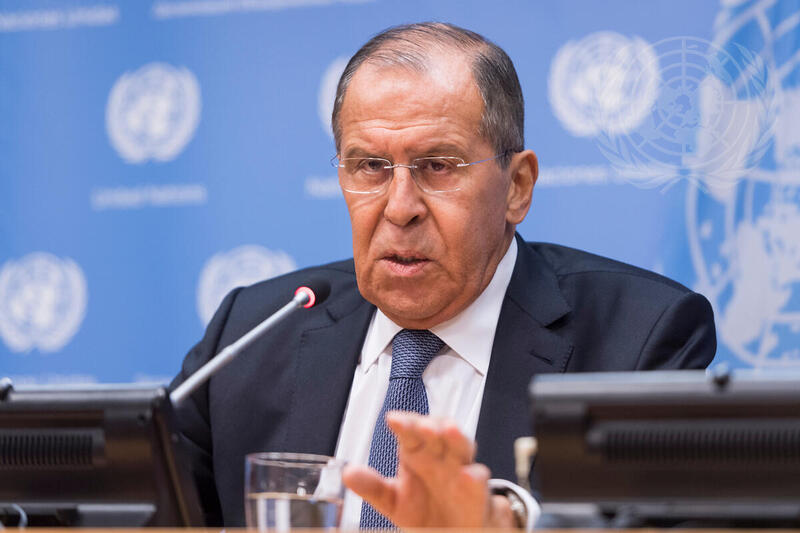
The Lavrov brush-off matters because Germany has been one of Moscow’s last plausible European interlocutors. Ties between Berlin and the Kremlin have soured sharply in recent weeks after an attempted drone attack at Leipzig airport last month that Berlin blamed on Moscow. A face-to-face meeting at the UN General Assembly — the first since the 2022 invasion, by most accounts — was supposed to be a de-escalation channel; instead, Russia used the moment to signal the opposite. The day before the strikes, Lavrov told the UN that Moscow intends to continue its military campaign “to the end.”
That leaves Ukraine’s Western backers with an uncomfortable math problem. Front-line positions have barely moved in a year, so the war has become an attritional aerial duel: Moscow hammering cities with cruise and ballistic missiles, glide bombs and cheap jet-powered drones, while Kyiv’s long-range drones hit Russian oil refineries and industry. Neither side can force a decision on the ground; both are trying to break the other’s home front from the air.
Who gains, who loses
Moscow gains a demonstration of reach and stamina — daylong pressure is cheap in drone terms, and every ruined data centre or rattled telecom office deepens the sense that nowhere in Ukraine is fully safe. But the targeting of a civilian telecom headquarters and apartment blocks hands Kyiv exactly the imagery it needs to stiffen Western support.
Kyiv pays in civilian lives and infrastructure but gains in urgency: daylong strikes are a harder argument for Western fatigue. Every hit on a high-rise near a kindergarten is, in strategic terms, ammunition for the argument that Ukraine’s air defences need replenishment and its deep-strike permission needs widening.
Germany and NATO’s eastern flank are the collateral audience. After the Leipzig airport incident, Berlin is no longer debating whether Russia’s escalation toward NATO is theoretical — it is debating the response. The strikes on Odesa-bound cargo vessels are a second signal: Moscow is widening the pressure campaign to the Black Sea logistics lane that feeds Ukraine’s exports and Western supply lines.
Civilians in occupied zones bear the quietest cost: the Enerhodar death shows that Ukraine’s retaliatory deep strikes carry the same fog of attribution and civilian risk that Kyiv accuses Moscow of.
What the numbers actually say
Counting this war from the air means counting claims, and the claims diverge by design. The AP’s figure of at least eight dead in Ukraine and one in Russia on Sunday sits alongside Reuters’ city-by-city tally and Ukrainian officials’ regional reports — all consistent in magnitude, none independently auditable in real time. The structural number that matters is the tempo: strikes “almost continuously throughout the day” represents a doctrinal shift from the nightly waves of 2022–2024. Moscow has not confirmed the doctrinal shift in those words, but its claimed target list — data centres, logistics, ports, telecoms, vessels — reads like a checklist for degrading the systems that keep a society functioning in daylight hours.
What happens next
Three things to watch. First, whether the daylong tempo holds into the workweek — if it does, it is not a one-off exchange but the new normal of the aerial war, with implications for Ukraine’s air-defence ammunition burn rate. Second, the Odesa shipping lane: two struck vessels in a day is either an outlier or the opening of a Black Sea pressure campaign that could ripple into grain markets. Third, Berlin’s response. Germany has absorbed the Leipzig blame and the UNGA brush-off; what it does next — more air-defence batteries for Ukraine, harder NATO posture, or a reopened channel — will say as much about where this war goes as anything that fell on Kyiv on Sunday.
Sources
- Associated Press, “Strikes kill 8 in Ukraine, 1 in Russia after Moscow rejects German calls to de-escalate” (September 27, 2026) — overnight/Sunday exchanges, Lavrov–German meeting, Leipzig airport drone, front-line assessment: theanswerorlando.com
- Reuters, “Russia says it struck military infrastructure, vessels in Ukraine” (September 27, 2026) — Russian defence ministry claimed targets, Kyivstar HQ struck: reuters.com
- Reuters, “Russian attacks kills three in Ukrainian cities, strikes hit Kyiv districts” (September 27, 2026) — Sumy, Kharkiv, Kyiv district strikes, Klitschko, Hryhorov: reuters.com
- WION, “Russia-Ukraine War: Russian Drone Strike Damages Kyivstar HQ In Kyiv” (September 27, 2026) — Suspilne report on telecom headquarters: youtube.com
- The Daily Tribunal, “Russian strikes on Ukraine kill five, including in Kyiv” (September 27, 2026) — Zelensky remarks, 16 damaged sites, Odesa strike, Lavrov “to the end”: dailytribunal24.com
Casualty figures are drawn from AP, Reuters and Ukrainian official accounts as reported on September 27, 2026; tolls were still being updated and could not be independently verified. Russian defence ministry claims are presented as claims, as Reuters noted. The Enerhodar casualty account is attributed to the Kremlin-installed mayor. Photo captions distinguish file photography from the September 27 strikes. This article reports verified facts and clearly labeled analysis; no side is taken.