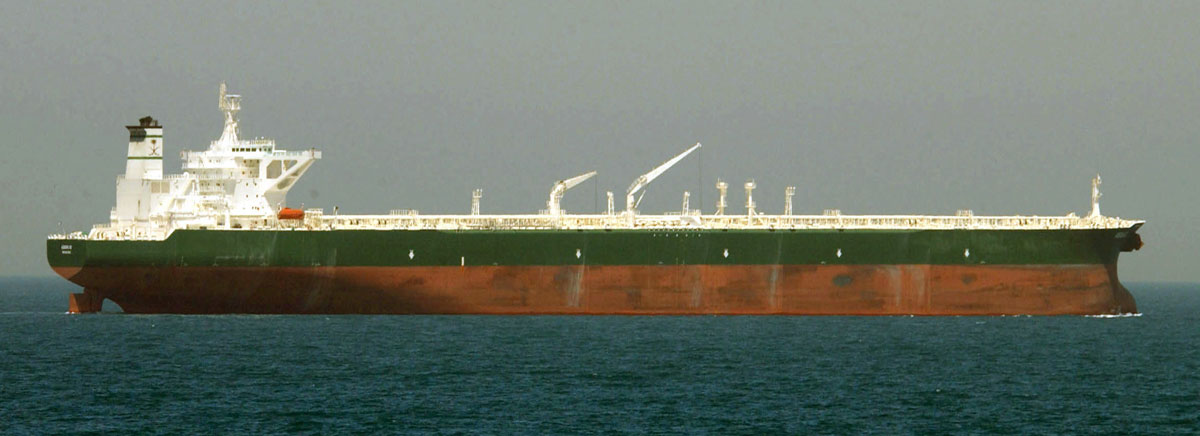
The Ukraine shadow fleet drone strikes have reached a milestone that, if substantiated, would amount to a new form of maritime siege. Maj. Robert “Magyar” Brovdi, commander of Ukraine’s Unmanned Systems Forces, said on Tuesday, September 22, that Operation MoLoChKa had “hunted and taken out of self-propelled condition” 300 Russian-linked vessels since July 6: 134 in the Sea of Azov and 166 in the Black Sea.
That is a Ukrainian military claim, not an independently verified inventory. Russia has not confirmed the losses, the vessels have not been identified in a public ship-by-ship list, and independent observers cannot yet test whether each target was disabled, lightly damaged or merely forced to stop. The number should therefore be read as Kyiv’s account of the campaign, not an audited result.
But the strategic question does not depend entirely on whether the final total is exactly 300. Brovdi’s public statement, the reported suspension of new MSC bookings to and from Novorossiysk, and the widening cost of insurance and rerouting all point in the same direction: Ukraine is trying to use cheap aerial drones to impose a moving economic perimeter around Russian ports and occupied Crimea. It is a blockade without a conventional navy, enforced through risk rather than declared sea control.
Why this matters: a siege aimed at revenue
Ukraine’s battlefield problem has always been larger than the front line. Russia can finance ammunition, recruitment and industrial production through energy exports even when territorial advances slow. Operation MoLoChKa attacks that relationship indirectly. Instead of trying only to destroy a military unit, it tries to make every tanker captain, insurer, charterer and port operator price the possibility that a voyage through the northern Black Sea will end in a disabled hull.
That is economic warfare in its most literal form. The immediate target is a ship; the intended effect is a chain of higher premiums, delayed cargoes, fewer willing crews, more defensive spending and lower confidence in Russian export routes. If a commercial operator withdraws before a vessel is hit, the campaign has produced strategic effect without another strike.
MSC’s reported suspension of new bookings to and from Novorossiysk after the MSC Ulsan III was attacked while sailing toward the Russian port is therefore more revealing than a celebratory tally. The company’s decision does not verify Ukraine’s 300-vessel claim. It does show that a major carrier judged the route risky enough to change commercial behavior.
The operation’s name states the logic. MoLoChKa is described as an acronym for “Moscow will fall through Crimea.” Crimea, annexed by Russia in 2014 and used as a logistics hinge for the southern theater, connects ports, fuel, military infrastructure and occupied territory. The Ukraine Crimea siege strategy seeks to tighten that hinge: disrupt sea supply, burden the Kerch approaches and force Moscow to defend economic traffic alongside military assets.
The claim and the geography
Brovdi divided the claimed 300 disabled vessels between two linked but distinct theaters. The Sea of Azov figure—134—suggests pressure on the enclosed waterway and the approaches to the Kerch Strait. The Black Sea figure—166—extends the risk to larger ports and export routes, including traffic associated with Novorossiysk.
“The Sea of Azov is at a standstill and will remain so, along with the Kerch Strait,” Brovdi said in remarks reported by Ukrainska Pravda. In the northern and north-eastern Black Sea, he added, passage had become a matter of “maybe we’ll get through.” Those words are a commander’s characterization of his own campaign, not independent evidence that either waterway is literally closed.
Ukraine says the drones are intended to disable rather than sink vessels. That distinction serves military, political and environmental purposes. Immobilizing a tanker can remove it from service, require towing and repairs, and send an insurance signal without releasing an entire cargo of oil into the sea. Whether every strike has achieved that controlled outcome is not publicly established.
What Russia’s shadow fleet is—and why it is vulnerable
The term “shadow fleet” describes a loose network of aging tankers and related commercial vessels used to move Russian oil and other cargo under sanctions and price-cap pressure. Ownership may be hidden behind shell companies; ships may change flags, names or insurers; and the chain between cargo, charterer and beneficial owner can be deliberately difficult to trace. The network expanded after Russia’s 2022 invasion of Ukraine and Western restrictions on Russian energy trade.
Estimates have put that network at as many as roughly 1,000 vessels. If Ukraine’s claim holds, 300 would represent about 30% of that notional fleet. But the denominator is uncertain and the numerator may include dry-bulk carriers or other Russia-linked ships rather than only tankers. “One-third of the fleet” is a useful scale comparison, not a verified loss ratio.
The fleet’s opacity creates both vulnerability and legal ambiguity. Older ships can be expensive to repair and difficult to insure. At the same time, a vessel may carry Russian cargo without being Russian-flagged, and commercial crews may include nationals from countries outside the war. Every strike therefore raises target-status, proportionality and civilian-risk questions that cannot be settled by the label “shadow fleet” alone.
Russia has condemned attacks on commercial shipping as “piracy” and has promised retaliation. Ukraine presents the vessels as instruments of sanctions evasion and war finance. The legal contest is more complicated than either slogan: piracy has a specific meaning in international law, while attacks during an armed conflict are assessed under rules governing military objectives, distinction, proportionality and precautions. Vessel-by-vessel facts matter.
The pace data tells a more skeptical story
The headline total is dramatic. The pace behind it is more revealing. Ukraine claimed 159 tankers struck in a 12-day period at the start of July—about 13.3 vessels per day. The public tally was still below 200 in late July, passed 280 by early September and reached 285 by September 11. Brovdi’s September 22 figure of 300 adds 15 vessels in roughly 11 days, or about 1.4 per day.
- Early July
- 159 vessels claimed in 12 days — about 13.3 per day
- By September 11
- 285 vessels claimed disabled
- September 11–22
- 15 additional vessels claimed — about 1.4 per day
- Total announced
- 300 vessels: 134 in the Sea of Azov, 166 in the Black Sea
A roughly 90% fall in the claimed daily pace admits several interpretations. The easiest targets may already have been removed. Russia may have adapted through rerouting, dispersal, electronic warfare, port air defense or changes in sailing schedules. Weather and operational cycles may have reduced opportunities. It is also possible that early claims used a looser definition of “disabled” or overstated the number of effective strikes.
The reported burst of 21 tankers “burned” in the three days before the announcement complicates the trend. That claim suggests a late spike inside an otherwise slower September. It does not erase the deceleration, and the lack of a published vessel list prevents independent comparison between the cumulative tally and the three-day figure.
This is why the phrase Ukraine disables 300 Russian vessels must remain attributed. The data can support analysis of Kyiv’s claimed tempo; it cannot convert the military’s accounting into confirmed maritime losses.
Cheap drones against expensive trade
The campaign’s economic logic rests on asymmetry. A comparatively inexpensive drone does not have to sink a tanker to cost Russia and its trading partners far more than the drone itself. A damaged propulsion system, fire, port delay or suspected strike can trigger inspection, repairs, salvage, crew replacement and a higher risk premium across many voyages.
That asymmetry explains the focus on Russia shadow fleet tankers and dry-bulk carriers. Their commercial value lies not only in the hull but in continuity: predictable schedules, available insurance and ports willing to accept them. Repeated disruption turns logistics into an accumulation of small penalties.
Ukraine’s Unmanned Systems Forces says it is applying the same model across other systems. In parallel claims, the force said it had hit 300 Russian air-defense assets since January—162 surface-to-air missile or gun systems, 124 radars and 14 electronic-warfare systems. It also claimed 34 energy hubs struck in Crimea and other occupied territory in early September under Operation “Crimean Switch off.” Those figures, like the vessel count, originate with Ukraine and remain unverified.
The maritime campaign is also part of a wider attack on Russia’s energy economy. Baird Maritime, summarizing reporting by The Times and International Energy Agency data, said a Russian refinery was hit on average once every three days during the first eight months of 2026 and that refining output fell to its lowest level in more than two decades. The relationship is strategic: pressure processing on land, transport at sea and logistics around Crimea.
Who gains, who loses and who pays
Ukraine gains leverage if the campaign diverts Russian air defenses, constrains exports and makes the occupation of Crimea more costly. It also demonstrates that a state with limited conventional naval power can contest commercial movement from the air. The gain shrinks if claims outrun evidence or if strikes alienate partners whose ships, cargoes or energy interests become exposed.
Russia loses flexibility when ports, tankers and escorts must operate under persistent threat. Yet Moscow can adapt: strengthen electronic warfare, move air defenses toward ports, convoy vessels, vary sailing times, reroute cargo and retaliate against Ukrainian ports. Those steps absorb resources but may reduce Ukraine’s strike rate.
Shipping companies and crews absorb immediate risk. Operators can stop accepting bookings, charge more, demand stronger insurance or send ships elsewhere. Cargo owners then pay through delay and freight rates. Crews carry the physical danger even when beneficial ownership and sanctions compliance are far removed from the bridge.
Importers may pay indirectly. If Russian oil or refined products become harder to move, price pressure can spread beyond the Black Sea. The effect is not automatic: spare vessels, rerouting, inventories and lower demand can offset disruption. But MSC’s response shows that the market does not need a verified 300-ship list before it begins pricing uncertainty.
A campaign without precedent—or proof?
If even a large fraction of Ukraine’s figure is accurate, Operation MoLoChKa may be the first sustained effort to interdict commercial shipping at this scale using uncrewed aerial systems. That would mark an important shift in naval warfare: a country without sea control imposing blockade-like effects through drones, data and insurance pressure.
The historical claim must remain conditional. Public reporting has not produced independent damage assessments for 300 vessels, satellite imagery for each incident or a transparent methodology explaining how Ukraine counts a ship “taken out of self-propelled condition.” Without those records, analysts cannot rule out duplicate counting, temporary stoppages or optimistic battle-damage assessment.
Skepticism is not dismissal. Military claims often arrive before commercial records, repair data and imagery. A disciplined assessment can hold two ideas at once: the 300 figure is unproven, and the visible commercial reaction indicates that the campaign is imposing real costs.
What happens next
- Russia hardens the maritime corridor. Expect more electronic warfare, port-based air defense, irregular sailing windows and possibly escorted movement around Novorossiysk, Crimea and the Kerch approaches. If the attack rate stays low, adaptation—not campaign exhaustion—may be the explanation.
- Ukraine expands the map. Baltic routes carry a large share of Russian energy traffic, while the December 2025 strike on the Qendil in the Mediterranean supplied a precedent beyond the Black Sea. Expansion would increase strategic reach and legal risk at the same time.
- Insurance becomes the clearest scoreboard. Premiums, exclusions, suspended bookings and port calls may reveal more than either side’s press releases. A campaign designed to change behavior succeeds when ships stay away, even if no hull sinks.
- The “disable, do not sink” doctrine is tested. A major spill, mass-casualty incident or sinking could turn a carefully framed economic campaign into an environmental and diplomatic liability.
- Energy-truce diplomacy collides with maritime pressure. Trump and Zelenskyy discussed a reciprocal energy ceasefire in New York during U.N. General Assembly week. Any future framework would have to define whether tankers, export terminals, ports and sanctions-linked shipping count as protected energy infrastructure.
Our assessment is that the campaign’s most durable effect will be measured less by Ukraine’s cumulative number than by Russian adaptations and commercial decisions through winter. If Novorossiysk bookings remain constrained, insurance costs rise and vessels wait or reroute, Operation MoLoChKa will have imposed a maritime tax even if later evidence cuts the confirmed tally sharply. If traffic normalizes while the public count keeps rising, the claim will deserve still greater skepticism.
Related coverage
Sources
- Baird Maritime, September 23, 2026: Brovdi’s announcement, Black Sea and Sea of Azov totals, and independent-verification caveat
- CNCB News: 21-tanker three-day claim and the meaning of MoLoChKa
- Dagens, citing Ukrinform: progression of the Ukrainian tally through July and September
- EuropeSays: Russia’s “piracy” characterization of attacks on commercial shipping
- Antikor, citing Ukrinform: Unmanned Systems Forces claims on vessels, air defenses and Crimean energy hubs
Reporting cutoff: September 23, 2026 at 4:00 a.m. PDT. The 300-vessel tally, geographic split, 21-tanker three-day figure and parallel Unmanned Systems Forces results are Ukrainian military claims and have not been independently verified. Vessel identities were not published, and Russia has not confirmed the claimed losses. Analysis above is identified as such and reflects the evidence available at the cutoff.