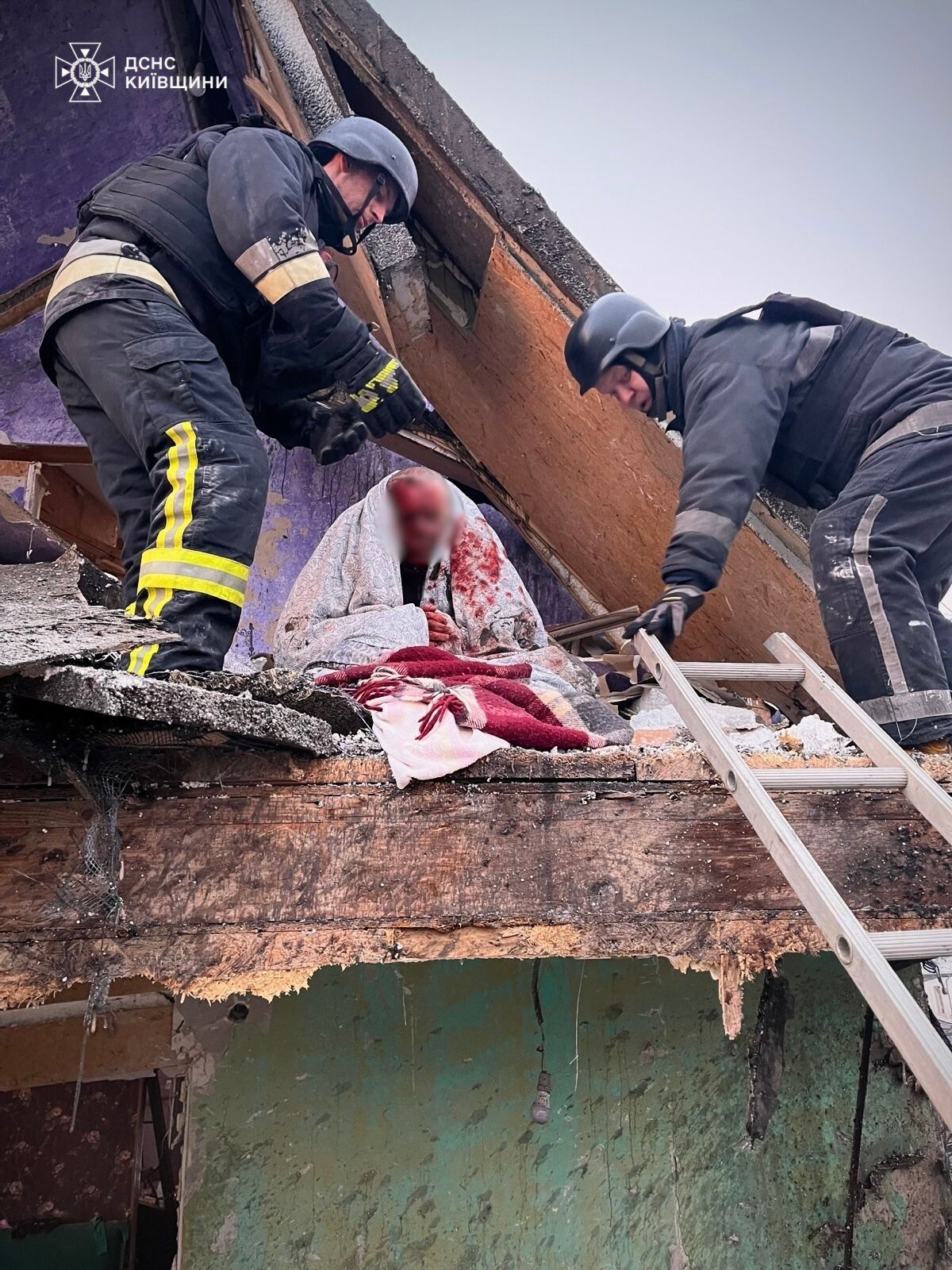
Russia strikes kill eight Ukraine September 22: officials said attacks across the country’s industrial heartland and other frontline areas killed at least eight people on Tuesday, September 22, while Zelenskyy held a 40-minute meeting with Trump at U.N. headquarters in New York.
The timing placed two realities side by side. In Ukraine, missiles, drones and aerial bombs continued to kill and damage economic infrastructure. In New York, leaders argued over whether reciprocal restraint around energy targets could become a first step toward wider negotiations. The two tracks did not converge on a deal: Zelenskyy said Kyiv was ready for “any format of an energy ceasefire,” but no terms, monitoring mechanism or Russian acceptance were announced.
Available reporting contained no public Russian response to the energy-ceasefire proposal. That absence matters. A Ukrainian offer and American interest do not create a truce without Russian participation, agreed definitions and a way to verify violations.
What happened
Reports from Ukraine described a broad strike pattern affecting industrial and frontline regions. The available accounts established a national death toll of at least eight; this article does not assign those deaths to individual cities beyond what the cited reports explicitly state. The attacks included damage to industrial, fuel, energy, port and transport-related sites, reinforcing a months-long pattern in which the physical front extends into the infrastructure that keeps the economy and armed forces functioning.
Ukraine said the overnight barrage included four cruise missiles, 212 drones and an unspecified number of Oniks anti-ship and ballistic missiles. Russia’s Defense Ministry said its forces struck industrial and military facilities, the fuel and energy sector, port infrastructure and vessels serving the Ukrainian military. Those are the belligerents’ accounts of targets and effects; independent verification remained limited at the reporting cutoff.
Ukrainian Prime Minister Sergii Koretskyi alleged that Russia “deliberately targets businesses, farms, warehouses, railways, energy facilities and residential buildings.” Moscow says it targets military and military-supporting infrastructure, and both sides deny targeting civilians. Civilian deaths and damage are documented outcomes; the intent behind individual strikes requires evidence beyond either government’s characterization.
Why this matters
The attacks show why a narrow energy ceasefire has become diplomatically attractive and operationally difficult. Energy and logistics are not peripheral to this war. Refineries, fuel depots, railways, ports, warehouses and power systems sustain military movement and national life at the same time. A pause covering those targets could protect civilians and stabilize supply, but the dual-use nature of the network makes the boundaries contentious.
It would also have to restrain both campaigns. Ukraine has increased long-range attacks on Russian oil refineries and large online retailers as part of an effort to weaken Moscow’s war economy and logistics. Russia has intensified attacks on Ukrainian economic infrastructure as its ground advances have largely stalled. Any agreement limited to one side’s preferred targets would not be reciprocal in practice.
That is the core analytical point: diplomacy and the air war now operate in parallel rather than in sequence. Negotiators are not discussing an energy truce after the fighting pauses; they are discussing it while both sides are using energy and logistics pressure as leverage. The proposal is therefore both a possible confidence-building measure and a bargaining contest over which tools each side would have to surrender first.
The Trump–Zelenskyy meeting
After the 40-minute meeting, Zelenskyy said Ukraine was ready for any energy-ceasefire format, provided Russia stopped attacking Ukraine’s energy system. He also said there had been “no discussion” of Ukraine unilaterally halting strikes on Russian refineries.
“President Trump, our teams, and I spoke about how to end the war. This is the priority. We are ready. I’m not sure Russia is ready as of today, but anyhow, we spoke about an energy ceasefire. We are ready for an energy ceasefire if they do not attack our energy system, our…”
Volodymyr Zelenskyy, in an X post on September 22
Zelenskyy reiterated that he was prepared for a trilateral meeting with Trump and Russian President Vladimir Putin. He said that readiness signaled agreement on the need to end the war, while adding that he saw no indication Putin was ready to talk. Trump, by contrast, said Putin was “willing to meet.” Neither statement established that a meeting had been agreed or scheduled.
Context: energy has become a second front
Ukraine’s refinery campaign has moved beyond isolated raids. International Energy Agency data cited in the supplied reporting said Ukrainian attacks hit a Russian refinery roughly once every three days during the first eight months of 2026 and helped push Russian refining output to its lowest level in more than 20 years. Attribution is essential: those comparisons reflect IEA data as presented in the cited coverage, not a Signal Post News independent audit.
On the Ukrainian side, the scale of Russia’s air campaign is also severe. Koretskyi said Russia launched about 2,100 jet-powered drones and 136 missiles in the first three weeks of September, killing 288 people. Those numbers are his stated tally. They do not make the eight reported deaths on September 22 literally an “average day”; the comparison instead shows that the day’s toll belongs to a much larger, sustained campaign whose intensity varies sharply by place and time.
The latest deaths also predated a separate September 23 attack in Kyiv in which city authorities reported one killed and seven injured after strikes hit petrol stations and transport infrastructure. That Wednesday follow-up is covered in our report on the Kyiv petrol-station strikes. The systems behind the campaign are examined in our analysis of Russia’s jet-powered drones, and the diplomatic terms are broken down in our Trump–Zelenskyy meeting analysis.
Winners, losers and competing readings
Ukraine gains diplomatic clarity but not yet protection. By offering reciprocity rather than a unilateral halt, Zelenskyy can argue that Kyiv is open to a bounded arrangement while preserving refinery strikes unless Russia also stops. The benefit is political; without Moscow’s acceptance, Ukrainians remain exposed to attack.
Russia retains leverage while talks remain undefined. Continued pressure on factories, transport and energy can impose economic costs and force Ukraine to spend scarce air-defense resources. But attacks that kill civilians also strengthen Kyiv’s case for sanctions, weapons and external pressure.
Trump can claim an opening, but not a breakthrough. His statement that Putin was willing to meet conflicts with Zelenskyy’s assessment that Moscow was not ready. The gap is not merely rhetorical: it raises the question of whether Washington has secured a concrete commitment or is describing general willingness without agreed conditions.
European supporters see a stalling risk. Estonian Foreign Minister Margus Tsahkna told USA TODAY that Putin had “used Trump to win more time” and increase pressure on Ukraine. That is Tsahkna’s judgment, not an established fact about Moscow’s motive. It reflects a broader allied fear that process can become a strategic asset when negotiations do not constrain combat.
Civilians and infrastructure operators lose immediately. Families bear deaths and injuries; businesses, utilities and railways absorb repair and insurance costs; air-defense crews must decide which threats to engage. Even when a site has military relevance, the surrounding economic and human systems are difficult to isolate.
What the numbers can—and cannot—tell us
- At least 8 killed
- Reported nationwide on September 22 in industrial and frontline areas
- 212 drones
- Ukraine’s account of the overnight barrage, alongside four cruise missiles and other missiles
- 40 minutes
- Length of the Trump–Zelenskyy meeting at U.N. headquarters
- 2,100 drones, 136 missiles
- Koretskyi’s tally for the first three weeks of September; he said 288 people were killed
- One refinery every three days
- Approximate tempo of Ukrainian refinery attacks in the first eight months of 2026, attributed to IEA data in cited reporting
The figures describe scale, not motive. The temporal overlap between the strikes and the U.N. meeting may be read as a diplomatic signal, but no available evidence establishes that Moscow timed the attacks to send one. Treating coincidence as proof would overstate what the reporting shows.
What happens next
- Zelenskyy’s U.N. address: Ukraine’s president was scheduled to speak in the General Assembly’s general debate on Wednesday, with the session scheduled to open at 9 a.m. Eastern time. His speech was expected to test whether the ceasefire proposal could attract public support beyond Kyiv’s established allies.
- Rubio–Lavrov talks: U.S. Secretary of State Marco Rubio and Russian Foreign Minister Sergey Lavrov were scheduled to meet Wednesday in New York. Watch for any Russian response to the energy proposal, agreement on further talks or continued reliance on broad statements without mechanics.
- Definitions and verification: A workable energy ceasefire would need a target list, geographic scope, start time, monitoring process and consequence for violations. Refineries, ports, railways and logistics hubs would be the hardest categories to define because of their military and civilian roles.
- The air campaign: Continued Russian launches and Ukrainian refinery strikes would show that bargaining remains coercive. A measurable reduction on both sides—not rhetoric alone—would be the first evidence of movement.
No ceasefire was in force at publication. The immediate test is whether the next diplomatic contacts produce reciprocal, verifiable terms while the casualty reports from September 22 are still being confirmed.
Sources
- Australian Associated Press: deaths, strike pattern, Trump–Zelenskyy meeting, Zelenskyy statements and military claims
- The Times: live U.N. General Assembly coverage and Russian-strike reporting
- USA TODAY: Margus Tsahkna interview, Trump’s diplomacy and the scheduled Rubio–Lavrov meeting
Reporting limits
Reporting cutoff: September 23, 2026 at 6:10 a.m. PDT. The death toll was attributed to Ukrainian officials and remained subject to revision. The cited reporting did not provide a complete, independently verified incident-by-incident accounting for every death, and this article does not infer one. Russian and Ukrainian descriptions of targets and battlefield effects are attributed. Available reporting contained no Russian public response to the energy-ceasefire proposal. Forward-looking U.N. and diplomatic events are described as scheduled, not completed.