War · Ukraine
The Komyshuvakha strike final toll is 72 people killed, Ukraine’s interior minister said on Monday, as the two-week search of the bombed school and aid centre in Zaporizhzhia region formally ended with four people still missing. It is a number Ukrainian officials reached in stages over fourteen days — and one that, on the reporting of Meduza, only the bombing of the Mariupol Drama Theater in March 2022 is believed to have exceeded in a single strike of this war.
KOMYSHUVAKHA, Ukraine, November 16, 2026 — The search is over. Two weeks after Russian aerial bombs destroyed the school in Komyshuvakha that served as the settlement’s humanitarian aid centre and air-raid shelter, Ukraine’s Interior Minister Ivan Vyhivskyi announced on Monday that rescue and recovery work at the site has ended, and he gave the Komyshuvakha strike final toll: 72 people killed, according to Ukrainian officials, with four people still missing. Vyhivskyi called the bombing “one of the most tragic events during the full-scale war” — a description that the arithmetic of the past fourteen days supports. Every figure in this article is as reported by Ukrainian officials and the sources cited at the end; none has been independently verified, and Russia had not publicly commented on the strike in the reporting cited here.
The announcement closes the longest and deadliest recovery operation at a single Ukrainian civilian site this year, and it closes it in the grimmest possible way: not with survivors, but with a final count. The four people still missing are, on the officials’ account, people whose remains the search could not recover or could not identify — a distinction the authorities have not fully drawn in public, and one that will matter to four families for a very long time. What ended on Monday was the digging. The identification work, the funerals, the criminal case and the argument about what this strike means will all run on.
Track it live: Follow the front line, strike reports and territorial changes on the Signal Post News live Ukraine war map
A toll that climbed for fourteen days
To understand what 72 means, it has to be read against the numbers that came before it, because the Komyshuvakha count never arrived all at once. It climbed, in public, in stages, as the rubble was cleared layer by layer — and each revision was announced by Ukrainian officials and reported, at the time, as the confirmed toll. In the first counts after the November 2 bombing, officials put the dead in a range of 24 to 31, with the spread itself a measure of how little could be known while the shelter’s collapsed concrete was still being lifted. The confirmed toll then rose to 37, Ukrainian officials said, and then to 40, and then to 50, as the search moved deeper into the underground rooms where residents had sheltered.
On November 6, with the operation in its fifth day, the toll given by Ukrainian officials reached 53 — the figure Signal Post News reported that day in our account of the aid point bombing as the toll rose to 53, when the end of the search was still not in sight. It did not stop there. Officials subsequently raised the confirmed count to 55, and then to 57, and for days the number held in the high fifties while the last sections of the shelter were cleared by hand. On Monday, as the search formally ended, Vyhivskyi gave the final figure: 72 killed, with four people still missing, according to Ukrainian officials. The jump from 57 to 72 in the final accounting reflects, on the officials’ account, the completion of the clearance and the identification work that ran alongside it — the point at which a search stops producing new counts because there is nothing left to search.
That progression — 24 to 31, then 37, 40, 50, 53, 55, 57 and finally 72 — is the statistical shape of a particular kind of disaster: a large number of people concentrated in one underground space, a structure that failed completely, and a recovery that could only proceed at the speed of heavy machinery, search dogs and forensic testing. It is also why officials resisted, throughout, any suggestion that the early figures were the story. Each number was a floor, not a total, and Monday’s announcement was the first time in fourteen days that a Ukrainian official presented a figure as final.
Nineteen bombs on a school that was handing out aid
The attack itself, on the Ukrainian account, came in two waves on November 2. Ukrainian officials said 10 aerial bombs fell on the school and aid centre as residents were receiving humanitarian aid — FAB-500 glide bombs, followed by a FAB-3000, a three-ton bomb carrying roughly 1.5 tons of explosive, with a blast radius Ukrainian officials put at up to 250 metres. A weapon of that size does not damage a building; it removes it, and drives the ground itself down into whatever lies beneath. What lay beneath the school in Komyshuvakha was the settlement’s air-raid shelter, an underground concrete structure where residents had gone, as they had been told to go, when the alert sounded.
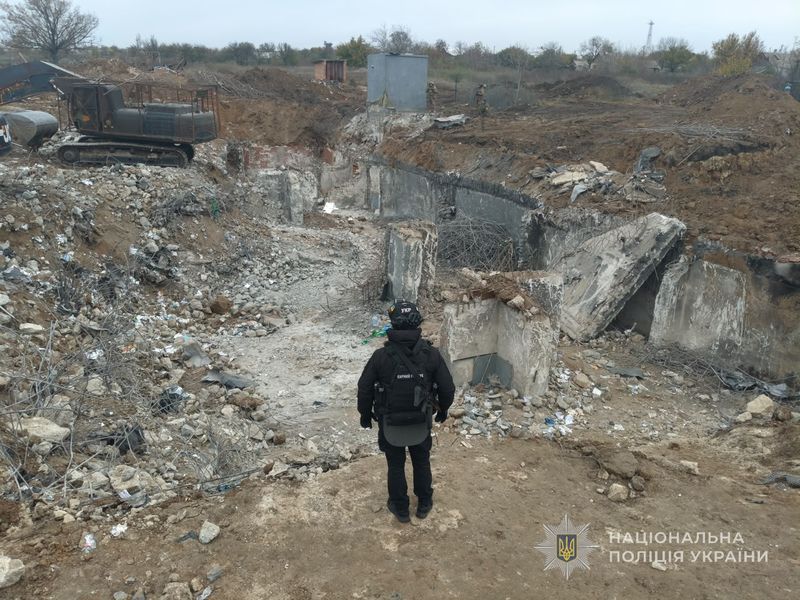
Then, Ukrainian officials said, a second wave of nine more bombs struck the shelter itself. President Volodymyr Zelenskyy characterised the sequence as a double-tap strike — a first attack on a target, followed by a second attack on the same place once people have gathered, sheltered or begun to respond. The shelter’s underground concrete collapsed under the bombing, officials said, trapping the people inside beneath the ruins of the building above them. It is that collapse, more than the number of bombs, that explains the toll: the place designed to protect the settlement’s residents from exactly this kind of attack became, when its concrete failed, the place where most of them died. Signal Post News set out the strike and the first days of the search in the November 6 report this article supersedes; Monday’s announcement is the end of the story that report began.
A search conducted under fire
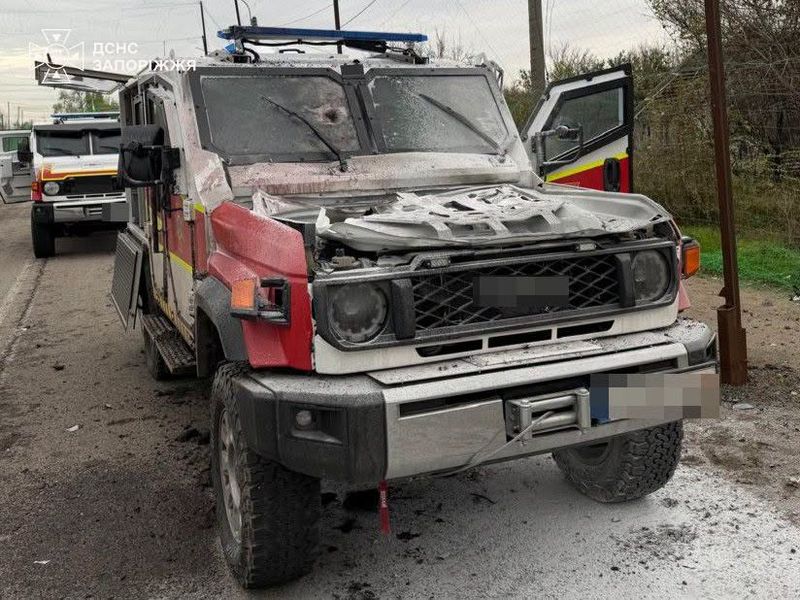
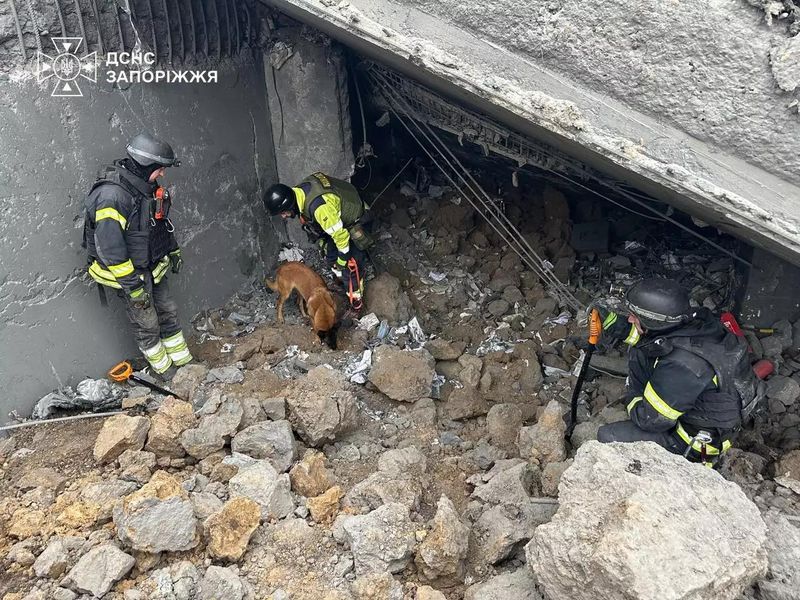
What distinguishes Komyshuvakha from other mass-casualty strikes of this war is not only the toll but the conditions under which the toll was established. According to Ukrainian officials, the settlement was shelled 11 times during the two weeks of the search, and nine of those strikes hit the rescue site itself, injuring three police officers and four rescuers. Emergency vehicles working at the site were damaged and destroyed by the renewed attacks, officials said — a fact recorded in the State Emergency Service’s own photographs from the scene, one of which leads this article. The search, in other words, was not a recovery operation conducted in the quiet after a disaster. It was conducted inside a continuing one, by people who were themselves being targeted in the same place, at the same work.
The forensic burden matched the physical one. Ukrainian officials said many of the bodies recovered from the shelter were badly damaged, and that identification required dozens of DNA tests, alongside search dogs and heavy equipment used to clear the site in stages. Four people pulled alive from the site in the first hours after the bombing remain in hospital, officials said. Everyone else the bombs reached was accounted for the slow way: by excavation, by elimination and, in the end, by laboratory work. That is the unglamorous machinery behind the single word “final” in Monday’s toll — and it is also why four people are still listed as missing rather than dead. The search has ended; for them, no identification has closed the file.
Who the dead were
The list of the dead, as Ukrainian officials have described it, reads like the staff roster of a small settlement’s entire public life. Among the 72, officials said, were rescuers and police officers — some of them killed, on the Ukrainian account, while responding — along with school staff, staff of the local government service centre, utility workers and medics. And among them was a teacher who, officials said, had run daily online lessons from inside the shelter: schooling continued from underground, in a settlement close enough to the front that gathering children in a classroom had long since stopped being safe, until the shelter itself was hit. Deaths like hers are why the Komyshuvakha toll has landed in Ukraine as something more than a number. The strike did not only kill the people who happened to be in a building. On the officials’ account, it killed a cross-section of the people who were keeping the settlement functioning — the people who handed out the aid, taught the children, fixed the utilities, treated the sick and dug other people out.
Seventy-two people, out of five thousand
Komyshuvakha lies about 20 kilometres from the front line in Zaporizhzhia region — close enough to be shelled as a matter of routine, far enough that thousands of people had decided, or been obliged, to go on living there. Its pre-war population was about 5,000. Set against that figure, the final toll given by Ukrainian officials on Monday means that a single strike, on a single morning, killed the equivalent of roughly 1.4 percent of everyone who lived in the settlement before the full-scale invasion — and did so in the one building where residents had gathered for aid and for safety. Percentages can flatten as well as reveal, but this one does the opposite: it converts a national news figure into a local one. In a community of 5,000, 72 dead is not a statistic about a war. It is a hole in every street, every workplace and every family gathering the settlement will hold for a generation.
The war-crime case, and the men Ukraine has named
The legal process is already moving. The Zaporizhzhia Oblast Prosecutor’s office has opened a war-crime investigation into the strike under Article 438.2 of Ukraine’s Criminal Code, the provision covering violations of the laws and customs of war. Separately, the UN Human Rights Monitoring Mission in Ukraine said earlier, as Signal Post News reported on November 6, that the bombing likely violated international law — an assessment made while the search was still in its first week and the toll stood at a fraction of its final figure. Prosecutors and investigators have been working at the site alongside the rescuers, which is one reason the police presence in the photographs from Komyshuvakha is so constant: the crater was simultaneously a rescue scene, a morgue and a crime scene.
Ukraine’s military intelligence agency, HUR, went further on November 7, publicly naming the officers it says planned and carried out the attack. HUR named Colonel Fedor Zubakov, identified by the agency as responsible for fire-strike planning in Russia’s Dnepr Group of forces, as the planner, and named six pilots it says flew the mission: Captain Sergei Yeliseyev, Captain Dmitry Zverev, Senior Lieutenant Rodion Plotnikov, Senior Lieutenant Nikita Ignatyev, Senior Lieutenant Maksim Sokolenko and Lieutenant Vadim Perekhrest. Those names are Ukrainian allegations, published by a Ukrainian state agency about a strike its government calls a war crime; they are reported here as such, and they have not been tested in any court. Russia had not publicly commented on the strike in the reporting cited for this article. Whether any of the men named ever faces a courtroom is a question about how this war ends, not about what happened on November 2 — but the naming itself is part of Ukraine’s method: fix responsibility to individuals, publicly and early, while the evidence is still being catalogued.
Second only to Mariupol
Meduza’s reporting on Monday’s announcement placed Komyshuvakha in the bleakest company the war offers: on its account, the only single strike believed to have killed more people was the bombing of the Mariupol Drama Theater on March 16, 2022, where hundreds of civilians had sheltered in a building marked, in letters visible from the air, as housing children. That comparison is a belief, not a count — the Mariupol toll has never been finally established — but it frames what Ukrainian officials are saying about November 2: that in more than four years of full-scale war, with its daily artillery, missile and drone strikes on Ukrainian towns, no single attack on a single site is known to have killed more people than the bombs that fell on a school handing out aid in a settlement of 5,000, except the theater in Mariupol.
The strike also sits inside a wider escalation of the air war that has continued, uninterrupted, through the two weeks of the search. While rescuers dug at Komyshuvakha, Ukraine and Russia traded some of the largest aerial barrages of the war, including the Ukrainian drone operation Signal Post News covered on Monday in our report on Ukraine’s biggest drone attack of the war and the strike on the Crimea bridge. That is the context in which Komyshuvakha will be argued over: Kyiv presents it as evidence of a deliberate method — heavy bombs, a civilian aid point, a second wave on the shelter — while the absence of any public Russian comment in the cited reporting leaves the Ukrainian account, attributed as it is throughout this article, as the only account on the record. What is not in dispute, because it was announced by the minister responsible and closes a fortnight of staged official counts, is the shape of the loss: the toll climbed from the 24–31 range through 37, 40, 50, 53, 55 and 57, and it stopped at 72, with four people still missing, because the search has ended.
What happens next in Komyshuvakha is quieter than what happened there on November 2: identifications to finish, funerals to hold, a prosecution file to build, and a settlement of a few thousand people to absorb the absence of 72 of its own. Follow Signal Post News for updates on the investigation and on the war in Zaporizhzhia region, and share your thoughts below.
Sources
Reporting of the end of the search and the final toll, November 16, 2026: Interior Minister Ivan Vyhivskyi’s announcement that the two-week search and rescue operation in Komyshuvakha has ended, with 72 people killed and four still missing, and his description of the bombing as “one of the most tragic events during the full-scale war”; the attributed toll progression from the 24–31 range through 37, 40, 50, 53, 55 and 57 to the final 72; the November 2 attack as described by Ukrainian officials — 10 aerial bombs including FAB-500s and a FAB-3000 on the school and aid centre, a second wave of nine bombs on the shelter, and the collapse of the shelter’s underground concrete; President Volodymyr Zelenskyy’s characterisation of the strike as a double tap; the shelling of the settlement 11 times during the search, with nine hits on the rescue site and three police officers and four rescuers injured; the composition of the dead as described by Ukrainian officials, including rescuers, police, school staff, local government service-centre staff, utility workers, medics and the teacher who ran daily online lessons from the shelter; the DNA identification work and the four survivors rescued in the first hours who remain in hospital — as reported by the Kyiv Independent, Meduza and Particle News. Meduza: the assessment that only the Mariupol Drama Theater strike of March 16, 2022 is believed to have killed more people in a single strike. Zaporizhzhia Oblast Prosecutor’s office: the war-crime investigation under Article 438.2 of the Criminal Code of Ukraine. HUR, November 7: the naming of Col. Fedor Zubakov and Capt. Sergei Yeliseyev, Capt. Dmitry Zverev, Sr. Lt. Rodion Plotnikov, Sr. Lt. Nikita Ignatyev, Sr. Lt. Maksim Sokolenko and Lt. Vadim Perekhrest, reported as Ukrainian allegations. UN Human Rights Monitoring Mission in Ukraine: the earlier assessment that the bombing likely violated international law. Reference: the 2026 Komyshuvakha strike. All casualty figures are as reported by Ukrainian officials and the outlets above and have not been independently verified; Russia had not publicly commented in the cited reporting. Photographs are by the State Emergency Service of Ukraine (DSNS Zaporizhzhia) and the National Police of Ukraine, CC BY 4.0, via Wikimedia Commons, as credited.