Ukraine fortifies filling stations
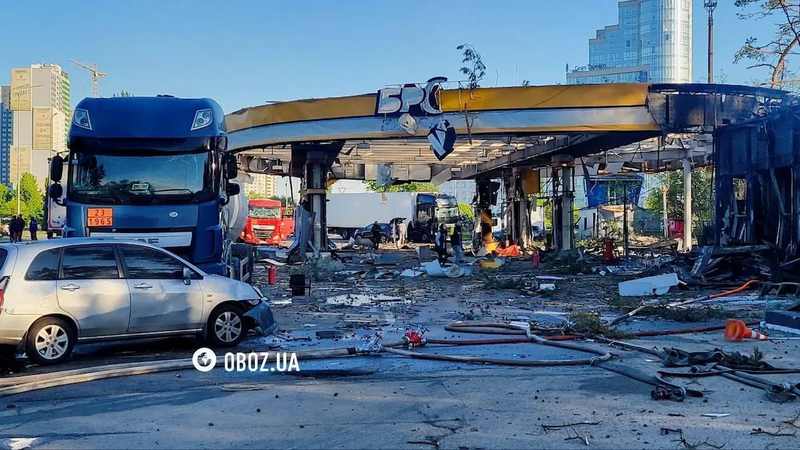
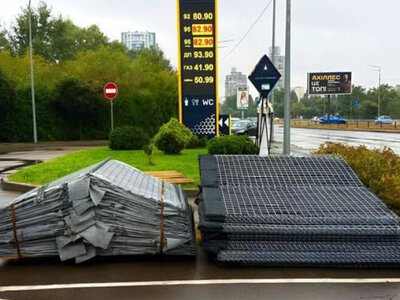
Ukraine fortifies filling stations because the fuel war has moved to the final yards of the supply chain. Gabions packed with sand and stone are being placed around forecourts, while concrete shelters offer staff and customers somewhere to get out of the blast zone. The measures are spreading as attacks once associated mainly with frontline districts reach retailers in Kyiv, Dnipro and Kharkiv.
The aim is not to make a petrol station invulnerable. It is to catch fragments, protect people and keep damage repairable. Fuel tanks are generally buried, so a strike may destroy pumps, signs, roofs and retail buildings without eliminating the stored fuel beneath them. That helps explain why operators can sometimes reopen within days—resilience measured in repair crews, replacement dispensers and safe access.
Why this matters
The petrol station is now part of the logistics map
A filling station is an ordinary civilian service, but it is also a node in a wartime logistics network. Ambulances, buses, repair vehicles, delivery fleets, generators and private cars all depend on retail fuel. A campaign against enough stations can impose friction without destroying a refinery: longer journeys to refuel, queues, local outages and extra pressure on the sites that remain open.
The strategic effect can therefore be distributed and psychological even while national stocks remain adequate. A damaged station in a capital neighborhood makes the energy war visible to commuters who may have experienced power cuts but did not previously think of the forecourt as critical infrastructure.
Safety engineering buys time, not immunity
Gabions can catch fragments and narrow the area exposed to debris. Concrete shelters can protect people during an alert. Neither guarantees survival against a direct, heavy strike. The practical measure is whether the defenses reduce casualties and convert catastrophic damage into something a local crew can repair.
Operators also close stations during air-raid alerts, protecting staff and customers but temporarily reducing capacity. Fortification therefore works as a layered system: warning, shutdown, shelter, physical barriers, firefighting and rapid reconstruction. No layer is sufficient alone.
Russia attacks Ukraine fuel infrastructure beyond the front
How the energy war evolved
Russia has struck Ukrainian energy assets throughout the full-scale war, including electricity generation, transmission networks, fuel depots and refineries. Filling stations near the front were exposed early. The recent change is geographic and operational: attacks on fuel retailers in large cities have made the last link in the chain a repeated target.
Energy Minister Denys Shmyhal said more than 300 filling stations had been destroyed or damaged in the previous six months. That averages at least 50 per month, or about 1.6 a day. Kyiv’s military administration said around 16 stations in the capital had been damaged since January 2026, yet the city had not suffered a fuel shortage. Damage is extensive, but redundancy and repairs have so far prevented systemwide scarcity.
When Russia strikes petrol stations, Kyiv repairs the network
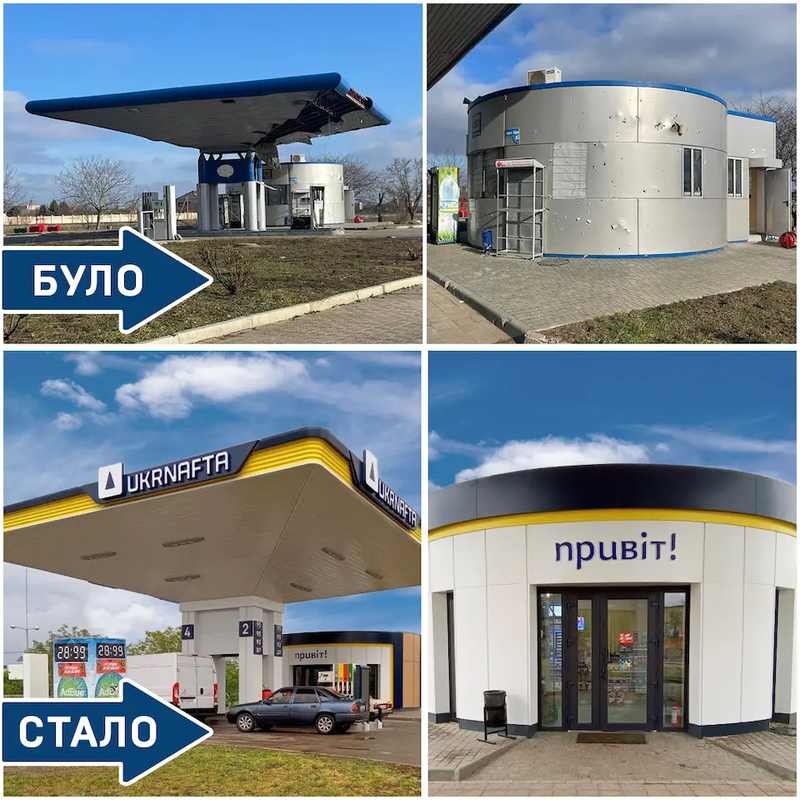
At least six Ukrnafta stations in Kyiv were hit in recent weeks, according to Reuters. During the news agency’s interview with Lesya Zharska, director of Ukrnafta’s station network, workers were rebuilding a destroyed site across the road on the capital’s outskirts. Her message was direct: “We will protect the facilities. We will restore the facilities. We are ready for the winter.”
Moscow says it does not deliberately target civilian infrastructure. Ukrainian officials and operators describe the filling-station strikes as part of an expanded campaign against fuel and logistics. Reporting on populated areas and visible retail sites has intensified the dispute over target selection, while independent assessment of intent remains difficult during an active air war.
What the numbers reveal about the winter fuel test
Three hundred stations hit; roughly 240 restored
Industry and government figures indicate that about 80 percent of roughly 300 attacked stations nationwide have been restored. Applied to the rounded total, that suggests around 240 locations returned to service and about 60 remained out of operation or unfinished. The estimate is not a precise inventory, but its order of magnitude is revealing.
An 80 percent restoration rate means the repair system has absorbed a large amount of damage. It does not mean the problem is solved. The remaining fifth can leave local gaps, and every repeat strike competes for crews, parts, permits and money. Resilience is a race between the tempo of destruction and the speed of reopening.
Ukraine fuel stations in winter 2026 face 10–15 percent more demand
Ukrnafta expects winter fuel demand to rise by 10 to 15 percent, in part because diesel and petrol support generators, transport and emergency activity when the power system is under pressure. If a network normally serves 100 units of demand, winter could lift that requirement to 110–115 while attacks simultaneously remove capacity. National stock levels alone do not settle the question of access.
Ukrnafta says the strikes will not produce a winter shortage. Its confidence rests on buried tanks, import channels, rapid repair and customers shifting among networks. The risk is geographic concentration. A national surplus does little for a district where several nearby sites are closed at once.
What a Ukraine winter fuel shortage would look like
The first warning would probably not be a countrywide “out of fuel” moment. More likely signs would be temporary closures after alerts, uneven regional availability, queues at surviving stations, purchase limits and higher distribution costs. Diesel is especially sensitive because freight, military logistics, public transport and backup generation all draw on it.
A stable national price can conceal local premiums and supply detours. The winter question is operational: can imports, storage, trucking and repair capacity keep the retail map dense enough that isolated damage does not cascade into broader disruption?
Ukraine energy infrastructure attacks meet a defensive redesign
Zelensky’s September order linked railways and fuel networks
At a September 15 meeting of Ukraine’s Supreme Commander-in-Chief’s Staff, President Volodymyr Zelensky said additional contracts would strengthen air-defense systems and expand electronic-warfare protection. He specifically connected those measures to Ukrzaliznytsia, filling-station networks and other critical infrastructure after intelligence indicated that Russia was targeting logistics.
The grouping is important. Railways move people, military supplies and commerce; filling stations complete many of the road journeys that begin or end at railheads. Protecting one without the other leaves a gap. The government’s response treats retail fuel not as a collection of storefronts but as part of a national mobility system.
Who benefits from the fortification drive
Customers and station workers benefit if barriers reduce shrapnel and shelters save lives. Fuel retailers benefit when lower damage allows faster reopening. Emergency services and local government gain from a more reliable distribution network. Manufacturers of gabions, prefabricated shelters and replacement forecourt equipment also see demand.
The broader beneficiary is redundancy. Ukraine has many retail stations across competing networks. Dispersal makes the system harder to disable in one blow, though repeated attacks can still impose costs. A decentralized network becomes more resilient when every node is modestly harder to damage and easier to rebuild.
Who loses—and what critics say
Retailers bear construction, insurance and repair costs. Customers can lose convenience and face local queues. Municipalities must manage barriers and shelters around roads and pedestrian routes. Workers face the stress of operating at sites that may be targeted again. Small independents may have less capital than a state-owned operator such as Ukrnafta for repeated rebuilding.
Critics can ask whether protective spending reaches the highest-risk locations, whether exposed canopies and pumps can ever be hardened economically, and whether resources would save more lives in air defense or municipal shelters. The counterargument is that low-cost barriers and rapid repairs do not compete directly with advanced interceptors; they address the damage that gets through.
Ukraine refinery strikes and Russia’s fuel crisis
The other side of the fuel-war ledger
Ukraine has been striking Russian refineries while Russia attacks Ukrainian retail and energy infrastructure. The target sets are not identical, but both campaigns seek leverage through fuel. Ukrainian operations aim upstream at processing plants; Russian strikes on stations push disruption downstream toward the point of sale.
Russia responded to domestic shortages with restrictions on fuel exports. Reports citing International Energy Agency data say Russian diesel output fell by about 30 percent, with queues in some areas lasting as long as 40 hours. Reduced exports can lift international prices, spreading the impact beyond the two combatants.
Forty-five percent versus more than 20 percent
Kyiv has claimed that attacks knocked out more than 45 percent of Russian refining capacity. The IEA estimate was above 20 percent. That gap reflects different methods, dates and definitions. “Capacity hit” can mean equipment was struck, temporarily halted or remained offline, while nameplate capacity is not the same as actual output.
The cautious conclusion is that the campaign is materially disrupting Russian refining but has not removed half of permanent capability on a clearly verified basis. One refinery has reportedly been hit about every three days in recent months—roughly ten strikes in a 30-day month—and some plants have been targeted as many as 15 times since the war began. Repetition matters because repairs can restore output, making the same site a target again.
Who gains and who pays
Ukraine gains if refinery attacks reduce Russian export revenue, complicate military fuel logistics or force Moscow to divert air defenses. Competing exporters can benefit from higher product prices. Russia can impose costs by pushing Ukraine to spend on retail repairs, imports and defensive systems.
Civilians and businesses on both sides bear immediate costs through queues, disrupted travel and prices. International consumers can pay more for diesel when Russian exports tighten. The strategic logic of attacking fuel is precisely that energy connects the military economy to daily life; that connection is also why consequences spread so quickly.
Russian strikes on fuel retail in Ukraine: what happens next
Scenario one: repairs stay ahead of the strike rate
This is Ukrnafta’s base case. Stations close after attacks, surface equipment is replaced, and alternatives absorb demand. Buried tanks and dispersed networks prevent a national shortage. Winter brings inconvenience and episodic local queues, but not a sustained supply crisis.
Scenario two: attacks cluster around major cities
A concentrated campaign against Kyiv, Dnipro, Kharkiv or key approach roads could overwhelm local redundancy even if national stocks remain healthy. Several stations taken offline in the same district would lengthen journeys and create queues elsewhere. The decisive variable would be how tightly hits are grouped in time and place.
Scenario three: power and fuel disruptions reinforce each other
The harder winter scenario is a combined campaign. Electricity damage raises demand for generator fuel just as station closures constrain retail access. Telecommunications and payment systems may also be affected. Backup power, cash procedures and distributed stocks help, but simultaneous strain across systems is harder than damage to any one network.
Scenario four: the refinery contest pushes prices outward
If Ukraine sustains its every-three-days tempo against Russian refining and Moscow keeps exports restricted, global diesel markets could tighten. Higher import costs would then pressure Ukraine too, partly offsetting the strategic benefit of Russian disruption. Energy warfare rarely produces a clean one-sided result because both economies touch the same regional market.
The winter measure of success
The most visible signs of adaptation are concrete and wire, but the decisive work will be less photogenic: spare pumps in warehouses, repair teams on call, safe shutdown procedures, fuel trucks rerouted after alerts and enough import capacity to replace lost domestic supply. The system succeeds when a destroyed canopy does not become a failed network.
The deeper lesson is that infrastructure resilience is no longer only about protecting large plants. It is about keeping thousands of ordinary nodes functional under repeated pressure. Ukraine can fortify filling stations, but winter will test whether barriers, repairs and redundancy can together move faster than the campaign aimed at wearing them down.
Sources and reporting notes
- Reuters — filling-station defenses, Ukrnafta interviews, station damage and winter-demand outlook
- President of Ukraine — September 15 defense and electronic-warfare measures for logistics and fuel networks
- Barchart / FreightWaves — refinery strike tempo, Russian diesel output and competing capacity estimates
- Devdiscourse — Energy Minister Denys Shmyhal’s tally of more than 300 stations damaged or destroyed
- LB.ua via Redtram — Ukrnafta gabion installation and air-raid shutdown procedures
- NaftoRynok — May 2026 damage at the BRSM-Nafta station in Kyiv
- NaftoRynok — restoration of the Ukrnafta station in Snihurivka
Reporting note: Battlefield claims and capacity estimates are attributed to their sources. Percentages based on rounded station totals are presented as approximations, not a precise operational count.