Burnham Says Iran's IRGC 'Almost Certainly' Directed the RAF Fairford Plot
Track it live: Iran war tracker — live map and latest developments
The RAF Fairford Iran plot moved on Monday from a police investigation into an open confrontation between Britain and Iran. Updating MPs, Burnham said the government's assessment was that the suspected plot against the Gloucestershire airbase was “highly likely” to have been coordinated in Iran and “almost certainly” directed by Iran's Islamic Revolutionary Guard Corps (IRGC). He promised a crackdown on what he called Iran's use of criminal networks in Britain, action against their funding streams, and further sanctions designed to restrict the capacity of Iran and the IRGC to do harm.
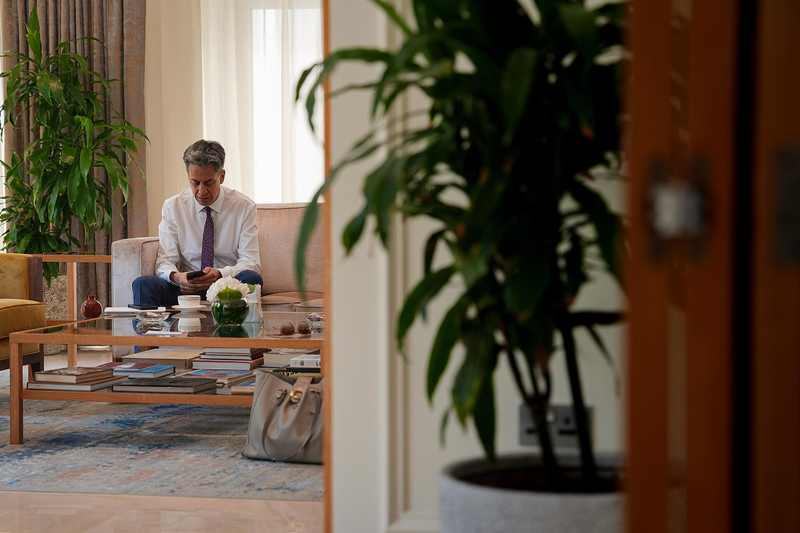
Home Secretary Shabana Mahmood told the Commons that a known individual based in Iran was believed to be behind the incident. Foreign Secretary Ed Miliband summoned Iran's ambassador to the Foreign Office to deliver the message in person, and the government announced sanctions against two Iranian nationals. Tehran rejected the accusations as unfounded; the ambassador denied Iranian involvement and asked Britain to present its evidence.
What happened at Fairford on September 27
The case began in the early hours of September 27, when police stopped three suspicious vans close to RAF Fairford and arrested five men near the base. Officers found a quantity of petrol in the vehicles but no explosives. Residents living nearby were evacuated that day as searches were carried out. Two further arrests followed, bringing the total to seven. All seven are in their 20s; six are British citizens and one is a dual British-Iranian national. Every one of them has since been released on bail, and none has been charged.
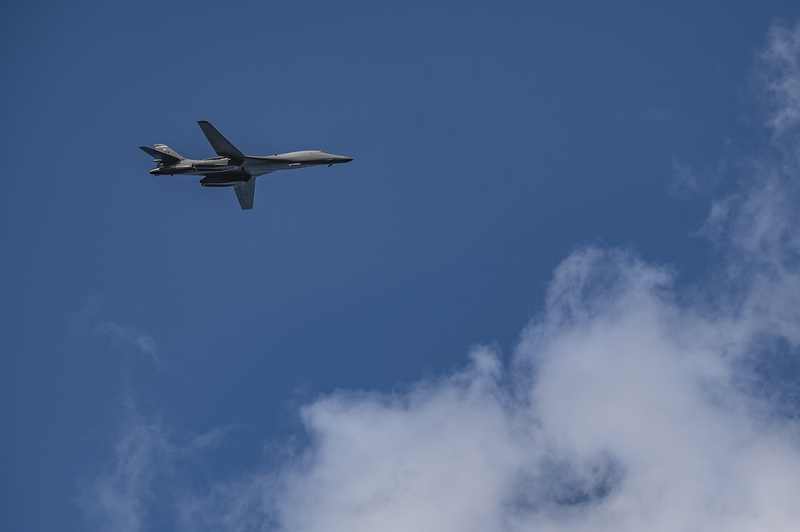
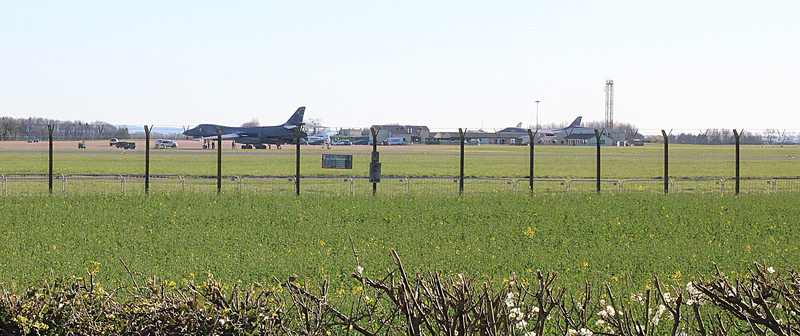
The target mattered as much as the method. RAF Fairford is the United States Air Force's main bomber base in Britain, and it had been used for American defensive strikes on Iran. Last week, the United States withdrew all 12 of its B-1 Lancer bombers from the base to their home stations — a move Washington publicly framed as a redeployment, but one that underlines how seriously the threat was taken on both sides of the Atlantic. Our earlier reporting covered the withdrawal of the B-1 bombers from RAF Fairford, the Westminster arrest in the Fairford investigation, and the first arrests near the base in September.
Sanctions, a summons, and a 29-country statement
London's response on Monday operated on three tracks at once. First, sanctions: the UK designated Ruhollah Bazghandi, whom it named as the IRGC's head of counterespionage, and Shahram Ali Reza Tamarzadeh Jakki, described as a facilitator for the Zindashti criminal network — a network already sanctioned and accused of involvement in plots against Iranian dissidents. Both men face an asset freeze and a travel ban.
Second, diplomacy: Miliband summoned the Iranian ambassador and said Britain would not tolerate threats on its soil. The ambassador, according to Iranian accounts of the meeting, denied involvement and asked for the evidence behind the claims — a request Tehran has repeated publicly while rejecting the allegations as unfounded.
Third, coalition pressure: almost 30 foreign ministries — including the United States, Canada, France and Germany — issued a joint statement condemning Iran's hybrid activities, a category the signatories used to cover lethal plotting, arson, sabotage and cyber-attacks carried out through covert networks and proxies. A statement of that breadth does not happen overnight; it signals that London and Washington have been briefing allies on the Fairford assessment for days.
Why this matters
Attribution is the story here. Governments routinely say a plot is “linked” to a foreign state; Burnham went considerably further, naming the IRGC as the directing hand in terms — “almost certainly” — that sit near the top of the intelligence community's own scale of confidence. That choice has consequences. It commits Britain publicly, makes a quiet climbdown diplomatically expensive, and sets the benchmark against which any eventual criminal case will be judged. If charges follow and a court hears weaker evidence than Monday's language implied, the gap will be politically costly. If no charges follow at all, the same problem arrives by a slower road.
The operational claim underneath the rhetoric is also significant. Britain is not describing a lone actor or an online radicalisation case; it is describing a state service allegedly tasking criminal networks inside the UK — the “hybrid” model in which intelligence officers stay in Tehran while expendable local recruits take the physical risks. That model is cheap, deniable and hard to deter with conventional tools, which is precisely why the government's response leaned on financial sanctions and funding-stream disruption rather than on arrests alone.
The numbers in context
Fairford does not stand alone in the official account. Last year Britain said there had been 20 credible Iranian-backed threats to kill or kidnap people based in the UK. In July, the government banned support for the IRGC itself and for HAYI, a linked group that had claimed attacks at sites connected to Jewish and Israeli communities and Persian-language media. Set against that trajectory — 20 threats, a proscription in July, an alleged plot against a bomber base in September, a prime-ministerial attribution in October — Monday's statement looks less like a reaction to a single incident and more like the public surfacing of a campaign Britain says has been running for years.
The case for caution
Balance requires stating plainly what has not happened. No suspect has been charged. No explosives were found. The seven arrested men are on bail, and under British law they are entitled to the presumption of innocence; an intelligence assessment, however confidently worded, is not a verdict, and none of the material behind it has been tested in court or published. Iran denies the plot outright and has asked for evidence — a demand that is self-serving, but not unreasonable in form, and one London has so far answered with assertion rather than disclosure.
Civil-liberties concerns cut the other way as well. The dual national among the suspects will draw attention to how diaspora communities get caught in the friction between two states; the Zindashti network, meanwhile, is a genuine criminal organisation in the official account, and disentangling criminal facilitation from state direction is exactly the kind of question a trial — if one comes — exists to answer. Readers should hold both truths at once: the government's assessment may be well founded, and it remains, for now, an assessment.
What happens next
Three clocks are now running. The first is the police investigation: whether any of the seven bailed men is charged will determine whether the Fairford case becomes a courtroom test of the IRGC claim or remains an intelligence assertion. The second is sanctions: Burnham promised further measures against Iran's networks and their money, and the two designations on Monday are best read as an opening tranche rather than the whole package. The third is Tehran's response: Iran has rejected the claims and demanded evidence, and the joint statement by almost 30 governments raises the diplomatic cost to Tehran of any retaliation — while also giving it a grievance to rally around at home.
For the alliance, the immediate question is basing. The B-1s are gone from Fairford, and whether American bombers return to Gloucestershire — and under what security posture — will be a practical measure of how contained London and Washington believe this threat to be. For Britain, the deeper question is the one Burnham's statement implicitly posed: whether a state that says it can identify the directing hand behind plots on its soil can also find a way to make those plots stop.
Sources: Reporting by Reuters and the Press Association on Prime Minister Andy Burnham's statement to the House of Commons, October 12, 2026. Photographs from Wikimedia Commons, credited individually.