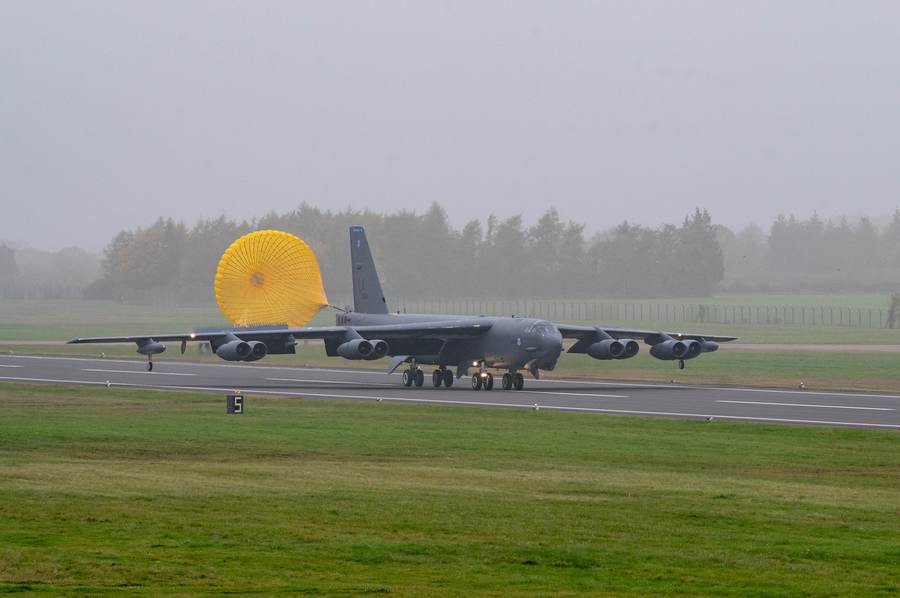
Counter-terrorism police have arrested a 25-year-old British-Iranian dual national in Westminster, London, on suspicion of “preparation of terrorist acts” in connection with the alleged RAF Fairford Iran plot — the suspected plan to attack the Gloucestershire airbase used by the U.S. military. It is the sixth arrest in an investigation that Britain's most senior counter-terrorism officer, Vicki Evans, has described as “hugely complex.” The arrest on Thursday, October 1, came a day after Prime Minister Andy Burnham told the BBC there are “strong indications” that Iran played a part in the plot — the first time the British government has publicly pointed the finger at Tehran. Within hours, Iran summoned the British ambassador in Tehran, and the standoff hardened into one of the gravest diplomatic crises of the U.S.-Iran war.
The sixth arrest
The Metropolitan Police's Counter Terrorism Command said the 25-year-old man was arrested in Westminster on suspicion of preparation of terrorist acts under Section 5 of the Terrorism Act 2006. Two properties were searched as part of the operation. Police later corrected the suspect's age from 27 to 25 and retracted an earlier claim that a second man had been “questioned under caution” — an unusual correction that underlines how fast-moving and sensitive the investigation remains.
Vicki Evans, the Senior National Coordinator for Counter Terrorism Policing, called the inquiry “hugely complex,” a choice of words that signals investigators are still mapping the full shape of the alleged conspiracy — who recruited whom, how far the planning went, and whether the network extends beyond the six people arrested so far. The investigation is ongoing; an arrest on suspicion is not a charge, and the alleged Iranian role has not been tested in court.
Burnham: “strong indications” of Iran's role
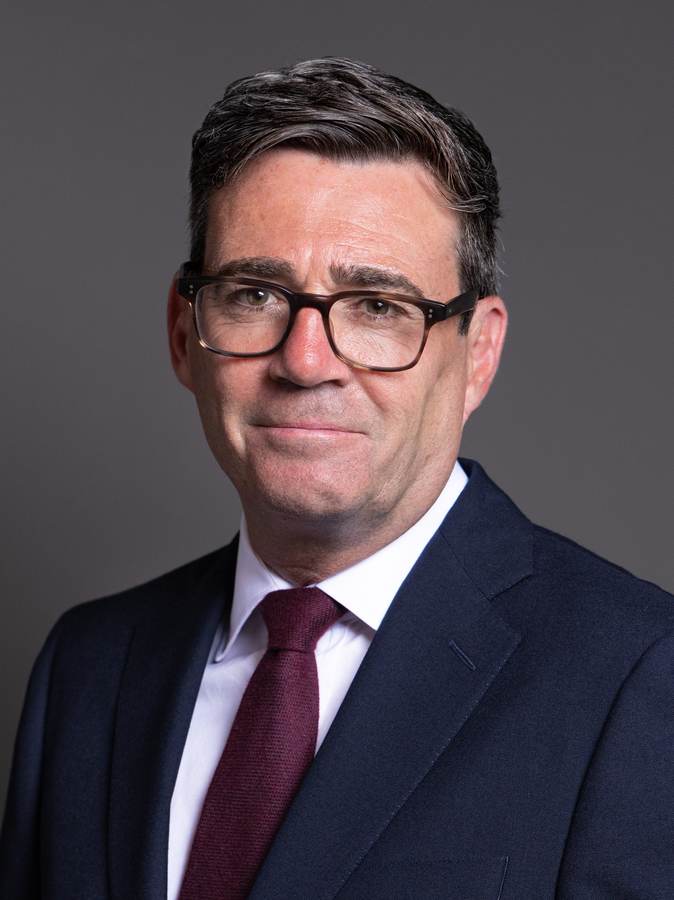
On Wednesday, September 30, Burnham gave the BBC the government's most direct statement yet. There are “strong indications” Iran played a part in what happened at RAF Fairford, he said, describing it as “an ongoing, complex, and serious police investigation.” “Obviously I wouldn't say it lightly,” the prime minister added — a deliberate signal that the attribution rests on intelligence, not speculation. He confirmed Britain is working “closely” with American colleagues on the case, chaired an emergency Cobra meeting of senior ministers and security chiefs, and said he “wouldn't hesitate” to recall Parliament if the crisis demands it.
The Fairford plot — what happened
The investigation began on Sunday, September 27, when five British men in their 20s — aged 23 to 25, from the London area — were arrested near RAF Fairford on suspicion of explosives offenses, later widened to terrorism charges. See our original report on the Fairford arrests. Police seized three white vans and recovered what they described as a “quantity of petrol.” Crucially, no improvised explosive devices were found — a fact that has shaped every debate since about how advanced the plot really was.
All five men were released on bail on Monday, a decision that drew an extraordinary public rebuke from President Donald Trump, who said of the release: “I wouldn't have done that.” Burnham defended the move, saying the men were freed under “the strictest possible bail conditions.” One of the strangest details to emerge, reported by The Times and the BBC, is that one of the five suspects called the 999 emergency line almost an hour before a local female farmer alerted authorities about masked men and vans near the base. Police are investigating whether the suspect got cold feet — or whether the call was itself part of a diversion. Neither possibility has been established publicly.
Washington: “the hands of a foreign actor”
The United States has been building the case for Iranian involvement all week. On Tuesday, September 29, Secretary of State Marco Rubio said the plot “clearly involves the hands of a foreign actor,” in comments reported by CNN. Trump had earlier said the arrested men “might be” connected to Iran and suggested the group had been under surveillance.
The Wall Street Journal reported that U.S. officials were aware of an Iran-linked plot to attack bomber aircraft and kill personnel at the base — and that a branch of Iran's Islamic Revolutionary Guard Corps had recruited UK nationals for the operation. According to the Journal, the plot involved multiple steps, including a diversion in a nearby neighborhood — a detail that gives the mysterious 999 call a darker possible meaning. Those claims depend on intelligence reporting that has not yet been presented in court.
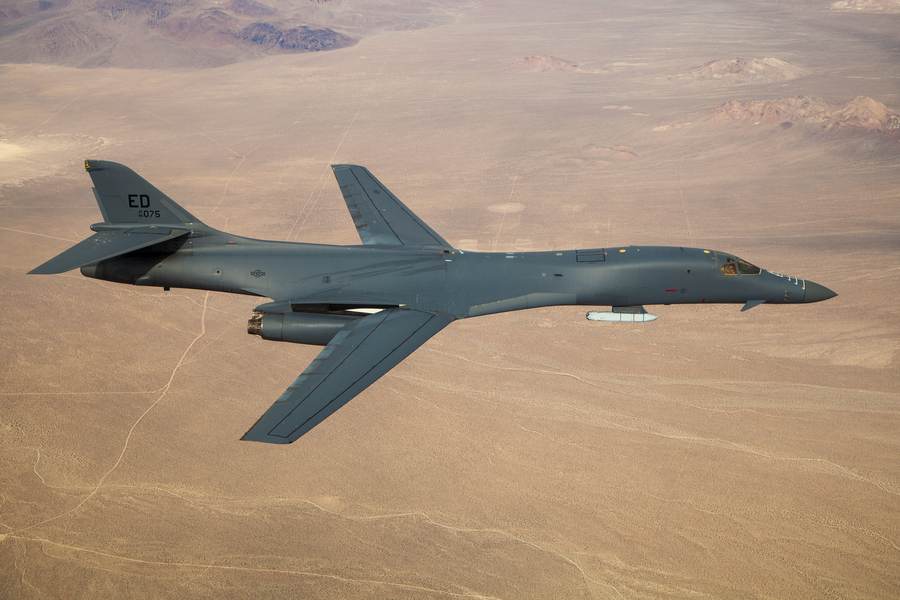
The target, according to the reporting, was no accident: RAF Fairford houses about a dozen heavy U.S. bombers, and American B-1 bombers have been flying missions against Iran from the base during the war. Striking Fairford would have been a strike at the very tip of the American air campaign.
Netanyahu: Israel warned Britain
Adding another layer, Israeli Prime Minister Benjamin Netanyahu told Fox News on Wednesday that Israel had passed Britain intelligence “that there was going to be an attack, and it's an Iranian-sponsored attack.” If confirmed, it would mean at least three governments — the U.S., UK and Israel — were tracking threads of the same conspiracy before the arrests. The Netanyahu Israel intelligence Britain Fairford claim remains part of the public case, not proof available for independent inspection.
Tehran denies everything
Iran has rejected the allegations outright. Its embassy in London said it “categorically rejects and strongly condemns” what it called “unfounded and malicious speculations.” Foreign Minister Abbas Araghchi said Britain was “barking up the wrong tree.” Then came the diplomatic counterpunch: on Thursday, Iran summoned British ambassador Hugo Shorter in Tehran. Deputy Foreign Minister Majid Takht-Ravanchi urged London to revise its “inappropriate approach” — diplomatic language for a formal protest that stops just short of expulsion. The exchange unfolded against a wider diplomatic backdrop explored in our Iran-UNGA coverage.
Why this matters
This is the moment the U.S.-Iran war came to Britain. For months, the conflict has been fought in the skies over the Middle East and the waters of the Gulf; now, the front line allegedly runs through a quiet corner of Gloucestershire. That changes the political geometry of the war entirely.
First, Burnham's “strong indications” remark is the first official British attribution of an Iranian hand in the plot. Attribution is the tripwire in statecraft: once a government publicly names a foreign power behind a terrorist conspiracy on its soil, diplomacy hardens, intelligence sharing accelerates, and the menu of responses — sanctions, expulsions, covert action — comes into play.
Second, the target set matters. RAF Fairford is not just a British base; it is a forward operating location for American strategic bombers. An attack there would have been an attack on both allies at once — on the U.S. air campaign against Iran and on British sovereignty. NATO's Article 5 was written for exactly this kind of ambiguity: an armed attack by a state's proxies on allied forces. Nobody is invoking it. But the logic is now on the table.
Third, the case tests the British counter-terrorism model in public. Releasing five terrorism suspects on bail within 48 hours — even under the “strictest possible” conditions — is a gamble that only pays off if surveillance holds and the courts eventually convict. Trump's open criticism puts allied friction on display at the worst possible moment, a tension that sits alongside his broader Iran policy examined in our Trump-Iran context.
How we got here
The Fairford plot did not emerge from nowhere. It is the latest point on two converging lines. One is the war itself. The United States and Iran have been in open conflict for months, and RAF Fairford — home to roughly a dozen heavy U.S. bombers, including B-1s flying combat missions against Iran — is one of the most valuable American military assets in Europe. In wartime, forward bomber bases are targets; that is their purpose and their peril.
The other is Iran's long record of reaching into Europe through proxies. British security officials have warned for years about Iranian plots on UK soil. MI5 has spoken publicly about disrupting Iran-backed activity in Britain, and European intelligence services have repeatedly accused Tehran of recruiting criminals and marginal figures through encrypted messaging apps to carry out surveillance, intimidation and attacks on dissidents and Jewish targets. The Journal's reporting — that an IRGC branch recruited UK nationals for a multi-step operation involving a diversion — fits that established playbook precisely: deniable, outsourced and designed to give Tehran room to deny state direction. Iran categorically denies involvement in this case.
Who benefits, who loses, what the critics say
If the attribution holds, the logic from Tehran's side is leverage. A successful strike on Fairford would have demonstrated that Iran can reach the American war machine anywhere — raising the cost of the bombing campaign and giving Tehran a card to play in any future negotiation. Even a foiled plot serves a purpose: it forces Britain to spend political capital, sows doubt among allies and reminds Washington that escalation has a home front.
The losers, so far, are clarity and calm. The UK-U.S. alliance is absorbing public disagreement over the bail decision. Britain's Iranian and British-Iranian communities face the familiar dread of collective suspicion — the sixth suspect's dual nationality guarantees it. And counter-terrorism police are working under a spotlight where every correction, like the retracted “questioned under caution” claim, becomes ammunition for skeptics.
The critics divide three ways. Trump and his allies say the bail release was reckless. Civil-liberties advocates will watch whether “the strictest possible bail conditions” become a template for indefinite control without charge. And Iran says the whole edifice is a fabrication. The truth, as always in the early days of a terrorism investigation, is hostage to what police can prove in court.
The numbers behind the plot
Strip away the rhetoric and the known facts are stark but limited: five men, aged 23 to 25, arrested near the base; three white vans seized; a “quantity of petrol” recovered; no explosive devices found. A sixth man, 25, arrested four days later in Westminster. Two properties searched. Under British law, terrorism suspects can be held for up to 14 days before charge — far longer than the standard limits for ordinary serious crime — which makes the decision to release the original five on bail after roughly 48 hours all the more striking.
Either the evidence for immediate charges was thin, or investigators judged that watched suspects could provide more intelligence than jailed ones; those remain analytical possibilities, not disclosed police conclusions. The “hugely complex” label from Vicki Evans suggests this is an intelligence-gathering operation as much as a criminal one. On the other side of the ledger: about a dozen heavy bombers at Fairford, the core of America's European bomber presence, flying real combat missions against Iran. The asymmetry is the story — a handful of young men in vans against a strategic air armada — and it is exactly the kind of asymmetry Iran's proxy doctrine is built to exploit.
What happens next
The investigation is the main event. Further arrests are possible — the sixth suspect's detention and the two property searches suggest police are still climbing the network — but none has been announced beyond the six. The pre-charge detention clock is ticking, and whether the original five face charges will be the next inflection point.
Diplomatically, the summoning of ambassadors is usually the first rung, not the last. Options on London's side include targeted sanctions on IRGC figures, expulsions of Iranian diplomats and designations that would tighten the screws on Tehran's European networks. Burnham's refusal to rule out recalling Parliament signals that the government is preparing the political ground for measures that need legislative cover.
Three scenarios branch from here. In the first, charges are brought and evidence of Iranian direction is laid out in open court — the attribution hardens and the crisis becomes a long confrontation. In the second, the case frays — suspects released without charge, evidence too intelligence-sensitive to use — and the affair curdles into a diplomatic wound that never quite heals. In the third, the investigation uncovers a wider network, and the “hugely complex” inquiry becomes the largest Iranian-linked terrorism case in British history. All three begin with the same fact: the war has come to England, and there is no going back to the days when Fairford was just a quiet airfield in the Cotswolds.