KOSPI Plunges More Than 7% Below 6,000 as a China Chip Breakthrough Rattles Asia
Track it live: Live global markets tracker
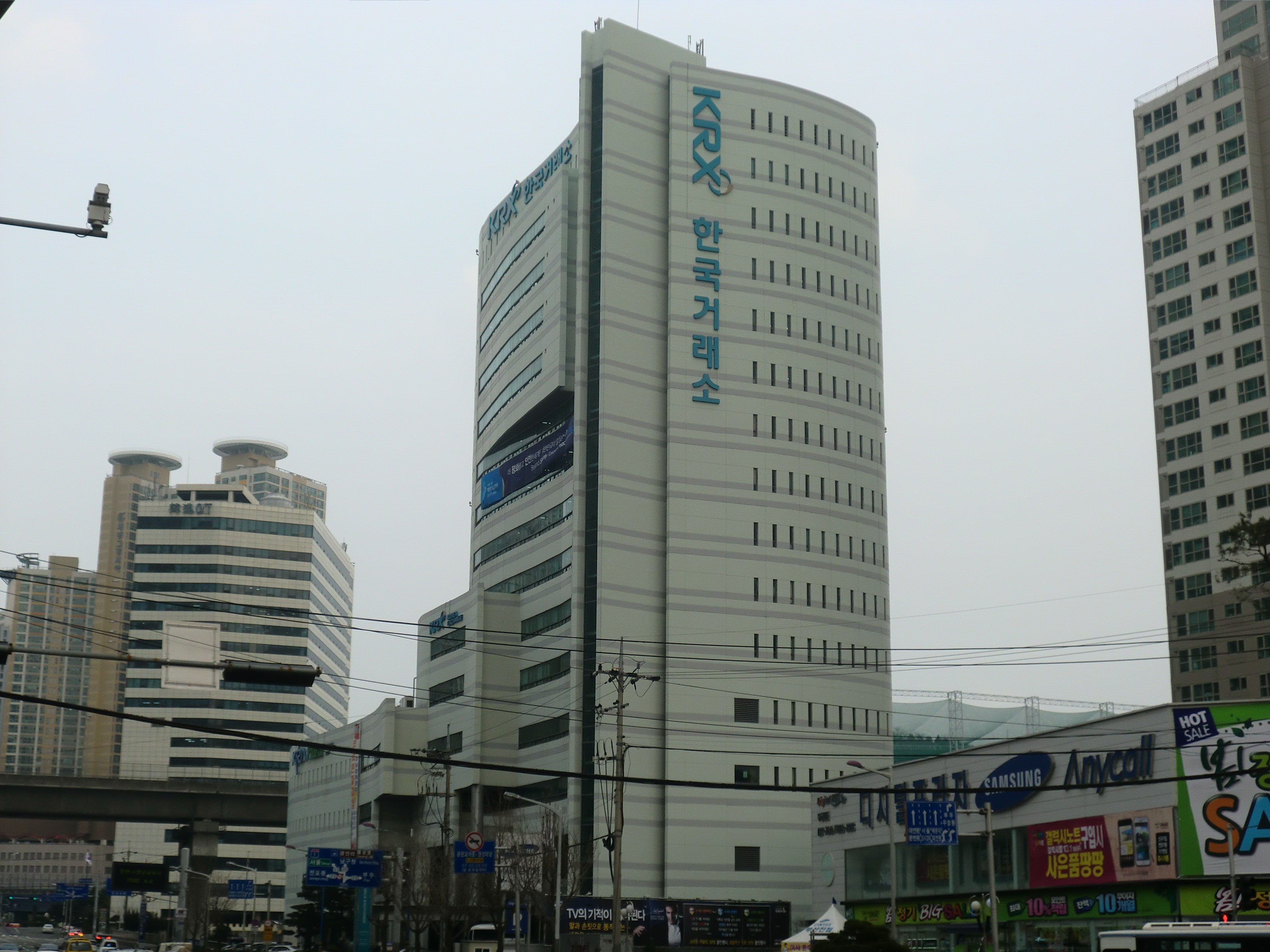
The KOSPI plunge today did not build slowly. South Korea's benchmark opened 3.10% lower at 6,186.08 on Tuesday, October 13, according to Korea Exchange data reported by the Seoul Economic Daily, and the selling accelerated from there. By 10:40 a.m. in Seoul the index was at 5,996.16, down 6.08%. By 1:30 p.m. it had widened to a 6.65% loss at 5,959.84, in Aju Press's reporting. The Associated Press, updating later in the session, had the Kospi down 7.4% at 5,914.35 — its lowest level since late July.
At 9:47 a.m., less than an hour into the session, the exchange triggered a sell-side sidecar — a temporary curb on program selling — after KOSPI 200 futures fell 5.08%. It was the first sell-side sidecar on the main board in about two months, since August 19. Circuit tools like that exist for disorderly markets. On Tuesday, Seoul needed one before most of Asia had finished its morning coffee.
Two stocks are half the index — and both were crushed
The KOSPI is not a broad index in the way the S&P 500 is. Samsung Electronics and SK hynix, the world's two dominant memory-chip makers, together account for more than half of its market value. When they fall together, the index has nowhere to hide — and on Tuesday they fell together, hard.
Samsung Electronics was down 6.79% late in the morning at 233,500 won, and 8.18% by early afternoon in Aju Press's figures; the AP put its loss at 7.7%. SK hynix fell 8.54% in the morning, 10.65% by 1:30 p.m., and 8.8% in the AP's later reading. SK Square, SK hynix's largest shareholder, dropped as much as 12.40%, and Samsung Electro-Mechanics lost around 8.7%. The KOSDAQ, Korea's tech-heavy second board, fell 4.44% to 811.49 in the morning session.
Foreign investors led the exit. They net sold 1.81 trillion won of main-board shares in the morning window the Seoul Economic Daily tracked, with program selling adding a net 1.02 trillion won of pressure. Korean retail investors bought 1.05 trillion won and institutions 598.7 billion won — domestic buyers absorbed the supply, but at steadily lower prices. Zoom out and the pattern is bigger than one morning: Bloomberg reporting puts foreign net selling of Kospi shares at more than US$6 billion so far in October.
The trigger: a denser Chinese DRAM chip
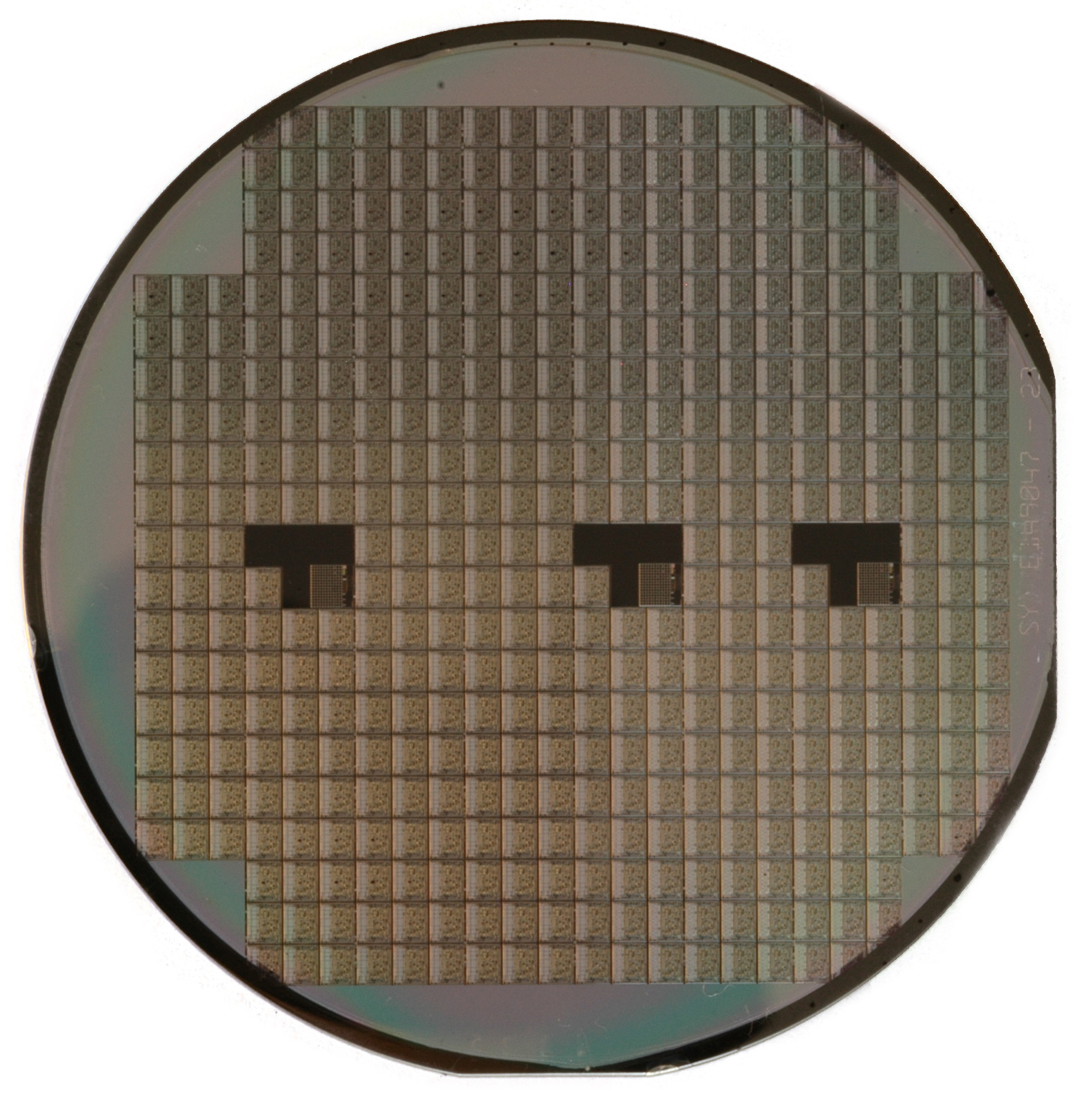
The match that lit Tuesday's fire was struck over the weekend, in a Chinese laboratory. ChangXin Memory Technologies — CXMT, China's largest memory maker — reported progress on a next-generation DRAM architecture known as 4F², a design that packs memory cells more tightly. Industry watchers cited a TrendForce estimate that the design could raise chip density by somewhere between 30% and 50%, and CXMT aims to bring server memory built on it to market by the end of 2026.
Server DRAM is not a niche. It is the high-value end of the memory business, the segment Samsung and SK hynix have treated as home turf while AI data centres bid memory prices upward. A credible Chinese entrant there threatens two things at once: market share, and the pricing power that comes from a two-player market. CXMT today holds roughly 8% of global DRAM revenue and, by most accounts, still struggles with the yields on the high-bandwidth memory AI accelerators need most. None of that stopped investors from repricing the incumbents immediately — markets sell the threat first and audit it later.
The unease was already in the tape before Seoul opened. Wall Street's Monday session ended mixed — the S&P 500 down 0.1%, the Dow up 0.4%, the Nasdaq down 0.4% — but chip shares were the weak spot: the Philadelphia Semiconductor Index fell about 2.6%, Micron lost 3.9%, SanDisk 6%, Nvidia 1.3% and Broadcom 1.9%. Broadcom's chief executive, Hock Tan, added fuel over the weekend by warning that many AI investors, in his blunt phrase, "have no clue" what they are buying, and that financing — not chip supply — may become the industry's real problem.
Asia followed Seoul down
No major Asian market escaped. Reuters put MSCI's broadest index of Asia-Pacific shares outside Japan down about 2% in early trading, with later reports taking the fall to roughly 2.4% and a two-month low. Japan's Nikkei 225, returning from a holiday, sank 2.6% early and was down 2.5% at 67,292.39 in the AP's update; chip-equipment maker Tokyo Electron fell 6.6% and SoftBank Group, a major OpenAI investor, lost 8%. Hong Kong's Hang Seng fell 1% to 24,033.51, Shanghai's Composite lost 1.1% to 3,754.82, Taiwan's Taiex dropped 1.9% with TSMC down 1.6%, and Australia's S&P/ASX 200 edged 0.2% lower to 8,767.40.
Energy did the rest of the damage to sentiment. Brent crude traded around $105.90 a barrel, near a two-week high, as attacks on Saudi Arabia kept supply risk alive and the Russia-Ukraine energy truce looked fragile. The US dollar sat near an 18-month high, with the euro at $1.1157 and the yen at 158.50. Saxo's chief investment strategist Charu Chanana told Reuters that markets are rediscovering how quickly geopolitics feeds back into inflation; Capital.com's Kyle Rodda pointed to the Wall Street chip selloff bleeding into Asia, with oil, positioning and an earnings season still to come making, together, a textbook risk-off day.
Why this matters
Start with the concentration problem, because Tuesday exposed it perfectly. An index where two companies supply more than half the value is not really an index; it is a leveraged bet on one industry wearing an index's clothes. South Korea's pension savings, its retail investors — famously active, and net buyers all through Tuesday's rout — and a large slice of the country's national wealth are riding on the global memory cycle. When that cycle wobbles, the whole market moves like a single stock. The sidecar, the 200-day moving average break Bloomberg flagged, the slide to roughly a third below June's record above 9,000: those are index-level symptoms of a two-stock disease.
Second, notice what the market chose to panic about. Not demand — AI data centres are still buying every high-end chip Korea can ship, and Samsung posted record earnings only last week, which failed to lift its shares, as Bloomberg noted. The panic is about supply and competition arriving at exactly the moment valuations assumed neither would. Memory has always been a boom-bust business; the AI era persuaded investors it had become a growth business instead. A Chinese rival's denser DRAM design does not end that story by itself, but it reopens the old question — what are Samsung and SK hynix worth if memory becomes a three-player commodity fight again? — and on Tuesday the market's answer was: a great deal less than on Monday.
Third, the timing. This lands in the same week the IMF is warning that AI investment is propping up global growth while war and debt threaten the outlook — a warning we covered in our look at the IMF's global economy warning — and days after India's Sensex and Nifty rout showed how fast $100-plus oil and foreign selling can cascade through an emerging market. Asia's two biggest October selloffs share the same ingredients: expensive oil, a strong dollar, foreigners heading for the exit, and richly valued tech at the centre of the index. That is a regional pattern now, not a Korean accident.
The case against panic — and why it only half-works
Bulls have real arguments, and Tuesday's data contains them. The KOSPI is still up about 44.9% for 2026 even after the rout. CXMT's 4F² design is a roadmap item, not a shipping product; its high-bandwidth memory yields reportedly lag the Koreans badly, and US export controls still fence it off from the best fabrication equipment. Korean retail investors treated the plunge as a sale, not a signal — they were net buyers throughout. And Samsung and SK hynix remain the only suppliers who can deliver advanced memory at AI scale this year and next.
Where the bull case weakens is on price, not product. Stocks that fall 7% on a competitor's press release were priced for a world where the competitor never arrives. Foreign investors — the marginal price-setters in Seoul — have now sold more than $6 billion this month, and they are not selling because CXMT ships server DRAM today. They are selling because the story that justified the multiple has acquired a rival, a date (end of 2026) and a plausible technology. Repricing a narrative takes longer than one session.
What happens next
The next test is earnings. Asia's chip giants report into a market that has just decided their moat is narrower than it believed, and guidance — especially anything on 2027 memory pricing and CXMT — will matter more than the headline numbers. Watch three things after that: whether foreign selling in Seoul slows once the index has reset (a third off the peak is historically where value buyers start circling Korean chips); whether CXMT's server-DRAM timeline survives contact with actual yields; and whether oil stays above $100, because every week it does, Asia's import-heavy markets carry the same inflation-and-outflows pressure that turned a chip story into a regional rout.
For US investors, the read-across is direct. The same names that fell in New York on Monday — Micron, Nvidia, Broadcom — are priced on the same assumption Seoul just repriced: that the AI hardware boom has years of uncontested pricing power left in it. Tuesday in Seoul does not prove that assumption wrong. It proves the market no longer believes it for free.
Sources
Associated Press (Oct 12-13, 2026) on the Kospi's fall to 5,914.35, regional indexes and Wall Street's Monday chip losses; Reuters (Oct 13, 2026) on the early Asian session, oil, currencies and analyst comment; Seoul Economic Daily (Oct 13, 2026), citing Korea Exchange data, on the opening levels, the sidecar trigger and investor flows; Aju Press (Oct 13, 2026) on the afternoon session; Bloomberg reporting via MarketIndex (Oct 13, 2026) on the 200-day average, the drop from the June record, foreign selling and Hock Tan's remarks; BeInCrypto/CryptoRank (Oct 13, 2026) on CXMT's 4F² design, the TrendForce density estimate and the KOSPI's year-to-date gain. Session figures are as reported by each outlet at the time stated in the article.