Brewers Beat Dodgers 7-4 for a 2-0 NLCS Lead as Los Angeles Weighs Benching Ohtani
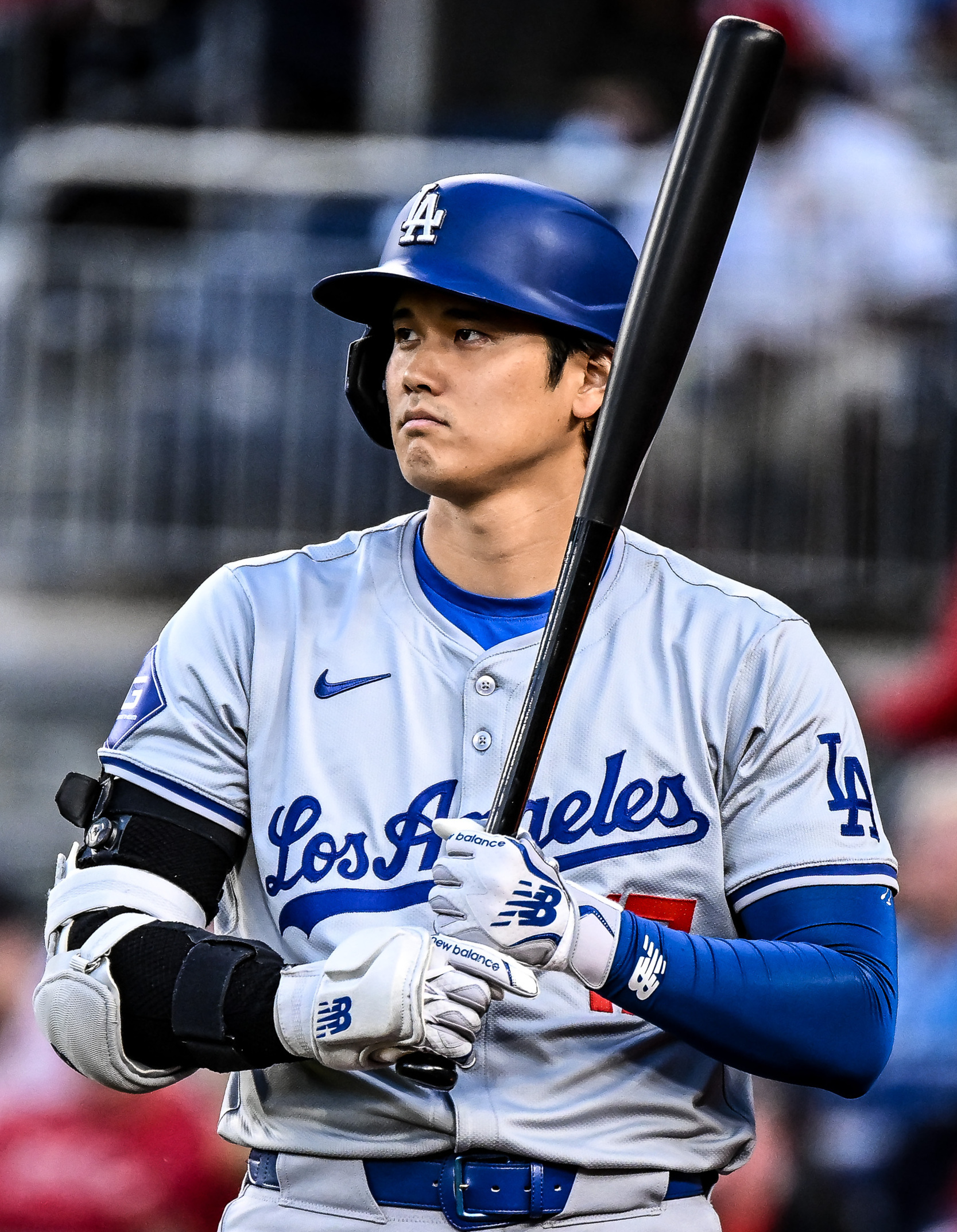
Dodgers Brewers NLCS Game 2 was supposed to be the night the two-time defending champions restored order. Instead, the Milwaukee Brewers beat the Los Angeles Dodgers 7-4 at American Family Field on Monday to take a 2-0 lead in the National League Championship Series — the first 2-0 lead in a best-of-seven series in franchise history — and the loudest story leaving the ballpark was not the score. It was Dodgers manager Dave Roberts saying, in effect, that he needs to talk to his biggest star about what comes next, with benching Shohei Ohtani for Wednesday's Game 3 openly on the table.
That conversation, Roberts told The Athletic's Ken Rosenthal and Katie Woo after the game, will happen on Tuesday's travel day, and no decision has been made. But the fact that it is happening at all — about the most famous player in baseball, in the middle of a championship series his team is trying to win for a third straight year — tells you how completely this series has tilted in 48 hours. Milwaukee's 2-1 win in Game 1 on Sunday could be filed as a one-run October coin flip. A 7-4 win in which the Dodgers led three separate times and still lost by three cannot.
Three leads, three answers: how Game 2 turned
Los Angeles scored first, in the first, without a hit driving in the run — Teoscar Hernández's sacrifice fly made it 1-0. Contreras answered immediately, singling in a run in the bottom of the inning to tie it 1-1. The Dodgers went back in front with help from Milwaukee's own starter: two Los Angeles runs scored on throwing errors by Logan Henderson, the kind of self-inflicted damage that usually buries a home team in October. Christian Yelich erased it with a two-run single in the third.
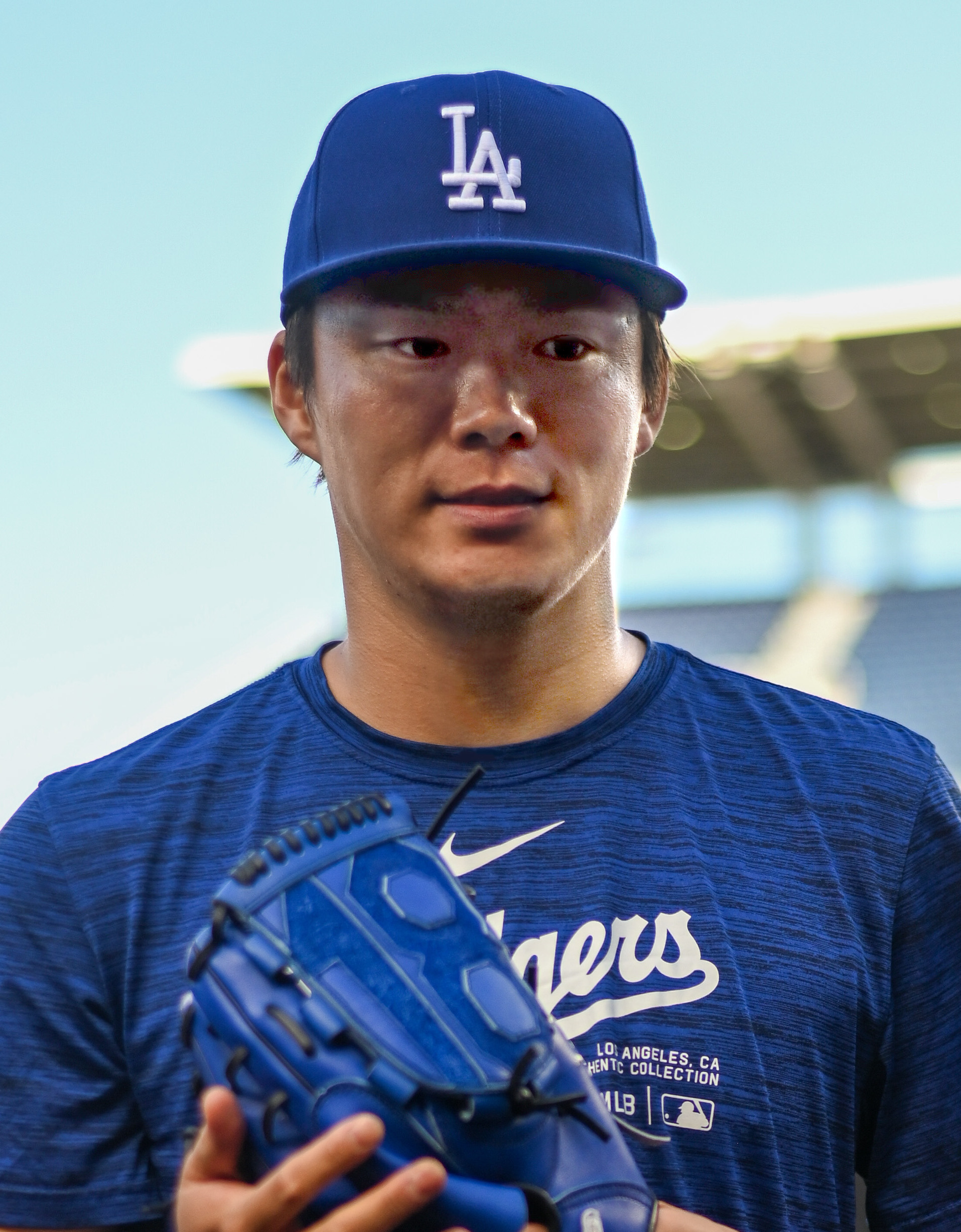
The pattern repeated one more time. Freddie Freeman's sacrifice fly in the fifth put the Dodgers ahead again — their third lead of the night — and Yoshinobu Yamamoto, their starter, was already gone by then, lifted after 2 2/3 innings and three runs in the shortest postseason start of his career. In the bottom of the fifth, Contreras met reliever Kris Bubic and drove a 436-foot solo home run to tie the game 4-4. An inning later he singled home David Hamilton — who, like Brice Turang, scored three times on the night — for the go-ahead run. Turang and Jake Bauers added RBI singles in the eighth, and a game the Dodgers had led three times ended as a three-run Milwaukee win.
Read the Dodgers' side of the box score and the strangeness sharpens. Los Angeles managed three hits all night, went 0-for-4 with runners in scoring position, and scored all four of its runs without a hit driving any of them in — two sacrifice flies and two error runs. That is not a slump statistic; that is an offence being held in a headlock.
Contreras, and a bullpen that has allowed about one run all October
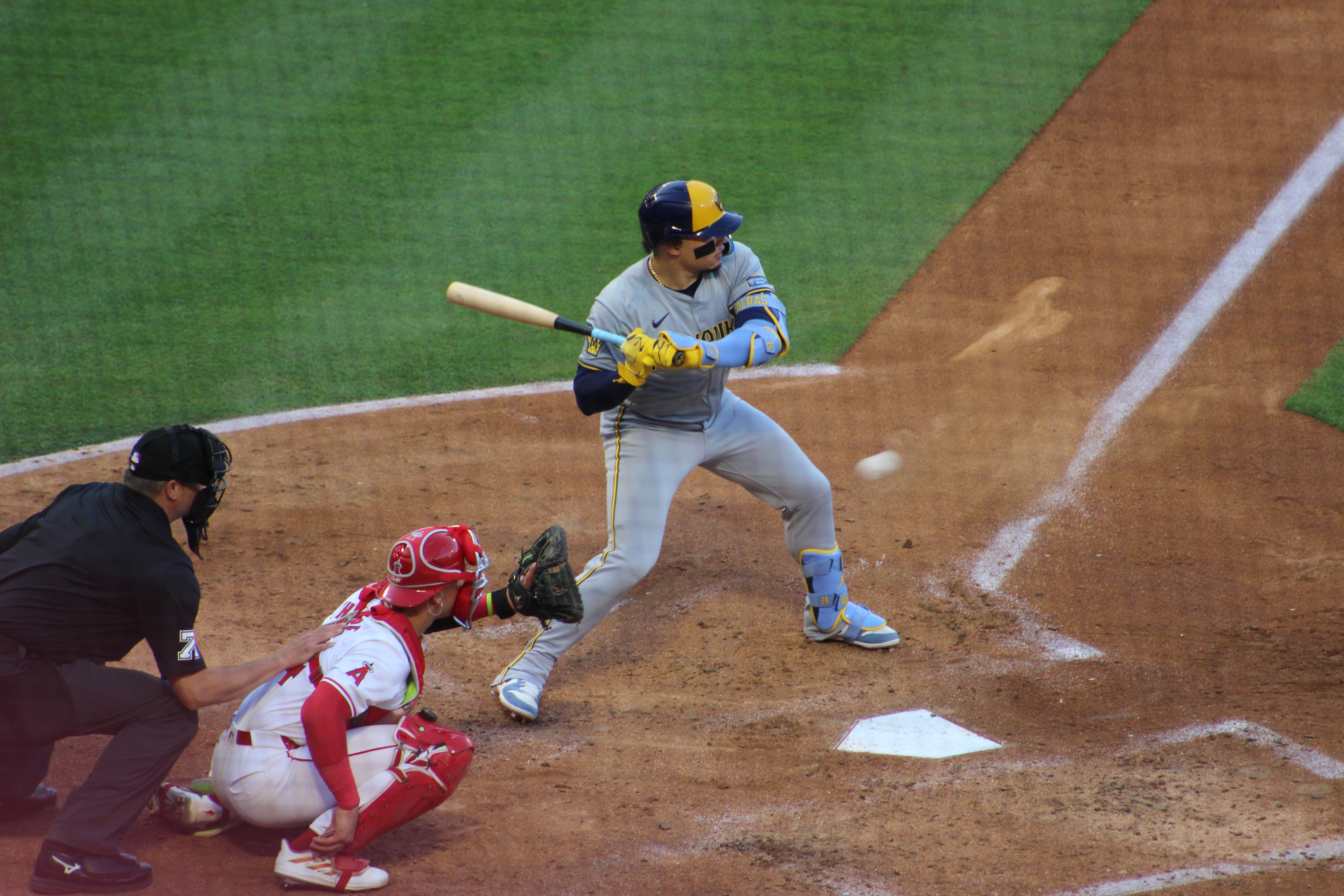
Start with the catcher. Contreras finished 3-for-4 with 3 RBI, and his hits were not decorative: an RBI single that tied the game in the first, the 436-foot home run that tied it again in the fifth, and the single that put Milwaukee ahead for good in the sixth. In a series Los Angeles was supposed to dominate on star power, the best player on the field through two games has been Milwaukee's catcher — a player who also has to handle a pitching staff that keeps changing pitchers mid-game by design.
Then there is the bullpen, which is becoming the central fact of this postseason. After Henderson's exit, four Milwaukee relievers — Dustin May, JoJo Romero, Abner Uribe and Aaron Ashby — retired all 15 batters they faced across five hitless innings, with seven strikeouts. Romero, perfect in the sixth, took the win; Ashby recorded the final five outs for the save. Nobody reached base. Nobody, in five innings against a lineup of former MVPs, even managed a hit.
Zoom out and the number is startling: Milwaukee's bullpen has allowed about one earned run all October — an ERA hovering near 0.31 across roughly 28 2/3 postseason innings, depending on which outlet's accounting you use. What that means practically is that every game in this series is really two games. If the Dodgers cannot build a real lead in the first four or five innings, they are trying to come back against the most reliable unit in baseball — and on Monday, with three separate leads to protect, they still could not get there, because their own starter could not get out of the third inning.
The Ohtani question: a slump, a body, and a decision nobody wanted
Ohtani went 0-for-4 with two strikeouts in Game 2. The moment that will be replayed came in the sixth inning, when he swung at a 1-2 pitch from Romero that was well outside — and lost his bat in the process. It looked less like a star being beaten than like a hitter whose timing and body are both somewhere else.
The numbers say this is not one bad night. Ohtani is 3-for-20 (.150) this postseason, all singles, with seven strikeouts. His last home run came on August 18 at Colorado. Since August 19 he is roughly 14-for-90 (.156) with no homers — a seven-week power outage for a player whose power is the point of him. And there is a physical story underneath the statistical one: a left knee injury ended his pitching season after early June, a right biceps issue has bothered him in recent weeks, and he spent a mid-September stint on the 15-day injured list. Roberts has already moved him down to fourth and fifth in the order, his lowest spots since 2020, without the slide stopping.
So the case for a benching, as it is being argued around the Dodgers, runs like this: this is a short series, the lineup is producing almost nothing, Ohtani is either hurt, exhausted or both, and a day off — or a shorter leash — might protect both the player and the team's chances in the games that remain. Any decision, notably, is not Roberts' alone: it runs through president of baseball operations Andrew Friedman as well, which is itself a sign of how large the call is.
The case against was made on national television within the hour. On the FOX postgame show, Derek Jeter argued that the Dodgers need Ohtani in the lineup because he is one of the rare players who can win a game by himself — and that a lineup already struggling for hits cannot afford to volunteer its most dangerous name onto the bench. There is also the colder logic of October: slumps this loud sometimes end in a single swing, and if that swing is coming, a manager wants it in his own uniform, in a game his team cannot afford to lose. Both arguments are honestly available. That is precisely why Tuesday's conversation matters.
Why this matters
For Milwaukee, the history is the headline. The Brewers had never led a best-of-seven series 2-0 — they lost Game 2 on both of their previous NLCS trips, in 2011 and 2018 — and they now stand two wins from their first pennant since 1982, 44 years ago, back when they were an American League club. Last October, the Dodgers swept them in this same round on the way to a second straight title. A year later, the sweep risk runs the other way, and it is being driven by a formula — contact hitting, three runs scored by the top of the order's table-setters, and a bullpen that treats a lead like a vault — that has now worked in six straight postseason games.
For Los Angeles, the stakes are the mirror image. The Dodgers are chasing a three-peat, something no club has completed since the Yankees of 1998-2000, and they are doing it with a suddenly thin margin: Yamamoto's early exit exposed a rotation that cannot afford short starts, the lineup produced three hits, and the franchise player has become a question instead of an answer. Teams that fall behind 2-0 in a best-of-seven usually do not advance — it is not impossible, but it requires winning four of five against an opponent that has given you almost nothing cheap. The Ohtani decision is therefore not a distraction from the series. It is the series, in miniature: gamble on the star's track record, or manage the team that actually exists right now?
What happens next
Game 3 is Wednesday at Dodger Stadium, with the series shifting to Los Angeles. The Dodgers will start Blake Snell; Milwaukee counters with Robert Gasser. Before any of that, on Tuesday's travel day, Roberts will sit down with Ohtani — a conversation the manager described as being about what is best for the player and for the team. Whether Ohtani's name is in Wednesday's lineup card, and where, will be the first real answer about how the Dodgers see their own crisis.
Milwaukee's task is simpler to state and harder to do: keep games close into the middle innings and let the bullpen close the door, twice more, in a ballpark that will be loud with a different kind of desperation. Our earlier coverage sets the scene — Sunday's Game 1 win, 2-1 on Brice Turang's homer, and how this NLCS rematch was set up in the Division Series. Two wins from a pennant the franchise has waited 44 years to chase again, the Brewers have made the defending champions the team with all the questions. That has not happened in this matchup in a very long time.
Sources
Reuters (Oct 13, 2026) on the Game 2 result, the 2-0 series lead and the game details; The Athletic reporting by Ken Rosenthal and Katie Woo (Oct 12, 2026), via Sports Illustrated and MLB Trade Rumors, on Dave Roberts' planned conversation with Shohei Ohtani and the Game 3 benching question; theScore and the Milwaukee Journal Sentinel (Oct 12, 2026) on Game 2, William Contreras and the Brewers' bullpen; New York Post (Oct 12, 2026) on the FOX postgame discussion. Statistics are as reported by those outlets on the night of the game.