UK East Jerusalem consulate closure
Overnight workers removed the "British Consulate General" plaque from the Sheikh Jarrah mission as Israel's 30-day closure order expired — the sharpest rupture yet in one of the world's oldest Western diplomatic relationships.
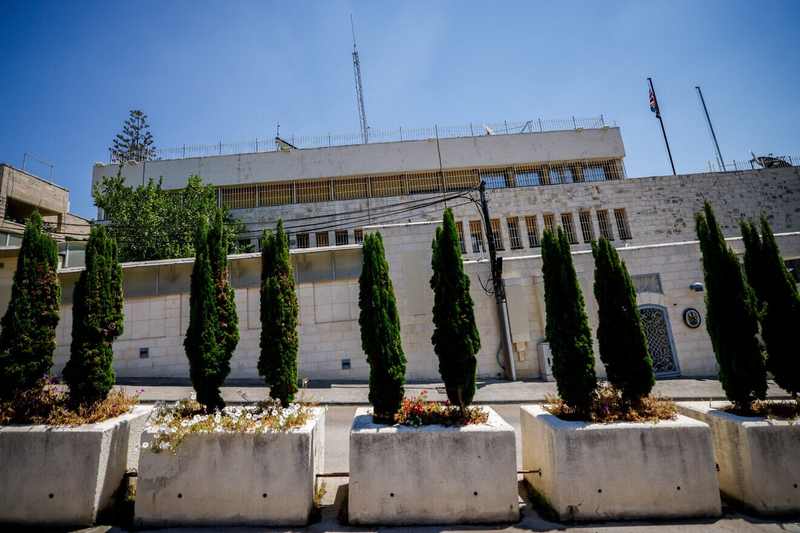
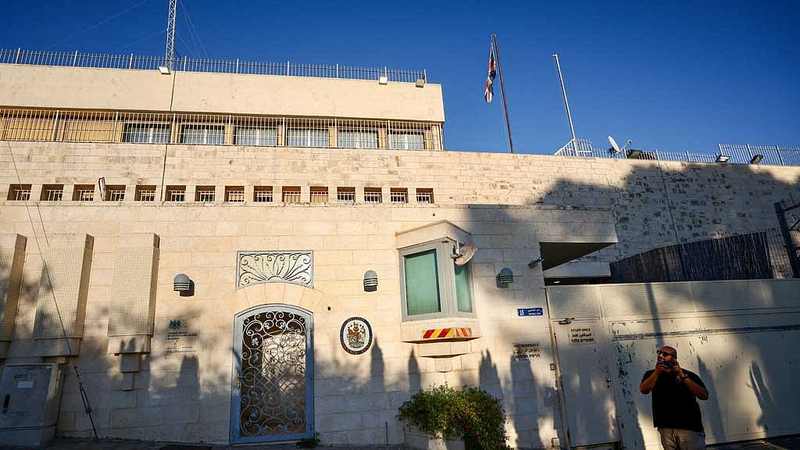
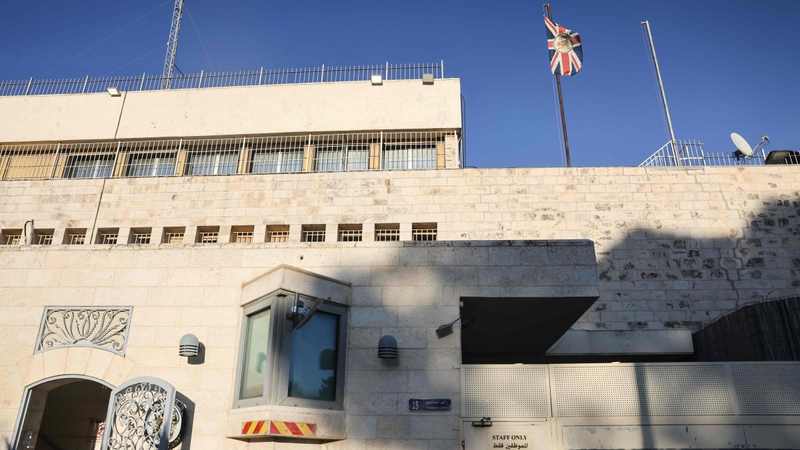
The UK East Jerusalem consulate closure moved from diplomatic threat to visible fact overnight, when workers at the British mission removed the plaque reading “British Consulate General” and signs marking its consular section as Israel's shutdown order expired. Reuters journalists witnessed the signage coming down. The British flag was still flying over the building, however, and the Foreign Office declined to say whether the consulate was still operating or whether any of the roughly 30 affected diplomats had returned to Britain. That ambiguity matters: the name has disappeared from the wall, but London has not yet explained whether it accepts the legal and political premise behind the order.
Why this matters
The Sheikh Jarrah consulate is not a decorative diplomatic outpost. It has been Britain's principal channel to Palestinians in Jerusalem, the occupied West Bank and Gaza, while providing consular services to Palestinians. Closing it therefore removes a reporting, aid-coordination and consular platform at the moment tensions are high and information from the ground is unusually valuable.
Its shuttering also effectively ends about two centuries of British presence in Jerusalem, a history that predates the establishment of the State of Israel in 1948. Reuters described the confrontation as a new low between long-standing allies. More than symbolism is at stake: the closure is the second-order consequence of UK sanctions on Israeli settlements, transforming an argument over trade and international law into a bricks-and-mortar diplomatic rupture. For readers following broader British foreign policy, the dispute sits alongside London's harder sanctions posture elsewhere, including its latest action against Russia's shadow fleet.
How we got here
On September 8, Israel ordered Britain to close the consulate within 30 days and remove its diplomats from Jerusalem. The order followed Britain's announcement of sanctions targeting Israeli settlements in the occupied West Bank, including a ban on trade in goods made there. France and Canada joined those sanctions, but Israel did not take comparable action against either government.
Israel's case, voiced by Foreign Minister Gideon Saar, is that London's sanctions amount to improper interference, including in Israel's general election scheduled for October 27. From that perspective, the order demonstrates that punitive measures aimed at Israel will bring direct diplomatic costs rather than remain one-way pressure. Britain's position, consistent with that of the United Nations and most governments, is that the settlements are illegal under international law. Israel disputes that interpretation. Those opposing legal positions are the foundation of the Israel UK diplomatic row; the closure is its most tangible consequence.
The rescue mission that failed
National Security Adviser Jonathan Powell quietly travelled to Israel last week in an attempt to keep the mission open. He held talks with Israeli officials, but three sources told Reuters that no agreement was reached. The visit showed the issue had moved above routine embassy management and into the realm of national security and high politics.
In London, officials debated whether Britain should refuse to comply. Senior Labour figure Emily Thornberry urged non-compliance, while legal advisers argued that Israel lacks lawful authority to force the British Consulate General Jerusalem mission to close. The Israeli position remained firm. A spokesperson for Saar said on Monday that “the consulate will close on Thursday,” according to Reuters. The failed diplomacy left the consulate closure deadline to do what negotiations could not: force a decision in public.
The numbers
The core figures explain both the scale and the extraordinary compression of the crisis: roughly 200 years of British presence in Jerusalem; 30 days from Israel's order to the deadline; around 30 British diplomats, plus family members, affected; and a possible tit-for-tat expulsion of a similar number of Israeli diplomats from Israel's embassy in London. The final date shaping British calculations is October 27, Israel's general election. One source said London could wait until after that vote before deciding how to respond.
Numbers do not settle the legal dispute, but they reveal the stakes. A centuries-old institutional presence has been wound down on a one-month clock, while any retaliatory move could quickly double the number of diplomats displaced. The question of whether Britain expels Israeli diplomats now matters not only as symbolism but as a practical measure of how much bilateral capacity both governments are willing to lose.
Who benefits, who loses
Israel gains an immediate demonstration that sanctions against it carry a direct diplomatic price, sending a warning to other governments considering similar measures. The cost is that reducing representation from an ally with deep intelligence and security ties may degrade practical cooperation that both countries use. A strong signal can be strategically effective while still shrinking the channels needed to manage the next crisis.
Britain's Labour government answers domestic and European demands to act on settlements, but it loses its principal consular, reporting and aid-coordination foothold for Palestinians — the population its sanctions were intended to defend. That creates an uncomfortable policy contradiction. Palestinians in Jerusalem, the West Bank and Gaza lose a consular channel and a rights-monitoring presence; the effect lands on ordinary people regardless of which government prevails in the legal argument. London's recent £88 million Gaza aid package underscores how much its policy depends on access and local coordination.
France and Canada, having joined the sanctions without facing Israeli action, are also watching. If Israel's response remains limited to Britain, London will ask why it was singled out. If the precedent broadens, Paris and Ottawa may have to decide whether solidarity with Britain is worth a similar loss of diplomatic access.
What happens next
The first scenario is retaliatory expulsions. Four sources told Reuters that Britain is likely to expel Israeli diplomats, potentially matching the number affected in Jerusalem, although a fifth source said London may wait until after the October 27 Israeli election. A decision to delay would lower the immediate temperature but leave the threat hanging over both governments.
The second is quiet compliance: the Britain consulate East Jerusalem presence winds down, the flag continues to fly for a time, and London avoids an immediate public response while it reassesses diplomatic coverage for Palestinians. That would limit escalation, but it could also be read in Israel and Britain as acquiescence. The domestic politics of that choice are sharp, as the debate over Britain's role abroad is already dividing parties; Kemi Badenoch's Conservative strategy is one recent sign of how contested the wider political ground has become.
The third is an escalation spiral. Israeli officials have warned that action against Israel would be met with a response, raising the stakes for a cycle of mutual expulsions. Such a cycle can start as calibrated signaling and end by hollowing out communication between allies precisely when private channels are most needed.
Whatever London decides, the plaque's removal is the image that will define this chapter — a 200-year relationship reduced to workers unscrewing signage overnight.