World · Middle East · Maritime
UAE rescues 22 crew burning cargo ship in the Gulf of Oman — that, in a single line, is nearly the whole of the official news from Sunday, and the part that matters most is the outcome: every sailor aboard came off the ship alive. The UAE National Guard said its Coast Guard rescued all 22 crew members, all of them Arab nationals, all in stable condition after first aid. What the ship was, whose flag it flew and why it caught fire are questions the official account pointedly does not answer.
Track it live: Middle East tracker
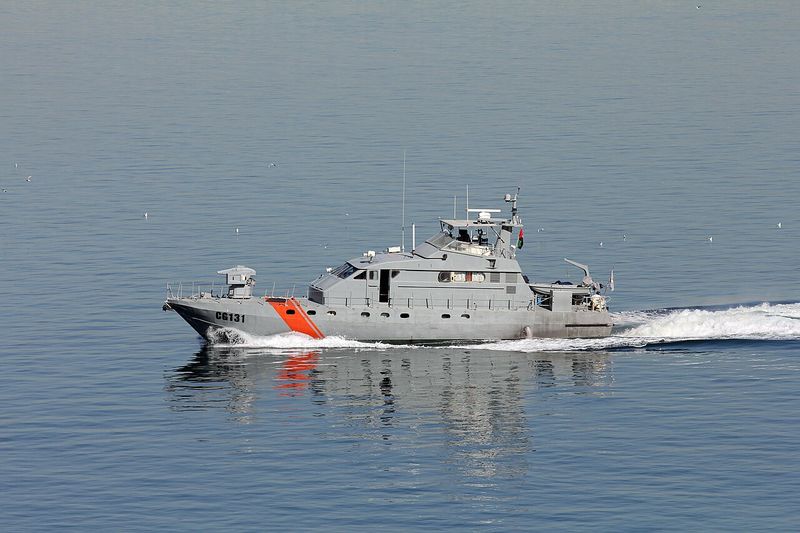
ABU DHABI, November 8, 2026 — The UAE National Guard Coast Guard rescued 22 crew members from a burning cargo ship in the Gulf of Oman on Sunday, November 8, 2026, in an operation the National Guard announced through the Emirates News Agency (WAM) and that Gulf News and other regional outlets reported the same day. All 22 crew members — described by the National Guard as Arab nationals — were in stable condition. They were given first aid and handed over to the competent authorities, the official account said. No deaths were reported, and the National Guard presented the operation as a straightforward, successful rescue: a ship on fire, a crew brought off, nobody lost.
That clean outcome is the verified core of this story, and it is worth stating plainly, because almost everything around it remains undisclosed. The National Guard’s account, as carried by WAM, identified neither the ship nor its circumstances, and reporting by the Arabian Post, Marine Insight, Virgin Radio Dubai and ANI syndication filled in the same outline from the same official source. None of the reporting named the vessel. None gave its flag, its owner, its cargo or its destination. And none — official or otherwise — said what caused the fire.
A ship fire at sea is among the most dangerous emergencies in merchant shipping, and a crew of 22 is a full ocean-going complement — master, officers, engineers and ratings — all of whom had to be taken off a burning vessel in open water, in a busy, exposed seaway rather than a harbour. That all 22 were reported stable afterwards is the fact on which everything else in this story hangs.
What we know — and what we do not know
Because the official disclosure is so thin, precision matters more than usual. Signal Post News is separating the two explicitly, and readers should hold the second list as firmly as the first.
What officials have said
- The rescue happened. The UAE National Guard announced that its Coast Guard rescued 22 crew members from a burning cargo ship in the Gulf of Oman on Sunday, November 8, 2026.
- Everyone survived and is stable. All 22 crew members were in stable condition, according to the National Guard.
- The crew are Arab nationals. The National Guard described all 22 as Arab nationals; it did not publish names or individual nationalities.
- First aid, then handover. The rescued sailors were given first aid and handed over to the competent authorities.
- The announcing channel is official. The account moved through WAM, the Emirates News Agency, and was reported by Gulf News, the Arabian Post, Marine Insight, Virgin Radio Dubai and ANI syndication.
What officials have not said
- The vessel is unnamed. No name, IMO number or identifying description of the ship appears in the official reporting.
- The flag is undisclosed. The National Guard did not say which flag the ship flew, nor name its owner or operator.
- The cause of the fire is undisclosed. Nothing in the official account explains how the fire started, where on the ship it burned, or how large it was. There is no official suggestion that the ship was attacked, and this article makes none: a fire’s cause here is simply unknown.
- The ship’s fate is unaddressed. The official account does not say whether the fire was extinguished, whether the vessel remained afloat, or where it was taken.
- No link to any other incident has been stated. Officials drew no connection between this rescue and any other vessel, incident or operation in the region, and none is reported here.
That discipline is not pedantry. In waters as politically charged as the Gulf of Oman, an unnamed burning ship attracts theories fast, and the first duty of reporting is to the short list of things actually known. The analysis later in this article is labelled as analysis, and it adds no invented detail to the lists above.
A separate report in the same waters: UKMTO, east of Khor Fakkan
One further reported item belongs in this story — carefully fenced off from the rescue itself. On Saturday, the day before the rescue, United Kingdom Maritime Trade Operations (UKMTO) reported an incident involving a bulk carrier and military forces east of Khor Fakkan, the Sharjah port city on the UAE’s Gulf of Oman coast; reporting of the UKMTO advisory placed it roughly 18 nautical miles offshore. UKMTO is the Royal Navy-run reporting point that merchant ships contact in these waters, and its advisories are deliberately terse: a location, a vessel type, a category of incident, and little more.
Two things must be said about that report in the same breath. First, it is real: UKMTO did report an incident involving a bulk carrier and military forces east of Khor Fakkan on Saturday. Second, it is separate: nothing in the UKMTO report, and nothing in the National Guard’s announcement, confirms that the bulk carrier is the cargo ship whose crew was rescued on Sunday. The two items share a stretch of sea and a weekend; they are not confirmed to share a ship, and Signal Post News does not present them as doing so. Readers will find the two events conflated elsewhere; the official record does not support that step, and the difference between “reported in the same waters” and “the same vessel” is exactly the difference between reporting and rumour.
Why this matters: the sea lane to Hormuz
To understand why a single unnamed cargo ship’s fire draws attention far beyond a rescue blotter, look at the map. The Gulf of Oman is the antechamber to the Strait of Hormuz: the water between the UAE and Oman to the south, Iran to the north and Pakistan to the east, through which shipping passes before threading the strait into the Gulf. In a typical year, roughly a fifth of the world’s petroleum liquids consumption moves through Hormuz, along with a large share of global liquefied natural gas trade. No corridor in global shipping is comparably sensitive: a lane used by tankers, bulk carriers, container ships and gas carriers, bordered by states whose relations range from cooperative to openly hostile, and patrolled accordingly.
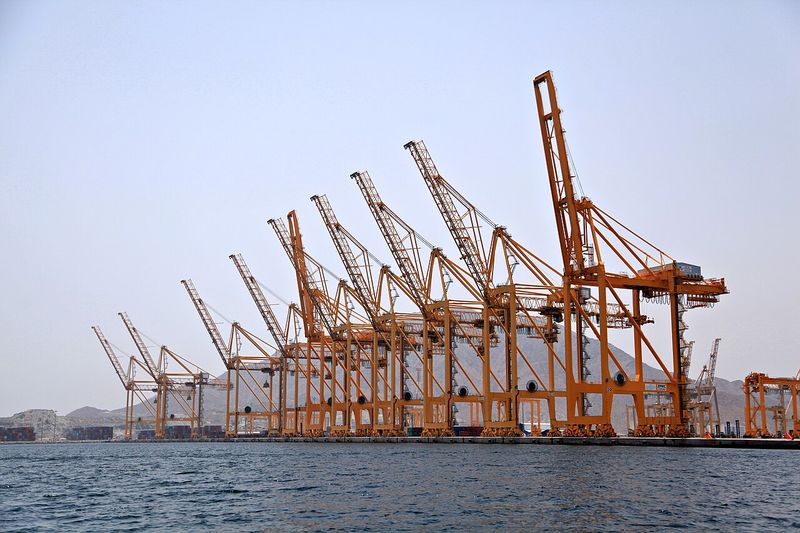
The UAE’s east coast sits directly on that corridor. Khor Fakkan handles container traffic that avoids the strait altogether; Fujairah, just down the coast, is one of the world’s largest bunkering and storage hubs, with a crowded offshore anchorage. A vessel in distress in the Gulf of Oman is therefore never just a vessel in distress. It is an event on the doorstep of the world’s most watched energy chokepoint, in waters where coast guards, navies and reporting centres like UKMTO track movements hull by hull — and where the difference between an accident and an incident is a question with markets, insurers and governments all listening for the answer. On Sunday, the official answer was: a fire, cause undisclosed, crew safe.
Background: a hard November in crowded waters
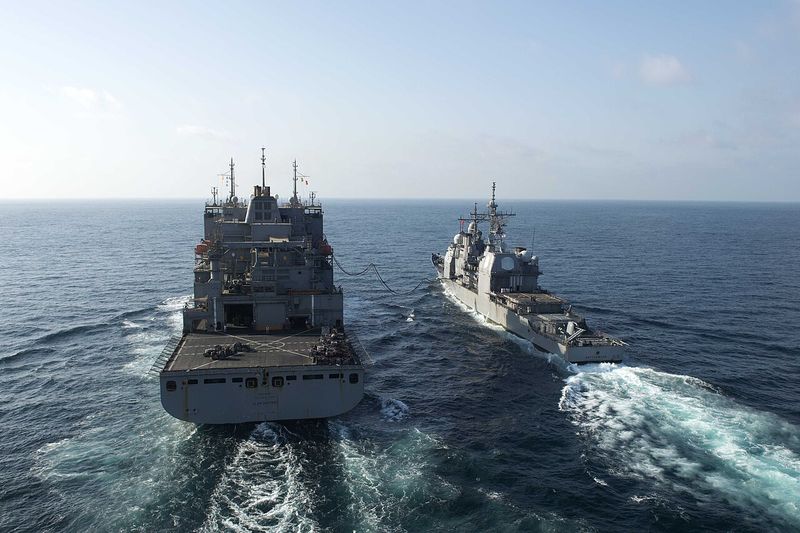
Sunday’s rescue did not happen in calm informational weather. The autumn of 2026 has been a bruising season for shipping in and around the strait. In October, Signal Post News reported that ship attacks in the Strait of Hormuz hit a record high, and the same month brought a ship seen on fire in the Strait of Hormuz amid claims that took days to untangle. The pattern has continued into November, with vessel incidents, interdictions and fires reported across these waters in quick succession — a tempo at which every new report lands in a newsroom, an insurance market and a naval operations room already primed to read it as part of a campaign.
Rescues, too, have been part of the pattern. In October, Oman’s navy evacuated 25 crew from the burning tanker RITI off Musandam, at the strait’s northern gateway — a different service, vessel and set of circumstances, but the same underlying reality: this season, the region’s maritime forces are repeatedly pulling crews off burning ships. Reporting of Sunday’s operation noted a closer precedent still: a month earlier, the UAE Coast Guard had carried out a similar evacuation of 22 sailors from a tanker that caught fire in the Arabian Gulf. None of that makes Sunday’s fire anything other than what officials said it was. It does explain why a short official statement was read, within hours, on several continents.
It also explains the machinery that produced the weekend’s other report. UKMTO, run by the Royal Navy with a liaison presence in Dubai, operates a voluntary reporting regime for the region: merchant ships register their transits, report their positions through the high-risk area, and call in anything suspicious — an approach by unknown craft, an interaction with military forces, an explosion, a fire. UKMTO turns those reports into advisories the whole industry reads, usually within the hour. The system’s value is speed and neutrality; its limitation is built into its design. An advisory tells the industry that something happened, roughly where, involving roughly what. Attribution, cause and consequence are for later — if they come at all.
How a coast guard rescue at sea actually works
Because the official statement compresses hours of work into a sentence, it is worth unfolding what “rescued 22 crew, given first aid, handed over to the competent authorities” actually involves. The sequence is governed less by improvisation than by an international architecture — the SOLAS and SAR conventions and the GMDSS distress system — that exists so a burning ship’s crew never has to negotiate its own rescue.
It begins with the distress call. A master who judges the vessel in grave and imminent danger alerts the nearest rescue coordination centre, fixing the two things a rescue needs most: a position and a point of contact. The responsible centre — for the UAE’s waters, the national search-and-rescue organisation working with the National Guard’s Coast Guard — tasks the nearest capable assets: patrol vessels, aircraft, and any merchant ships in the vicinity, which are obliged under SOLAS to render assistance. In a fire case, the tactical problem is brutal in its simplicity. A crew fighting a losing fire retreats to a muster point, ideally upwind of the smoke; rescuers approach from the lee side; and the transfer itself — by boat, ladder, lifeboat or liferaft — is the most dangerous phase, conducted alongside a hull that may be radiating heat, listing, or venting burning fuel.
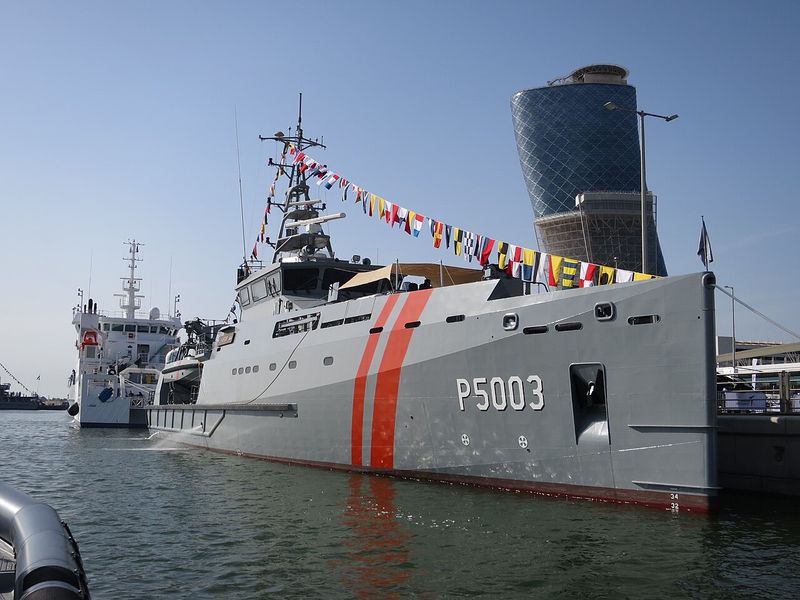
Once the crew is off, the medical clock starts. “First aid” covers triage on the rescuing vessel or ashore: burns, smoke inhalation and heat stress are the expected presentations from a ship fire, and “stable condition” is the standard first report that none of the 22 was in immediate danger when assessed. Then comes the handover the statement describes — to “the competent authorities” — in practice the port and immigration authorities of the receiving state: identity and nationality checks, consular notification, medical follow-up where needed, and statements about what happened aboard.
The ship, meanwhile, enters a different legal world: the flag state’s duty to investigate the casualty, the coastal and port states’ interests in pollution and navigational safety, and the owner’s and insurer’s salvage decisions. If those channels eventually produce a cause, it will arrive in months, not news cycles — which is why the honest sentence about Sunday’s fire, for now, remains the National Guard’s own: cause undisclosed.
Who benefits, who loses — and what the critics say
Analysis, clearly separated from the facts above, starts with an unusual feature of this story: the clearest beneficiary is unambiguous. Twenty-two sailors are alive and stable who, on a worse day in the same waters, might not have been. Their families, their crewing agencies and their flag state’s consular services all received the best available version of this news. The UAE, institutionally, also gains: a National Guard that can point to a second clean mass evacuation of a burning ship’s crew within a month strengthens its claim to be the corridor’s most reliable first responder, a reputation with real value in a region where response capability is a form of deterrence and of diplomatic capital.
The losers are structural rather than personal. Shipowners and their insurers absorb the cost of the ship itself — fire damage, salvage, delay and potential total loss — and every fire in the corridor feeds the actuarial picture that has kept war-risk and hull premiums for Gulf transits elevated through the autumn. Insurers’ standing criticism of the current season is not of any single state but of opacity itself: unnamed vessels and undisclosed causes make risk harder to price, and what cannot be priced precisely gets priced expensively, with the cost passed down the charter chain to cargo owners and consumers. Crews sailing the corridor make the complementary point: seafarers’ unions and welfare organisations have spent the autumn arguing that merchant crews carry risks they did not sign up for at wages that do not reflect them, and each new burning ship — whatever its cause — is Exhibit A in that argument.
The third critic is quieter: the region’s own coast guards and navies. Every rescue, interdiction and advisory in these waters is executed overwhelmingly by regional services — Emirati, Omani and their neighbours — while the shipping that benefits is flagged, owned and insured largely elsewhere. The burden-sharing complaint is an old one, and a season like this sharpens it: the response burden is local, immediate and human; the commercial benefit is global and diffuse. None of these arguments requires Sunday’s fire to have been anything but an accident. All of them explain why an accident, in this sea, in this season, is never received as merely an accident.
What happens next
Four threads will decide what this story becomes. The first is identification. A 22-person crew does not vanish into an unnamed ship forever: port records, crewing agencies, the sailors’ own accounts and tracking data will, in all likelihood, attach a name to the vessel in the coming days. Until that happens from a checkable source, the ship remains, in the only record that counts, unnamed.
The second thread is the cause investigation. If the flag state opens a formal casualty inquiry, its findings will be the first authoritative word on whether this was machinery, cargo, electrical failure or something else — and will formally close off the theories the information vacuum has grown since Sunday. The third thread is the ship: whether she was towed, where, in what condition, and whether she returns to service or becomes a salvage and insurance dispute. The fourth thread is the one to watch most carefully: whether any authority formally connects the weekend’s documented items — the UKMTO report east of Khor Fakkan and the Sunday rescue — or formally separates them. As of publication, no authority has done either. Signal Post News will update this story if one does.
What do you think — should officials be required to name a rescued vessel and disclose a fire’s suspected cause, or does the crew’s safety close the public’s claim to know? Like, follow Signal Post News for continuing coverage of the Gulf of Oman and the Strait of Hormuz, and share your thoughts in the comments below.
Sources
Sources: UAE National Guard statement announcing the Coast Guard rescue of 22 crew members from a burning cargo ship in the Gulf of Oman, as carried by the Emirates News Agency (WAM), November 8, 2026; Gulf News reporting of the National Guard announcement, November 8, 2026; UKMTO (United Kingdom Maritime Trade Operations) incident report involving a bulk carrier and military forces east of Khor Fakkan, November 7, 2026, as reported; Arabian Post, Marine Insight, Virgin Radio Dubai and ANI syndication reporting of the rescue, November 2026; Crew Mirror, “UAE National Guard Rescues 22 Crew from Burning Cargo Ship” (November 2026); The Media Line via SRN News, “UAE Coast Guard Rescues 22 Crew Members From Burning Cargo Ship in Gulf of Oman” (November 2026). Photos: Wikimedia Commons, as credited in the captions; all are file photos, and none depicts the rescued vessel.