War · Middle East · Strait of Hormuz
Oman's navy took every crew member off the Panama-flagged commercial vessel RITI on Friday after it was targeted and caught fire off the Musandam coast, officials in Muscat said — the second Hormuz ship emergency in a single news cycle, and the first in days in which a crew could not stay aboard its own ship.
Track it live: Iran war and Strait of Hormuz tracker · Live oil prices
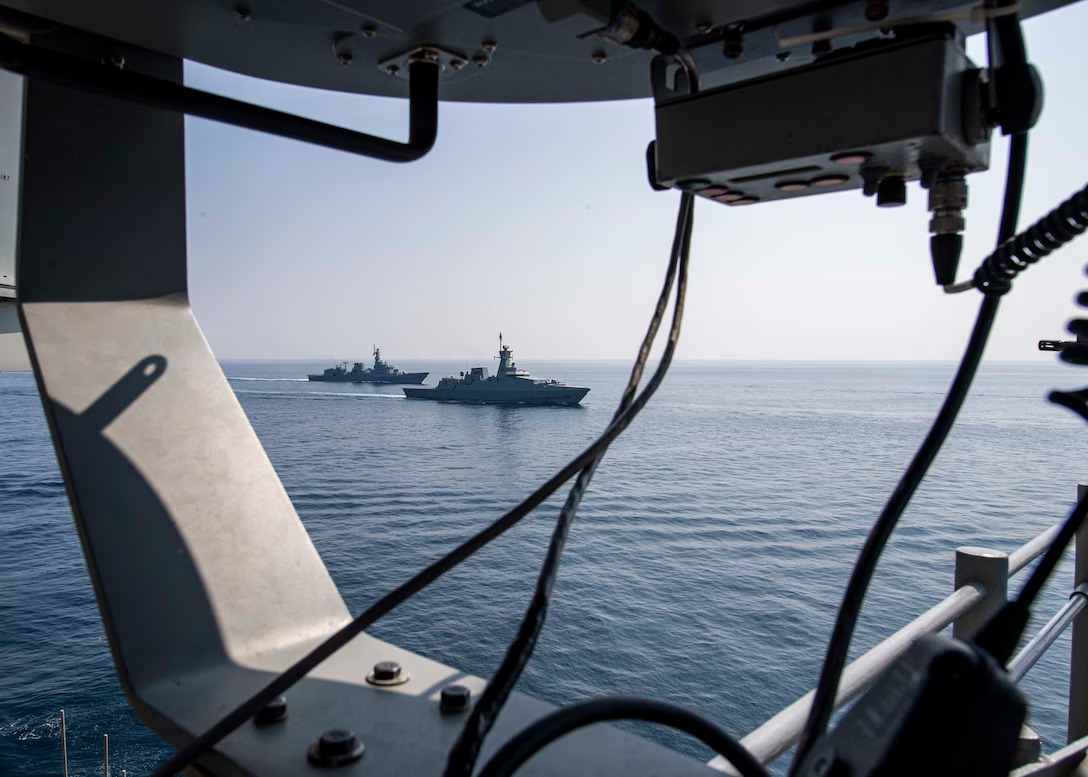
Oman's Royal Navy evacuated all 25 crew members from a Panama-flagged commercial vessel that was targeted and caught fire off the coast of Musandam on Friday, Oman's Maritime Security Centre said — a step up in the Strait of Hormuz shipping campaign, because this time the crew could not stay with their ship. The navy, working in coordination with the centre, took the crew off the vessel and provided them with medical care, the centre said in a statement reported by Reuters. The vessel was named in the centre's statement, as quoted by other outlets carrying the announcement, as the RITI (also rendered Riti). The centre gave no details about who attacked the ship, what weapon was used, or what condition the vessel was left in, and no group has claimed responsibility.
The evacuation was the second ship emergency of a single news cycle in the strait. On Thursday night, a small boat attached two limpet mines to the crude tanker Louise 1 off Khasab, at the northern tip of the same Omani peninsula — an attack whose crew stayed aboard, put the fire out, and got their ship under way again (see our report on the Louise 1 limpet-mine attack). The RITI's crew, by contrast, had to be taken off entirely. What separates those two outcomes — the size and location of the fire, damage the statement does not describe, or simple precaution after a run of attacks that have already injured merchant seafarers this month — is exactly what the Omani statement does not say.
What is confirmed — and what is not
What is confirmed comes from a single official source: the Maritime Security Centre, Oman's maritime security authority, said the Royal Navy of Oman evacuated 25 crew from a Panama-flagged commercial vessel that was targeted and caught fire off Musandam, and that the crew received medical care. Reuters reported the statement on Friday (12:45 UTC). A casualty report by VesselTracker, the vessel-tracking and maritime casualty service, independently names the ship as the Riti, says the incident remains under investigation, and records that no responsibility has been officially attributed.
One detail in the first reports does not reconcile, and readers should know it. Reuters reported the vessel was 1.6 nautical miles off the Musandam coast — essentially in the strait's inshore traffic lanes. The centre's statement, in a fuller quotation carried by other outlets, put the incident approximately 106 nautical miles off the coast of Musandam Governorate — far out in the Gulf of Oman. Those are very different positions: different waters, different response times, and a different relationship to the strait's controlled routes. The centre has not publicly reconciled the two figures, and Signal Post News is reporting both, attributed, rather than choosing one. Reuters' report, notably, was sourced to the Omani centre rather than to a UKMTO advisory, and no advisory naming the RITI had been published by the British agency in the first reports.
Claims around the strait on the same day — kept separate
Friday also brought Iran's Revolutionary Guards statements about other vessels: the IRGC Navy said two oil tankers had been halted south of the strait after encountering "incidents" while attempting what Tehran calls an unauthorised route — one in the eastern and one in the western strait — and Iran separately said it had destroyed a U.S. unmanned vessel in the eastern Strait of Hormuz, a claim the U.S. military did not immediately confirm, Reuters reported. Tehran's earlier claim that tankers had struck mines in the strait, and Thursday's reported ship fire and projectile sightings off Khasab, are covered in our report on Thursday's ship fire and the IRGC mine claim. Neither the Omani centre nor the IRGC has linked the RITI to any of those claims, and the statements describe different positions and different outcomes. Readers will see these incidents merged in some coverage; the official statements treat them as separate events, and so does this article.
Oman, the strait's reluctant first responder
There is a structural reason an Omani warship keeps arriving first at other people's emergencies. The strait's deep-water traffic separation scheme — the lanes every loaded tanker must use — runs through Omani territorial waters along the Musandam coast, which makes Oman the coastal state responsible for rescues in the very channel the war is being fought over. Friday's evacuation is at least the fourth time during this war that Omani forces have taken a merchant crew off a stricken ship. On March 4, the Royal Navy of Oman rescued all 24 crew of a Malta-flagged cargo vessel struck by two missiles near the strait, the Oman News Agency reported at the time. On October 6, Oman's air force medically evacuated 10 injured crew from the Panama-flagged tanker On Peace after a projectile strike injured 12 of its 19 crew off Limah, in Musandam (see our report on the On Peace attack). And in another October incident reported by Reuters, an Omani naval vessel evacuated 23 crew from the Panama-flagged EL GAIA after an engine-room fire following an attack about 103 nautical miles northeast of Musandam, with two crew reported missing.
Oman is simultaneously the war's mediator and its coastguard. Muscat has spent the autumn arguing for a Gulf non-aggression framework and shuttling between Tehran and its neighbours (see our report on Oman's non-aggression pact push), while its navy pulls foreign seafarers out of burning ships in Omani waters. Every rescue strengthens Muscat's standing argument — that the strait cannot be governed by the two belligerents' competing route regimes, because it is Omani rescue crews, not American or Iranian ones, who keep ending up responsible for the human consequences.
Why this matters
An evacuation is a threshold event in a shipping war. Crews are trained and paid to fight shipboard fires, and owners abandon a vessel's own damage control only when the fire is beyond the crew, the ship is unsafe, or the authorities judge that staying aboard risks lives. Each threshold crossed reprices the strait: war-risk insurance is already being recalculated voyage by voyage after a record month of attacks, and a full-crew evacuation is the kind of entry underwriters read first. It also lands on the crewing market. The roughly 25 people taken off the RITI are the full complement of a mid-size commercial vessel — officers and ratings drawn, as most tanker crews are, largely from the Philippines, India and Indonesia — and every evacuation makes the next crew harder and more expensive to sign.
Markets were already pricing a dangerous strait before Muscat spoke. In early Friday trade, Brent crude rose 86 cents, or 0.75 percent, to $115.74 a barrel and U.S. WTI rose 72 cents to $102.72, Reuters reported — a fourth consecutive monthly gain, with Brent on course to finish October up about 14 percent. The Omani statement arrived hours later, into that already-elevated market, alongside another small signal of corporate nerves: ExxonMobil and Chevron had cancelled plans for their executives to travel to the UAE's biggest oil show next week, two sources told Reuters. The pattern to watch is not any single price print but the accumulation of operational facts — a mined tanker on Thursday, an evacuated crew on Friday — each of which makes the strait's "open for business" status harder to assert and more expensive to insure.
What happens next
Four facts will decide what Friday's evacuation becomes. First, the RITI herself: her condition, whether she is towed to an Omani port as the EL GAIA was, and whether fire or flooding continues aboard an uncrewed ship carrying cargo. Second, identification and attribution: a statement from the vessel's owner or manager, a Panamanian flag-state inquiry, or a UKMTO advisory would move the story from a rescue report to an investigated attack. Third, the position discrepancy — 1.6 or 106 nautical miles — which Omani authorities can settle with a single corrected statement, and which determines whether this attack happened inside the strait's lanes or far out in the Gulf of Oman, where it would mark a geographic widening of the campaign. Fourth, the response of the two belligerents: Washington has said the strait's primary routes were cleared of mines, and Tehran has said it is enforcing its own passage rules; neither claim, as stated, explains a burning ship whose crew had to be lifted off by the neutral state in between.
Sources
Reuters, "Oman navy evacuates 25 crew from vessel off Musandam," Oct 30, 2026 (reporting by Muhammad Al Gebaly and Yasmine Ghania; Maritime Security Centre statement); Oman Maritime Security Centre statement, Oct 30, 2026, as quoted in Dawn/South Punjab News live coverage, Oct 30, 2026 (vessel named RITI; approximately 106 nautical miles); VesselTracker casualty report on the Riti, Oct 30, 2026; AFP, "Iran Guards say two tankers halted after 'incidents' in Hormuz," Oct 30, 2026; Reuters, "Oil rises on supply concerns as Houthis attack Saudi Arabia," Oct 30, 2026; Oman News Agency, "RNO Responds to Distress Call Following Missile Strike on Cargo Vessel in Strait of Hormuz," Mar 4, 2026; Reuters via MarineLink on the EL GAIA evacuation, October 2026.
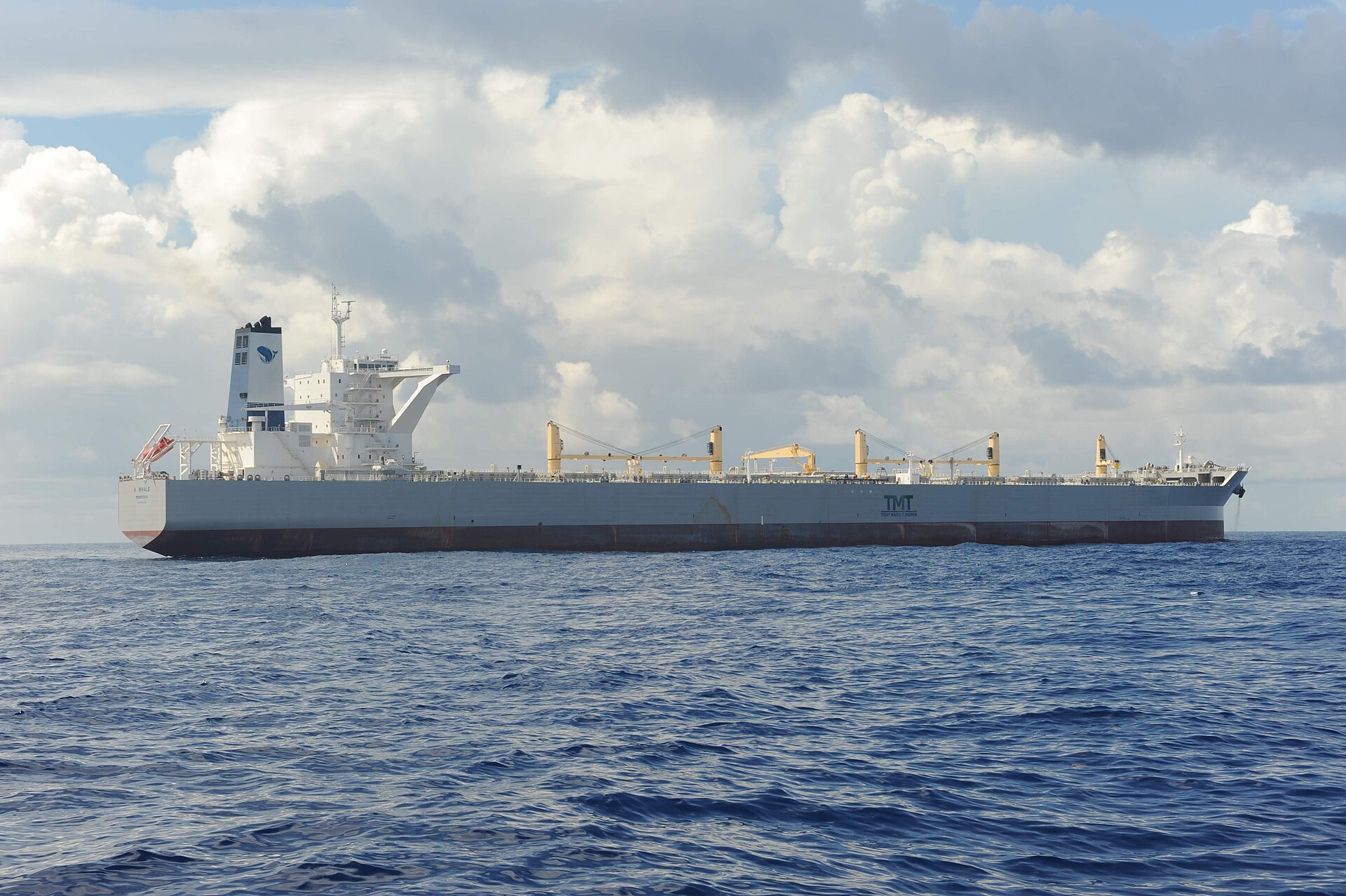
Photos: U.S. Navy (public domain) via CENTCOM/DVIDS, and ImagePerson and U.S. Coast Guard (public domain) via Wikimedia Commons, as credited in the captions. File photographs — no photograph of the RITI or of Friday's evacuation has been published by Omani authorities.