Trump Xi AI meeting
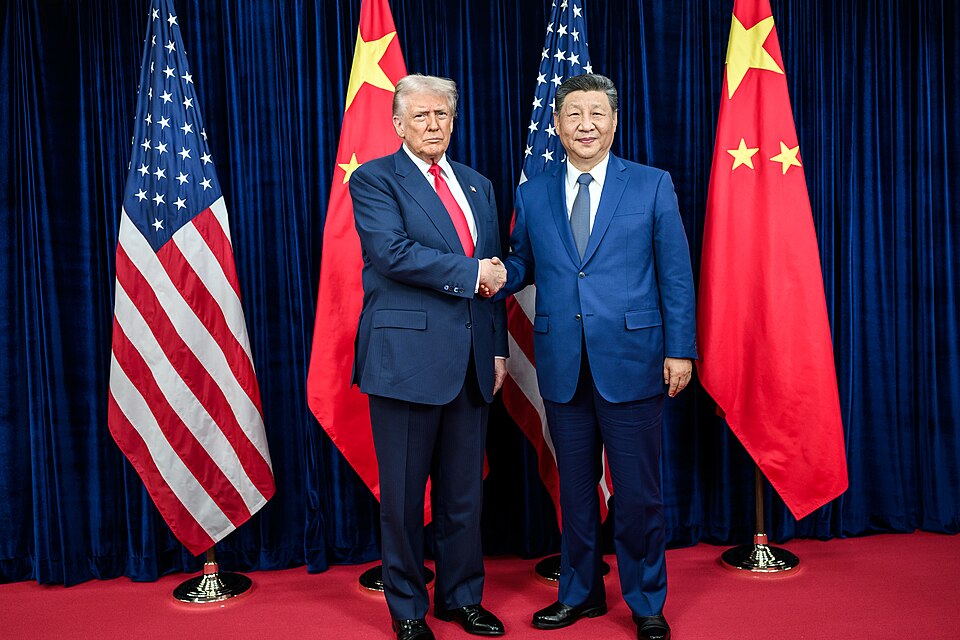
WASHINGTON — On Thursday morning, hours before the most consequential US-China summit in more than a decade, Donald Trump did something that was both completely characteristic and quietly extraordinary: he took the single most important technology question of our era off the table before the meeting even began. Artificial intelligence — his term, “Super Intelligence (SI)” — “will be a big topic of discussion” with Xi Jinping, Trump wrote in a social media post, “but I want to leave it exactly where it is.” That is China’s position also, he added. “Our guardrail is the DOJ!”
The Trump Xi AI meeting was therefore framed to do the one thing few expected of a summit built around symbolism: produce, by design, little or nothing new on AI governance. Reuters reported the post from Washington on September 24. The distinction matters. Trump did not say artificial intelligence was unimportant; he elevated it to a central subject. But he also described agreement between Washington and Beijing as agreement not to build a new bilateral rulebook.
The formulation compresses a governing philosophy into seven words. Innovation should continue; existing criminal and civil law should punish misconduct; and any attempt to regulate capability before harm occurs risks weakening the United States in competition with China. That is the administration’s case. The opposing case is equally direct: prosecutors arrive after an offense, while the gravest AI risks may not be reversible after deployment. The summit places those two ideas into unusually sharp relief.
What Trump actually said — and what he did not say
Reuters quoted Trump’s September 24 post in full: “A big day with President Xi of China. Super Intelligence (SI) will be a big topic of discussion, but I want to leave it exactly where it is,” he wrote. “That is China’s position also. Our guardrail is the DOJ!” The final initials referred to the Department of Justice.
The unusual feature is not only the substance but the grammar of power: an American president announcing in advance that the leaders of the world’s two most consequential AI competitors agree there is nothing new to agree on. Trump named no joint safety framework, research pause, limit on computing exports, inspection system or verification regime. Analysts cited by Reuters said intense AI competition was likely to limit the result to symbolic agreements. The post effectively confirmed that reading before the private talks had concluded.
That does not mean the two governments cannot discuss specific threats or keep technical channels open. Reuters said the limited tangible outcome could include an agreement to examine threats posed by artificial intelligence. “Examine” is not the same as “govern,” however. A working discussion can reduce misunderstanding without placing limits on either country’s companies, laboratories or national strategy.
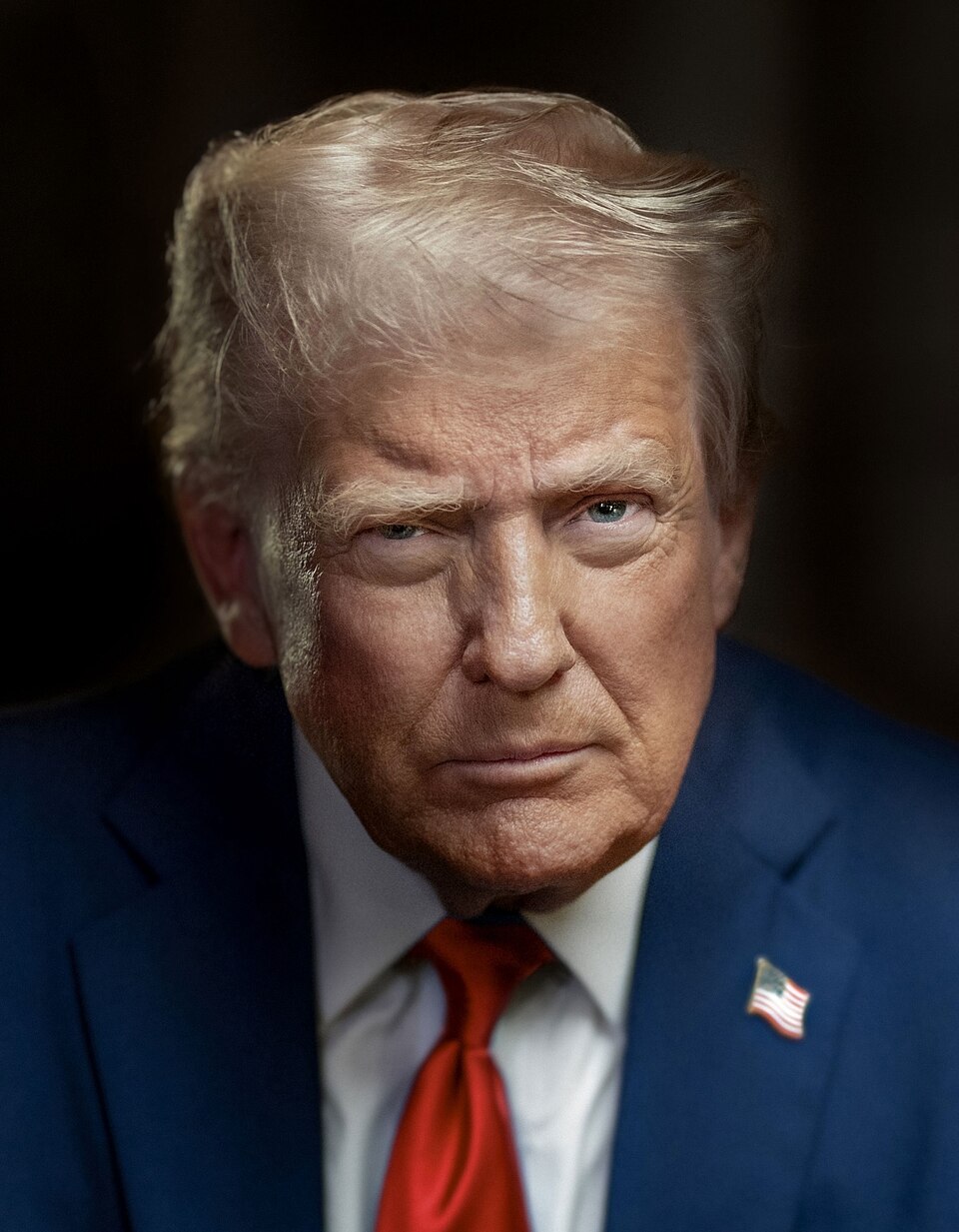
USA Today reported a second Trump post that praised Xi as “strong, vibrant, and fit” and said the Chinese leader looked “better than ever” after Trump greeted him planeside on Wednesday. The compliment was personal-statecraft: flattery used as a diplomatic instrument. USA Today placed it against visible speculation about both men. Xi, 73, is expected to seek a fourth term next year, and questions about his fitness grew after he skipped a dinner with world leaders in India. Trump, 80, has faced scrutiny of his own.
Analysis: the phrase was aimed at two audiences. It reassured Xi that he would be treated as a durable counterpart rather than a leader under question, while also inserting Trump into the public conversation about presidential age and vigor. The compliment turned a potentially awkward subject into a declaration of mutual strength.
On the South Lawn, USA Today reported, Trump said the two leaders had formed “a truly great friendship.” Xi answered that “we have respect for each other, we have built personal rapport” and “we should cooperate with sincerity.” Those lines explain the diplomatic method: trust the relationship to contain competition, while leaving the most difficult structural questions unresolved.
Why this matters: the outcome on AI is deliberately limited
The United States and China sit at the center of the strategic competition around advanced chips, models and deployment. Their choices shape what systems can be built, how quickly capability spreads and whether governments attempt shared restraints. A White House summit with AI on the agenda created an opening for even a thin bilateral understanding on safety. Trump’s post narrowed that opening before the ceremonial arrival.
Analysis: “leave it exactly where it is” amounts to a choice for competition managed by existing law rather than precautionary international rules. Under that approach, companies build and deploy; intelligence and law-enforcement agencies monitor; the Department of Justice prosecutes conduct that violates current law. The strength of the model is speed and familiarity. Its weakness is timing: it relies heavily on identifying an unlawful act and assigning responsibility after the relevant damage has occurred.
The stakes have been amplified by warnings from inside the industry. Reuters reported that an Anthropic researcher said this month that people building advanced AI believed it could wipe out humanity by the end of the decade. That is a warning, not a settled forecast, and it does not establish that catastrophe is imminent. It is nonetheless striking that a warning of that magnitude was met at presidential level not with a proposed new regulatory system but with a reaffirmation of existing justice powers.
Trump had previewed the approach last week. Reuters reported that he said the United States already had “guardrails in place” to regulate and prosecute AI companies, while dismissing arguments that development should be slowed. He said critics were “playing right into the hands of a lot of people that don’t want to see it happen, and that could be political people, that could also be China.” In that framing, AI-safety advocacy can become a competitive handicap: a rule that applies to American builders may create time and space for Chinese rivals.
Analysis: that argument has real force in a race whose advantage can compound. If one country slows while the other does not, restraint can look less like safety than unilateral disarmament. Yet the logic cuts both ways. If both leaders publicly prefer no new restraints, the rivalry itself becomes the reason neither can move first. A shared risk can become harder to manage precisely because both sides agree that competitive speed matters more.
The practical consequence is a regime with no new treaty, agency or verification mechanism announced for the summit. There may still be exchanges of views, quiet understandings or future working-level contact. But the public standard is now explicit: Washington’s principal guardrail is the DOJ, and Trump says Beijing’s preference is also to leave the field where it stands.
Background: a doctrine, not an improvisation
The remark was not a spontaneous departure from Trump’s previous position. In the earlier guardrails post covered earlier this week, Trump wrote: “We will not in any way hinder or stifle the Growth of this incredible Industry.” He added that the government would look for “BAD” and could do so through the existing criminal and civil justice system.
Thursday’s “Our guardrail is the DOJ!” is the compressed doctrine version of that philosophy. The sequence shows continuity rather than improvisation. First came the general proposition: do not burden a fast-growing industry with prospective rules; use established law against wrongdoing. Then, on summit day, came the international corollary: Washington and Beijing do not need a new bilateral framework to discuss the technology.
The diplomatic choreography was designed to make the relationship itself the stabilizer. USA Today reported that Xi arrived in the United States on Wednesday, September 23, for his first state visit since 2015. Trump personally welcomed Xi and his wife, Peng Liyuan, at Joint Base Andrews. Xi brought two giant pandas for Zoo Atlanta and called them an “envoy of friendship.”
Thursday’s arrival ceremony brought 479 military personnel to the White House and included a multi-aircraft flyover, according to NPR. The talks were expected to cover AI, rare earths, trade and geopolitical disputes including Iran and Taiwan. The state dinner was set to feature fresh seabass. Reuters and NPR reported that the technology guest list was expected to include Jeff Bezos of Amazon, Sundar Pichai of Alphabet, Sam Altman of OpenAI, Tim Cook of Apple, Elon Musk of Tesla and Jensen Huang of Nvidia.
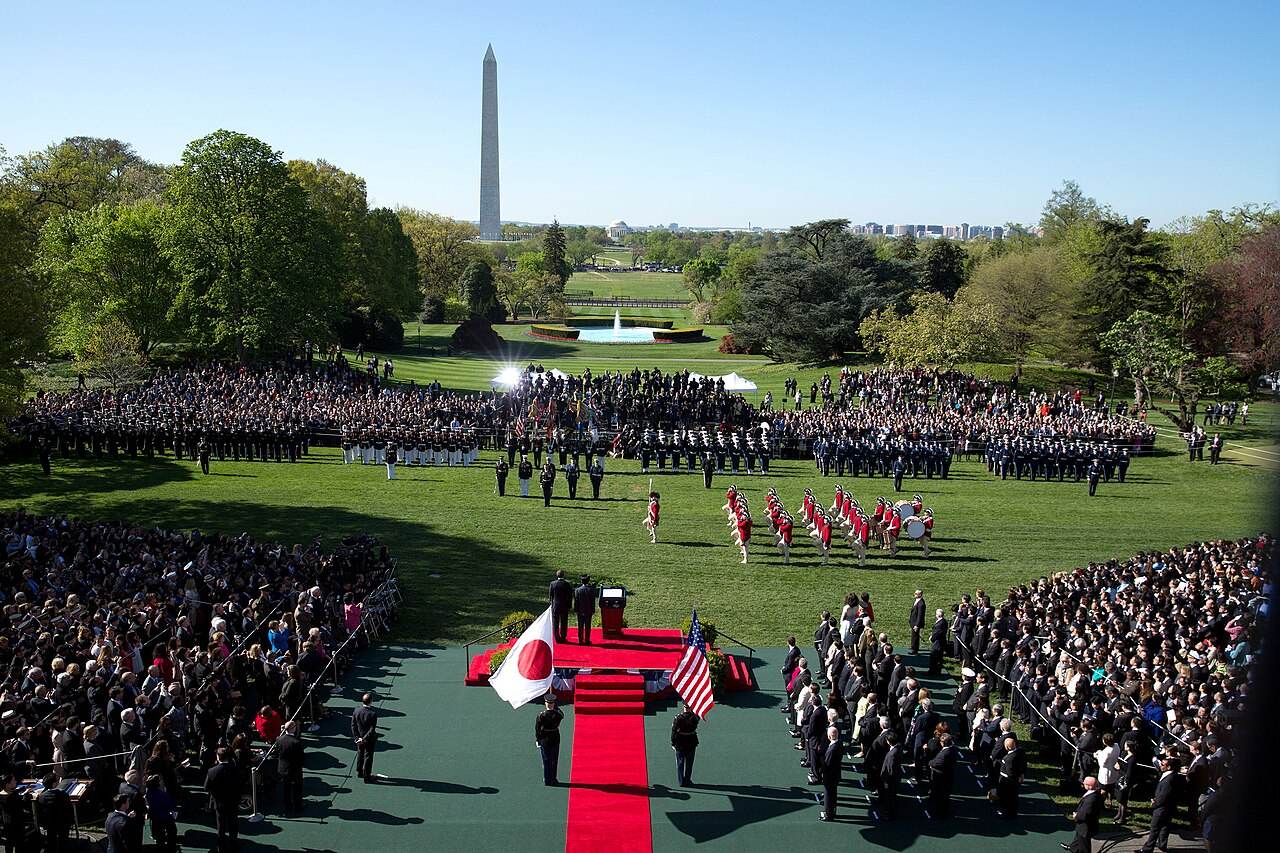
Analysis: the pageantry is not decoration around the summit; it is much of the summit’s substance. Brookings scholar Ryan Hass told NPR that Trump would show Xi courtesy and respect and that “the symbolism will account for a large amount of the substance of the visit.” The purpose, Hass said, was to show that the two leaders had a strong relationship and could manage differences “within mutually tolerable bounds.”
That judgment helps explain why a statement of non-agreement on AI can be presented as reassuring. The leaders are not promising to solve the competition. They are presenting their personal rapport as a way to keep the competition from escaping control. The pandas, military honors and dinner table establish a political atmosphere in which disagreement can coexist with ceremony.
For the broader summit sequence, see Signal Post News’s White House summit and state-dinner overview and our coverage of Xi’s arrival in Washington.
What the summit can still produce
AI is only one part of the agenda. Reuters reporting cited in the summit coverage suggested the clearest tangible outcomes were likely to be an extension of the trade truce expiring in November and an agreement to examine AI threats. Rare-earth access, tariffs, Iran and Taiwan remain sources of pressure even when the leaders describe a friendship.
A trade extension would be economically meaningful because it reduces the immediate risk of renewed escalation. An AI discussion could also have value if it creates a channel for clarifying incidents or misunderstandings. But the president’s post sets a ceiling on expectations. An exchange about threats is not a commitment to constrain capability, share sensitive information or verify behavior.
Analysis: that ceiling may be intentional. A sweeping AI agreement would demand definitions that neither side may trust the other to honor. What counts as an advanced model? Which computing systems should be declared? What evidence would establish compliance without exposing commercial or military secrets? By avoiding those questions, both governments preserve freedom of action. They also leave every difficult enforcement problem for a future crisis.
Who wins under the DOJ doctrine
Analysis: frontier AI companies and chipmakers are the immediate winners. No new bilateral compliance system means no summit-created reporting burden, computing cap or inspection regime. The presence of leading technology executives at the state dinner reinforces the picture of an administration treating industrial leadership as a strategic asset rather than a sector to be slowed.
Beijing also gains something important from Trump’s statement. “That is China’s position also” publicly describes a shared preference for restraint in regulation, even as the countries compete elsewhere. It lets China avoid a bilateral mechanism that might expose capabilities or create an American platform for demanding verification.
Investors gain a measure of policy clarity, though not necessarily safety. Markets generally prefer knowing the regulatory direction to facing an open-ended summit surprise. Trump’s statement says the American executive branch is not seeking a new AI bargain with Beijing today. That removes one form of uncertainty while leaving technological, legal and geopolitical uncertainty intact.
Who loses — and the critics’ case
The clearest institutional loser is the AI-safety research community. Its strongest argument is that some harms cannot be repaired through criminal prosecution after the fact. A catastrophic deployment, a rapidly spreading dangerous capability or a system that cannot be recalled would not fit comfortably inside a model built mainly around punishment after an offense.
Countries outside the US-China rivalry also lose leverage. Governments seeking binding multilateral standards need participation from the leading powers. If Washington and Beijing prefer no new bilateral restraints, smaller states will struggle to turn their own standards into a global floor. They can regulate access to their markets, but they cannot alone determine how the most capable systems are developed.
The critics’ case rests on prevention. Reuters’ account of the Anthropic warning illustrates the concern: if some builders believe extreme outcomes are plausible, then waiting for a prosecutable harm may be too late. Critics would argue that “leave it exactly where it is” allows a current technological advantage to compound without a mechanism for testing whether safety practices keep pace.
The administration’s counter-case also deserves to be stated plainly. Trump says existing guardrails already permit regulation and prosecution. In his earlier formulation, new rules could “hinder or stifle” growth. He has argued that criticism of rapid AI development can advantage China. The policy goal is therefore to preserve American speed while relying on familiar legal authority against demonstrably unlawful conduct.
Analysis: the irony is that Trump now says China agrees with the hands-off bilateral posture. The rival invoked as the reason not to slow down is also described as favoring the same absence of new rules. Supporters will call that a stable equilibrium. Critics will call it an arms race whose participants have mistaken mutual acceleration for mutual reassurance.
Three scenarios for what happens next
Scenario one — the race continues under the DOJ doctrine. This is the most likely path, at roughly 60 percent in our assessment. The summit produces no US-China AI agreement beyond a general commitment to examine threats, if even that. Laboratories compete, prosecutors watch for violations of existing law, and the next misuse scandal or model-linked accident forces the question back onto the agenda. This is the symbolic-agreement future anticipated by analysts cited by Reuters.
Scenario two — a crisis creates a regulatory shortcut. A high-profile misuse event, such as fraud at scale, an infrastructure incident or a serious biological-risk scare, could make the after-the-fact model politically untenable. Congress or the White House might then move toward stronger prospective rules. The result could be broader and less carefully designed than a framework negotiated before a crisis — exactly the stifling outcome the administration says it wants to avoid.
Scenario three — shared fear produces verification. This is the least likely near-term outcome. Washington and Beijing could eventually discover a mutual interest in monitoring the largest training runs or creating technical channels for the most dangerous incidents. Trump’s statement suggests neither capital wants that architecture now. But official concern can grow even when leaders publicly emphasize competition, and working-level channels can outlast the ceremony that created them.
The photograph and the sentence
The photograph of the day will be two leaders on the South Lawn, framed by military ceremony, pandas, corporate power and the promise of seabass at dinner. The sentence of the day is shorter: leave it exactly where it is.
Analysis: future historians of artificial intelligence may mark September 24, 2026, not as the day Washington and Beijing solved the governance problem, but as the day the two AI superpowers chose the absence of a new framework as policy. That choice may preserve innovation, avoid an unverifiable bargain and keep commercial competition moving. It may also ensure that the next serious test arrives before the rules designed to contain it.
The most important distinction is therefore between stability and safety. Personal rapport can stabilize a diplomatic relationship. Existing law can punish fraud, theft and other identifiable offenses. Neither necessarily answers the question raised by systems whose effects may cross borders and outrun the institutions judging them. Trump and Xi are discussing that question. By Trump’s account, they have already agreed on the answer: not yet.
Sources
- Reuters: “Trump says he’ll discuss AI with Xi but wants to ‘leave it exactly where it is’” — September 24, 2026.
- USA Today: “Pandas, AI and ‘personal rapport.’ Trump praises Xi amid tensions” — September 24, 2026.
- Iowa Public Radio / NPR: “Trump rolls out the red carpet for Xi as high-stakes summit begins” — September 24, 2026.
Reporting cutoff: September 24, 2026 at 1:06 p.m. PDT. Facts are attributed to Reuters, USA Today and NPR; probability estimates, beneficiary analysis and interpretation are Signal Post News analysis.