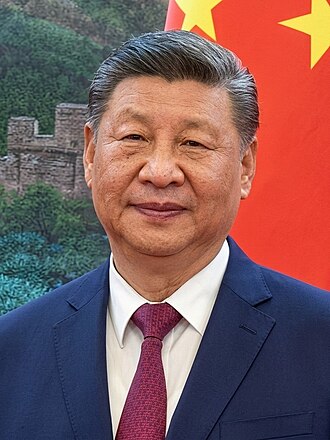
WASHINGTON — Donald Trump is personally greeting Xi Jinping and his wife, Peng Liyuan, on the tarmac at Joint Base Andrews on Wednesday evening as the Chinese leader begins a three-day Washington state visit — his first visit to Washington in more than a decade. The Xi Jinping Washington state visit 2026 is being staged as a spectacle: a Thursday military ceremony with jet flyovers, a visit to the National Archives and a state dinner bringing together leaders of companies central to both economies, including Apple's Tim Cook, Nvidia's Jensen Huang and OpenAI's Sam Altman, according to Reuters.
The choreography is unmistakably grand, but it should not be mistaken for agreement. Behind the honor guard are unresolved disputes over tariffs, Taiwan, advanced technology, rare-earth supply chains, Iran, fentanyl and detainees. The visit is designed to make the relationship look stable long enough for the two governments to test whether stability can become policy.
A welcome reserved for popes
A president traveling to Andrews to receive a foreign dignitary is extraordinarily rare. The last U.S. presidents to make that gesture were Barack Obama and George W. Bush, for Pope Francis and Pope Benedict XVI. Trump is using an honor normally associated with a spiritual leader to tell Xi that this is not an ordinary working visit.
Thursday's formal arrival is expected to widen the frame: a large military honor guard, a presidential salute, a military review in the Rose Garden and a flyover led by a B-2 Spirit stealth bomber with four F-22 Raptor fighters, according to syndicated reporting from the Times of India's Washington correspondent. The hardware projects American power even as the ceremony projects welcome. It is reassurance and warning in the same picture.
The contrast with Trump's May state visit to Beijing is deliberate. Xi did not greet Trump at the airport; Vice President Han Zheng and other officials did. There were no comparable flyovers and no meeting between the first ladies. Rush Doshi, a former National Security Council official, has noted the asymmetry in the pageantry. Washington is offering more visible deference than Beijing did, and both capitals understand that the images will be replayed for a domestic audience.
Why this matters
The theater is the message. Trump spent years saying China was “eating our lunch.” Now, in the Times of India correspondent's phrase, he is becoming “tarmac man” for Xi. That pivot tells Beijing that Washington wants the relationship stabilized. It also tells Xi's audience at home that Chinese leverage is real enough to bring an American president to the runway.
Rare earths sit at the center of that leverage. China controls the overwhelming share of global processing capacity, and Chinese suppliers have been slow-walking export licenses, with some U.S. firms waiting more than six months. Manufacturers cannot replace refined inputs by declaration. Mines, separators, permitting systems and commercial relationships take years to build.
Iran adds another measure of restraint. An administration that once threatened “economic D-Day” for countries doing business with Tehran has so far withheld secondary sanctions on major Chinese banks, even though China is Iran's largest trading partner. That does not mean Washington has abandoned pressure. It means officials appear unwilling to rupture the China relationship before testing what the summit can produce. Pageantry, in this setting, is a negotiating instrument rather than ornamental protocol.
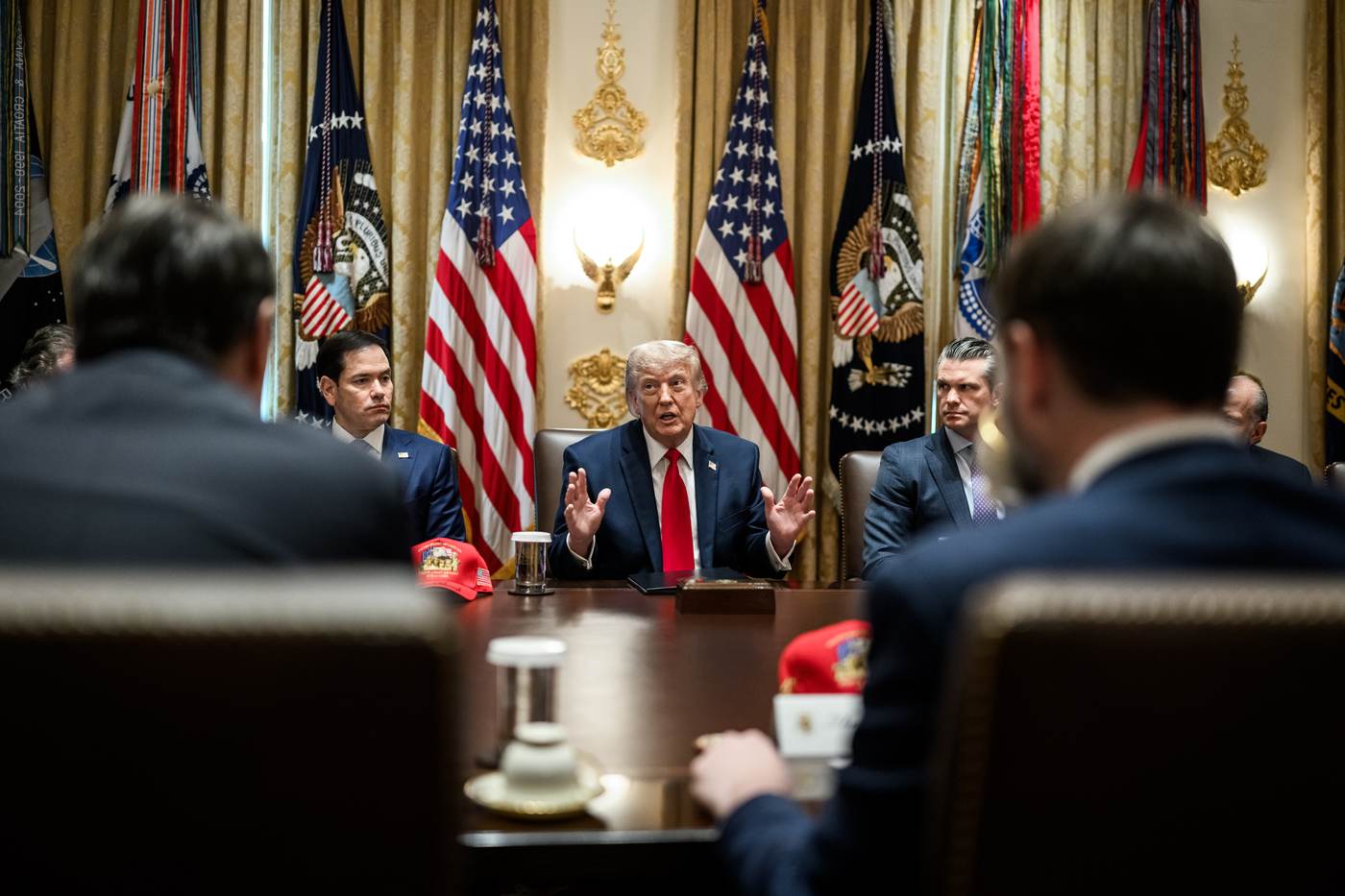
The Thursday agenda
Tariffs and the November deadline
The 11-month trade truce expires in November. Last year, Trump imposed triple-digit tariffs on Chinese imports before relaxing both the policy and the rhetoric. Thursday could produce narrower deals that lower tariffs in selected sectors, but the deeper test is predictability. Companies need to know which rates apply, when licenses will move and what triggers renewed escalation; another broad promise without implementation rules would simply push uncertainty toward the deadline.
Taiwan and the arms sales
People familiar with the preparations expect Xi to raise Beijing's claim to Taiwan forcefully, on a subject Washington would prefer not to let dominate the visit. The administration approved an $11 billion arms sale to Taiwan in December — the largest on record — while a second package worth roughly $14 billion has remained on hold for months. Trump has called arms sales “a very good negotiating chip.” For Taipei, that language turns defense planning into summit leverage.
The concern is not only a formal concession. A delayed package, softened statement or changed licensing rhythm can alter expectations without either side announcing a new doctrine. Taiwan, Japan and other U.S. partners will therefore read the post-summit administrative decisions as carefully as the public remarks.
Rare earths and tech controls
Trump is expected to maintain firm U.S. export controls on advanced technology despite Xi's objections. Beijing's rare-earth advantage is the silent third party at the table: Washington can restrict chips and manufacturing tools, while China can slow the materials needed for motors, electronics and defense systems. Neither instrument is cost-free. Each side's pressure encourages the other to build substitutes, but those substitutes do not arrive on a summit timetable.
Iran, fentanyl and detainees
Beijing has preserved close ties with Tehran. Some U.S. officials believe China could use that influence to help break the Iran-war stalemate, although Trump has said he sees no need to ask for Chinese help. China, the world's largest oil importer, helped steady crude markets after the war began by reducing demand and releasing strategic stockpiles. Its choices affect prices even when its diplomacy remains limited.
Cooperation on fentanyl-trafficking networks and precursor chemicals is also on the table. Trump is expected to press for the release of Americans and others detained in China. These issues offer possible deliverables smaller than a trade grand bargain but more immediate for families and law-enforcement agencies.
AI and military-to-military dialogue
Officials may explore artificial-intelligence cooperation despite a fierce contest over compute, models, chips and standards. The practical opening is likely to be narrow: crisis communication, safety discussions or agreed boundaries, not shared frontier technology. Expanded military-to-military dialogue is similarly modest but valuable. In a relationship crowded by aircraft, ships and cyber operations, a reliable channel can prevent an accident or bad intelligence report from becoming a confrontation.
Who wins, who loses
Trump reaches the summit at a difficult political moment. His approval numbers have fallen, public discontent with the Iran war has grown and his party faces a hard November congressional election. Nearly seven months of war have pushed U.S. energy prices higher. A visible agreement with Xi would let him argue that personal diplomacy can lower economic and strategic risk. A ceremony without a result leaves him owning the deference while China keeps its leverage.
Xi appears stronger in the images. China's trade engine is roaring, and the tarmac greeting supports his claim that Beijing must be treated as an equal power. Yet the domestic economy beneath that picture remains uneven: household demand is weak, the property downturn persists and sweeping military-corruption purges have consolidated Xi's authority while raising questions about People's Liberation Army readiness.
Taiwan is the most exposed third party. Xi wants Washington's language and arms policy to move closer to Beijing's position; Taipei faces a roughly $14 billion package stuck in limbo while its security becomes part of a negotiation it cannot attend. U.S. technology and manufacturing firms dependent on Chinese rare earths stand to gain most from a thaw — and to lose most if November arrives without a durable deal.
The executives at the state dinner will also be both guests and evidence. Apple, Nvidia and OpenAI represent the commercial scale of the relationship and the strategic technologies each government wants to shape. Their presence can help define practical problems. It cannot settle whether national-security restrictions and market access can coexist.
What happens next
Expectations for a breakthrough remain slim. The more plausible purpose is to stop competition from hardening into confrontation. The format reinforces that caution: no joint press conference and no joint statement at the end. Instead, each government is expected to issue its own account, emphasizing the gains it wants domestic audiences to see, as it did after the leaders' two previous meetings.
The real tests come after the motorcades leave: whether the November truce is extended, whether the Taiwan arms package moves, whether rare-earth licenses accelerate and whether military contacts become routine. The leaders could meet again on the sidelines of the APEC summit in China in November or at the G20 meetings in the United States in December. Those possibilities give both sides a reason to preserve flexibility now.
Former White House official Edgard Kagan, now at the Center for Strategic and International Studies, has described the deeper conflict as a contest of time horizons: Trump believes time favors the United States; Xi believes America is in decline and time favors China. The red carpet cannot reconcile those assumptions. It can buy three days in which neither leader benefits from proving the other right.
- Reuters: Trump's planned spectacle, state dinner and negotiating agenda
- Matzav: Foreign Ministry spokesman Guo Jiakun confirms the September 23–25 visit at Trump's invitation
- OkayNews: syndicated reporting on the honor guard, flyover and Rush Doshi's analysis of the ceremonial asymmetry
- Yoopya: agenda analysis on trade, AI, Taiwan, Iran, fentanyl and detainees