$6.2 billion for the anti-Nvidia bet / Tenstorrent's open-standard wager gets its biggest cheque
Track it live: Live market data and index tracker
The deal, in numbers
The round was led by Trace Capital and Innovation X, with participation from ARK Invest, Fidelity, Morgan Stanley, T. Rowe Price, Sandisk and Tether Investments, among others, Reuters reported. The comparison that gives the headline its force is the company's own recent history: in December 2024, Tenstorrent raised more than $693 million at a $2 billion pre-money valuation, in a round led by Samsung Securities and AFW Partners. In under two years, the paper value of the company has roughly tripled on the pre-money measure and more than doubled post-money, while the size of the cheque has more than doubled too.
Put those numbers in context and they sharpen rather than soften. Late-stage rounds of $1.5 billion are no longer unusual in AI, but they are usually written for model companies with consumer products and software margins. Tenstorrent sells silicon and servers — a capital-hungry, slow-margin business in which every generation of product must be designed, fabricated and shipped before it earns anything. That makes both the amount and the investor list, heavy with large public-market institutions such as Fidelity, Morgan Stanley and T. Rowe Price, a stronger signal than the same numbers would be for a software startup: these are investors who normally buy listed companies, choosing to pay a private-market price for a hardware challenger instead.
What Tenstorrent actually sells
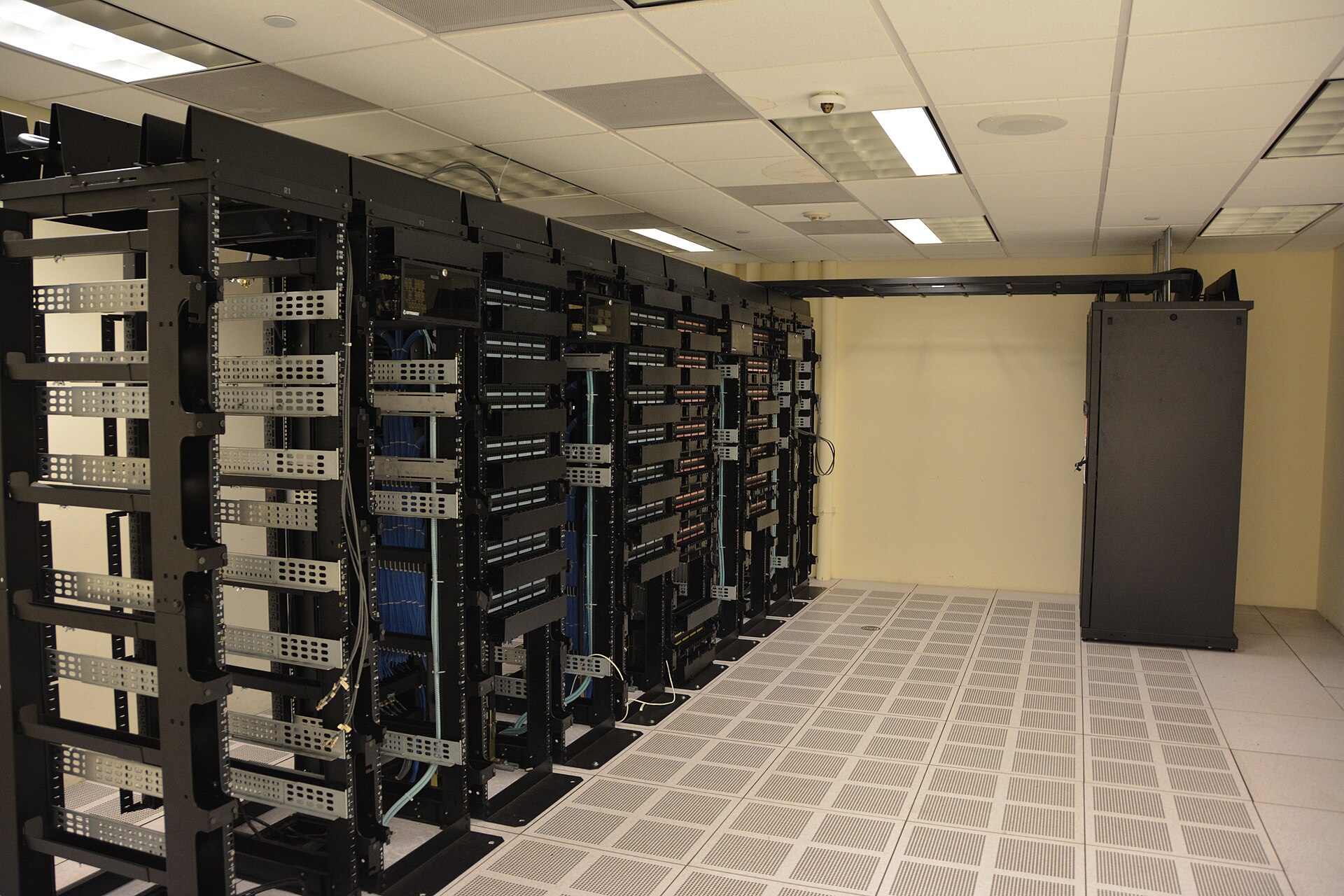
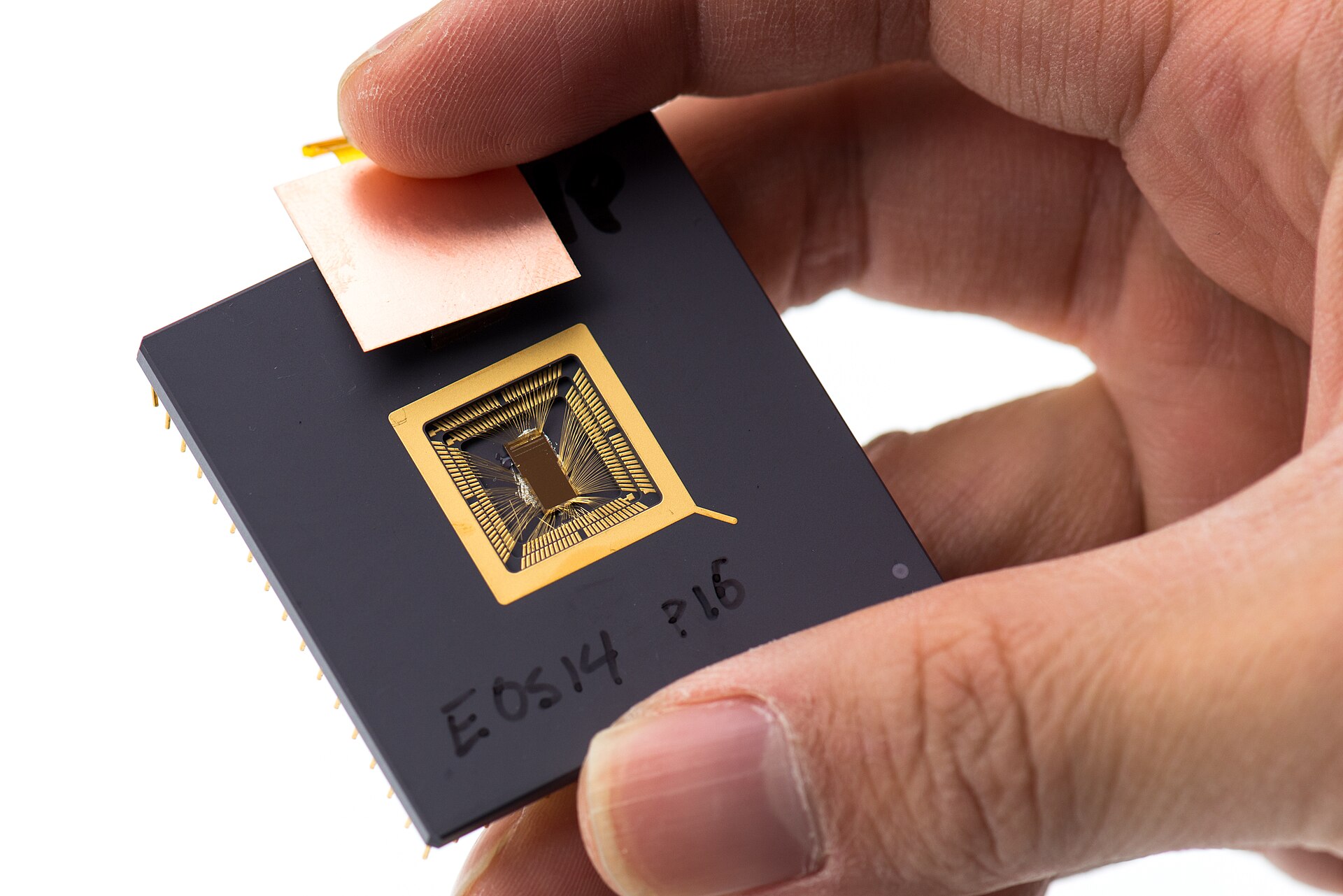
Tenstorrent's range runs from individual accelerator cards and desktop workstations up to the Galaxy servers that anchor its pitch: systems combining dozens of its AI chips — 32 of its Blackhole processors per server, by the company's account — that can be linked into larger clusters for training and running AI applications, including chatbots, coding assistants and video generators. Reuters reported the new funding will be used to scale production of those Galaxy servers. Alongside finished systems, the company licenses its designs — its Tensix AI cores and its TT-Ascalon CPUs — to other chipmakers building their own silicon, with Samsung and LG among the customers named in coverage of the company.
The Keller factor is not decoration. Before Tenstorrent, Jim Keller helped design Apple's A4 and A5 chips, led work on AMD's Zen architecture — the design that made AMD competitive with Intel again — and led Tesla's self-driving chip effort. In an industry where a single tape-out can cost tens of millions of dollars and fail for reasons only experience anticipates, investors are partly buying a track record: this team has shipped category-defining silicon at three different companies. "We built one architecture and sell it at every size," Keller said of the company's approach, adding that "the future of compute is open, scalable, and owned by the people building on it."
The open bet: RISC-V silicon, open-source software
Tenstorrent's defining choice is openness at both layers of the stack. Its processors are built on RISC-V, the open instruction-set architecture that anyone can implement without paying licence fees to a single owner — unlike the proprietary ecosystems controlled by Arm, Intel or Nvidia. Designing both the AI accelerator and the general-purpose CPU that directs it, as Tenstorrent does with Tensix and Ascalon, is unusual among AI chip startups, most of which build only the accelerator and rent the rest of the system from incumbents. Its software stack is open source as well, including tools that connect frameworks such as PyTorch to its hardware — a deliberate mirror image of Nvidia's CUDA, the proprietary layer that has kept developers loyal to Nvidia hardware for nearly two decades.
The challenger thesis, stated plainly, is that a growing class of buyers — enterprises that want AI running on their own premises, and governments and conglomerates that want sovereign control of their compute — will pay for hardware and software they can own, inspect and modify, even against a faster incumbent. It is the same thesis now being tested from the cloud side, where Amazon has just released a tool to move PyTorch workloads onto its own Trainium chips, as we report in our coverage of the Amazon TorchNeuron Trainium PyTorch tool, and from the licensing side by efforts such as AMD's deal for Groq's LPU technology. It also explains why Tenstorrent's licensing business matters strategically: every Samsung or LG chip built on Tenstorrent intellectual property widens the open ecosystem without Tenstorrent having to win the server sale itself.

Why this matters
What does $6.2 billion actually buy in this market? Less than the headline suggests, and more than sceptics admit. Against the round: Nvidia's ecosystem advantage is measured in decades and millions of developers, its AI-era revenue is counted in the hundreds of billions across the buildout, and $1.5 billion — while transformative for a startup — is a rounding error next to the capital the hyperscalers deploy in a single quarter. No funding round repeals CUDA's network effects, and Tenstorrent's performance claims, like every challenger's, rest largely on company and investor assertions rather than independent, like-for-like benchmarks on production workloads. There is also a live debate about AI spending itself: this week's market jitters over the financing of the data-center boom show how quickly sentiment can turn against the whole challenger complex, a risk visible across the late-cycle deal flow we have tracked, from Cohere's acquisition-led expansion to the interconnect bets of smaller startups.
For the round, though, there is a serious argument, and it has three parts. First, the money buys the one thing challengers usually die without: inventory and staying power. AI hardware is a business of enormous upfront costs — design, fabrication slots, server production — and customers will not bet production workloads on a supplier that might not exist in three years. A $1.5 billion balance sheet is itself a product feature in enterprise sales. Second, the valuation's trajectory is information: sophisticated institutions re-priced this company upward by more than three times against its December 2024 pre-money mark during a period when they could see its order book and design wins, which is a different signal from a first-round leap of faith. Third, the open thesis has a structural tailwind that did not exist five years ago — export controls, sovereign AI programs and hyperscaler efforts to design around Nvidia all push buyers toward architectures nobody can switch off.
The honest gaps should be stated as plainly as the headline. Beyond scaling Galaxy server production, Tenstorrent disclosed limited detail with the announcement: its revenue, the unit economics of a Galaxy system, the full terms of the round and the split of the new capital between production, research and licensing development were not fully disclosed at reporting time, and this article does not invent plans the company has not stated. Keller's own history cuts both ways for critics, too — Zen succeeded at AMD partly because Intel stumbled, and Tenstorrent needs no stumble from an Nvidia that is executing at historic levels. Investors have priced in the possibility of success, not its probability. Those are different numbers, and only one of them is $6.2 billion.
What happens next
Three tests will decide whether this round reads, in hindsight, as conviction or as peak-cycle exuberance. The first is deployment: named customers running Galaxy systems in production, at a scale that can be counted in racks and clusters rather than press releases — trading firm Virtu Financial's on-premises use and Equinix's offering of Galaxy capacity, both cited in coverage of the company, are the kind of evidence to watch multiply or stall. The second is the licensing ledger: each additional Samsung- or LG-class design win compounds the open ecosystem and produces high-margin revenue that server sales cannot match. The third is independence itself — a company valued at $6.2 billion with this investor list will face perpetual acquisition speculation, and whether it stays independent, and on what terms, will say much about how its backers read the same numbers the public cannot see.
For now, the round's clearest meaning is simpler: the market for an alternative to Nvidia is not a niche. At $6.2 billion, it is an industry — one that smaller challengers such as Volantis and its laser interconnect bet are also raising into, each attacking a different seam of the same moat.
Sources: Reuters, Oct. 19, 2026, reporting by Anhata Rooprai and Max A. Cherney, via syndication ($1.5 billion late-stage round; $6.2 billion post-money valuation, more than doubling December 2024; Series E led by Trace Capital and Innovation X with ARK Invest, Fidelity, Morgan Stanley, T. Rowe Price, Sandisk and Tether Investments; funding to scale Galaxy server production; RISC-V architecture; Keller background; December 2024 round of $693M+ at $2 billion pre-money led by Samsung Securities and AFW Partners); SiliconANGLE, Oct. 19, 2026 (product range from Blackhole cards and workstations to Galaxy servers; Tensix and Ascalon RISC-V designs; Galaxy as best-selling product; Virtu Financial and Equinix usage; Keller quotations); Wowtale, Oct. 20, 2026 (Tensix/TT-Ascalon dual-design model; licensing route via Samsung and LG; stated uses of the new capital). Related on Signal Post News: AMD's Groq deal and the LPU challenger thesis · Cohere buys Aisle: startup consolidation in the AI race · Volantis's $88 million laser-interconnect raise · Amazon's TorchNeuron: the cloud side of the anti-CUDA bet.