Trump pocket rescission funds
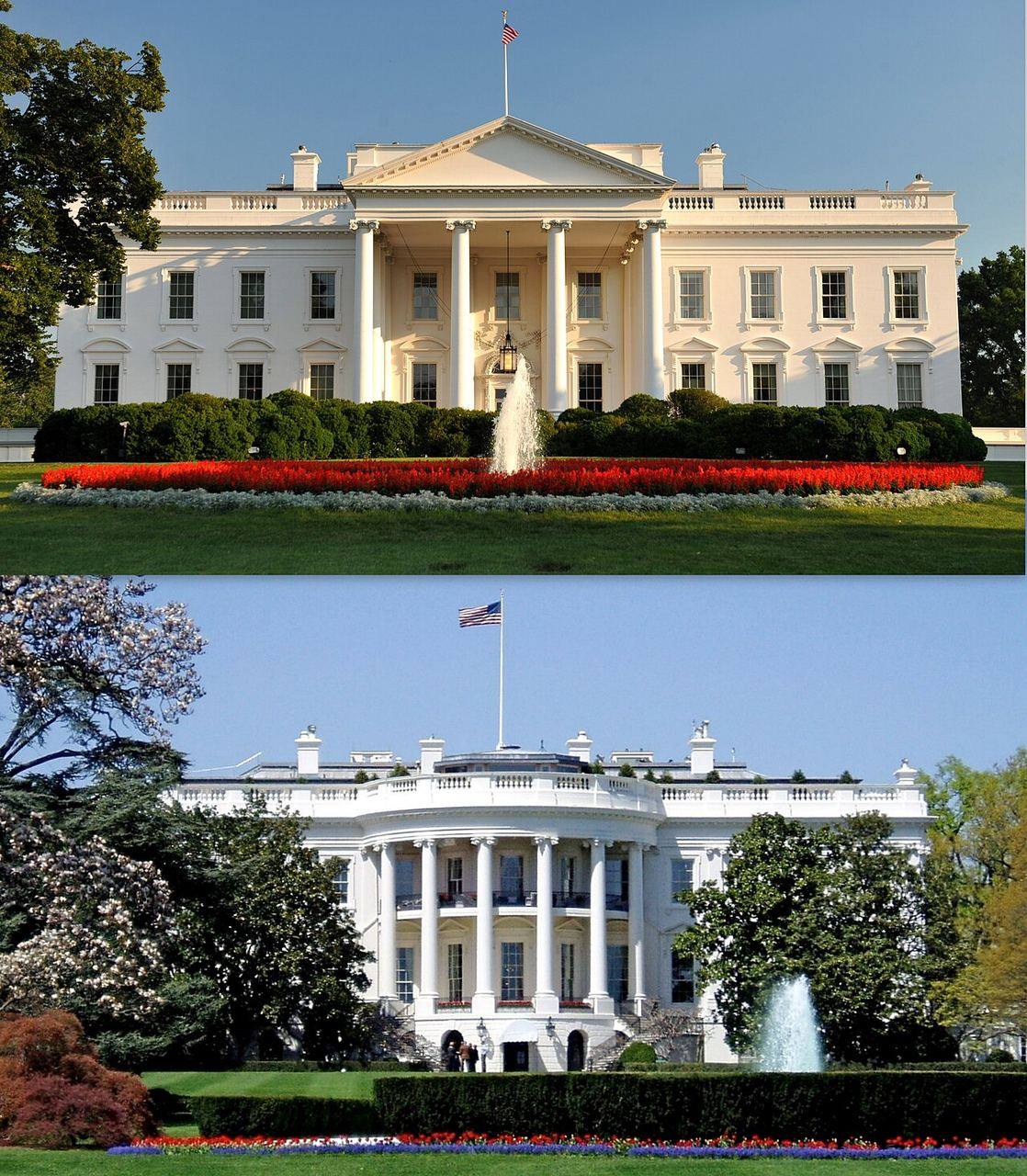
Trump pocket rescission funds — the phrase describes one of the most aggressive uses of executive power over spending in modern American history, and it returned on Friday, September 25, 2026, when President Trump announced he is clawing back $810 million in spending Congress already approved. It is the second year in a row the White House has reached for the maneuver, and this time it drew a word rarely aimed at a sitting president by his own party’s top appropriator: “illegal.”
The money targets programs for health and education services, support for immigrants and refugees, racial-minority business development, and overseas conservation. The single biggest tranche — $567 million — is Health and Human Services funding for programs serving noncitizens. The White House statement was blunt: “President Trump is committed to utilizing all possible tools to cut wasteful and harmful government spending that does not benefit American citizens.” The programs, it said, supported illegal immigration, stoked racial tensions, and promoted “alarmist” environmental approaches.
Pocket rescission explained: running out the fiscal clock
To understand why this fight matters, start with the mechanism. Under the Impoundment Control Act of 1974, a president who wants to cancel appropriated spending must send Congress a rescission request — and Congress then has 45 days to approve it. If Congress does nothing, the money must be spent.
A “pocket rescission” games that clock. The White House submits the request just days before the fiscal year ends on September 30. The funds expire with the fiscal year before the 45-day window can lapse — so the money simply dies, whether or not Congress ever votes. It is the executive equivalent of filibustering the calendar: no vote is taken, no veto is cast, and the appropriation evaporates.
The maneuver is extraordinarily rare. Before this White House revived it, a pocket rescission had not been attempted in nearly 50 years. Last year the administration used it to cancel $4.9 billion in foreign aid, and the Supreme Court declined to block that move — creating, if not a legal precedent, then at least a demonstrated path. Friday’s $810 million package is the second trip down that path, and its targets are domestic rather than foreign: health, education, refugee support and minority business programs, categories with organized constituencies and sympathetic plaintiffs.
What the White House says: waste, fraud and ‘harmful spending’
The administration’s case is political as much as legal. The targeted programs, in the White House’s telling, are the residue of a spending philosophy that subsidizes illegal immigration, funds racial grievance and indulges climate alarmism. Cutting them is framed not as a constitutional provocation but as housekeeping — “all possible tools” to end “wasteful and harmful government spending that does not benefit American citizens.”
There is a constituency for that argument, and it is not small. Polling throughout 2026 has consistently shown majorities favoring reduced federal spending in the abstract, and the administration’s base treats congressional appropriations for noncitizen programs as a standing grievance. For those voters, the question of whether the Impoundment Control Act permits the maneuver is secondary to whether the spending should have existed at all.
But the legal question will not stay secondary, because the programs have defenders with standing to sue, and the mechanism’s legality is genuinely contested — including by the government’s own watchdog.
Susan Collins calls it ‘illegal’ — and her Maine race is the subtext
Senator Susan Collins of Maine, the Republican chair of the Senate Appropriations Committee, did not mince words: the move is “illegal,” she said — “the most recent attempt by this Office of Management and Budget to undermine Congress’s Constitutional power of the purse.”
Consider the source, because it is what makes the rebuke remarkable. Collins is not a backbencher or a lame duck; she chairs the committee whose authority the rescission bypasses. She is a Republican calling a Republican president’s spending maneuver unconstitutional in the plainest available language. And she is doing it while fighting one of the tightest reelection races in the country, in a state where a reputation for institutional independence is her political brand.
The collision with the midterms is unavoidable. Collins needs Maine’s ticket-splitters — voters who will back a Republican senator while voting Democratic elsewhere — and those voters reward exactly this kind of break with the White House. At the same time, the break gives her Democratic challenger an opening to argue the obvious: that a senator who calls her own president’s actions illegal has lost control of her party, and that Maine would be better served by a Democrat who never has to choose.
Senator Patty Murray of Washington, the top Democratic appropriator, went further: the rescission is “theft from the American people, plain and simple.” Expect that phrase in campaign ads within days.
The 2025 precedent: $4.9 billion and the Supreme Court’s non-block
Last year’s pocket rescission — $4.9 billion in foreign aid — is the reason Friday’s move was possible at all. The Supreme Court declined to block it, and the White House read that silence as permission. Whether it was permission is now the central legal question, because a declined emergency application is not a ruling on the merits.
The Government Accountability Office has previously concluded that pocket rescissions are unlawful under the Impoundment Control Act — the law’s 45-day framework, in GAO’s reading, does not permit the president to time a request so that the window can never close. GAO opinions are not binding on courts, but they carry weight with them, and they give congressional plaintiffs a starting text for litigation.
The honest legal picture: the maneuver sits in a gray zone the Supreme Court has not resolved, created by last year’s non-block. The White House is betting the Court will stay out again. Congress’s defenders are betting that a domestic-spending target with sympathetic beneficiaries produces a different judicial reception than foreign aid did. Both bets are live.
Why this matters: Congress’s power of the purse
The Constitution gives Congress the power of the purse — Article I, Section 8, no ambiguity. It is arguably the legislature’s most fundamental authority: the president proposes, but Congress disposes. A pocket rescission does not merely trim spending; if accepted as lawful, it converts the appropriations process into an advisory exercise, because any president could nullify any appropriation by filing the paperwork on September 28.
That is why Collins’s word — “illegal” — matters more than the $810 million. The dollar figure is modest by federal standards; the principle is not. Two consecutive years of pocket rescissions establish a practice. Practices become precedents. Precedents become the new normal, and the new normal here is an executive branch that can unilaterally rewrite the budget in the last week of September.
Who wins, who loses
Winners: White House base voters who want spending cut by any available means; the Office of Management and Budget, which has carved out a working — if contested — tool for the final week of every fiscal year; and, in the short term, the administration’s fiscal hawks, who get a headline cut without a congressional vote.
Losers: the beneficiaries of the targeted programs — refugees, minority-owned businesses, noncitizens relying on HHS health and education services — who lose funding with no legislative recourse. Congressional authority itself, which is the real defendant in the coming litigation. And Collins, forced into open warfare with a president of her own party while defending her seat in Maine — though her calculation is clearly that the fight helps more than it hurts.
The numbers: $810 million now versus $4.9 billion in 2025 — a smaller package, but aimed at domestic programs with louder defenders. And five days: the distance between the announcement and the September 30 fiscal cliff, the entire window in which opponents must find a judge willing to act.
What happens next: three scenarios
Scenario one — the courts stay out. As in 2025, no court intervenes before the money expires on September 30. The $810 million is gone, the White House claims vindication, and the pocket rescission becomes an annual September ritual. Congress fumes; the practice hardens into precedent. This is the administration’s base case, and last year suggests it is plausible.
Scenario two — an injunction lands. A federal judge, moved by the GAO’s reading of the Impoundment Control Act and the sympathetic profile of the targeted programs, blocks the rescission before September 30. The administration appeals, the case climbs, and the Supreme Court is finally forced to rule on the merits of a question it dodged last year. Whatever the outcome, the gray zone closes.
Scenario three — Congress retaliates legislatively. Even if the money is lost, Congress amends the Impoundment Control Act to explicitly bar late-September rescission requests — a fix both parties’ appropriators could support, since the power of the purse is an institutional interest, not a partisan one. Collins’s “illegal” becomes a bill. Whether a president who benefits from the tool would sign such a bill is the obvious complication — which is why this scenario likely waits for a different Congress, or a different president.
Five days to the fiscal cliff. The money, the principle and the Maine Senate race are all on the same clock.
Sources
- Reuters, “Trump seeks to withhold $800 million in Congress-approved funds” (Sept. 25/26, 2026) — $810 million package, targeted programs, White House statement
- Wall Street Journal, “Trump Angers Lawmakers With $810 Million in Cuts” (Sept. 25/26, 2026) — Collins “illegal” rebuke, Murray “theft” response, $567 million HHS tranche