Senate rejects Iran war powers resolution 50-49
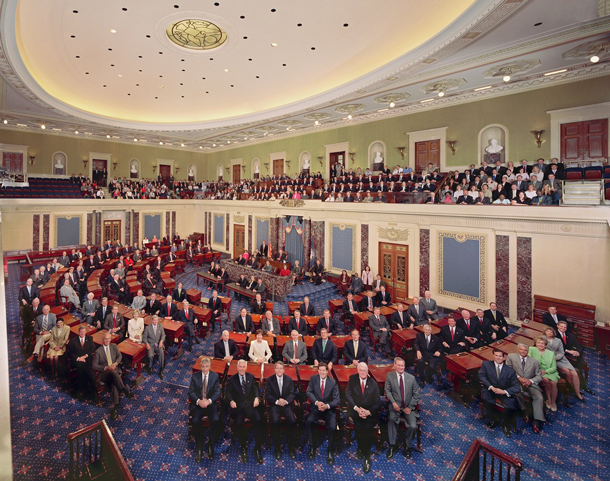
The vote was the latest in a long series of Democratic attempts to use the War Powers Resolution of 1973 to check President Trump's handling of the Iran conflict, which began in February 2026 when the United States launched strikes on Iranian targets — an operation the White House has called Operation Epic Fury. The measure would have required the president to halt US military action against Iran until Congress voted to authorize it, removing the authority under which the campaign has proceeded for more than 200 days.
The defeat was expected, but the roll call told a more nuanced story than the partisan framing suggested. Four Republicans crossed party lines to vote in favor of the resolution: Senators Susan Collins of Maine, Lisa Murkowski of Alaska, Rand Paul of Kentucky, and Thom Tillis of North Carolina. For Tillis, who is retiring from the Senate in January, it was the first time he had supported such a war-powers measure. On the Democratic side, Senator John Fetterman of Pennsylvania voted with the Republican majority against the resolution, while Senator Angela Alsobrooks of Maryland did not vote.
Why this vote mattered: the legal fight over Trump's Iran campaign
The resolution's fate turned on a factual and legal dispute that has defined the entire Iran debate. The White House maintains that the president has already "terminated hostilities" in Iran, arguing that active combat has wound down and that what remains does not require congressional authorization. Democrats and the measure's sponsors argue the opposite: that hostilities plainly continue — pointing to the ongoing US blockade of Iranian ports, American strikes on Iranian vessels, and Iran's own blockade of the Strait of Hormuz, the narrow waterway through which a fifth of the world's oil moves.
Senate Minority Leader Chuck Schumer, who has led the push, said ahead of the vote that Democrats had now forced 14 separate votes aimed at ending the conflict. According to Schumer's account, the alleged war has cost the lives of at least 19 US service members and more than $43 billion in taxpayer money — figures that have not been independently confirmed but have become the Democratic leadership's standard indictment of the campaign's toll.
The vote came two days after Trump's UN speech on Iran
The timing added political charge to the roll call. On Tuesday, President Trump used his address to the UN General Assembly to threaten to "annihilate the Islamic Republic of Iran" if Tehran continues what he described as its destabilizing campaign across the Middle East — language that drew worldwide attention and, according to supporters of the resolution, underscored the risk of a conflict escalating without congressional oversight. Read our coverage of the UNGA speech and the threats that framed this week's debate.
The resolution had already cleared one chamber: the House passed it in July as H. Con. Res. 89, in what was then seen as a rare bipartisan check on the administration. Its failure in the Senate means that authorization now goes nowhere, and the campaign continues on presidential authority alone.
The numbers behind the defeat: a dozen votes, one near-miss
Thursday's outcome fits a pattern. Lawmakers have cast more than a dozen war-powers votes tied to Iran this year, and all but one — in June — failed. The narrow 50-49 margin, in a narrowly divided Senate, was the closest Democrats have come to succeeding.
The public mood adds context to the arithmetic. A recent Reuters/Ipsos poll found only 34% of Americans approve of the strikes on Iran, suggesting the war is broadly unpopular even as it is politically locked in place. With the midterm elections on November 3 — less than six weeks away — Democrats made clear the vote was as much about the campaign trail as the war room: they said they would keep forcing Republicans to go on the record on a war that polling suggests the public dislikes.
What happens next
Schumer has promised the votes will keep coming, and the narrow margin — with four Republicans already willing to break ranks — means the administration cannot fully take Senate cooperation for granted. But with the Senate math unchanged and the White House insisting hostilities have ended, there is no realistic path to congressional authorization being required before the midterms.
The deeper question is strategic rather than procedural: the US remains committed to enforcing its blockade, Iran's blockade of Hormuz continues to menace global energy flows, and the rhetoric from both Washington and Tehran keeps escalating. The vote settled who has the legal authority. It did not settle how the war ends.
Follow our live coverage of the Iran crisis and the UN General Assembly.