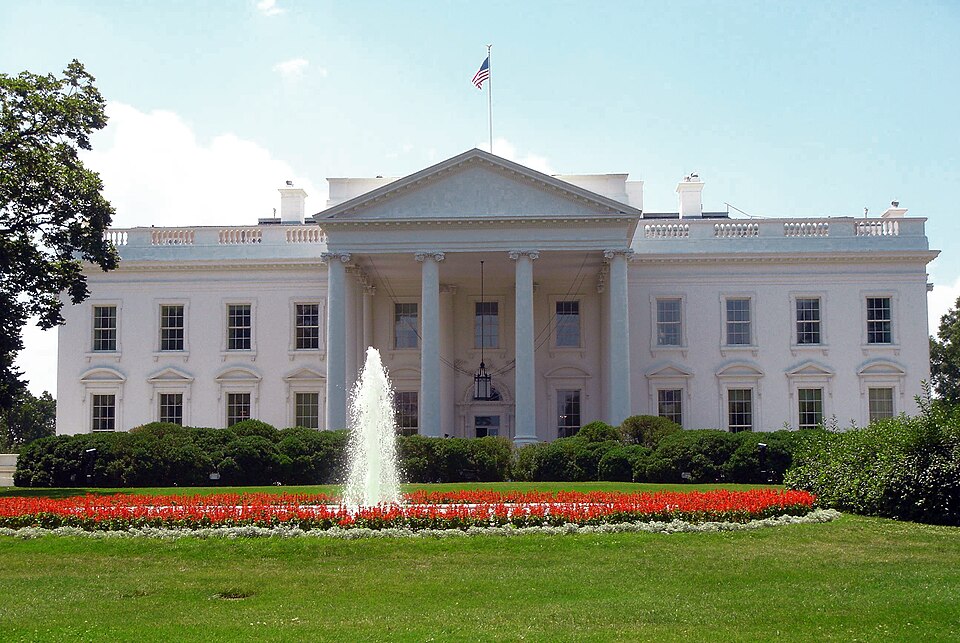
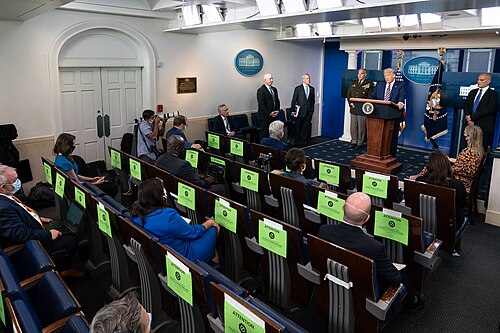
WASHINGTON — A judge blocks Trump media ban restrictions imposed on CNN, MS NOW and Politico, ordering the White House early Thursday to “immediately return, reinstate, and restore” the outlets’ press passes. U.S. District Judge Timothy Kelly’s temporary restraining order lasts 14 days and gives the three news organizations the practical relief they sought: their journalists can again enter the White House grounds while their constitutional case moves forward.
Kelly found that the outlets had cleared the demanding threshold for emergency relief and were likely to succeed in showing that their hard passes were revoked without constitutionally adequate due process. “This is a high bar, but Plaintiffs have met it,” he wrote. He also rejected the administration’s national-security justification on the present record, saying there was no factual basis to conclude that excluding these organizations protected security or that restoring them during litigation would create danger.
The order is the first judicial block against the press-access crackdown of Trump’s second term. It is consequential, but it is not a final merits judgment. The administration may appeal, seek an emergency stay or return to court with a fuller factual record. Kelly could later consider a preliminary injunction before the 14-day clock expires. The White House did not immediately respond to requests for comment reported by the Associated Press and Reuters.
What the Kelly temporary restraining order press ban ruling does
The operative result is direct. Officials must restore the credentials taken or deactivated after Trump’s September 18 announcement and must stop enforcing the outlet-wide ban for two weeks. A temporary restraining order exists to prevent immediate, irreparable harm and preserve a workable status quo while a court examines a dispute. It does not guarantee that the plaintiffs will prevail at trial.
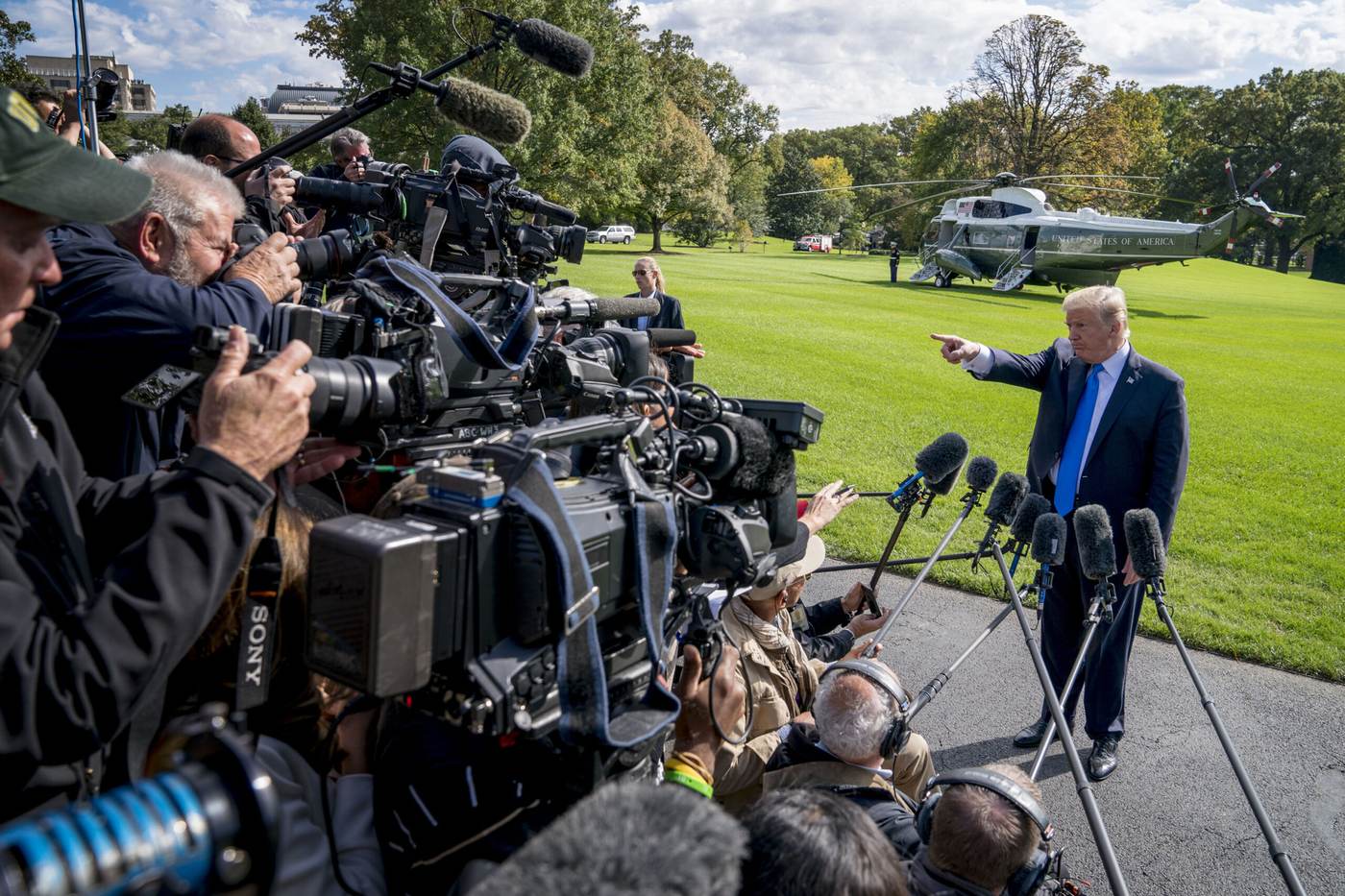
That distinction matters because White House access is perishable. A reporter excluded from a briefing, presidential departure or diplomatic event cannot fully reconstruct the missed opportunity after litigation ends. The injury claimed by the outlets was therefore not simply reputational. It affected daily newsgathering, the ability to question officials in real time and the public’s access to competing accounts of presidential decisions.
The ruling also clarifies what “CNN Politico MS NOW White House access restored” means. It does not create unlimited entry to every event, override Secret Service screening or abolish pool arrangements. It restores the continuing hard-pass system the organizations held before the ban, subject to ordinary neutral security and scheduling rules.
Why this matters: an emergency order that previews the merits
A court does not issue emergency relief merely because a dispute is politically important. A plaintiff normally must show a likelihood of success, irreparable harm, a favorable balance of equities and consistency with the public interest. Kelly’s statement that the plaintiffs met a “high bar” is therefore an early assessment of legal strength, not a final verdict.
For the press corps, the order draws a line between criticism and coercion. A president may denounce coverage, dispute facts and favor some media formats over others. The constitutional problem arises when state-controlled access is allegedly withdrawn because officials dislike a publication’s viewpoint and when the affected outlet receives no clear standard or meaningful chance to respond.
For the public, the interest is broader than sympathy for three large companies. White House reporting is part of the system by which executive power is observed. Restoring access increases the number of journalists able to witness events, ask questions and compare the administration’s official feed with independent reporting—particularly during a day of consequential coverage around President Xi Jinping’s state visit.
The September 18 ban and the press ban hearing September 2026
Trump announced the ban on Friday, September 18, attacking the outlets for what he called “fake news” and saying they should not be able to report “FICTION and LIES.” The three organizations were then denied entry, and their White House credentials were confiscated, disabled or treated as invalid. They sued in federal court Monday, alleging First Amendment viewpoint discrimination and a Fifth Amendment due-process violation.
The case moved quickly because every day of exclusion imposed a fresh newsgathering cost. At Wednesday’s emergency hearing, Justice Department lawyers argued that access to the White House is a privilege, not an entitlement, and that the president retains wide authority over a secure executive complex. Kelly ended the hearing without a ruling, saying he would decide “as soon as I can.” The written order arrived early Thursday.
The plaintiffs’ lawyers submitted a Truth Social post that Trump published at 11:53 p.m. Tuesday. In it, he attacked CNN correspondent Kaitlan Collins as a “third rate reporter” and called the outlets “sick, treasonous, and demented.” The Kaitlan Collins Truth Social post evidence was offered not because harsh language is itself unlawful, but because motive matters when plaintiffs argue that official power was used to punish a viewpoint.
White House press credentials revoked due process: the central test
Kelly’s clearest ground was procedural. Once the government establishes a continuing credential system and grants a hard pass, appellate precedent says it must provide fair procedures before revocation. At a minimum, that usually means notice of the alleged problem, a sufficiently definite rule and a meaningful opportunity to answer before access is taken away, absent an urgent circumstance that justifies acting first.
The administration pointed to post-ban letters that described “objectionable reporting” and an avenue for review. Kelly found the standard “so vague it hardly does the trick.” A rule that leaves journalists unable to know what conduct triggers punishment also leaves officials with broad discretion. That is especially sensitive where the regulated activity is reporting about the officials who control the credentials.
The order does not establish that a White House pass can never be revoked. A journalist who violates clear conduct or security standards can face consequences. The narrower lesson is that government must articulate standards before applying them, connect the facts to those standards and provide a process capable of correcting error or pretext.
Trump press ban national security defense rejected
National security was the administration’s strongest institutional argument and its weakest factual showing, according to the order. The White House is not an ordinary workplace: the president lives and works there, foreign leaders visit, and the Secret Service manages risks that courts generally treat with seriousness. The Justice Department was entitled to emphasize those responsibilities.
But deference is not a substitute for evidence. “The record lacks factual support for defendants’ contention that the revocation of plaintiffs’ hard passes will in fact protect national security,” Kelly wrote, or that national security would be endangered if access were restored during litigation. He noted that Trump’s own explanation focused on the outlets’ “alleged lack of truthfulness and negativity,” rather than a specific security incident.
That mismatch matters. If the government says in court that an action protected security while the decision-maker publicly described it as punishment for negative reporting, a judge will ask which rationale actually drove the decision. The administration may still attempt to build a factual record on appeal or at a later hearing, but the emergency record did not support its claim.
The Jim Acosta 2018 press pass precedent
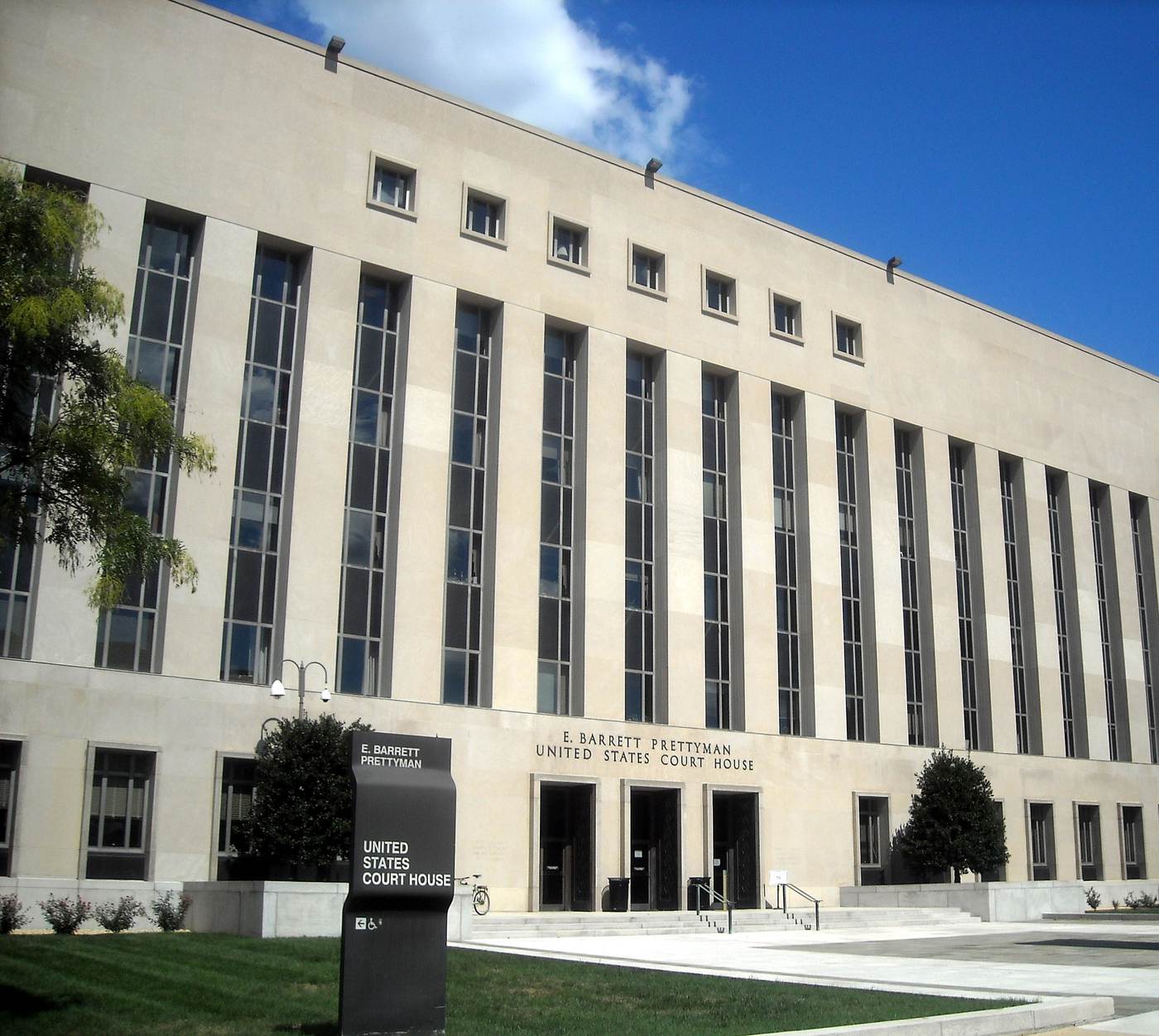
Kelly’s role carries an unusual historical echo. Trump nominated him to the federal bench in 2017. In 2018, Kelly ordered the first Trump administration to restore CNN correspondent Jim Acosta’s White House pass after a confrontation at a press conference. That decision also focused on due process, avoiding a broader final ruling on the First Amendment.
The Jim Acosta 2018 press pass precedent does not make the current case automatic. Acosta’s dispute involved one correspondent and conduct the White House said occurred during an event; the present ban covers three organizations and was publicly tied to their reporting. Yet the procedural architecture is similar. In both cases, the court asked whether the government had clear standards, gave adequate notice and allowed a meaningful response before withdrawing an established credential.
There are at least two closely relevant D.C. Circuit lines of authority in addition to Acosta: cases involving White House correspondents Sherrill and Karem. They recognize the executive’s security interests while requiring meaningful standards and process in hard-pass decisions. The pattern across those outcomes is not that reporters always win. It is that discretion over access is reviewable when the government has created a regular credentialing system.
Two legal tests, not one
The Trump press ban First Amendment lawsuit contains two related but distinct theories. The due-process claim asks how the passes were taken: Was there advance notice? Was the rule clear? Could the outlets contest the decision? Kelly found likely success on that procedural route, which was enough to support emergency relief.
The viewpoint-discrimination claim asks why the passes were taken. Government ordinarily cannot punish speakers because it dislikes their perspective. Trump’s public references to negative coverage and alleged untruthfulness support the plaintiffs’ argument, while the administration can contend that access decisions reflect institutional management or security rather than suppression of ideas.
Winning on process can be narrower than winning on viewpoint. The White House might try to cure procedural defects with written standards and a hearing. But if the underlying purpose remains retaliation for disfavored journalism, better paperwork would not eliminate the First Amendment problem. That is why discovery into decision-making and a fuller evidentiary record may become decisive.
Who benefits—and who loses leverage
The three outlets benefit immediately. Their journalists recover access before more briefings and presidential events pass without them. The practical value is highest now, not after a final judgment months later.
The broader press corps gains a safeguard. Reuters, Fox News, The Washington Post and press-freedom groups supported the plaintiffs’ position in court filings. Their institutional concern crosses ideology: if one administration can remove an entire outlet for hostile coverage without a defined process, a future administration could use the same power against different targets.
The public gains more independent observation. Reporters do not hold passes merely as corporate benefits. Their access feeds stories, live questions and competing interpretations consumed by voters who never enter the White House themselves.
The administration loses immediate leverage. The order weakens the theory that access is a revocable favor wholly insulated from judicial review. It also limits the use of exclusion as a tool in the Trump war on media fake news campaign and its escalating rhetoric. Yet the president retains the bully pulpit, control over many event formats and the ability to appeal.
Critics of the ruling can fairly argue that judges should not micromanage access to a secure presidential complex and that no newsroom has an inherent entitlement to proximity. Supporters answer that the injunction does not manage security operations; it requires the government to use clear, neutral standards and fair procedures. The constitutional dispute turns on that boundary.
The numbers: a 14-day clock and a six-day reversal
Fourteen days is the life of the temporary order. Unless extended or replaced, it creates a short runway for a preliminary-injunction hearing, an appeal or a negotiated procedural solution.
Three outlets were targeted institutionally: CNN, MS NOW and Politico. That breadth distinguishes the case from a dispute centered on one reporter’s behavior and strengthens the argument that editorial identity, not a discrete security incident, drove the action.
Six days elapsed between the September 18 announcement and the September 24 order. The compressed timeline reflects both the ongoing injury and the relatively developed precedent around White House hard passes.
Three prominent modern disputes—Sherrill, Acosta and Karem—form the closest procedural comparison, and each produced a ruling recognizing constraints on arbitrary credential decisions. Their facts and remedies differ, so they do not settle every First Amendment issue. They do, however, undermine the broadest version of the “privilege, not entitlement” doctrine.
Trump TV is the parallel fight over distribution
The Times reported that the White House launched “Trump TV” after a broadcasters’ boycott. That channel is sidebar color, but it points to a larger strategy. Credential disputes concern who enters the physical space; an official 24-hour stream concerns who controls the audiovisual pipe through which the public sees the presidency.
An administration is free to publish its own feed. The concern arises if official distribution substitutes for independent access or makes unscripted questioning harder. Kelly’s order addresses the doorway, not the broadcast infrastructure. Both battles nevertheless ask whether public information will be mediated solely by the government or tested by journalists who do not depend on presidential approval.
Practical effect during Xi Jinping’s state visit
The timing gives the order immediate diplomatic significance. Xi’s state visit brings trade, technology, Taiwan and security questions to the White House. Restored access means journalists from the three outlets can participate in the coverage ecosystem while meetings and public appearances occur, rather than receiving relief only after the visit has ended.
That does not guarantee a question, a seat in every room or inclusion in every pool. It restores eligibility under the established system. In a fast-moving state visit, eligibility itself matters: pool reports, arrival observations and shouted questions can shape the first public record before official readouts are issued.
Press ban appeal what happens next
The administration’s quickest route is the U.S. Court of Appeals for the D.C. Circuit. To obtain an emergency stay, it would need to persuade judges that it is likely to succeed, faces irreparable harm without a pause and that the equities and public interest favor suspension. The absence of a specific security showing may make that difficult, but appellate outcomes are never certain.
At the district court, Kelly can schedule a preliminary-injunction hearing within the 14-day window. That stage permits a fuller record and can produce relief lasting through the litigation. The parties may submit declarations, internal decision documents and more detailed legal arguments about both process and viewpoint discrimination.
The White House could also issue clearer written rules and attempt to re-revoke the passes after notice and a hearing. That could improve its position on due process. It would not necessarily cure a viewpoint claim if the new standard targets “negative” or “objectionable” reporting in a way that remains vague or discriminatory.
The rhetoric may escalate as the legal process becomes more structured. Trump has repeatedly framed hostile coverage as dishonesty; the outlets frame the ban as punishment for journalism. Courts will have to separate protected presidential criticism from the use of government power. The ultimate result may be a narrow procedural rule, a broader First Amendment limit or an appellate decision emphasizing executive control.
Conclusion: a meaningful order, not the last word
Kelly’s ruling is a significant defeat for the administration because it restores access now and because it finds likely legal success at the emergency stage. It also confirms that White House credential decisions do not become unreviewable simply because officials call access a privilege.
But restraint is essential. A temporary restraining order is preliminary, the 14-day period is short and an appeal could change the immediate result. The court has not finally decided every First Amendment allegation, and the administration has not exhausted its security or management arguments.
The durable principle at stake is narrower and more important than the personalities involved: if government grants continuing press credentials, it must use intelligible standards and a fair process before taking them away. Whether the White House accepts that rule, tries to satisfy it with new procedures or asks the D.C. Circuit to narrow it will determine the press ban appeal and what happens next.
Sources
- Associated Press: Judge blocks Trump’s ban and orders White House access restored
- Reuters: Judge blocks Trump’s White House media ban
- The Times: Trump ordered to lift White House media ban by judge
This is a fixed September 24, 2026 reporting snapshot. The temporary restraining order restores access for 14 days; it is not a final judgment on all constitutional claims. Legal analysis and forward-looking scenarios are Signal Post News analysis based on the cited reporting and precedents.