Supreme Court Missouri congressional map
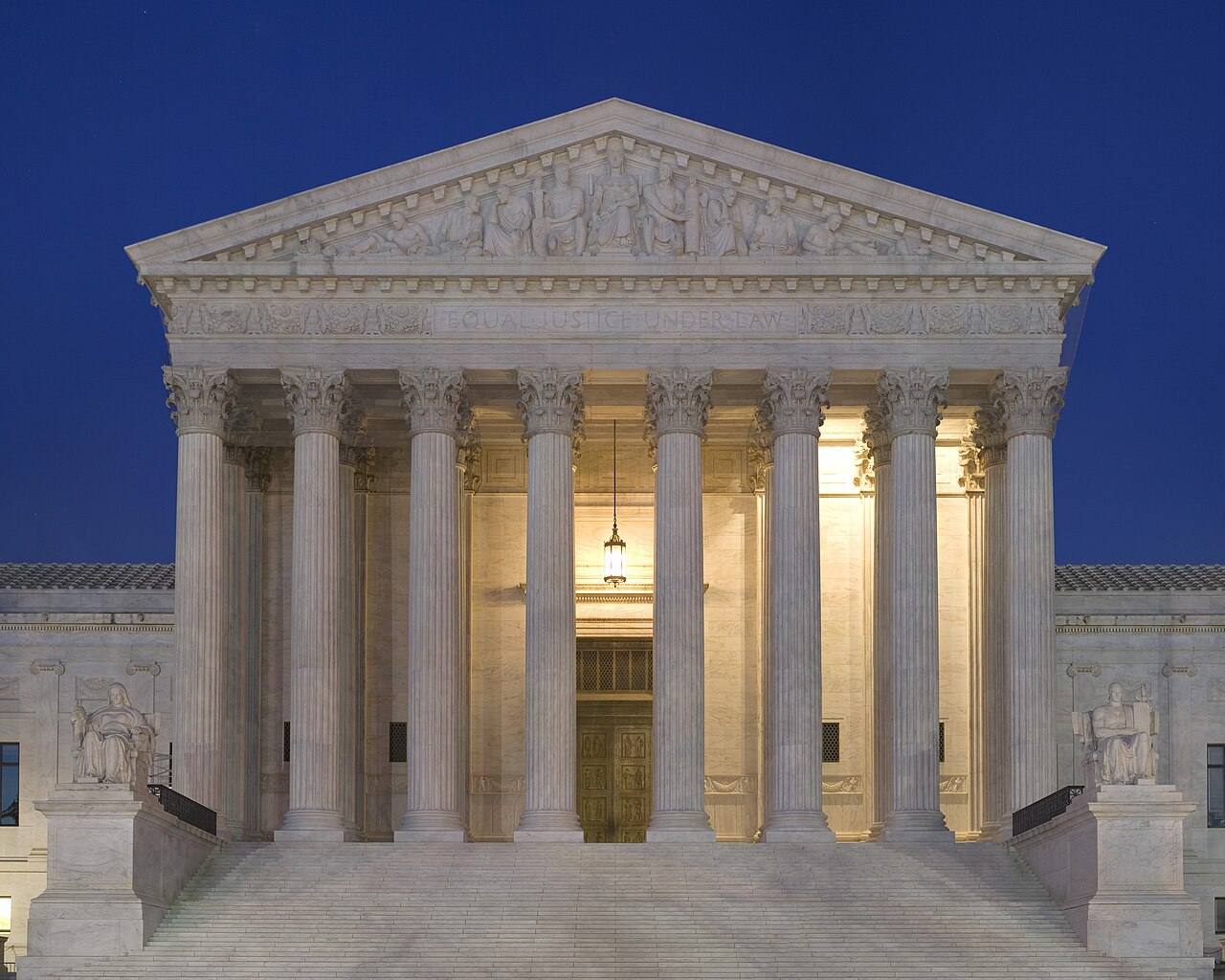
WASHINGTON — The Supreme Court on Friday blocked Missouri from using a Trump-backed congressional map in the November midterm elections, the third time in as many weeks the justices have sided against the redrawn districts. In an unsigned order with no noted dissents, the court suspended a lower court's ruling that would have required the new map — drawn last year at President Donald Trump's urging — and warned that “at this late date, ordering reversion to the 2025 map midst of an ongoing election would usher in electoral chaos.” Ballots using the older 2022 map have already been printed and mailed, and absentee, military and overseas voting has begun.
The immediate result is unusually concrete for an emergency-docket fight: Missouri must conduct the general election with the same congressional districts voters used in 2022 and 2024, even though last month's primaries were held under the legislature's newer lines. Republican Gov. Mike Kehoe said Missouri would comply, while arguing that voters “deserved consistency and certainty, and not for the rules to be changed between elections.” The order and reaction were reported Friday by USA Today, CNN and NPR Illinois/St. Louis Public Radio.
The dispute is about far more than cartographic housekeeping. Missouri's 2025 map broke apart the Kansas City district held by Democratic Rep. Emanuel Cleaver and was designed to give Republicans an advantage in seven of the state's eight House districts. People Not Politicians collected enough signatures to send the changes to voters, making the map both a courtroom question and a direct-democracy test.
Analysis and what comes next
Why this matters: one House seat, and a national redistricting war
One seat can sound modest until it is placed beside the arithmetic of a narrowly divided House. Control of the chamber determines which party writes legislation, runs investigations and decides whether a president's agenda advances or stalls. The Emanuel Cleaver district map was the fulcrum: dismantling a Democratic-held Kansas City seat could have moved Missouri from a six-to-two Republican delegation to a seven-to-one advantage.
That is why the case became a proxy for a national midterm elections redistricting fight. Trump's allies have pressed Republican-led states to revisit congressional lines in the middle of the normal decade-long cycle, not because of a new census but because an extra favorable seat could help lock in control. The Missouri redistricting Supreme Court order does not ban mid-cycle mapping as a general rule. It does, however, expose a practical limit on the strategy: a map that remains trapped in litigation until voting begins may become unusable no matter how much partisan value it carries.
How Missouri got here: Trump's map push and a September of courtroom whiplash
The Missouri legislature approved the new boundaries last year after Trump urged red states to rejigger their maps before the 2026 vote. The 2025 plan then collided with People Not Politicians Missouri, whose signature campaign sought a statewide vote on whether the changes should stand. Litigation moved through state and federal courts for much of September, producing conflicting rulings while election administrators were printing ballots and voters were beginning to return them.
Friday's order carried an unmistakably exasperated line: “given this Court's two prior orders in this litigation, our conclusion that this was error should come as no surprise.” That language matters because emergency-docket decisions often arrive with little explanation. Here, the justices said enough to make the institutional concern clear: lower courts cannot keep reordering the rules while an election is already underway.
The dispute also sits beside other court fights over the rules of political competition. In Israel, a challenge over Arab parties, ballot access and Supreme Court review shows how election law becomes most destabilizing when basic participation rules remain unsettled close to voting day. The legal systems differ, but the democratic risk is similar: courts may be asked to protect rights while also avoiding last-minute disruption.
The court's own logic: ballots already mailed, voting already begun
The court's reasoning turned on timing rather than a final endorsement of either map. Election law has long reflected a reluctance to change voting rules once an election is imminent or in progress. In Missouri, that concern was no longer theoretical. The Missouri absentee ballots using the 2022 map had been printed and mailed, and military and overseas voters were already casting ballots. Ordering a different district plan at that point would create a basic administrative question with no clean answer: which ballot governs a vote already submitted?
That choice also complicates simple ideological readings of the court. In a separate fight over executive power, the court backed Trump's foreign-affairs maneuver in the earlier $810 million pocket-rescission dispute. This time, the same institution stopped a map championed by his allies. The contrast does not prove political neutrality in every case; it shows that legal doctrines can pull in different directions. A court sympathetic to executive latitude can still police election timing when a late switch threatens the mechanics of voting.
Who wins, who loses, what the critics say
The short-term winners are Democrats, Cleaver and Kansas City voters whose district remains intact for the general election. People Not Politicians also wins time: the ballot campaign's claim that Missourians should decide the map's fate is no longer overtaken by a 2026 congressional election conducted under the disputed lines. Voters gain the certainty of using districts familiar from the previous two general elections.
The losers are Trump, Missouri Republican mapmakers and Kehoe, whose preferred plan will not produce the hoped-for seventh Republican-leaning seat this November. Abha Khanna, an attorney for the map's opponents, said the decision protects ballots already cast and preserves Missourians' right to decide the map for themselves. Critics of the redraw argue that Republican officials continued pressing it even after adverse court rulings made the timetable increasingly untenable.
Kehoe's objection nevertheless has genuine force. Missouri voters used one set of districts in the primary and will use another in the general election. Candidates organized, raised money and won nominations under boundaries that now do not govern the final contest. The Supreme Court chose the disruption it considered smaller; it did not eliminate disruption. Similar institutional tensions appear when courts check executive action, as in the White House press-access fight after a federal judge's order.
What the numbers say: 7 of 8, and the math of the House
Missouri has eight congressional districts. The legislature's 2025 plan sought to position Republicans to win seven, leaving Democrats with one. The older map preserves two Democratic-held seats as the starting point for November. Those figures do not guarantee outcomes — candidates, turnout and national conditions still matter — but they define the structural advantage each party expected.
In a House controlled by a slim majority, the difference between a six-to-two and seven-to-one delegation can determine far more than Missouri's representation. One vote can decide the speaker, a committee subpoena or the fate of a budget bill. That is the strategic appeal of Trump Missouri gerrymandering in 2026: the national reward can be large even when the state-level change is just one seat. Friday's ruling removes that advantage from this election and tells other states that a late legal victory may be worthless if implementation would collide with ballots already in voters' hands.
What happens next: the ballot vote, the general election, and the map wars beyond Missouri
The November general election now proceeds under the 2022 lines. The public vote on the 2025 map still looms, and that result will shape the next phase of the fight. If voters reject the plan, the legislature's gambit loses both its immediate electoral benefit and its claim to public consent. If voters approve it, Republicans may try to revive the boundaries for a later election after the timing problem has disappeared.
Other states considering mid-cycle redraws will be watching the sequence as closely as the outcome. Republicans could regroup around 2027 maps, leaving enough time for litigation and election administration. Opponents will argue that courts should continue shutting down partisan redraws when they reach the ballot too late. Neither path ends the national conflict; the ruling changes its calendar and raises the cost of waiting until the last moment.
The balanced lesson is narrower than either party's preferred slogan. The court did not decide that Missouri may never redraw its map, and it did not declare every mid-cycle plan unlawful. It decided that an election already in motion cannot be reorganized without risking “electoral chaos.” In a midterm cycle defined by redistricting brinkmanship, choosing certainty over strategy reverberates far beyond Kansas City.
Related coverage from Signal Post News
Sources
Reporting note: The order, quotations, map details, ballot status and responses in this analysis are attributed to the three reports listed above. The Supreme Court's emergency order resolves which map governs the November election; it is not a final ruling on every underlying claim about the 2025 map.