U.S. · Politics · Judiciary
Trump judicial nominees in the Senate were supposed to be the lame duck’s formality: 23 lifetime seats to fill before Democrats take the chamber in January. Instead the blitz has hit resistance from the president’s own party — a withdrawn nomination in Arkansas, a 12–10 committee where one defection blocks, and two senators with nothing left to lose.
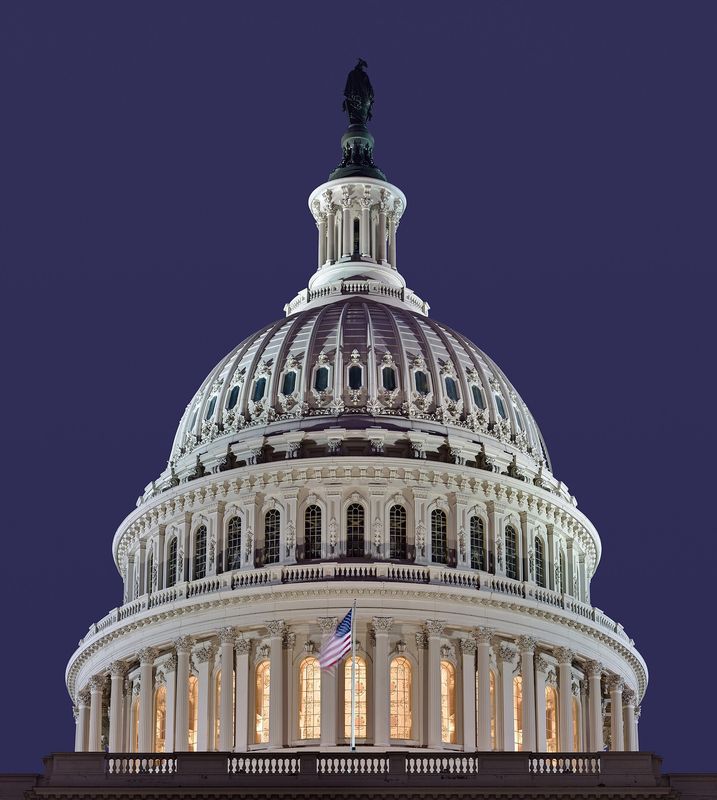
WASHINGTON, November 15, 2026 — The fight over Trump judicial nominees in the Senate has entered its most consequential phase, and its most surprising one: the obstacle is no longer the Democratic minority, which lost the chamber fight on November 3 and will take the majority in January, but a small number of Republican senators who are using the last weeks of their party’s control to say no to their own president. President Donald Trump’s judge appointment blitz — 57 judges confirmed in his second term so far, 23 nominees still pending, and a White House that says it expects every one of them confirmed this year — has run into the oldest force in Senate life: home-state deference, wielded by men with nothing left to lose. Reuters, reporting on November 15, captured the message two of them delivered privately to the Judiciary Committee’s chairman in a quote that will stand as the epitaph of the lame-duck fight: on the way the White House has handled its nominees, the answer from within the president’s own party is that that is “not the way it works here.”
The arithmetic explains both the urgency and the fragility. Trump’s judicial project is the most durable achievement of his presidencies: 234 judges confirmed in his first term, including three Supreme Court justices, and 57 more so far in the second, a combined total that leaves roughly a third of the active federal judiciary as Trump appointees. Every seat filled in the next six weeks is a lifetime appointment that a Democratic Senate, arriving in January, would never have confirmed; every seat left empty is one the incoming majority fills instead, or leaves vacant on its own terms. The White House and Senate Majority Leader John Thune are treating the lame duck accordingly — Thune has made judicial confirmations a top priority for the remainder of Republican control, and the first lame-duck nominee was confirmed on Thursday, with Daniel Domenico, a US District Judge in Colorado nominated to the 10th Circuit, set for a vote on Monday. But the blitz has a bottleneck, and the bottleneck has names: Thom Tillis, John Cornyn, and the senators of Arkansas.
Arkansas: the withdrawal that proved the point
The clearest demonstration of the resistance came on Tuesday, when the White House withdrew the nomination of Lee Rudofsky to the Eighth Circuit and replaced him with Arkansas Supreme Court Justice J. Cody Hiland. Rudofsky, a first-term Trump appointee known for a ruling weakening enforcement of a major voting-rights law, in Reuters’ characterisation, had been opposed by Arkansas’s two Republican senators, John Boozman and Tom Cotton — neither of whom sits on the Judiciary Committee, which meant their opposition could not be expressed as a committee vote. It was expressed the older way: as a home-state refusal that no White House, however dominant, can simply schedule around. The Senate’s norm that a nominee opposed by both home-state senators does not advance is not a rule; it is a courtesy with the force of one, and Arkansas is the proof that it still binds a president at the height of a confirmation blitz. Hiland, the replacement, is expected to move — the difference between the two nominations being, in essence, that one had the home-state senators and the other did not.
The Rudofsky episode matters beyond Arkansas because of what it revealed about the committee behind closed doors. Tillis of North Carolina, who is retiring, and Cornyn of Texas, who lost his primary to a Trump-backed challenger, privately told Chairman Chuck Grassley that they would vote against Rudofsky, Reuters reported — a message the Associated Press independently corroborated. Tillis described the White House’s approach publicly: at times, he said, the administration has essentially told senators, “This is our guy, I hope you’ll get on board.” His answer, delivered with the freedom of a man not facing another election, was the quote Reuters put at the top of its story. And his leverage is not rhetorical. “No way,” Tillis said, “because I’ve got the deciding vote” — a statement of arithmetic, as the next section shows, rather than bravado.
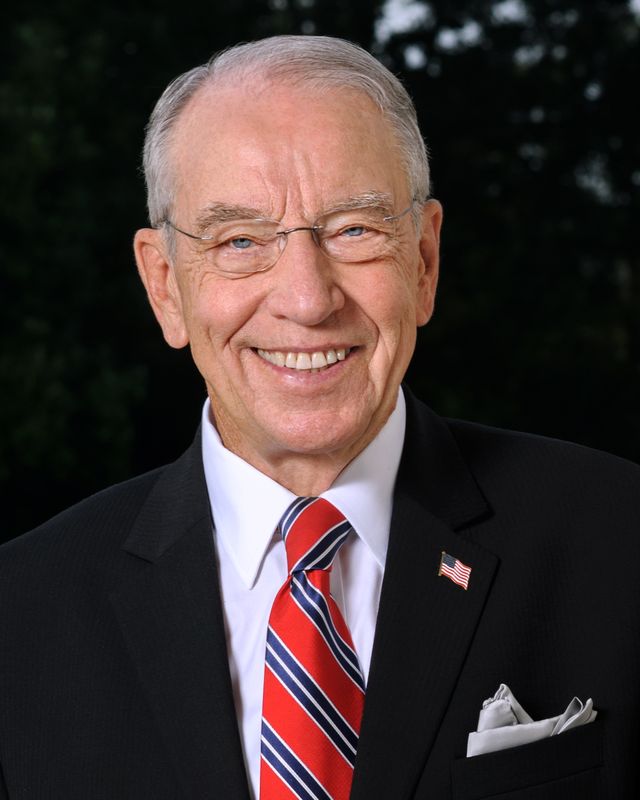
The committee arithmetic: 12–10, and one defection is enough
The Senate Judiciary Committee sits at 12 Republicans and 10 Democrats. With Democrats united against a nominee, a single Republican voting no produces an 11–11 tie that blocks advancement. That is the whole geometry of the lame-duck fight: the White House does not need to lose a faction, it needs only to lose one person, once, per nominee — and the two Republicans best positioned to be that person are the two with the least reason to fear the president. Tillis is retiring; his seat, his future and his reputation are no longer denominated in Trump’s favour. Cornyn lost a primary to a challenger the president backed, which means the political debt that ordinarily disciplines a senator of the president’s party has already been collected and cancelled. Between them, they hold the deciding votes on any nominee they choose to oppose, and they have now demonstrated — privately to the chairman, and in Tillis’s case in public — that they are willing to use them.
Grassley’s handling of the calendar shows the pressure registering. In Oklahoma’s fight, described below, the chairman postponed a scheduled Tuesday committee vote rather than force a public defeat — the classic chairman’s move when the count is not there, buying time for negotiation at the price of the one resource the lame duck cannot replenish, which is days. Every postponed vote compresses the remaining schedule against the fixed wall of January, when control of the chamber changes hands. Thune’s floor operation faces the same compression from the other side: 23 pending nominees, a first confirmation only on Thursday, Domenico on Monday, and a queue behind him in which each contested name consumes floor time that uncontested names need. The blitz is not failing. It is rationing — and rationing, against a deadline set by an election the president’s party lost, is a form of losing slowly.
Texas and Oklahoma: the resistance spreads
Cornyn’s leverage is not confined to votes against other states’ nominees. He has declined to commit on T. Elliot Gaiser, the head of the Justice Department’s Office of Legal Counsel, whom Trump has nominated for a federal judgeship in Dallas, in the Northern District of Texas — Cornyn’s own state, where a home-state senator’s reservation carries the Arkansas lesson’s full weight. A nominee for a Texas seat who cannot get Texas’s senior senator to commit is a nominee in the same structural position Rudofsky occupied: advanced on paper, blocked in practice, awaiting either a conversion, a withdrawal, or a White House decision to spend capital it may not recover. Cornyn, it should be noted, has not said no. He has declined to say yes — which, six weeks from a change of majority, is its own answer on a timer.

Oklahoma supplies the third front. Senator Alan Armstrong, who leaves office on November 30 and will be replaced by Senator-elect Kevin Hern, is opposing Zach West, the nominee for the Eastern District of Oklahoma, after having earlier given the nomination a green light. West is no marginal figure in conservative legal politics: he has been praised by conservative activists for defending abortion restrictions and for defending religious schools’ participation in a charter program. That a nominee with those credentials, in a state as Republican as Oklahoma, is being held by a departing Republican senator illustrates the fight’s true nature. This is not ideology; West’s opponents are not objecting to his jurisprudence. It is prerogative — the insistence of senators, including senators on their way out, that the appointment power the Constitution shares between president and Senate will actually be shared, on the Senate’s terms, in the Senate’s time. Grassley’s postponement of the Tuesday vote on West is the institutional acknowledgment that the objection is real.
Why this matters
Analysis. The lame-duck judges fight is a stress test of a norm that has structured American judicial politics for a century: the president nominates, but home-state senators consent, and the consent is not ceremonial. That norm survived the abolition of the filibuster for judicial nominees, the packing of the appellate courts in Trump’s first term, and four years of Democratic confirmation discipline, because it serves senators of both parties in both directions — today’s majority is tomorrow’s minority, and every senator expects to be consulted on the judges who will sit in their state for thirty years. What is unusual about November 2026 is not that the norm is being invoked. It is who is invoking it, and when: Republicans, against a Republican president, in the final weeks of Republican control, at the cost of seats their party will not get another chance to fill. Norms are usually defended by the party they inconvenience least. This one is being defended, at real price, by the party it is currently costing the most — which is the strongest evidence available that it is a norm and not a tactic.
The stakes, measured in the judiciary’s composition, are concrete. Twenty-three pending nominees is not a rounding error; it is a cohort. Appellate seats among them will vote on the legality of the next administration’s regulations, the reach of executive power, voting rules, abortion restrictions and the administrative state for decades, and the difference between a lame duck that confirms twenty of them and one that confirms eight will be visible in circuit majorities for a generation. Roughly a third of active federal judges are already Trump appointees; the blitz’s success or failure decides whether that share grows toward two-fifths before the door closes. Domenico’s Monday vote is therefore worth watching less for Domenico than as a pace-setter: a smooth confirmation signals a queue that can move; a contested one signals that every name will be a negotiation, and negotiations are what the calendar forbids.
There is, finally, the question of what the resistance means for the presidency itself. Trump’s second term has been built on the premise that the Republican Party’s institutions bend to the White House’s will. The judges fight is the counterexample arriving on schedule: the two senators defying him are doing so from positions his power cannot reach — one retiring, one already defeated by his own endorsement. A presidency’s leverage over its party is at its maximum when its members need it for re-election, and at its minimum in a lame duck populated by the departing. The White House line, reported by Reuters, is that it expects all pending nominees to be confirmed this year. The Senate’s answer, so far, is Arkansas: a withdrawal, a replacement, a postponed vote, and a retiring senator explaining how it works here.
What happens next
Monday brings the Domenico vote, the first real measure of the floor operation’s pace. Behind it, the queue resolves into three categories. The uncontested will move in batches, as Thune prioritises the calendar around them. The negotiated — Hiland in the Eighth Circuit, whose home-state path Arkansas has now cleared — will move as their bargains close. And the contested will consume the session: Gaiser in Texas, awaiting Cornyn’s decision; West in Oklahoma, awaiting a resolution between a departing senator, a chairman who has already blinked once, and a White House deciding how much a district seat in Muskogee is worth. Armstrong’s November 30 departure adds a clock inside the clock: his replacement, Hern, arrives owing the president’s party a different set of debts, and a nomination blocked by the predecessor may move under the successor — if the calendar leaves it anywhere to move to.
January is the wall. When the new Senate is sworn in, every unconfirmed nominee returns to a White House facing a Democratic majority, and the blitz ends not with a vote but with a change of custody. The administration knows the date; the resisters know the date; the nominees, waiting in the peculiar limbo of the pending, know it best of all. What the next six weeks will establish is which proved stronger in the end: a president’s determination to fill the bench while he still can, or a handful of his own senators’ determination that even now — especially now — the Senate’s consent is a thing to be earned, name by name, vote by vote, the way it works here.
Related coverage: Trump Asylum Ban Supreme Court Case Tests Presidential Power at the Border · Federal Judge Blocks East Potomac Golf Links Closure, Pausing Trump’s ‘Trash Island’ Redevelopment
Sources
Reuters — reporting of November 15, 2026 (Morgan and Raymond): 57 judges confirmed in the second term and 23 nominees pending; the Tuesday withdrawal of Lee Rudofsky and his replacement by J. Cody Hiland after opposition from Senators Boozman and Cotton; Tillis’s and Cornyn’s private message to Chairman Grassley and Tillis’s public remarks; Cornyn’s non-commitment on T. Elliot Gaiser; Senator Armstrong’s opposition to Zach West and the postponed committee vote; Daniel Domenico’s Monday vote; Majority Leader Thune’s prioritisation and the White House expectation that all pending nominees be confirmed this year. Associated Press — wire reporting of November 15, 2026, independently corroborating the core facts, including Cornyn’s reservations on Gaiser, the Arkansas senators’ role in the withdrawal, Armstrong’s objection to West, the postponed vote and the private Tillis–Cornyn message to Grassley. Washington Examiner — reporting on the Republican holdouts, the Judiciary Committee’s 12–10 majority and Tillis’s “deciding vote” remark. Photographs: Diliff (CC BY 2.5), United States Congress (public domain) and United States Senate Photography (public domain), via Wikimedia Commons.