U.S. · Politics · Immigration · Supreme Court
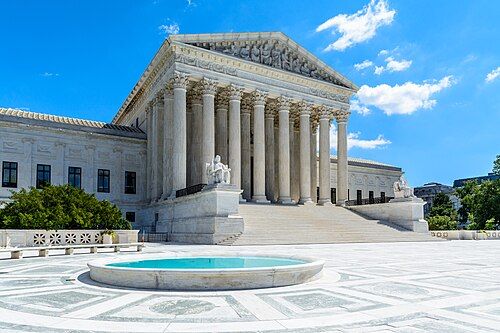
The Trump asylum ban Supreme Court case is set: the justices agreed on Friday, November 13, to decide whether President Donald Trump lawfully shut off asylum at the southern border on his first day back in office. The case, Mullin v. RAICES, is not only about one proclamation: the justices also took up whether a single federal judge can block an immigration policy for everyone it covers. Arguments are expected in the spring, and Reuters reports a decision is expected by the end of June, at the close of the Court’s term — and the ban stays in effect the whole time.
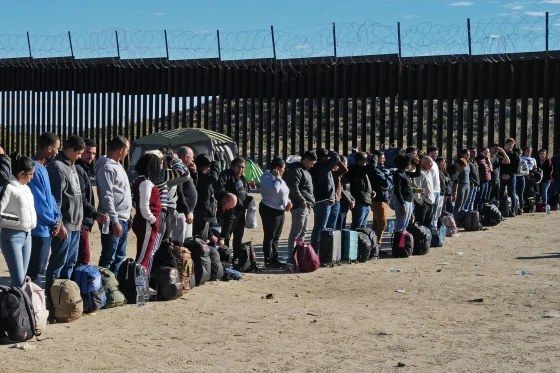
WASHINGTON, November 15, 2026 — The Trump asylum ban Supreme Court case is now set. In a brief order issued Friday, November 13, the justices granted the government’s petition in Mullin v. Refugee and Immigrant Center for Education and Legal Services, No. 26-239, agreeing to review lower-court rulings that found President Trump exceeded his authority when he suspended access to asylum at the U.S.-Mexico border. Reuters reported the grant the same day, and the Associated Press described the ban as “a pillar of the Republican president’s far-reaching crackdown on immigration.” The Court has not ruled on whether the ban is legal. It has agreed to answer that question — and a second one about the power of the judges who struck it down.
What the justices took, precisely, matters. The government’s petition, filed August 24 by Solicitor General D. John Sauer, presented three questions. The Court granted the first two and left the third — a challenge to how the plaintiff class was defined — behind. Question one is the merits: whether Proclamation 10888 and its implementing guidance, which suspended entry for certain noncitizens crossing the southern border and cut off their access to asylum and other protections that could let them remain, are lawful. Question two is the remedy: whether a provision of immigration law, 8 U.S.C. § 1252(f)(1), bars the classwide relief the district court entered — in plain terms, whether the lower court could protect everyone covered by the policy, or only the people who sued. The order gives no reasons, and the omission of the third question is not a ruling on the class; it simply narrows what the Court will decide.
What the asylum ban actually does
Proclamation 10888, titled “Guaranteeing the States Protection Against Invasion,” was signed on January 20, 2025, hours after Trump returned to the White House. Invoking Sections 212(f) and 215(a) of the Immigration and Nationality Act — the provisions that let a president suspend entry of noncitizens he finds detrimental to the national interest — it declared migration at the southern border an “invasion,” suspended the entry of people crossing between official ports of entry, and directed officials to deny them access to asylum and related protections, using expedited procedures to remove them. Reuters noted the policy also reaches some migrants who arrive at official crossings but lack specified medical or criminal-history information, a point immigrant advocates have pressed: people fleeing violence may be unable to produce that information on demand. The proclamation contains its own off-switch and no other: the restrictions remain until the president determines the “invasion at the southern border” has ended.
That design is the legal fight in miniature. Federal immigration law, as the AP put it in its report on the grant, allows people to seek asylum if they fear persecution in their home countries “no matter how they arrived in the U.S.” Congress wrote that right into the statute. The administration’s answer is that granting asylum has always been discretionary — the government decides who receives it — and that a president who may deny every claim in a category may also decline to process that category at all, rather than accept applications it says are destined to be rejected. The Justice Department told the justices, in USA Today’s account, that presidents have inherent authority to secure the border and protect national security, and it calls the policy the “most important and effective” piece of the president’s border effort. Both readings cannot be right, and after two courts sided with the challengers, the Supreme Court will now choose between them.
How the case got here: two courts, one pause button
The lawsuit arrived almost as fast as the proclamation. In February 2025, thirteen individuals and three immigrant-rights organisations filed a class action in Washington. The plaintiffs included would-be asylum seekers who said they had been deported without the credible-fear interview that screening law provides for. “The plaintiffs in this case fled persecution and torture, including political imprisonment and threats from the Taliban. Yet, the Trump administration refused to honor its obligation to consider them for asylum,” said Keren Zwick, executive director of the National Immigrant Justice Center, one of the groups behind the case.
In July 2025, U.S. District Judge Randolph Moss ruled for the challengers and set the restrictions aside, finding that Trump lacked the “sweeping authority” he had asserted. In April 2026, a divided three-judge panel of the U.S. Court of Appeals for the District of Columbia Circuit upheld Moss: the majority held that the president could not categorically suspend the right to apply for asylum or route covered migrants through the administration’s new summary-removal procedures. The full D.C. Circuit denied rehearing on July 23, 2026. But the practical state of play never matched the challengers’ wins: the asylum-related parts of the judgment have been on hold since August 2025, first while the government sought and obtained a partial stay and then while it petitioned the Supreme Court. The ban the courts found unlawful has therefore remained the operating policy at the border for more than a year — and Friday’s grant keeps it in place until the justices rule.
The numbers argument both sides are really having
Underneath the statutory fight sits a factual one, and it is worth separating because the Court’s decision will be law, not a verdict on the statistics. The government’s brief credits the policy with a dramatic effect: the Justice Department says the ban reduced the number of migrants apprehended at the border by 93 percent, and argues that long processing times under the old system themselves drew migration, because people released into the country while awaiting decisions had reason to come. The challengers answer with the trendline: border apprehensions, they say, had already fallen more than 90 percent from their peak before the proclamation took effect, as crossings dropped through late 2024. On that account, the ban arrived after the surge had broken and claimed credit for a decline already under way.
Both things can be partly true — a fall from a peak and a further fall under a new policy are not mutually exclusive — which is exactly why the legal question is framed the way it is. If Section 212(f) lets a president suspend a congressionally created right whenever he declares an invasion, the numbers are decoration; the power exists regardless of whether this policy “worked.” If it does not, no apprehension statistic can save the proclamation. The justices have been asked to rule on authority, and the authority question is what will govern the next president, and the one after that, facing a border situation nobody has yet described.

Why this matters
First, the merits question redraws the oldest line in immigration law: who writes the rules for protection, Congress or the president? Asylum as Americans know it is a statutory creation — the 1980 Refugee Act built the modern system on the post-war principle that people fleeing persecution get a hearing. Every modern president has strained against parts of that system, and courts have pushed back on some strains and allowed others. But a categorical suspension, by proclamation, of the right even to apply, for everyone who crosses in a particular way, until the president alone decides an “invasion” is over, is the maximal version of the executive claim. If it survives, the statutory right to seek asylum becomes, in practice, a default that any president can switch off at the border by declaration. If it falls, the declaration tool itself is narrowed for every future emergency, real or asserted.
Second, question two may matter as much as question one, and to far more than immigration. Last year the Supreme Court restricted nationwide injunctions in the birthright-citizenship litigation, limiting how broadly a single judge can block a policy for non-parties. Class actions were the tool that remained, and the D.C. Circuit’s classwide relief in this case is an example of it in use. If the justices now hold that Section 1252(f)(1) bars classwide relief against immigration-enforcement policies, a challenger could win the legal argument and still protect only named plaintiffs — while the policy continues for everyone else, one lawsuit at a time. Reuters, in a separate analysis published Saturday, framed the administration’s wider campaign plainly: having curtailed one judicial tool, it is now taking aim at the others, including the Administrative Procedure Act route, in cases moving toward the Court. Mullin is the immigration chapter of that larger story about how much of a president’s programme a court can actually stop.
Third, the case does not arrive alone. It is the third major immigration dispute on this term’s docket. The justices will hear arguments on December 9 on whether the administration can deport people swiftly to third countries — countries other than their own — without letting them argue they face persecution or torture there; Signal Post News covered the Court’s earlier order allowing those third-country deportations to restart. They will also decide whether immigrants can be detained without a chance to seek bond, the issue in the Fifth Circuit’s no-bond-hearings ruling covered here in October. And just last June, in a different case, Mullin v. Al Otro Lado, the Court allowed the government to turn back asylum seekers at ports of entry under a now-defunct “metering” policy — a ruling about people who had not yet crossed, which the dissent said “blesses the Executive Branch’s decision to slam the door shut.” Read together, the term is a systematic review of how much of the asylum and removal system the executive controls. Mullin v. RAICES is its centre of gravity, because it concerns people already on U.S. soil and a right Congress wrote in the plainest terms.
Who gains, who loses, under each outcome
If the government wins outright, the administration keeps its signature border policy and gains a precedent future presidents of either party will cite: entry-suspension power broad enough to reach a protection Congress created. Border enforcement gains a cleaner, faster removal pipeline, and the class-action route to broad relief in immigration cases narrows or closes. The losers in that world are, first, the people the statute was written for — those who cross in fear and never receive the credible-fear screening that decides whether their claim is even heard — and, second, Congress, whose asylum framework would stand revealed as optional at the border whenever a president says the word invasion.
If the challengers win, the right to apply for asylum regardless of manner of entry is reaffirmed, classwide relief survives in immigration cases, and the administration loses the centrepiece it credits for its border numbers — though it keeps every other enforcement tool it has built since January 2025, from expedited removal within the statute to the third-country and detention policies being litigated separately. The honest complication is operational: a ruling for the challengers restores applications, and applications mean processing capacity, backlogs and release decisions that the government will immediately present as a renewed pull factor. The Court cannot rule on that capacity question; it can only decide whose reading of the statute is right, and leave the consequences to the political branches that created them.
What happens next
The calendar is the first fact: no argument date has been set. Reuters expects arguments in the coming months and a decision by the end of June, when the term closes; several outlets place the arguments in the spring of 2027. Until then, nothing changes at the border — the partial stay holds, the proclamation operates, and covered crossers are turned to expedited removal without asylum screening. Briefing will now test the two questions separately, and the tell to watch is whether any justice’s questions at argument treat question two as the easier off-ramp: courts that want to avoid a landmark merits ruling sometimes decide the remedy instead, and a narrow loss for the challengers on classwide relief would leave the ban standing for almost everyone while postponing the constitutional-size question about presidential power for another case, another term. The opposite tell is just as real: a Court that has been, as Reuters noted, “largely deferential to Trump in his second presidential term” on immigration may simply say so on the merits.
Either way, the end of the Court’s term next June is now the date the border runs on. A proclamation written in an afternoon in January 2025 will have operated for nearly two and a half years before the Supreme Court decides whether it was ever lawful — which is, in the end, the quiet fact underneath this entire case: in modern immigration law, the pause button is also a policy, and whoever controls the pause often controls the outcome long before the final ruling arrives.
Sources
Reuters, “Supreme Court will weigh Trump’s asylum restrictions at US-Mexico border,” November 13, 2026 (grant of review; lower court found Trump exceeded his authority; arguments in the coming months, ruling by end of June; 6-3 conservative majority’s deference pattern; December 9 third-country deportation arguments). Associated Press, “Supreme Court to consider Trump’s ban on seeking asylum at southern border,” November 13, 2026, via EuropeSays and Tampa Bay 28 (federal law allows asylum regardless of manner of arrival; third major immigration case this term). USA Today, “Supreme Court to weigh in on Trump’s asylum ban, one of his top initiatives,” November 13, 2026 (Justice Department “most important and effective” and inherent-authority arguments; Judge Moss’s “sweeping authority” ruling; government’s 93 percent apprehension claim; challengers’ more-than-90-percent pre-existing decline; Keren Zwick, National Immigrant Justice Center). Immigration Analytics, docket analysis of Mullin v. RAICES, No. 26-239, November 13, 2026 (grant limited to Questions 1 and 2; Proclamation 10888, 90 Fed. Reg. 8333; petition filed August 24, 2026 cycle; Moss judgment July 2025; D.C. Circuit April 2026; rehearing denied July 23, 2026; partial stay in place since August 2025). Reuters, “At the Supreme Court, Trump aims to cut the power of judges again,” November 14, 2026 (the wider campaign against broad judicial relief). Center for Constitutional Rights, statement on Mullin v. Al Otro Lado, June 25, 2026 (the separate metering/turnbacks ruling and Justice Sotomayor’s dissent).