War · Iran · Diplomacy
Tehran has cut its Strait of Hormuz reopening plan from seven days to two — but the faster clock, by Iran’s own account, starts only if Washington first ends the naval blockade, lifts its newest sanctions and meets demands the United States has not publicly accepted.
Track it live: Iran war tracker — the conflict behind the Hormuz standoff · Oil price tracker — what the strait means for crude markets
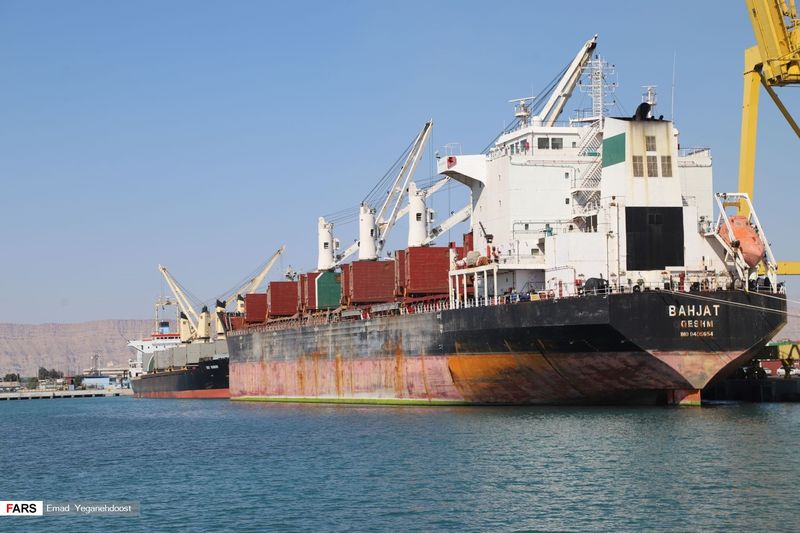
DOHA, Qatar — The Strait of Hormuz reopening plan that Iran first priced at seven days could now be carried out in two, Tehran said on Monday, after a round of talks with Qatari mediators in Doha produced a draft proposal that is now being circulated. That is Tehran’s claim, and it arrives with a condition large enough to contain the headline: by Iran’s own account, the two-day clock starts only after the United States ends its naval blockade of Iranian ports and accepts a list of demands that Washington has not publicly agreed to. The negotiators have left Doha, the draft’s details have not been published, and the waterway itself remains, for most shipping, a fraction of its pre-war self.
What changed over the weekend is the timeline Iran is attaching to its own offer. Foreign Minister Abbas Araghchi, in an interview with Al Jazeera released on Sunday, said that under a deal the strait could open within a two-day timeline rather than the seven days originally envisaged, according to Reuters’ account of the interview. Foreign ministry spokesperson Esmaeil Baghaei picked up the same figure on Monday, presenting the compressed schedule as evidence of Iranian flexibility. “The possibility of implementing this plan in two days is another indication of Iran’s good-faith approach,” Baghaei said, in remarks reported by Euronews and the Associated Press — while adding that “everything depends” on the United States accepting Iran’s demands.
What happened in Doha: a draft circulated, and the negotiators went home
Iranian negotiators have left the talks with Qatari mediators in Doha aimed at ending the war with the United States, and a draft proposal for a deal is being circulated, with a follow-up meeting possible, Reuters reported on Monday, citing an official briefed on the talks. The official said the negotiators departed on Sunday and stressed that they did not leave because of difficulties — a clarification that matters in a process where walk-outs have repeatedly signalled collapse. No details of the draft were provided, and Signal Post News has not seen its text.
The Iranian presence in Doha was built around message-carrying rather than face-to-face negotiation with Americans. Deputy Foreign Minister Kazem Gharibabadi was in Doha to facilitate the exchange of messages with Washington through Qatari intermediaries, Baghaei said, according to Reuters; Euronews, summarising Associated Press reporting, added that he travelled to Doha on Monday to help draft a preliminary agreement. Messages are still being exchanged via the mediators, Baghaei said — both the state of play and a measure of its fragility: this is a negotiation conducted at one remove, through a Gulf state that has made a speciality of the role. Our earlier reporting traced how Qatar’s mediators shuttled between Tehran and Doha as the channel for US–Iran messages, and that channel is where this draft was produced.
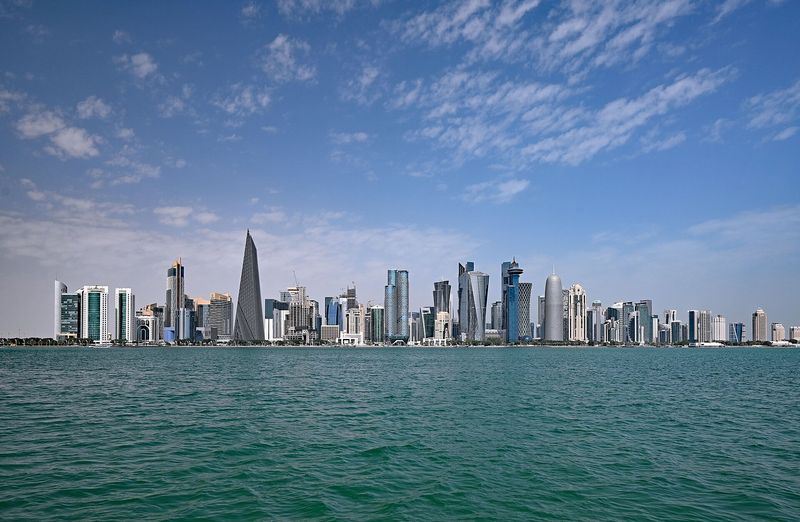
The two-day plan: what Iran says has to happen first
The basis of the talks, Reuters reported, is Iran’s seven-step plan, drawn up in September, to reopen the Strait of Hormuz and end the US naval blockade. What Tehran now suggests — Baghaei’s word was a possibility, not a commitment — is that the same plan could be implemented on a faster timeline. Signal Post News tracked the original offer when it was made: Iran’s September proposal to reopen the strait within seven days set the framework everything since has argued over.
Araghchi’s Al Jazeera interview, as summarised by Euronews and AP, gives the two-day version its shape. On day one, the United States implements the measures agreed in a deal; on day two, the strait reopens and transit returns to normal. Qatar had proposed cutting the original seven days to five or fewer — a mediator’s compromise Tehran has now publicly gone beyond, at least in its own telling. The sequencing is the substance: in Iran’s version, Washington moves first, verifiably, and only then does the waterway open. That is the point on which the earlier rounds foundered, and it is why the two-day figure should be read as a claim about Iranian readiness, not as a countdown that has begun.
The conditions Araghchi listed
The price attached to the faster clock is long. According to the Euronews/AP summary of Araghchi’s interview, Tehran’s conditions include Washington accepting a new Iran–Oman transit route through the strait; removing sanctions imposed in recent months — since August, after the Islamabad memorandum; reducing US troop numbers in the region; ending the war on all fronts, including Lebanon; unfreezing Iranian assets abroad; restoring oil-export sanctions waivers; and ending the US naval blockade of Iranian ports. Each item is, on its own, a negotiation; together they amount to a substantial rollback of the pressure campaign Washington has built since the summer. That is why Tehran presents them as the definition of a deal — and why no one should mistake the list for agreed text. Washington has not publicly accepted these conditions.
“No reopening while the blockade stands”: Baghaei’s condition
If the two-day timeline is Iran’s headline, the blockade is its footnote — and the footnote governs. Baghaei set out the condition in terms that leave little room for a softer reading, in comments reported by Reuters: “Our demands have been articulated very clearly and transparently… no final agreement can be initiated, nor can the Strait of Hormuz be reopened or secured, unless the US naval blockade is brought to an end, Iran’s demands are respected, and Iran’s legitimate requirements are addressed.”
That is the condition that governs everything else in this story: in Tehran’s public framing, the two-day offer is not a concession extracted under pressure but a timetable Iran controls, offered from what it presents as a position of leverage — control of the waterway itself. Whether that leverage is as strong as Tehran claims is a separate question, and the shipping data below is where it can be tested.
Why this matters
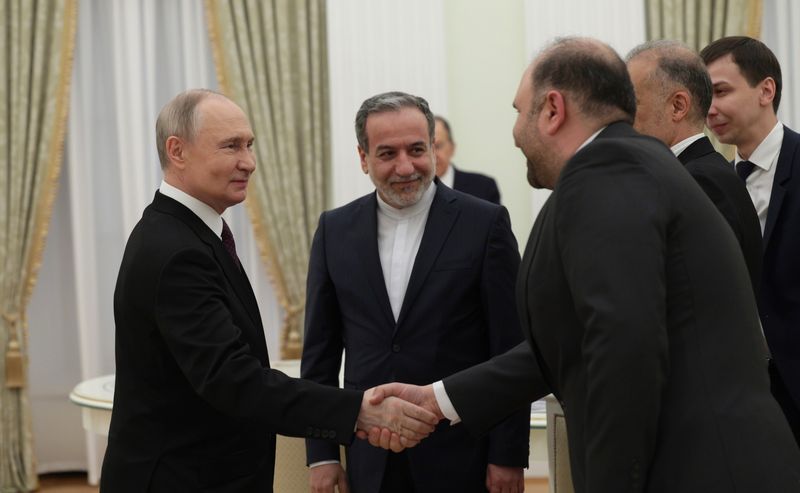
The Strait of Hormuz is the narrow exit from the Gulf through which the region’s oil and gas reaches the world, and its effective closure since the spring has been the war’s largest economic fact — larger, for most households, than any single strike. A credible reopening plan therefore moves things far beyond diplomacy: crude prices, tanker insurance rates, Gulf exporters’ revenues and the calculations of every finance ministry that has spent eight months pricing in a chokepoint. That is why a change in a number — seven days becoming two — travelled around the world on Monday, even though the underlying disagreement has not visibly narrowed.
It matters, second, because of the calendar. Trump has said the United States would not launch new attacks on Iran before Tuesday’s November 3 midterm elections, and has described the talks as productive, Reuters reported — while not ruling out further military action afterwards. A draft circulating on the eve of the vote is thus doing double duty: it is a negotiating document, and a public signal from Tehran that a deal is available. Baghaei dismissed the idea that the elections would transform Washington’s position, saying Tehran did not expect them to “give birth to a new US.” Both sides are talking to the other’s public as much as to each other. And it matters, finally, because of what a conditional promise is worth after eight months in which announcements have repeatedly outrun implementation: the plan should be judged not by the speed Tehran advertises, but by whether the first verifiable step, on either side, actually happens.
How we got here: from February’s strikes to a rejected first draft
The war began in late February, with US–Israeli strikes on February 28. Iran has claimed control over the Strait of Hormuz since the war’s opening phase, barring safe passage, Tehran said, for vessels affiliated with the United States and Israel. What began as a wartime closure hardened into the conflict’s central bargaining asset: the one thing Iran holds that the world economy needs back.
Diplomacy has run alongside the blockade in fits and starts. An Islamabad memorandum produced a framework that later collapsed — the sanctions Tehran now demands be removed are, by its own description, ones imposed since August, after that memorandum. In September, Tehran formalised its terms in the seven-step plan to reopen the strait and end the blockade. The initial Iranian proposal was rejected by Trump, Reuters reported. Through October the plan sat at the centre of an unresolved argument about sequencing and scope, as our reporting on the seven-day plan’s stalemate in the US–Iran talks documented. Monday’s development — a draft circulated, a timeline compressed from seven days to two — is the first movement in that argument for weeks. It is movement in the presentation of the offer. Whether it is movement in the offer itself is what the draft’s unpublished text would tell us, and no party has published it.
The strait by the numbers: traffic still a fraction of normal
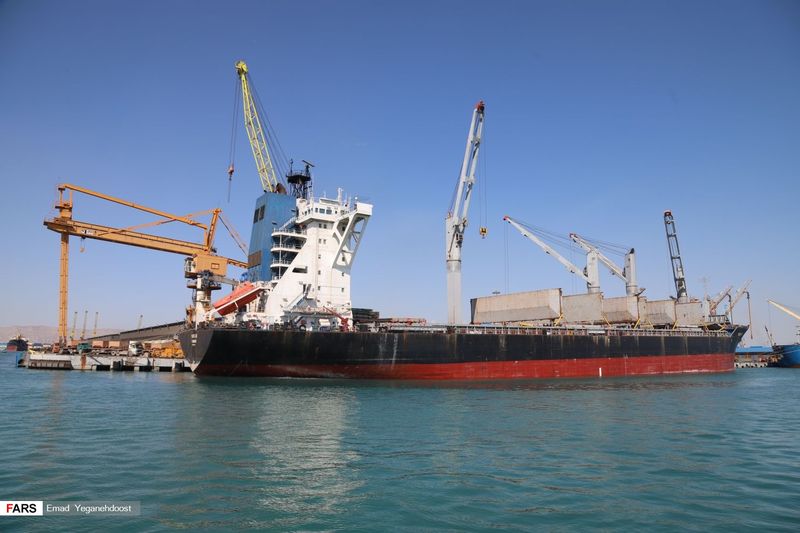
Against the diplomacy, set the waterway’s actual condition, as reported by the shipping-safety authorities whose tallies Signal Post News cites here as reported figures, not as counts we have independently verified. A reported tally of UK Maritime Trade Operations (UKMTO) reports counted at least 35 attacks on shipping in the Gulf and Hormuz in October — the highest monthly count since the conflict began. UKMTO also recorded 122 outbound and 155 inbound transits in the week to October 28: traffic running at roughly 70 percent below pre-war levels.
Those two numbers, held together, describe the strait as it actually is. It is not sealed — hundreds of transits a month still occur — but it operates at a fraction of normal volume under a level of risk that produced a record month of attacks. That is the baseline any reopening plan has to change, and it is why insurers and shipping lines, not governments, will deliver the first honest verdict on any deal: a strait is open when unescorted commercial traffic returns at normal volume and war-risk premiums fall, not when a communique says so. The weekend also brought a claim that illustrates the information problem around the waterway: Iran’s Islamic Revolutionary Guard Corps said on Sunday that two tankers had struck mines. There has been no independent confirmation of that claim, and it is reported here as a claim only.
Who gains, who loses — and what the critics on each side say
For Iran, a deal on these terms would convert its one wartime asset — control of the strait — into the things it most needs: the blockade lifted, assets unfrozen, oil waivers restored and sanctions rolled back, without surrendering the waterway before payment. The two-day framing serves that strategy: it casts Tehran as the reasonable party, ready to move fast, and places the burden of delay on Washington. Sceptics answer that the conditions are priced so high precisely so they can be refused — that a plan requiring the United States to unwind its pressure campaign first, shrink its regional footprint and end the war on every front including Lebanon is less an offer than a restatement of war aims in diplomatic form.
For the United States, acceptance would deliver the clearest economic win available from this war — a reopened strait and normalised energy flows — at the cost of concessions its pressure strategy was built to withhold. American critics of a deal on these lines argue it would reward the seizure of an international waterway; supporters of engagement answer that the blockade-and-strike strategy has not reopened the strait either, that October’s record attack tally is the measure of the current approach, and that a verified sequence can be policed as it unfolds. Trump’s public position, as Reuters reported it, holds both doors open: no new attacks before the midterms, talks described as productive, further military action not ruled out after them.
The bystanders have the simplest arithmetic. Gulf exporters gain from any credible reopening and lose from every week at 70-percent-below-normal traffic. Shipowners and insurers lose most from the present condition — an open strait that is not safe and a closed strait that is not total. Oil consumers gain if a deal takes the war premium out of crude, and lose if the post-election period brings the escalation Trump has declined to rule out. Qatar gains either way: every round held through Doha confirms its role as the region’s indispensable intermediary.
What happens next: three ways the draft travels
The first scenario is acceptance in substance. Washington agrees the sequence — its measures first, the strait on day two — the follow-up meeting the briefed official described takes place, and the draft becomes a text both sides sign. The tell would not be the signature but the shipping: transits climbing back toward pre-war volumes and insurers repricing the route. Nothing in Monday’s reporting suggests this is imminent; it is the scenario the draft’s circulation is designed to make imaginable.
The second is rejection followed by escalation. If Washington treats the conditions as it treated the initial proposal — which President Donald Trump rejected, Reuters reported — the diplomatic track thins at exactly the moment the electoral constraint on American action expires, and Tehran’s public position gives it little room to reopen the strait unilaterally without losing face. In that scenario, October’s record month for attacks on shipping reads less like a peak than like a baseline.
The third, and on this war’s record the most travelled, is partial movement: the draft annotated rather than accepted, one or two steps tested — a sanctions waiver here, a category of shipping passed there — while the full sequence remains disputed. The follow-up meeting, if it happens, is where that scenario would begin. Watch for three things: any American public response to the specific conditions, rather than to the idea of talks; any published text or agreed summary of the draft; and the weekly UKMTO transit count, which will say whether the waterway believes what the capitals are saying.
For now, the honest summary is the narrow one. Iran has said the strait could reopen in two days. It has also said, in the same statements, exactly why it has not: the blockade stands, its demands are unmet, and Washington has not publicly accepted the terms. Both halves of that sentence are the news. Do you think Washington should take the two-day deal on Tehran’s terms — or is the price too high? Tell us in the comments, like this story if it helped you follow the talks, and follow Signal Post News for the follow-up meeting and the first US response.
Sources
- Reuters, November 2, 2026 — “Iranians have left Doha talks, draft proposal for US deal being circulated, official says”: the negotiators’ Sunday departure (not because of difficulties), the circulated draft and possible follow-up, the September seven-step plan as the basis of the talks, Gharibabadi’s role in Doha, Baghaei’s blockade statement, Araghchi’s two-day timeline via Al Jazeera, Trump’s rejection of the initial proposal, his pre-midterm position, and the “give birth to a new US” remark.
- Euronews / Associated Press, November 2, 2026 — summary of Araghchi’s Al Jazeera interview: the day-one/day-two sequence, Qatar’s proposal to cut seven days to five or fewer, Tehran’s listed conditions, Gharibabadi’s Monday travel to Doha, and Baghaei’s “good-faith approach” and “everything depends” remarks.
- Al Jazeera, interview released Sunday, November 1, 2026 — Araghchi’s statement that, under a deal, Hormuz could open within two days rather than seven. UKMTO figures are reported tallies, as described in the text; the IRGC tankers-and-mines statement is an Iranian claim without independent confirmation. Related Signal Post News coverage is linked in the text above.