War · Middle East · Iran
A U.S. military aircraft fired precision munitions into the stern of the bulk carrier M/V Huda in the Gulf of Oman on Saturday, disabling a civilian-crewed merchant ship for the fifth time since July — and CENTCOM chose the same day to announce Task Force Iron Gate, a new cell meant to extend the blockade from the sea to Iran’s land borders and the Caspian.
Track it live: Iran war and Gulf shipping tracker
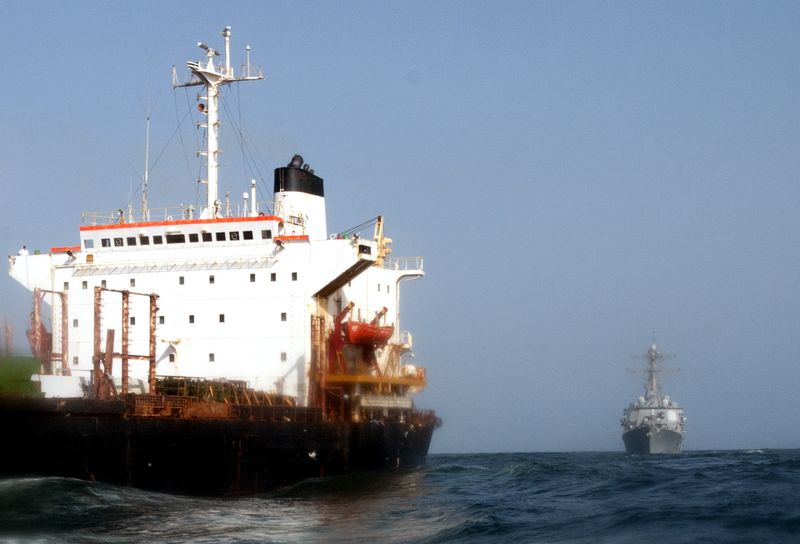
WASHINGTON, November 7, 2026 — The US disables ship Iran blockade campaign crossed a new threshold on Saturday. U.S. Central Command (CENTCOM) said a U.S. military aircraft fired precision munitions into the stern of the M/V Huda, a St. Kitts and Nevis-flagged bulk carrier, in the Gulf of Oman, disabling the vessel after its civilian crew ignored repeated warnings and attempted to violate the U.S. naval blockade against Iran multiple times. CENTCOM said the crew was directed to abandon the targeted spaces before the strike, that the vessel had visited an Iranian port, and that it was trying to depart regional waters when it was hit. CENTCOM released video of the operation. It is the fifth merchant ship U.S. forces have disabled since the blockade began in July 2026 — and the first reported disabling in almost a month.
What we know — and what we do not
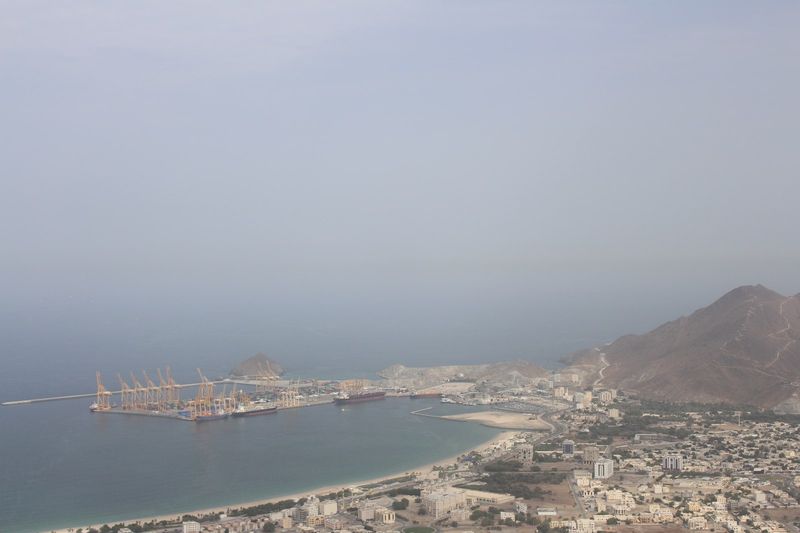
The Huda is a 24,993-deadweight-ton bulk carrier built in 1999, about 160 metres long, listed under IMO number 9197088 in ClassNK data reported by the shipping press. The UK Maritime Trade Operations (UKMTO) centre recorded a bulk-carrier incident involving military forces roughly 18 nautical miles east of Khor Fakkan, in the United Arab Emirates — the anchorage area outside the Strait of Hormuz where ships wait before attempting the transit. UKMTO listed the crew’s condition and the extent of damage as unknown. Vessel-tracking reporting said the ship was hit at the anchorage off Khor Fakkan and that all crew were reportedly safe; Signal Post News is presenting that as reported, not confirmed, because CENTCOM’s statement did not address it.
What CENTCOM did not state is a long list, and it matters for everything that follows: the number of crew aboard, their condition, what cargo the Huda was carrying, which Iranian port it had visited, and which aircraft or munition carried out the strike. Iran had not issued a specific response to the Huda disabling at publication time. Any account that fills in those blanks today is guessing, and this article will not.
The fifth ship: the pattern in the numbers
The Huda is the fifth merchant ship disabled since July, and the first since October 10, when U.S. forces disabled the bulker Ocean Molica, also in the Gulf of Oman. Set against that figure is the one CENTCOM emphasises: 147 commercial vessels have complied with warnings and been redirected in the same period. Read together, the two numbers describe a blockade that most mariners obey. Roughly twenty-nine ships have turned away for every one that has been stopped by fire — a compliance rate above 96 percent even before counting the traffic that never tested the line at all.
That ratio cuts both ways politically, and both readings were audible on Saturday. U.S. officials present the five disablings as proof the blockade has teeth: warnings are real, and a ship that runs them repeatedly will eventually be stopped by force. Critics of the campaign answer with the same arithmetic: if compliance is that high, they ask, was disabling a 27-year-old bulk carrier with a civilian crew the only remaining option — or a demonstration aimed at the next hundred ships watching? The strike’s method sharpens that question. In most earlier cases, non-compliant ships were boarded or redirected; putting precision munitions into a merchantman’s stern is an escalation in enforcement method even when, as CENTCOM says, the targeted spaces were emptied first. Shipping lawyers and marine insurers will press exactly the points CENTCOM’s statement leaves open — the adequacy and record of the warnings, the proportionality of the response, and who compensates owners and cargo interests for a disabled ship. U.S. officials, for their part, frame the strike as the only language that stopped a vessel that had already tried to run the blockade multiple times.
Task Force Iron Gate: the blockade goes ashore
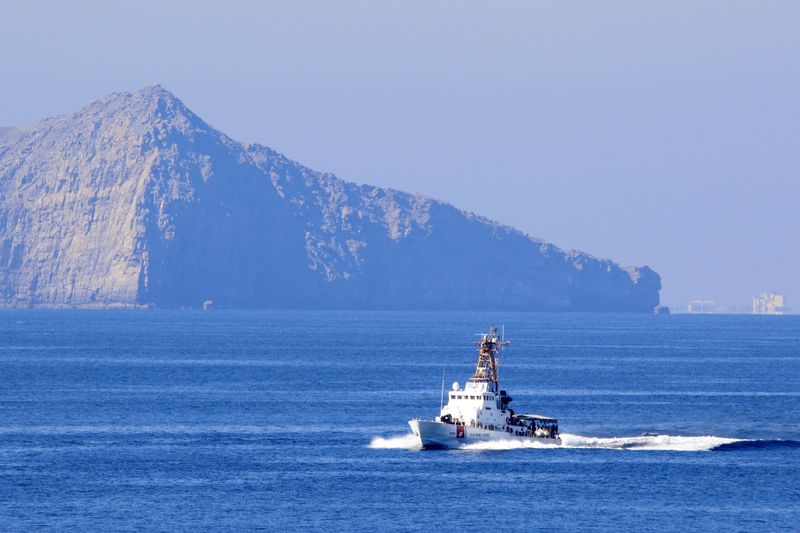
The strike was only half of CENTCOM’s Saturday. The command also announced Task Force Iron Gate, a roughly 20-person civilian-military staff based at CENTCOM headquarters in Tampa, Florida, directed by Adm. Brad Cooper, the CENTCOM commander. Its mission, per CENTCOM, is to coordinate with other U.S. agencies against the movement of advanced weapons systems, dual-use technologies, sanctioned material and illegal revenue streams across Iran’s land borders and the Caspian Sea. Reuters first reported the task force’s creation on Saturday.
“The establishment of Task Force Iron Gate reinforces the success of our ironclad blockade against Iran at sea,” Cooper said, adding that strengthening interagency collaboration will “further constrain Iran’s ability to finance terrorism, rebuild weapons factories, and replenish their military.” CENTCOM estimates the naval blockade has prevented Iran from exporting more than $25 billion in crude oil in recent months — an estimate this article attributes to CENTCOM, which did not publish the methodology behind it.
The land focus exists because of what investigators have found moving overland. A Reuters investigation found that Iran built a secret network importing at least $2 billion in hardware, explosives and heavy-duty trucks since January 2025 — by cargo ship across the Caspian Sea from Russia, by truck from Central Asia, and by freight planes from China. In other words, while the sea blockade squeezed the oil going out, a second, quieter logistics system kept war material coming in.
The honest arithmetic of Iron Gate
Twenty people in Tampa cannot physically seal anything, and the geography is unforgiving: Iran shares land borders with seven countries — Iraq, Turkey, Armenia, Azerbaijan, Turkmenistan, Afghanistan and Pakistan — plus a Caspian coastline. No serious reading of Saturday’s announcement should treat Iron Gate as a cordon. It is a coordination and intelligence cell. Its real-world effect, if it has one, will be produced elsewhere: by partner governments willing to inspect trucks and ships, by sanctions designations that make the smuggling network’s front companies radioactive, by seizures at ports and border crossings, and by prosecutions that raise the cost of moving cargo for Tehran.
Measured against the numbers in this story, the task is asymmetric in both directions. CENTCOM’s claimed $25 billion in blocked oil exports is more than twelve times the $2 billion in smuggled imports Reuters documented — a reminder that the sea campaign operates at a scale the land network does not match. But the $2 billion bought precisely the categories Iran most needs — explosives, hardware, trucks — and a coordination cell’s success will not be measured in dollars. It is also worth recording what CENTCOM did not announce on Saturday: no new legal authorities, no named partner countries, no budget, and no measurable targets against which Iron Gate’s performance can later be judged. The task force’s first public products — designations, seizures, indictments — will say more about it than its founding statement does.
Why this matters
A blockade learning to escalate in two directions at once
Saturday’s two announcements are one story. At sea, enforcement moved up a rung: from warning, to redirecting, to boarding — and now, for the fifth time but after a month’s pause, to disabling fire against a merchant ship. On land, the campaign widened sideways, from a naval cordon to an interagency effort against smuggling routes that no fleet can reach. Together they describe a blockade entering a new phase, in which Washington is simultaneously raising the cost of defying it at sea and trying to close the leaks that have limited its effect ashore. Whether that combination pressures Tehran toward the table or hardens the siege economy Iran has been building since January 2025 is the open question the next months will answer.
Who benefits, who loses, who is exposed
The immediate beneficiaries are the blockade’s enforcers: CENTCOM can point to a 147-to-5 compliance record and a new task force as evidence of momentum, and the Huda strike costs Washington little if the crew is confirmed safe and the ship is salvaged without environmental damage. Gulf shipping that complies with the regime also gains a perverse kind of clarity — the rules, however harsh, are predictable. The losers are concentrated and specific: the Huda’s owners, charterers and cargo interests, who now hold a disabled 1999-built bulker and an insurance fight; Iranian oil buyers and the smuggling intermediaries Iron Gate exists to name; and, most exposed of all, the civilian crews who sail the Gulf of Oman’s anchorages knowing that a fifth ship has now been stopped by munitions. The critics’ case is equally specific: each disabling normalises firing on merchant shipping, invites legal challenge over warnings and proportionality, and risks the incident — a crew killed, a hull sunk, oil in the water off Khor Fakkan — that turns an enforcement campaign into a wider war. Iran’s government, which had not responded specifically to the Huda strike at publication time, loses revenue by CENTCOM’s account but gains the argument, which it has made since July, that the blockade is collective punishment enforced at gunpoint.
Background: a blockade inside a wider war
The naval blockade of Iranian ports has run since July 2026, imposed after the ceasefire collapsed, and the Huda strike landed in an already crowded weekend. On Friday, as this site reported in its coverage of the confirmed U.S. strikes on an Iranian air-defence system on Qeshm Island, Washington struck inside Iran itself while Qatar tabled a two-day bridge deal to reopen the strait. Transit through the Strait of Hormuz has fallen to a trickle — one ship crossed by mid-morning on Saturday and a second by late afternoon — while Tehran has continued to widen its own deterrent, most recently by lifting the 2,000-kilometre limit on its ballistic missile range. The diplomacy, meanwhile, runs on parallel tracks: U.S.-brokered contacts through Doha continue even as the separate Ukraine track heads toward the November 10–11 Abu Dhabi meeting, where, as this site’s Abu Dhabi coverage reported, Moscow has set its own preconditions. The blockade is the pressure instrument connecting all of it — which is why a single bulk carrier at a Fujairah-side anchorage drew a precision strike on a Saturday.
What happens next
The first unanswered questions are practical. CENTCOM has not announced the Huda’s disposition: whether the disabled bulker will be towed to Khor Fakkan or another port, who will salvage her, and the confirmed status of her crew all remain open, and UKMTO’s incident record still lists damage and crew condition as unknown. Expect the shipping world’s verdict to arrive with the markets on Monday, in war-risk insurance premiums and Gulf freight rates, which have repriced after every previous disabling. In Washington, the test of Iron Gate will be whether a 20-person Tampa cell produces public artefacts — sanctions designations against the Caspian and Central Asia network Reuters documented, seizures, or prosecutions — or remains a headquarters announcement. And in Tehran, the response that had not come by Saturday evening will set the tone: silence, a protest through maritime channels, or an answer at sea. The blockade’s arithmetic says most ships comply. Saturday was about the ones that do not — and about a campaign that has now formally extended itself from the water to the land.
What do you think — does disabling a merchant ship strengthen a blockade’s deterrence, or cross a line that endangers every civilian crew in the Gulf? Follow Signal Post News for updates as CENTCOM, UKMTO and the vessel’s operators confirm the crew’s status and the ship’s fate, and share your thoughts below.
Sources
Sources: U.S. Central Command statement, “U.S. Forces Disable Cargo Vessel Attempting to Violate Naval Blockade” (November 7, 2026), via EIN Presswire; Reuters, “Expanding naval blockade, US military looks to restrict Iranian land commerce” (November 7, 2026); Life News Agency, coverage of CENTCOM’s announcement and X post on the disabling of the M/V Huda (November 7, 2026); UK Maritime Trade Operations (UKMTO) incident reporting for the Gulf of Oman, November 7, 2026; and ClassNK vessel data for M/V Huda (IMO 9197088) as reported by the shipping press. Photos: Wikimedia Commons, as credited in the captions.