War · Iran · Strait of Hormuz
A reported Qeshm Island missile strike near the town of Suza late on Friday has put the Strait of Hormuz back on a knife edge — arriving in the same hours that President Donald Trump weighs whether to end the Iran war or reignite it, his advisers split in public view, and Qatar launches a last-minute mediation to keep a new American operation from starting.
Track it live: Iran war tracker
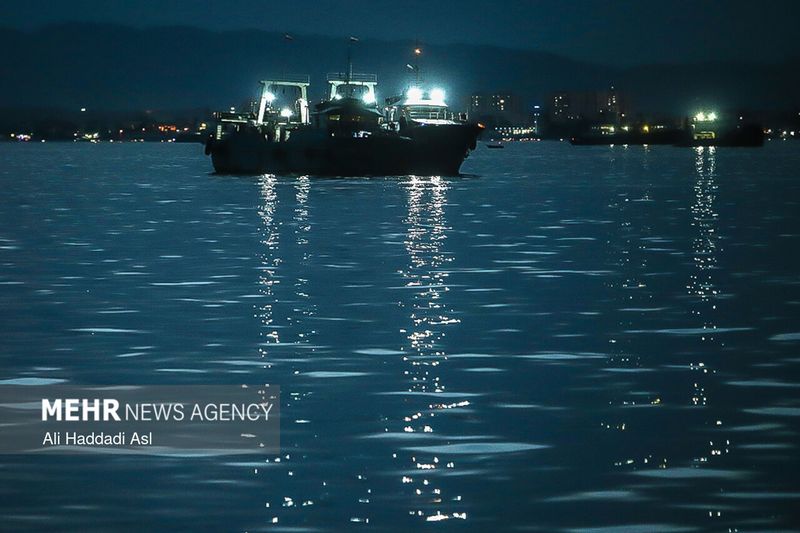
QESHM ISLAND, November 6, 2026 — The reports of a fresh Qeshm Island missile strike began, as so much of this war now does, with Iranian media and a sound heard in the dark. Iran’s state news agency IRNA reported that local witnesses said two projectiles struck the Suza area of Qeshm Island, in southern Iran, after the sound of an aircraft was heard over the island. The semi-official Tasnim news agency, reporting on Saturday, said initial reports indicated two missiles had struck the island — and, in the same breath, that there was no official information on possible damage. Iranian state television reported two explosions heard in the Suza area late on Friday and no casualties. Those accounts, carried by Reuters, are the established core of what happened. Everything beyond them — who fired, at what, and to what effect — remains unconfirmed, and this article will keep that line bright throughout.
What gives two explosions on an island in the Strait of Hormuz their weight is everything happening around them. In Washington, with the midterm elections over, President Donald Trump is being pressed by clashing advisers to make the decision he has deferred for weeks: end the Iran war, hold it in place under sanctions and blockade, or return to major combat operations. The Wall Street Journal reported Friday that explosions were reported on Qeshm Island on Friday evening after what a U.S. official described as small-scale strikes, adding that the United States has conducted several such strikes in recent weeks while cautioning that they did not signal a return to full-scale combat operations. In Doha and Oxford, Qatar has launched what Gulf officials describe as an 11th-hour attempt to stave off a new American operation altogether. And at sea, the carrier USS Theodore Roosevelt has only just begun a port call in Singapore, at least two weeks from the Middle East — a reminder that the military clock and the political clock are not running at the same speed.
What was reported on Friday night
Start with the narrowest, best-sourced version of events, because the versions diverge quickly. Reuters, in a report datelined Cairo on November 7 and published on November 6, relayed two Iranian accounts. Tasnim said initial reports indicated two missiles had struck Qeshm Island, with no official information on possible damage. IRNA, reporting earlier, cited local witnesses who said two projectiles struck the Suza area after the sound of an aircraft was heard over the island. Suza — also rendered Souza in some transliterations — is a coastal town on the island’s northern shore, facing the Iranian mainland across the narrow Clarence Strait.
Iranian state television added a third account: two explosions heard in the Suza area late on Friday, and no casualties. The Fars news agency widened the map, reporting explosions also near Bandar Khamir, on the mainland opposite Qeshm, and suggesting they might be linked to warning shots toward the Strait of Hormuz. These accounts are not reconciled, and readers should hold them as parallel reports rather than a single confirmed picture: missiles or projectiles, two explosions, a possible second location, a possible warning-shot explanation, an aircraft heard overhead. None of them, on its own, identifies an attacker, a target, or damage — and no Iranian military statement has done so either.
The one external characterisation on the record comes from the Wall Street Journal, which reported that a U.S. official described the Friday-evening explosions as following small-scale strikes, in a pattern Washington has maintained for weeks: limited strikes, publicly framed as something short of a return to full-scale combat. That description is an official’s characterisation reported by the Journal — it is not a Pentagon statement claiming responsibility for the November 6 projectiles, and Signal Post News is not treating it as one.
What we don’t know yet
Because this story will be misread in proportion to its importance, the unknowns deserve their own section, stated plainly. Who fired the November 6 projectiles: not officially confirmed by any government. No U.S. or Iranian military statement has identified the origin of the projectiles reported near Suza. What was targeted: unknown. Qeshm hosts facilities associated with Iran’s Islamic Revolutionary Guard Corps, but no source in the verified reporting identifies a target for Friday’s projectiles. What was damaged: unknown. Tasnim said damage details were still awaited from Iranian authorities, and Iranian state television reported no casualties. Whether the Bandar Khamir reports describe the same event: unresolved; Fars’s suggestion of warning shots toward the strait is a suggestion, not a finding. Until officials in Washington or Tehran say more, any account that fills in those blanks is going beyond the evidence — including any account that treats Friday night as the opening of a new campaign rather than another episode in a weeks-long pattern of limited strikes and counter-claims.
The second time in a week: Qeshm’s place in this war
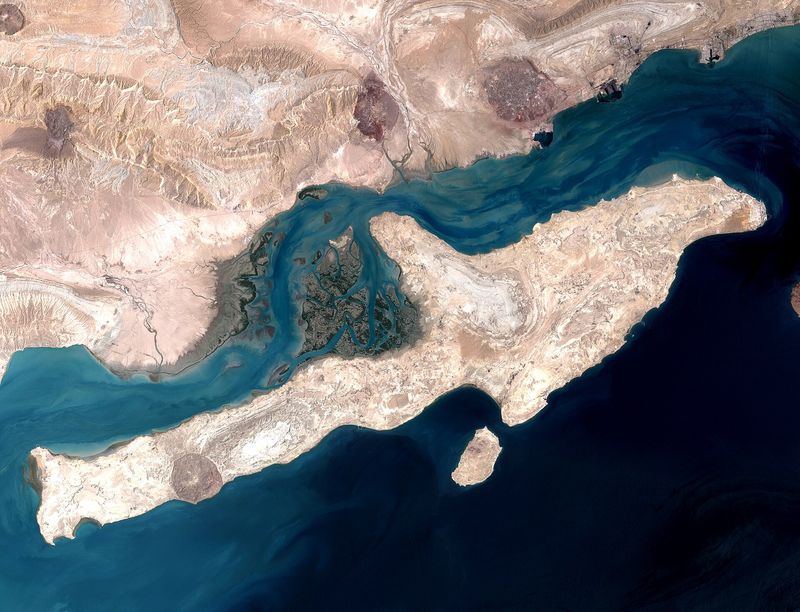
Friday’s explosions were not the island’s first of the week, and the earlier episode is the essential context for reading this one. On November 2, the United States carried out limited defensive strikes on Qeshm Island after Iran’s IRGC fired a surface-to-air missile at a U.S. aircraft over the strait — reported at the time by the Wall Street Journal, CNN and the Associated Press from U.S. officials. Iran, for its part, claimed drone shootdowns near Qeshm. Even in that clearer episode, the two capitals’ accounts diverged on what had been hit and what had been lost. Qeshm keeps recurring in this war for geographic reasons that no diplomacy can move: at roughly 1,500 square kilometres, it is Iran’s largest island in the Persian Gulf, sitting in the Strait of Hormuz opposite Bandar Abbas — Iran’s principal naval hub — and Bandar Khamir, hosting IRGC facilities, and watching over the waterway through which about a fifth of the world’s seaborne oil and a large share of its liquefied natural gas normally pass.
The wider war supplies the rest of the frame. It began on February 28 with joint U.S.-Israeli strikes on Iran. A June memorandum of understanding, meant to convert the bombing into a negotiated track, collapsed within weeks, and Washington reinstated its naval blockade on July 14. Since then the conflict has settled into the condition that makes episodes like Friday’s so hard to read: not peace, not open campaign, but a coercive stalemate punctuated by limited strikes, each one officially described as an exception and collectively describing a war that never quite stopped. Our earlier coverage traced the decision now converging on the Oval Office in Trump’s Iran war decision: strikes, pressure or a deal.
Why this matters
Two projectiles on one island would be a local incident in a quieter world. In this one, they land at the intersection of every unresolved question of the war’s ninth month. First, escalation control: both Washington and Tehran have spent weeks calibrating limited strikes and limited responses precisely to avoid the full-scale combat both say they do not want — and calibration depends on each side correctly reading the other’s episodes. An unattributed strike is the hardest kind to read, and therefore the most dangerous. Second, energy: Hormuz is the world’s most consequential chokepoint, and every explosion near it is priced, within hours, into oil and gas markets that have already absorbed eight months of war. Third, timing: the explosions arrived while the American president is actively deciding whether the war resumes in earnest. An incident that might have been a footnote in October becomes, in this week, an argument — cited by those urging action as proof the stalemate is failing, and by those urging a deal as proof of where drift leads.
The decision in Washington: a room divided
The Wall Street Journal’s account of the post-midterm scramble describes a decision being contested adviser by adviser. Vice President JD Vance has questioned whether the war was worthwhile and told Trump he intended to blame the electoral defeat on the war, according to U.S. officials cited by the Journal. On the other side of the argument, Defense Secretary Pete Hegseth and the CENTCOM chief, Adm. Brad Cooper, have supported a return to major combat operations in recent briefings, and hawkish outside advisers have called the president since Election Day arguing that his legacy depends on forcing Iran to surrender its nuclear programme. Between those poles sits the pressure camp: Secretary of State Marco Rubio and Treasury Secretary Scott Bessent advocate tightening sanctions and continuing the blockade. Special envoy Steve Witkoff backs continued diplomacy aimed at a deal that ends the war and reopens the Strait of Hormuz. Outside the administration, Israeli Prime Minister Benjamin Netanyahu is still pushing for renewed strikes; Gulf allies, the Journal reports, are more sceptical.
Trump’s own public words this week have kept every option alive, deliberately. Told to reporters on Thursday, in the Journal’s account: “Now we will make a decision… I would rather not destroy the rest of the country if possible, but maybe I will have to. You’ll know soon enough.” He also said this week that he had “no choice” but to bear the political cost of targeting Iran’s nuclear programme: “If I had to do it again, I’d have to do it again, because, long term, it’s the only answer.” A White House official added the counterweight: the president is in no hurry, as Iran’s economy sputters and oil flows through the strait. A Pentagon official, asked about preparations, confined the department’s role to a sentence: its job is to develop and execute military options. Read together, those statements describe leverage being maintained in all directions at once — toward Tehran, toward his own divided room, and toward the mediators. Our running coverage of the threat environment around that decision includes Tehran’s warning, reported this week, that Iran threatens missile strikes on Europe and U.S. bases if the war resumes.
Qatar’s 11th-hour mediation
Against that backdrop, Qatar moved on Friday. Qatari officials said they had launched an 11th-hour attempt to stave off a new American operation and to bridge the gaps needed to open the Strait of Hormuz and lift the U.S. blockade, the Journal reported. Qatar’s prime minister, Sheikh Mohammed bin Abdulrahman al-Thani, speaking at an event in Oxford, England, put the effort on the record: “Our mediators are working as we speak to avoid another wave of escalation in the region.” Qatar’s ruler, Sheikh Tamim bin Hamad al-Thani, spoke with Trump on Friday, and Gulf officials said they saw signs that both sides were looking for an off-ramp. Iranian officials are expected to return to Doha in the coming days, possibly as early as Saturday.
The deal idea under discussion shows how far the mediators are trying to compress the calendar: a preliminary-talks timetable that the June memorandum set at 60 days would shrink to two days, moving almost immediately into nuclear negotiations. Whether Iran would accept is unclear — Tehran’s stated price, discussed below, starts from the June terms, not from a shortcut past them. On Saturday, Qatar’s International Media Office denied circulating reports that the United States and Iran had failed to reach an agreement, calling them false and misleading, and said both sides continue to work toward an agreement with Qatari mediation ongoing, Reuters reported. A denial of failure is not an announcement of success; it is, at minimum, evidence that Doha believes the channel is alive at the moment of maximum pressure. We have followed the mechanics of the Hormuz track in our coverage of the two-day reopening plan and the Doha talks.
The military clock: ready later this month
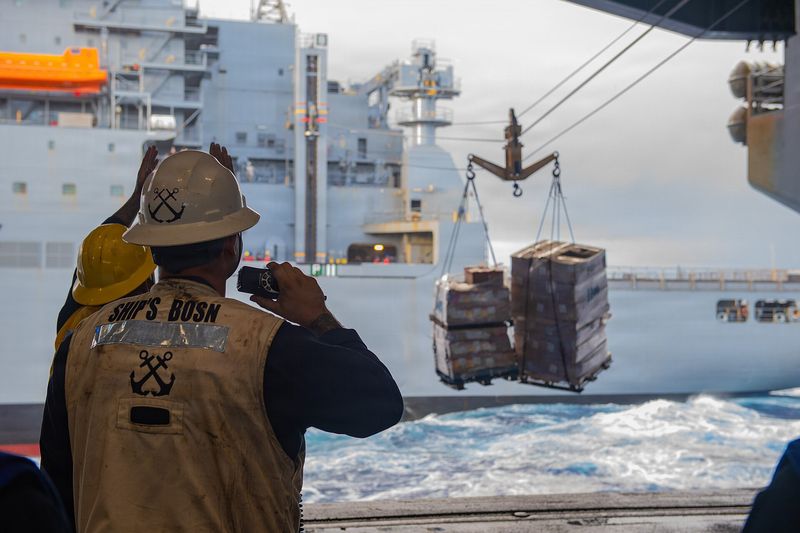
If Trump orders renewed operations, the Pentagon stands ready to execute swiftly — but officials told the Journal that the ideal timeframe begins later this month, when additional equipment arrives. The arithmetic is visible on the carrier map. The USS Theodore Roosevelt carrier strike group — the carrier CVN-71 with Carrier Air Wing 11, the cruiser USS Chosin and the destroyers USS Paul Hamilton and USS Decatur — began a port call in Singapore on Friday, USNI News and The War Zone confirmed, and is not expected to reach the Middle East for at least another two weeks. An additional Marine expeditionary unit is expected later this month, joining roughly 20 U.S. ships already operating in the region. In the meantime, the United States has moved a Patriot air-defence system to Israel, relocated personnel away from bases considered vulnerable to Iranian retaliation, and deployed additional ships, munitions and troops.
Hegseth and Cooper, the Journal reports, have spent weeks preparing the option they favour, and have advised that resuming attacks — targeting Iranian energy infrastructure, nuclear facilities and missile and drone arsenals — is the only way to make Iran surrender its nuclear material. That advice defines what “restarting the war” would actually mean in practice: not a repetition of February’s opening, but a campaign against the systems Iran needs to rebuild what February destroyed, sustained until Tehran gives up the material itself. The preparations cut both ways as evidence. They are what a Pentagon does when an order may come; they are also, as the Singapore port call shows, a force still travelling toward its start line.
Tehran’s price, and the experts’ split
Iran’s position, as the experts cited by the Journal describe it, begins from strength claimed rather than weakness conceded. Tehran is threatening to expand its retaliation beyond the Middle East if attacked. Its price for a settlement, per Eurasia Group’s Gregory Brew, is a return to this summer’s memorandum of understanding: Iran allowed to sell oil on the open market again, and the strait fully reopened, before any nuclear discussions. Maintaining the status quo of sanctions and blockade, Brew notes, is the path of least resistance — but it commits the United States to continuing the war at high oil prices. Brookings’ Suzanne Maloney argues the midterm result exacerbates Trump’s predicament, and that the options will likely compound the strategic and economic price already paid. The Foundation for Defense of Democracies’ Behnam Ben Taleblu takes the opposite brief: Trump holds a winning hand and should “hold the line” with sanctions and blockade. CSIS’s Seth Jones distilled the room’s mood into the question every camp is really answering: “What do you choose that is the least bad option?”
Who benefits, who loses
Analysis, clearly labelled as such: the hawks in Washington and Jerusalem gain argument from every unattributed explosion, because each one demonstrates that the stalemate is not stable — though the same incidents strengthen Qatar’s hand as the indispensable channel and Tehran’s claim that time and pressure are survivable. The pressure camp around Rubio and Bessent benefits if Friday’s episode stays small: a pattern of limited strikes under a holding blockade is, roughly, their policy already. The clear losers, in every scenario, are the people who live along the strait — in Suza and Bandar Khamir as much as in the Gulf ports opposite — and the shipping and energy markets that must price a chokepoint carrying a fifth of the world’s seaborne oil on the basis of unreconciled midnight reports. Iran’s economy, by the White House’s own account, continues to sputter under the blockade regardless of which option Trump chooses; what the choice decides is whether that pressure is the strategy or merely the prelude.
Three scenarios from here
Scenario one: the deal accelerates. Iranian officials return to Doha, the two-day timetable is accepted in some form, and Friday’s explosions are retrospectively filed as the last spasm of the old pattern. The obstacles are the ones Qatar is mediating: sequencing of blockade relief, oil sales and nuclear talks, and whether Tehran will move before its June terms are met. Scenario two: the hold. Trump takes the White House official’s advice embedded in his own camp’s argument — no hurry — sanctions tighten, the blockade continues, limited strikes continue to be described as exceptions, and the decision is deferred past the carrier’s arrival. This is the path of least resistance Brew describes, and it prices the war into oil markets indefinitely. Scenario three: the restart. Later this month, with the Roosevelt in theatre and a Marine expeditionary unit embarked, Trump orders the major combat operations Hegseth and Cooper have prepared, against energy, nuclear and missile targets — and Iran carries out its threat to widen retaliation beyond the region. In that scenario, the question of who fired two projectiles near Suza on November 6 will matter less than the fact that, when they landed, every capital was already braced for the answer to a larger one.
What to watch in the next 72 hours is concrete: any Iranian official damage assessment from Qeshm, which Tasnim said was still awaited; any U.S. military statement that does — or pointedly does not — address Friday’s projectiles; the announced return of Iranian officials to Doha; and the Roosevelt’s departure from Singapore, the first physical marker of the military clock. Until those arrive, the honest summary of Friday night remains the narrow one: explosions were reported on Qeshm Island, Iranian accounts differ, no government has confirmed who fired, and the decision that will give the episode its meaning has not yet been announced.
Sources: Reuters, “Two missiles strike Iran’s Qeshm Island, Tasnim news agency says” (November 6, 2026), reporting Tasnim, IRNA, Iranian state television and Fars accounts and Qatar’s International Media Office statement; The Wall Street Journal, “Trump’s Clashing Advisers Press Him to Make Iran War Decision” (November 6, 2026), by Alexander Ward, Lara Seligman, Benoit Faucon and Natalie Andrews, including the U.S. official’s description of small-scale strikes, the Qatar mediation and the Theodore Roosevelt timeline; USNI News and The War Zone reporting on the carrier strike group’s Singapore arrival (November 6, 2026). Characterisations by officials and experts are attributed in the text; the origin, target and damage of the November 6 projectiles are not officially confirmed.