War · Iran · United States
President Donald Trump said on Thursday that he will soon decide whether to resume all-out war on Iran. After his first post-midterm national-security meeting on the conflict, he laid out the choice in public: go further with strikes until Iran’s nuclear programme can, in his word, be “certified” dead — or stop short of destroying what is left of the country. No new strikes have been ordered, and no decision has been announced.
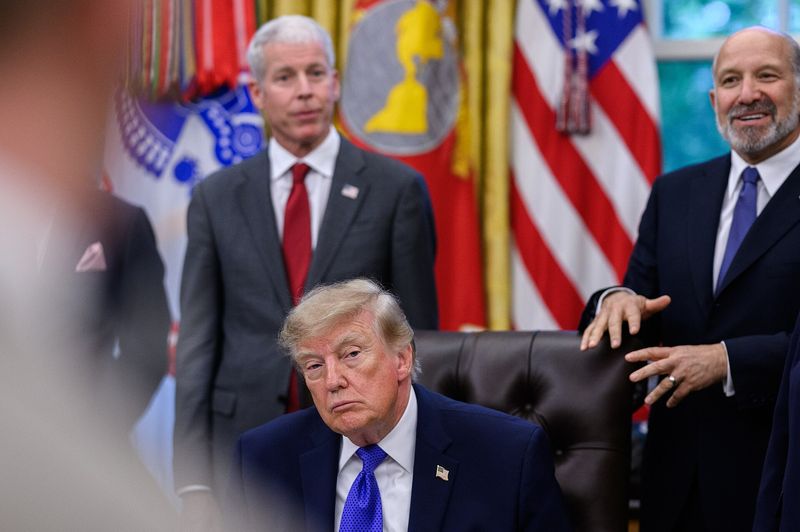
WASHINGTON, November 6, 2026 — The most consequential sentence of the week in Washington was delivered almost as an aside. President Donald Trump, taking questions in the Oval Office on Thursday, November 5, after signing a proclamation and after his first post-midterm national-security meeting on Iran — held inside his weekly intelligence briefing, according to two U.S. officials cited by Axios — turned to the war that has defined his second term and told reporters the administration was now at the point of decision. “Now we will make a decision,” he said. “Do we want to go further and just certify it — by certifying it, meaning it will never happen again?”
Track it live: Live war tracker
He followed it with the line that has since run around the world: “I would rather not destroy the rest of the country if possible, but maybe I’ll have to. You’ll know soon enough.” And later, in the same exchange: “We’re locked and loaded. If we have to do the rest of the Iran thing, we’re very much locked and loaded.” The president said a neighbouring country had told him Iran would take 25 to 30 years to rebuild from the damage already done — he put the figure at 25 years in his remarks — and he was blunt about the nuclear file at the centre of it all. Asked about reports that Iran is reviewing a mediator’s proposal on its nuclear programme, Trump said: “They’re not doing anything without our approval… Iran will never have a nuclear weapon.”
What he did not do matters as much as what he said. He announced no decision. He issued no order. And the officials describing the military’s posture were careful, on the record, about the same distinction: U.S. Central Command is finalising preparations to potentially resume major combat operations, but it has received no new directive. Readiness is not an order, and a threat is not a strike. But the week has compressed the distance between the three, and this article sets out what is actually known: the three options on the president’s desk, the signals from the military, Tehran’s seven conditions, the two-day deal Qatar has drafted, and the fight already under way in Washington over what he should choose.
The three options
Strip away the rhetoric and the decision, as described by the officials and by Trump himself, has three branches. The first is renewed strikes: a return to major combat operations aimed at finishing the work the administration says the first campaign left incomplete — above all, ensuring that Iran’s nuclear programme cannot be rebuilt. That is the meaning of Trump’s word “certify”: force used until Washington can certify the programme is dead for good. The second option is continued economic pressure: hold the blockade and the sanctions architecture in place, keep the straits under American control — Trump boasted on Thursday that more oil is moving through the strait under U.S. control than before the war — and let time and deprivation do the work. The third is a deal, but only on terms Trump has repeatedly described as major Iranian concessions: a settlement in which Tehran accepts constraints it has so far refused, verified in ways Washington controls.
Each option carries a different theory of the war. Strikes assume the remaining problem is physical — facilities, stockpiles, expertise — and can be bombed out of existence. Pressure assumes it is political will in Tehran, and that it breaks first. A deal assumes the programme can be fenced in by inspection faster than it can be rebuilt in secret. Trump’s remarks touched all three theories in a single appearance: he praised the blockade, threatened the strikes, and left the door open to the proposal — while insisting nothing moves without his approval.
Ready, not ordered: the military signals
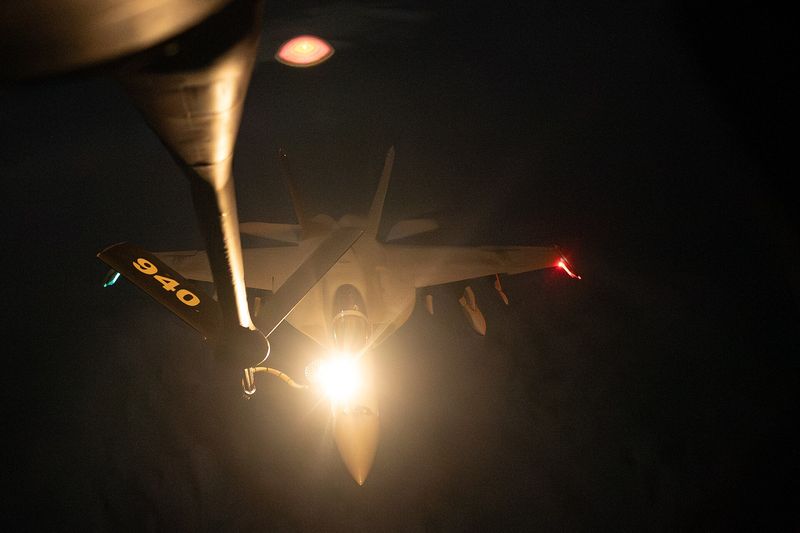
The hardest facts of the week are about posture, not action. A U.S. official told Axios that CENTCOM is finalising preparations to potentially resume major combat operations against Iran. Preparations of that kind are what a combatant command does when a president is weighing an option he may or may not take. They make the threat credible; they do not make it a decision. The same official account stressed that no new directive has been given.
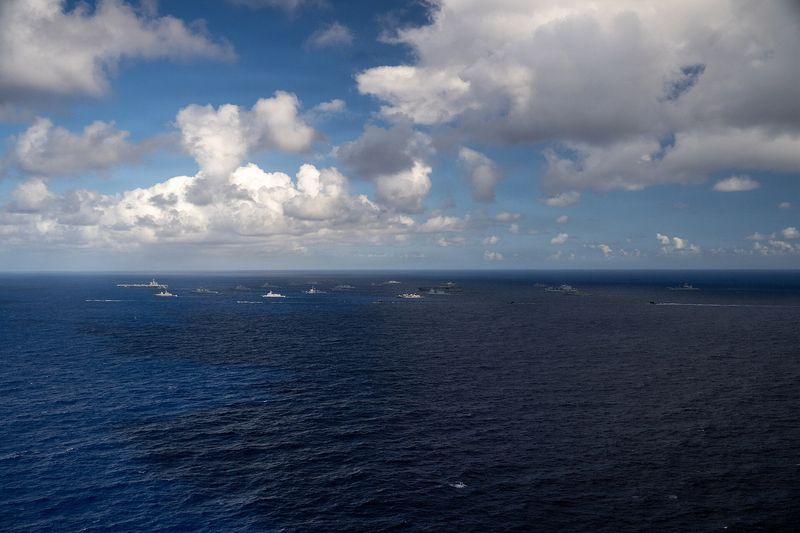
The carrier map tells the same story of a force still moving into place rather than one already unleashed. The USS Theodore Roosevelt strike group is stopping in Singapore from Friday and will not reach the CENTCOM area of operations before mid-November. If the president wanted maximum naval weight behind a decision, the calendar argues for a decision window that opens later rather than sooner — one reason analysts read Thursday’s language as leverage at least as much as intent. Trump himself fed that reading: within hours of the Oval Office remarks, on Friday, he called Qatar’s Emir, Sheikh Tamim bin Hamad Al Thani, according to a U.S. official who spoke to CBS — a call to the war’s chief mediator, not to a battlefield commander. Our earlier reporting on the command’s preparations is here: how CENTCOM readied the option to resume strikes.
Tehran’s price: seven conditions
Iran’s answer, delivered before Trump spoke, was a list. Mohsen Rezaei, secretary of Iran’s Supreme National Security Council, set out seven conditions for reopening the Strait of Hormuz and entering negotiations: among them, the lifting of sanctions, the release of frozen Iranian assets, reparations, and an end to the blockade. Until those conditions are met, Rezaei said, there will be no reopening of Hormuz and no negotiations. It is a maximalist opening position — payment and relief first, talks second.
Both statements can be true at once. Iran did send a nuclear proposal via Qatar, a senior Iranian official told Reuters on November 5 — Tehran is, in fact, negotiating, whatever its public conditions say. And the proposal exists because Washington’s blockade made the status quo unbearable; any version of it lives or dies in the Oval Office. The seven conditions are the price tag Tehran has hung on the door, in a negotiation it insists is not happening.
The Qatar draft: a two-day ladder
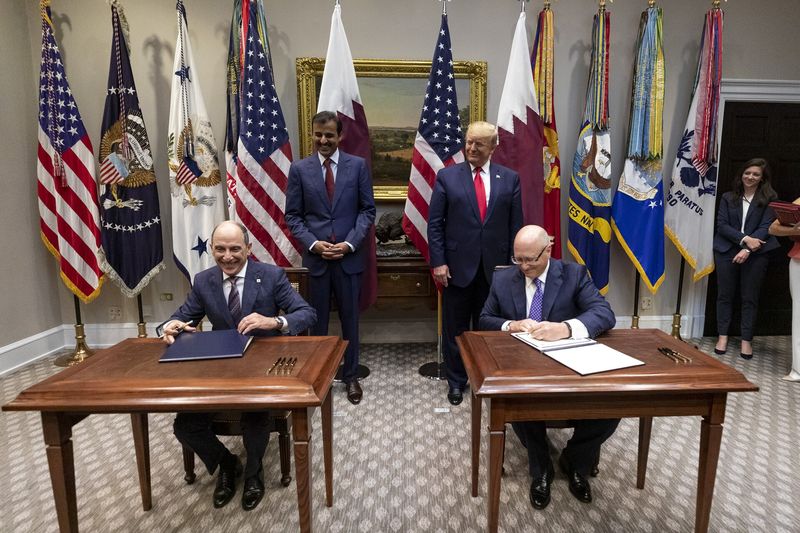
What Qatar has put between the two positions is a ladder, built to be climbed in 48 hours. Under the Qatar-mediated draft described in reporting this week, day one would see the United States lift its blockade and release some frozen Iranian funds, while Iran invites International Atomic Energy Agency inspectors back into the nuclear sites bombed in the war. Day two would see the Strait of Hormuz reopen and nuclear talks resume. Each side gives something visible before it has to give everything; each step can be halted if the other side cheats.
The design answers the war’s central problem of trust: Washington wants inspectors on the ground before it believes assurances; Tehran wants money moved and warships stood down before it believes promises. Sequencing converts a leap of faith into small, verifiable trades. It is also why Trump’s Friday call to the Emir matters: Qatar drafted the only document both capitals are currently reading. We have followed the Hormuz track step by step in our coverage of the two-day reopening plan and the Doha talks.
Washington pushes back — in both directions
The president does not make this decision in a vacuum, and the midterm results have rearranged the room around him. Vice President JD Vance has publicly blamed the Iran war for the Republican Party’s midterm losses and urged a negotiated settlement — an extraordinary position for a vice president to take against the defining military campaign of his own administration, and a signal of where the party’s anti-war wing now stands. Pulling the other way, Israeli Prime Minister Benjamin Netanyahu has pressed Trump to resume strikes, according to Axios: Jerusalem’s view is that a pause which leaves Iran’s programme damaged but alive merely schedules the next war on worse terms.
Democrats, about to take control of Congress, are moving on the constitutional flank. Representative Gregory Meeks plans resolutions to terminate the war and restore Congress’s role in authorising it; Whip Katherine Clark has attacked the war’s objectives and costs. A war begun on February 28 has now run for more than eight months, and who gets to continue it is about to be contested in a chamber the president’s party no longer controls.
Meanwhile, Iran rebuilds
One more fact pattern hangs over the choice, and it cuts in favour of those urging speed. BBC Verify reported on Friday that satellite imagery shows Iran digging and rebuilding at the Garmdareh and Shahroud missile bases, with more than a dozen other struck sites under repair. Reconstruction does not equal reconstitution — a repaired roof is not a rebuilt missile — but the imagery establishes the direction of travel: every month of pause is a month Tehran spends undoing the first campaign’s work. That is the hawks’ strongest empirical card, and it pairs with Trump’s own framing: his 25-to-30-year rebuild claim describes the damage done; the satellite pictures describe the clock now running against it.
For the doves, the counter-evidence is economic and political. The blockade is, by the president’s own account, working: oil moves through the strait under American control, Iran’s assets remain frozen, and its conditions read like the opening bid of a state that needs relief. A second bombing campaign would spend that leverage and reunite Iranian politics around resistance. Both readings are honestly held in Washington tonight — which is why the decision is genuinely undecided, not merely unannounced.
Why it matters, and who wins and loses
The stakes run well past the two capitals. A resumption of major strikes would hit global energy markets within hours: Hormuz carries a fifth of the world’s oil. A deal would do the opposite — release Iranian barrels, unfreeze assets and reopen the strait, a political earthquake in Jerusalem and the Gulf states that backed the campaign. Continued pressure changes nothing this week, which is its own consequence: Iran’s economy stays in a vice while its engineers rebuild.
For Trump personally, the decision is the hinge of his post-midterm presidency. He campaigned on ending wars; he is now weighing the resumption of the largest one of his tenure, days after his party lost Congress in an election his own vice president blames on that war. A deal lets him claim the programme ended on his terms; strikes let him claim it ended, full stop. What he cannot do is decide nothing for long: the carrier arrives in mid-November, and the new Congress is drafting its resolutions. “You’ll know soon enough,” he said. For once, the calendar agrees with him.
What happens next
Watch four things. First, the Qatar channel: whether the two-day draft produces an Iranian answer on inspectors, the single step that would turn a draft into a process. Second, the Theodore Roosevelt’s transit: its arrival in the CENTCOM area in mid-November is the earliest moment the full strike option is physically in place. Third, Tehran’s seven conditions: any softening of the reparations or asset language would signal the opening bid becoming a negotiation. Fourth, Washington: Meeks’s resolutions and the Vance-Netanyahu argument are the domestic bracket around the decision, and the president’s next public words on Iran — he has promised they are coming — will be read against every line of what he said on Thursday. Until then, the accurate statement of the situation remains the narrow one: preparations are being finalised, a proposal is on the table, and no order has been given.
Sources: President Trump’s remarks at the Oval Office signing, November 5, 2026 (White House stream and transcript); Axios reporting on the national-security meeting and CENTCOM preparations (November 5–6, 2026), citing two U.S. officials; Reuters reporting on Iran’s nuclear proposal via Qatar (November 5, 2026), citing a senior Iranian official; DPA and Epoch Times reporting on the Oval Office remarks; CBS News reporting on Trump’s call with the Emir of Qatar (November 6, 2026); BBC Verify satellite-imagery analysis of Garmdareh and Shahroud (November 6, 2026).