Trump Says Anyone Using 'Artificial Intelligence' Instead of 'Super Intelligence' Is 'The Enemy'
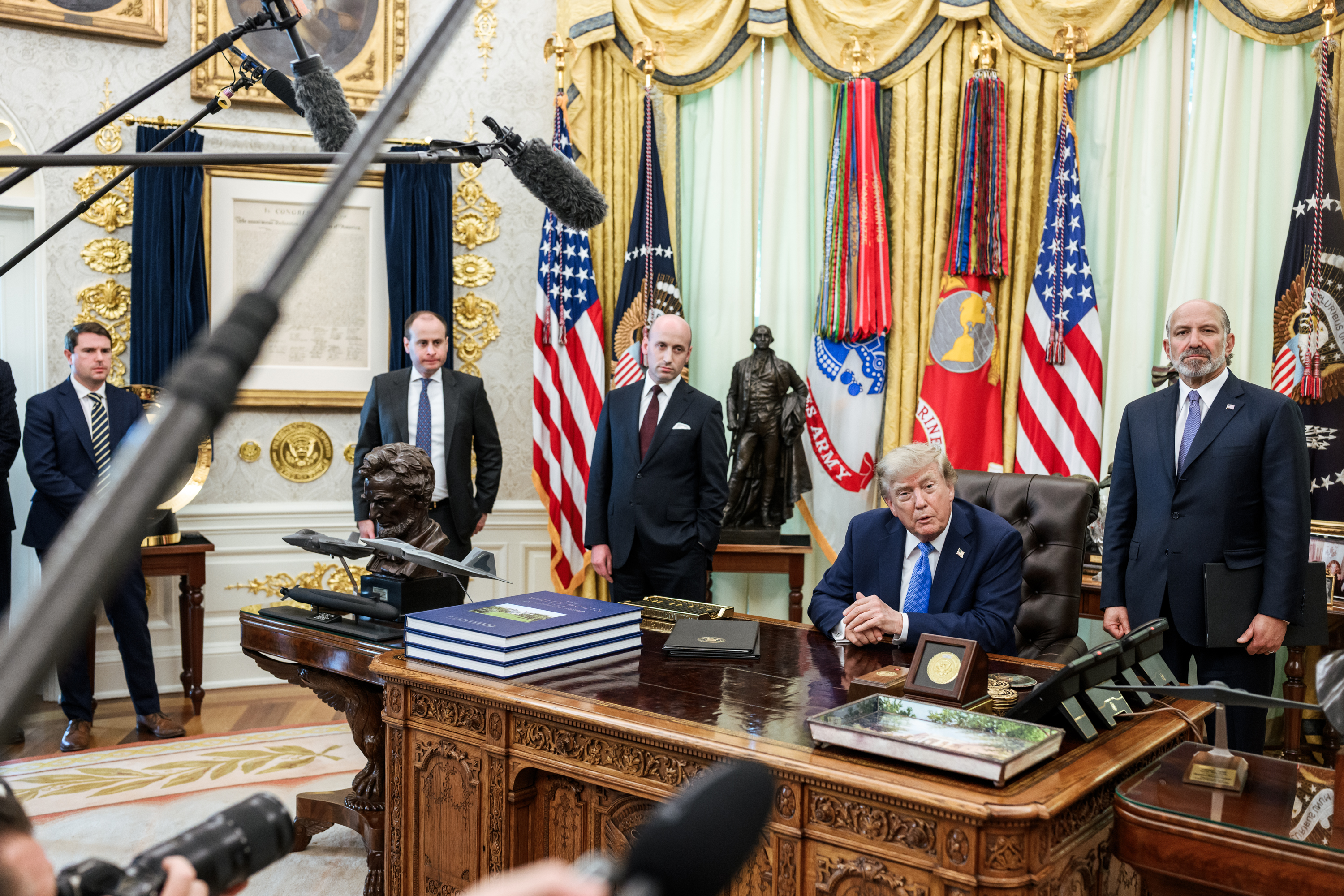
Trump “the enemy” artificial intelligence: President Donald Trump declared on Thursday that the White House considers “anyone that uses the term, ‘Artificial Intelligence,’ as opposed to the highly accepted new and more accurate term, ‘Super Intelligence,’ THE ENEMY.” The post, published at 12:14 PM EDT on Truth Social and signed “President DONALD J. TRUMP,” is the sharpest escalation yet of a campaign that began with a September 29 executive order renaming AI as “Super Intelligence” across the executive branch.
The post
The full text of the post reads: “The White House considers anyone that uses the term, ‘Artificial Intelligence,’ as opposed to the highly accepted new and more accurate term, ‘Super Intelligence,’ THE ENEMY! President DONALD J. TRUMP.”
Two claims in that short statement stand out. First, the assertion that “Super Intelligence” is “highly accepted” — a claim that sits uneasily with the reality that the rest of the world, including the researchers who build these systems, overwhelmingly still says “artificial intelligence.” Second, the word “enemy,” which moves the rebrand from branding to loyalty test: it is no longer just the administration’s preferred style guide; those who won’t use it are now political adversaries.
Why this matters
Governments rebrand programs all the time. What is unusual here is the framing of dissent: a sitting president declaring that ordinary vocabulary used by journalists, researchers, teachers, and his own government’s website makes the speaker an “enemy.” That has three immediate consequences.
It turns language into a loyalty test. The practical effect is to sort people not by what they believe about AI policy, but by which words they use. Critics of the administration’s AI policy who adopt “Super Intelligence” would pass; supporters who keep saying “artificial intelligence” would fail. Supporters say that is the point — a mark of alignment with the administration’s direction. Detractors call it performative and designed to punish independent speech.
It escalates the “enemy” rhetoric. Trump has long used combative labels for political opponents, but attaching the word “enemy” to everyday vocabulary is a new reach: it extends the category from people and organizations to word choice itself. That is the kind of move that historians of political language tend to flag, because it widens the zone of what counts as opposition.
It creates a chilling effect. Federal workers, grant recipients, university researchers, and journalists covering the administration now have to decide whether using the standard global term for a technology is worth the risk of being publicly branded. Even people who agree with the rebrand may self-censor — not out of conviction, but to avoid the label.
How we got here: the rebrand timeline
Sept. 21–22: the UN debut
The rebrand went international at the United Nations General Assembly, where Trump told world leaders the word “artificial” made the technology sound fake and said U.S. documents would now say “super” instead. The Washington Post reported that the administration had polled alternative names, including “Superior Intelligence” and “Extreme Intelligence,” before settling on “Super Intelligence.”
Sept. 29: the executive order
Trump signed an executive order directing federal departments and agencies to use “Super Intelligence” and “SI” instead of “Artificial Intelligence” and “AI” in official communications, websites, reports, and policy documents where legally permitted — the move we covered here. Historical documents, contracts, and regulations were exempt from retroactive renaming.
The Accord and the typo
Days later, Trump unveiled the White House Accord on Super Intelligence — a voluntary “morally binding” safety pact signed by the CEOs of the biggest U.S. tech companies — though the announcement was overshadowed by a typo in the Accord’s text, “Unites States,” which went viral on its own.
The task force and Xi
Trump then created a Super Intelligence Force task force to report on the technology’s risks and opportunities — led by AI czar Jay Clayton — and claimed during Chinese President Xi Jinping’s state visit that Xi had agreed to use the term “super intelligence,” a diplomatic talking point the White House included in its official fact sheet.
Thursday’s post completes the arc: what began as a branding preference has become, in the president’s own words, a test of allegiance.
What “superintelligence” actually means
The strongest pushback has come from the people who study the technology for a living. In AI research, “superintelligence” is not a synonym for today’s AI — it describes a hypothetical system that outperforms humans across virtually every domain, one that does not yet exist. Experts have called the rebrand misleading for exactly that reason: labeling today’s chatbots and coding assistants “Super Intelligence” borrows the prestige of a future machine while sidestepping the questions the public keeps asking — who tested these systems, who is liable when they fail, and who can switch them off.
Supporters of the rebrand argue that “artificial” carries a negative connotation — fake, imitation — and that “super” better reflects the technology’s promise and American leadership in building it. The White House fact sheet on the executive order made that case explicitly, framing the new term as a recognition of the technology’s advancing frontier.
Reactions
The post drew swift mockery and consternation online, with commentators noting the irony that the White House’s own AI portal, AI.gov, still uses the term “AI” — along with much of the rest of the federal government, which Axios noted continues to use the old terminology even after the executive order. The State Department ordered diplomats to adopt “Super Intelligence” after Trump’s UN speech, and an Axios test of the America.gov chatbot returned a response stating the executive branch uses “Super Intelligence” — but the old term remains embedded across government sites and documents.
The broader reaction split along predictable lines. The president’s supporters framed the post as characteristic Trumpian hyperbole with a serious point: the administration is defining its AI era and expects its people to use its vocabulary. Critics framed it as an authoritarian-adjacent move — a president branding ordinary speech as enmity — and pointed out that “highly accepted” is, at best, a claim about the administration itself rather than the country or the world.
Who wins, who loses, what critics say
The administration wins message discipline — maybe. If the goal is getting every federal employee and agency to speak the same language, public pressure from the president himself is the strongest tool available. The risk is that coercion breeds resentment and quiet noncompliance rather than genuine adoption.
Reporters and researchers lose safe ground. Journalists now have to choose between the administration’s preferred term and the term their global audience recognizes — a choice that did not exist a month ago. AI researchers face the same bind, with the added wrinkle that “superintelligence” in their field means something technically different from what the White House says it means.
Critics say the word is doing political work the policy isn’t. A label that says “super” invites admiration; a label that says “artificial” invites scrutiny. Opponents argue the rebrand is designed to make skepticism about AI policy sound unpatriotic — and that Thursday’s post proves the point by turning the vocabulary choice itself into a declaration of loyalty.
Supporters say it is about American confidence. The administration’s position, stated in the executive order and repeated by the president, is that the United States is leading a new technological era and its language should reflect ambition rather than doubt. On that view, “THE ENEMY” is rallying rhetoric, not a policy threat.
What happens next
Watch the federal register and agency sites. The September 29 order already requires agencies to swap in the new terminology. Thursday’s post raises the stakes for anyone who drags their feet — expect a visible acceleration of “SI” language across government communications.
Watch the press. The most interesting test is not what the government says about itself but how journalists handle the demand. News organizations prize their own style guides; the question is whether any of them adopt “Super Intelligence” — or publicly refuse.
Watch the tech companies. The CEOs who signed the White House Accord now operate in a world where the president calls dissenters from his vocabulary “the enemy.” Elon Musk has already responded playfully — renaming SpaceX’s AI unit to “SpaceXSI” per Reuters reporting — which suggests at least some industry figures are treating the rebrand as a branding game rather than a mandate.
The deeper question is whether a government can rename a technology by decree — and whether declaring its old name a marker of enmity speeds that up or turns it into a punchline.
Sources
- Trump’s Truth archive — @realDonaldTrump post, October 8, 2026, 12:14 PM EDT (status ID 117406176604364910)
- Truth Social — original post
- Inshorts — “People calling AI ‘Artificial Intelligence’ are enemies of White House: Trump,” October 8, 2026
- JFeed — “Trump declares those using ‘Artificial Intelligence’ term as the enemy,” October 8, 2026
- CryptoTimes — “Trump Just Declared the Super Intelligence Era in the ‘Unites States.’ So Who Controls It?”
- Gizmodo — “Trump Gets Xi to Agree to Call AI ‘Super Intelligence,’ White House Says”