Europe · Czech Republic · Media
The Czech media funding protest filled the front of Prague’s Letná Plain on Sunday: tens of thousands of people, many wearing pointed hats folded from newspapers, gathered to defend Czech Television and Czech Radio against a government bill that would abolish the licence fee and fund both broadcasters from the state budget instead — two days before the anniversary of the Velvet Revolution, on the very ground where Czechs once gathered to end a regime that controlled the airwaves.
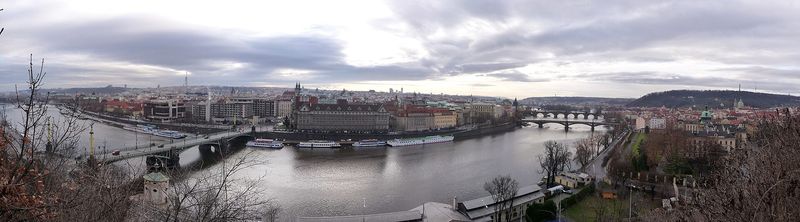
PRAGUE, November 15, 2026 — There are protest venues, and then there is Letná. The broad plain above the Vltava, facing the castle and the old town across the river, is where Prague goes when it wants to be counted in the largest possible numbers — in November 1989 against the communists, in 2019 against Andrej Babiš in his first term as prime minister, and on Sunday, November 15, against Babiš again, this time over the future of the two institutions that carry the country’s shared memory of all those earlier crowds: Czech Television (ČT) and Czech Radio (ČRo). Reuters reported that tens of thousands attended, that the front section near the stage filled quickly, and that protesters clogged nearby metro stations on their way in. Many wore pointed paper hats folded from newspapers — a deliberate, affectionate reference to Večerníček, the animated bedtime-story character who has introduced ČT’s nightly children’s programme for decades, and who has become the closest thing the defence of Czech public media has to a mascot.
Precision about the crowd matters, and this article will keep it: the verified figure for Sunday is tens of thousands, as Reuters reported. The far larger numbers in circulation before the rally — local authorities estimating hundreds of thousands might come, and the organisers, Million Moments for Democracy, speaking of 400,000 to 600,000, with their leader Mikuláš Minář suggesting it might become the largest public gathering in Czech history — were expectations, not attendance. They describe the mobilisation the organisers hoped for, on a symbolic weekend, two days before the November 17 Velvet Revolution holiday. The crowd that actually stood on Letná was smaller than the dream and still, by any ordinary measure, very large: a five-figure multitude that filled the space in front of the stage and slowed a capital city’s metro to a shuffle, in defence not of a wage or a pension but of a funding mechanism. That last fact is the story. Licence fees do not usually fill plains. What filled this one was the widespread Czech understanding — right or wrong, and this article will test it from both sides — that whoever controls the money controls the microphone.
What the bill actually does
The measure at the centre of the Czech media funding protest is, mechanically, simple. Every Czech household currently pays a combined 205 crowns a month — about $9.26, or £7.03 — in two licence fees that fund ČT and ČRo directly. The government bill would cancel both fees and pay for the two broadcasters out of the state budget instead. Attached to the change, according to the reporting, is a financing cut of roughly 15 per cent, which would take Czech Television’s nominal budget back to its 2008 level and Czech Radio’s back to 2005. The bill is not law. It has passed only a preliminary first reading — forced through, opponents never tire of noting, at 4:36 a.m. on October 24, which is why Sunday’s rally marched under the name “Letná Against 4:36” — and it awaits further debate, with committee deliberations reported suspended at the end of October. Special tram lines and boosted metro services were laid on for the rally, which ran from 2 p.m.; the city, at least, planned for the crowd the organisers promised.
Two details in that mechanism deserve more attention than they usually get. The first is the history of the fee itself: the television fee stood at 135 crowns, unraised, from 2008 until 2025 — seventeen years in which inflation quietly did to ČT’s income what no parliament had to vote for. Campaigners who present the licence fee as a golden shield rarely mention that it can be, and was, frozen into decline by simple inaction. The second is what the government says would replace it. Babiš has argued that a state contribution would be mandatory, multi-year and inflation-adjusted — in other words, that the new model could in principle be more stable, and more honest, than a fee that politicians were afraid to raise for a generation. That argument deserves to be heard in full, because the protesters’ case does not depend on denying it. It depends on a different question: not whether this government promises to keep its hands off, but whether the structure lets any future government put its hands on.
Why a funding model became a fight about independence
The licence fee’s real function was never the money. It was the distance. A fee paid by households to the broadcasters, set in law and flowing outside the annual budget, means that no finance minister, in any given autumn, can trim a newsroom’s income as one line among ten thousand in a budget negotiation. State funding reverses that geometry: the money still comes, but it comes through the room where governments bargain, and everyone in public media understands what can be traded in that room — not necessarily through threats, which are crude and deniable, but through the quiet knowledge, on both sides, of where the money lives. That is why the detail that has done the most damage to the government’s case comes from the government itself: its own impact assessment, examining four options for funding public media, ranked a reformed licence fee as the strongest protection for independence and direct state funding as the riskiest of the four. Ministers are entitled to choose the riskiest option anyway; governments do it all the time, for reasons of cost or simplicity. But they cannot then be surprised when the country reads the assessment and concludes that the risk was seen, priced and accepted — and asks what was bought with it.
The trust numbers explain why the broadcasters, unusually for institutions under political attack, start this fight with the public already half-persuaded. The Reuters Institute Digital News Report 2026 found that 59 per cent of Czechs trust Czech Television’s news and 58 per cent trust Czech Radio’s — making them the most trusted news organisations in the country. Governments elsewhere in Europe have picked fights with public broadcasters that large parts of the public were happy to see lose. Babiš has picked one with the two most trusted institutions in Czech public life, in the month of the Velvet Revolution anniversary, over a saving to households of about nine dollars a month. The arithmetic of that choice is the opposition’s entire campaign, and it writes itself.
From Old Town Square to a strike to Letná
Sunday was the crest of a campaign that has been building all autumn. Thousands protested in Prague’s Old Town Square on October 25, the day after the 4:36 a.m. vote. In early November — November 3, on the AFP account — Czech Television and Czech Radio staff held a one-day strike, curbing broadcasts: the rare and potent spectacle of the broadcasters themselves going quiet to demonstrate what silence would sound like. Demonstrations spread through towns and cities in the weeks between. And behind the campaign stands an organisation with a track record that no Czech politician can dismiss: Million Moments for Democracy, which brought roughly a quarter of a million people to each of three previous anti-Babiš rallies — two during his first term, including the vast 2019 gatherings, and one in March 2026 that drew more than 200,000. Sunday’s tens of thousands did not match those peaks, and honesty requires saying so. But a movement that can put five figures on a plain in mid-November, on a single policy issue, with the anniversary weekend still to come, is not a movement a government can simply wait out.
The government’s case, and the critics’
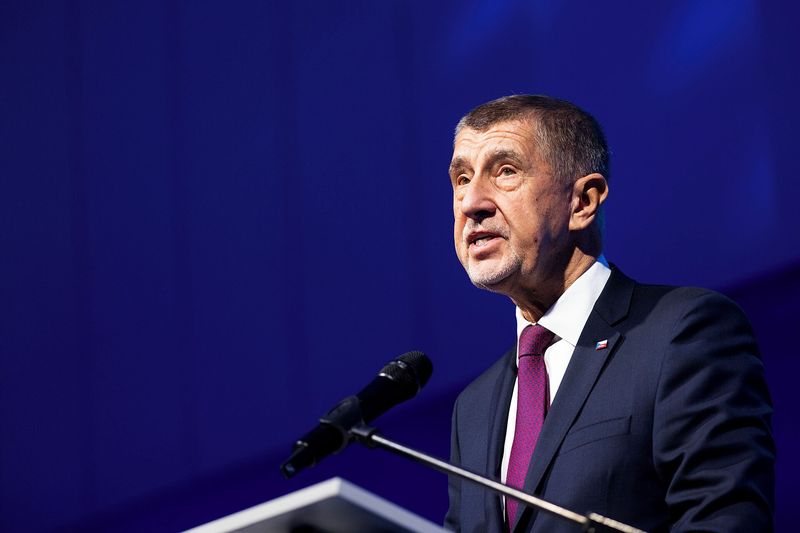
Babiš’s coalition — his ANO movement, backed by the far-right SPD and the eurosceptic Motorists — does not present the bill as an attack on media freedom, and its arguments are not all cynical. The prime minister says, first, that abolishing the fees keeps an election promise to lighten the financial burden on households, and a government that won on that promise is entitled to keep it. He says, second, that the replacement funding would be mandatory, multi-year and inflation-adjusted — a guarantee, on paper, stronger than a fee that sat frozen for seventeen years. He has accused the protesters of riling up the public with unfounded claims, and published an op-ed answering what he called the “seven lies” about the fees. His coalition partners are blunter: the SPD’s leader, Tomio Okamura, says scrapping the fees was an SPD election promise, and the coalition as a whole accuses both private and public media of bias against it — a grievance that, fairly or not, is sincerely held by many of its voters, for whom ČT is not a neutral national treasure but a Prague institution that talks down to them.
The critics’ case operates at a different altitude. The parliamentary opposition has compared the bill to the media model built in Hungary under Viktor Orbán; the European Broadcasting Union, the European Federation of Journalists, Reporters Without Borders and the International Press Institute have all criticised the plan, drawing parallels with moves by Slovakia’s Robert Fico and Hungary’s Orbán. Those comparisons are characterisations by opponents and media bodies, and this article attributes them as such: the Czech bill is not the Hungarian system, which was built over fifteen years through ownership changes, advertising pressure and regulatory capture, none of which a funding bill by itself accomplishes. But the comparisons persist because the first step in each of those stories was financial: make the public broadcaster depend on the government of the day, and the rest can follow at leisure. Television presenter Daniel Stach, one of the most recognised faces of the campaign, has framed the defence in cultural rather than institutional terms — the broadcasters as “symbols, part of our history.” It is a shrewd framing in a country where the bedtime-story character on a paper hat can stand for the whole argument: this is ours, we grew up with it, and we do not trust you with it.
Who benefits, who loses
If the bill passes unchanged, the government gains a lever it insists it will never pull and its voters gain nine dollars a month. The broadcasters lose the structural guarantee that has defined them since the 1990s, and about 15 per cent of their money; whether they also lose their nerve is the question the next decade would answer, in a thousand small editorial decisions no rally could monitor. If the bill fails or is transformed, the opposition gains the largest scalp of Babiš’s second premiership and Million Moments gains proof that its machine still works. The subtler loser, in either outcome, is the idea of a settlement: a funding model that both camps could accept as permanent, of the kind the government’s own assessment pointed toward when it ranked a reformed fee first. Nothing in the autumn’s politics suggests either side currently wants a settlement more than it wants the fight.
What happens next
The bill now returns to the unglamorous terrain where such fights are actually decided: committee rooms and a second reading, with deliberations to be resumed after their late-October suspension. Watch three things. First, the text: whether the mandatory, multi-year, inflation-adjusted guarantee Babiš promises appears in the bill in a form that binds future budgets, or remains a press-conference assurance. Second, the alternatives: an earlier floated possibility of a revised or off-budget arrangement has been reported but not confirmed, and a face-saving redesign — a reformed fee by another name — is the classic exit from a fight a government is losing in the street. Third, the calendar: Tuesday is November 17, the Velvet Revolution holiday, the most symbolically loaded date in the Czech year, and AFP’s preview reporting indicated Babiš would not attend the official celebrations. A prime minister absent from the anniversary of the revolution that freed the airwaves, while the airwaves’ future is the country’s loudest argument, is an image his opponents could not have commissioned better.
The deeper question Letná posed on Sunday will outlast the bill. Every democracy eventually has to decide how it pays for journalism it does not control, and every answer — fee, budget, charter, endowment — is a bet on the good faith of strangers not yet elected. Czechs filled a plain this weekend because they have living memory of the alternative, and because the ground they stood on is where their parents’ generation went to end it. Governments can win votes at 4:36 in the morning. What they cannot do is choose the hour at which the country decides to answer. Related reading: Babiš and Meloni on Europe’s carbon and energy rules, and this site’s coverage of France’s autumn of street protest.
Sources
Reuters, November 15, 2026 (Michael Kahn, Prague): tens of thousands protested on Sunday against the plan to cancel the public media fee and fund the broadcasters from the state budget; the front section near the Letná stage filled quickly, metro stations were clogged, and many protesters wore pointed hats folded from newspapers in tribute to Večerníček; the opposition’s comparison with Hungary; the 205-crown combined monthly fee; the bill’s preliminary passage and pending debate; the earlier one-day strike by Czech TV and Radio workers; the proposed 15 per cent cut (television to 2008 nominal levels, radio to 2005); and Babiš’s burden-of-households defence. AFP, November 15, 2026 (preview): the expectation of hundreds of thousands, Million Moments for Democracy as organiser, Mikuláš Minář’s “largest gathering” remark, the 400,000–600,000 expectation, the movement’s three previous rallies of about 250,000, and the November 3 strike date. The Guardian, November 15, 2026, and Transitions reporting for The Guardian (Rob Cameron, November 13): the EBU, EFJ, RSF and IPI criticism and the Slovakia/Hungary comparisons; Daniel Stach’s role; Babiš’s “seven lies” op-ed; the Reuters Institute Digital News Report 2026 trust figures (59 per cent for Czech Television news, 58 per cent for Czech Radio); the government impact assessment’s ranking of funding options; the television fee’s freeze at 135 crowns from 2008 to 2025; and the SPD position. EuropeSays / ČTK chain, November 15: the “Letná Against 4:36” name, the 2 p.m. start and the special tram lines 40/44. Actual Sunday turnout is reported throughout as “tens of thousands” per Reuters; all larger figures are attributed expectations. Photographs are file photos via Wikimedia Commons and do not depict Sunday’s rally.