Supreme Court third-country deportations ruling
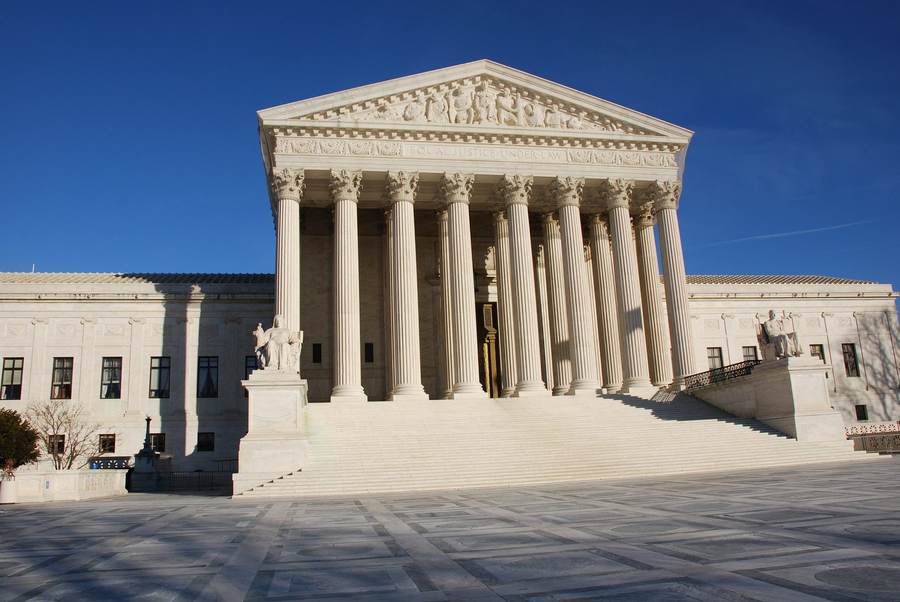
WASHINGTON — The Supreme Court third-country deportations ruling on Tuesday allowed President Donald Trump's administration to restart removals of migrants to countries other than their own without first providing the process a federal judge said was necessary to test claims of persecution or torture. The apparent 6–3 unsigned order stays U.S. District Judge Brian Murphy's February judgment while the justices take up the dispute, with arguments scheduled for December and a final decision expected by the end of June.
Justices Sonia Sotomayor, Elena Kagan and Ketanji Brown Jackson indicated that they would have denied the stay, but none of the justices wrote an opinion explaining the result. That silence is central to understanding Tuesday's decision. The administration has won the ability to operate the policy now; it has not yet won a merits ruling declaring the policy lawful.
What happened: a stay now, a full hearing in December
The Court granted the Justice Department's emergency request to suspend Murphy's judgment while the case proceeds. It also converted the fight into a full Supreme Court case, setting it for the December argument session. The stay is expected to remain in force until the Court issues its judgment, which places the practical rule for the coming months on the administration's side.
Murphy, a Boston-based federal judge, had concluded that the Department of Homeland Security's guidance violated immigration procedures and constitutional due-process protections. His judgment required meaningful notice and an opportunity for a migrant to raise a country-specific fear before being sent somewhere not listed in the person's removal order. The First U.S. Circuit Court of Appeals upheld most of that judgment on September 18.
The administration said the interruption produced “chaos.” Federal lawyers told the justices that the decision forced officials to cancel a flight carrying about 70 migrants bound for three countries and required renewed diplomatic work. The legal question is not whether that disruption was operationally expensive. It is whether efficiency can substitute for the statutory and constitutional process the lower courts found necessary.
Why this matters: the shadow docket is shaping policy in real time
Emergency orders are designed to manage cases before final judgment, but in disputes like this one they also determine what the government can do to real people for months. Tuesday's order is the third time the Court has allowed the administration's third-country policy to operate during litigation. Each intervention is formally temporary. Together, they have created a durable operating environment without a full majority opinion explaining the governing law.
That is the power of the Court's emergency, or “shadow,” docket. A stay is not precedent in the same way as a signed merits decision after briefing and oral argument. Yet its consequences may be irreversible: a migrant sent to South Sudan, Uganda or Liberia cannot simply be restored to the same legal and physical position months later if the policy is struck down. “For now” is therefore a legal qualification, not a description of limited human consequences.
The unsigned order also obscures the majority's reasoning. A stay normally signals that at least five justices believe the government has made the required showing, including a likelihood of success and irreparable harm. But the public cannot tell which part of the lower courts' reasoning the majority considered weakest. The December questions — policy lawfulness, lower-court jurisdiction and the permissible reach of relief — suggest the justices may be as interested in judicial power as in the underlying deportation procedures.
Context: a 2025 policy, the Djibouti episode and repeated intervention
The case began in 2025 after DHS expanded removals of people whose home countries would not accept them or who could not be returned to a nation named in an existing removal order. Under the government's guidance, removal can happen quickly when a receiving country gives diplomatic assurances against persecution or torture. When those assurances are absent, the burden can fall on the migrant to raise a fear after receiving limited notice.
Murphy's earlier injunction demanded more notice and a meaningful opportunity to be heard. The Supreme Court paused that order in June 2025. A later confrontation involved men placed on a deportation flight toward South Sudan, diverted and held at a U.S. military base in Djibouti while courts argued over the scope of the justices' first intervention. The Supreme Court again sided with the administration, lifting protections Murphy had attempted to preserve for that group.
By the time of Tuesday's order, the dispute had grown beyond one flight or one class of detainees. More than a dozen United Nations human-rights experts had urged the United States to halt the practice, warning that third-country removals can expose vulnerable people to abuse, onward transfer and refoulement — return to a place where they face persecution.
The competing cases: enforcement leverage versus irreversible harm
Attorney General Todd Blanche called the policy “an entirely lawful and critical tool for immigration enforcement.” Solicitor General John Sauer described it in court papers as essential for removing people — including some with serious criminal convictions — whom their home countries will not take back. From the administration's perspective, a removal order that cannot be executed against any accepting country becomes an incentive for obstruction and weakens the credibility of the immigration system.
The White House framed the ruling as vindication. Spokeswoman Lauren Bis said the Court had again rejected what she characterized as a district judge's effort to halt removals and that the result “yet again affirms the lawfulness of the President's homeland security agenda.” That language goes further than the order itself: the justices stayed a judgment and granted review, but they did not issue an explained merits opinion holding the policy lawful.
Attorneys for migrants answer that the process reaches far beyond people convicted of violent crimes. Their filings say it has been used against longtime U.S. residents, many without criminal histories, and has produced “grave and irreversible harms,” including disappearances, beatings, sexual assaults and detention. Some deportees, advocates say, arrived in countries they had never heard of, while others were pushed toward the same home countries from which the United States had already protected them.
Both sides are describing a real problem. The government needs a lawful path for people under final removal orders when the named destination refuses them. Migrants need a workable chance to identify a risk that may be specific to a country they did not know was under consideration. The case turns on whether the administration's diplomatic assurances and limited notice satisfy the law, or whether the lower courts were right that an individualized opportunity to object is indispensable.
Who benefits, who loses
The administration gains leverage. The restored policy broadens the set of possible destinations and reduces the power of a home government's refusal to block removal. That advances Trump's mass-deportation goal, particularly for cases the government views as difficult to execute.
Receiving states gain bargaining power — and liability. Countries willing to accept deportees can seek diplomatic, security or economic benefits. They also inherit responsibility for people with no local support, uncertain legal status and, in some cases, credible protection claims. Secret or lightly disclosed agreements make it harder for citizens, legislatures and courts in those states to evaluate the bargain.
Migrants bear the immediate risk. A final removal order does not answer whether a different destination presents a distinct danger. When notice is compressed and counsel cannot investigate local conditions, the nominal ability to raise fear may not be meaningful. The stay transfers that risk from the government to the individual until the final ruling.
Lower-court authority is narrowed in practice. Murphy's judgment remains part of the record, but it cannot govern while stayed. Repeated emergency intervention can make trial-level fact finding feel provisional whenever the Supreme Court is willing to alter the rule without explanation.
What the numbers mean: scale, concentration and a larger ambition
Rights groups count more than 25,000 migrants sent to 29 countries under the policy, with the vast majority going to Mexico. Other destinations have included South Sudan, Uganda, Equatorial Guinea, Liberia, the Central African Republic and Guyana. The list matters because “third country” is not one standardized condition; each destination has different institutions, security risks, asylum rules and capacity to receive people.
Twenty-five thousand is a large humanitarian and administrative footprint. It is also a fraction of the millions of removals Trump has promised. That comparison explains why the administration treats the mechanism as strategic rather than marginal. It can expand the map of removal destinations and pressure home governments to cooperate. But scaling the policy multiplies the chance that diplomatic assurances will fail, that an individual risk will be missed or that a receiving government will move a deportee onward.
The concentration in Mexico also cuts two ways. It shows that the most politically dramatic destinations are not the typical outcome. At the same time, the use of 29 countries confirms that this is not merely an extension of a neighboring-country arrangement. It is a global network whose safeguards are only as reliable as its least transparent agreement.
What happens next: three plausible paths
Scenario one: the Court upholds the policy broadly. A majority could find that existing removal statutes give DHS sufficient destination authority and that the notice process, particularly when backed by diplomatic assurances, meets legal requirements. Such a ruling would entrench third-country removals and limit future nationwide challenges.
Scenario two: the Court permits the tool but requires process. The justices could recognize third-country removal authority while insisting on clearer notice, a meaningful fear screening or review when conditions change. That compromise would preserve enforcement capacity while rejecting the idea that executive assurances alone close the inquiry.
Scenario three: jurisdiction decides the case. The Court may focus on whether the lower courts had authority to hear the claims or vacate the guidance on a class-wide basis. A procedural ruling could leave the policy operating without resolving every due-process and anti-torture question, pushing future challenges into narrower individual cases.
December's oral argument should reveal which path has traction. The questions presented will test the policy's legality, the lower courts' authority and the scope of relief they may issue. A final ruling by the end of June will provide the explanation Tuesday's order withheld. Until then, the administration can restart the machinery, migrants must navigate it under compressed procedures, and the most consequential legal rule is the one the Court has not yet fully defended in public.
Sources and reporting notes
- Reuters: Supreme Court lets Trump resume third-country deportations
- Associated Press: Supreme Court lets quick deportations resume while it weighs policy
- D.V.D. v. Department of Homeland Security: First Circuit opinion and case history
- CNN: Court order and White House response
Reporting basis: The order is unsigned and unexplained. This analysis separates the immediate effect of the stay from the merits the Supreme Court will consider after December arguments.