World · Weather · Europe
Storm Charles floods Europe in the fullest sense of the phrase: one Atlantic system, named on November 9, battered Madeira with gusts of 136 km/h and hundreds of millimetres of rain, forced Portugal to close its schools and ground a third of Lisbon’s flights before the storm even made landfall, then pushed floods across the French Riviera and put Italy on its highest rainfall alert — and, as of Thursday, had not killed anyone in Portugal or Spain.
Track it live: Severe weather tracker
LISBON, November 15, 2026 — The storm had a name before it had a landfall, and that sequence turns out to be the story. Storm Charles, named on November 9 as the third named storm of the 2026–27 southwest-Europe season after Adam and Bruna, according to AccuWeather reporting carried by Orbis Weather, spent four days crossing the map of southern Europe in stages: Madeira first, on Tuesday night; mainland Portugal on Wednesday, under a government stay-home order issued before the worst of it arrived; southern Spain the same day; the French Riviera on Thursday; and an Italian red warning, the highest there is, for the corridor from Tuscany to Venice as the system’s rains spread east. By the weekend, forecasters were still warning that flood and landslide risk would continue across Portugal, Spain, France and Italy on November 14–15, on ground the storm had already soaked.
The raw numbers describe a major storm by any European standard. Madeira recorded a gust of 136 km/h — 84.5 mph — at Funchal airport, reported by MetDesk via The Guardian; AccuWeather put a gust of 137 km/h in the highlands at Chão do Areeiro; the Associated Press reported Madeira struck on Tuesday with winds of 130 km/h. The rain figures conflict, and this article carries both attributions rather than settling them: Portugal’s Lusa news agency, via Correio da Manhã, reported more than 240 mm in six hours on high ground, while MetDesk reported 355 mm in 12 hours, at a location it did not name. Either figure is extraordinary. The higher one is roughly three and a half times Lisbon’s typical rainfall for the whole month of November, which runs on the order of 100 mm — delivered, on MetDesk’s account, in half a day.
Madeira first: 328 incidents and a port closed before midnight
Madeira, the Portuguese Atlantic archipelago that sits in the path of systems like this one, took the first and hardest hit. A red warning — the top of the scale — ran from 21:00 on Tuesday to 06:00 on Wednesday. By 13:10 on Wednesday, Madeira’s Regional Civil Protection service had logged 285 incidents, as reported by Daily Context: 78 landslides, 72 floods and 42 fallen trees, with Funchal, the capital, accounting for 73 incidents and Santa Cruz for 67. By 18:40 on Wednesday the count had risen to 328, including 88 landslides, according to Diário de Notícias reporting carried by Orbis Weather. The numbers climbed through the day even as the winds eased, which is the familiar arithmetic of saturated hillsides: the rain stops, and the ground keeps moving.
The island’s infrastructure shut in sequence. Funchal port closed at 20:00 on Tuesday, before the red warning even took effect. Funchal marina sustained significant damage. All 41 of the island’s levada trails — the irrigation-channel footpaths that are Madeira’s signature walking network and a pillar of its tourism economy — were closed through November 12. And across the back-to-back storms Bruna and Charles, six cruise calls were turned away, according to APRAM, the Madeira ports authority, as reported by Cruise Hive and i-journey. Each turned-away call is a day of passengers who never came ashore, in an island economy built substantially on the people who do.
The man in the garage at São Roque
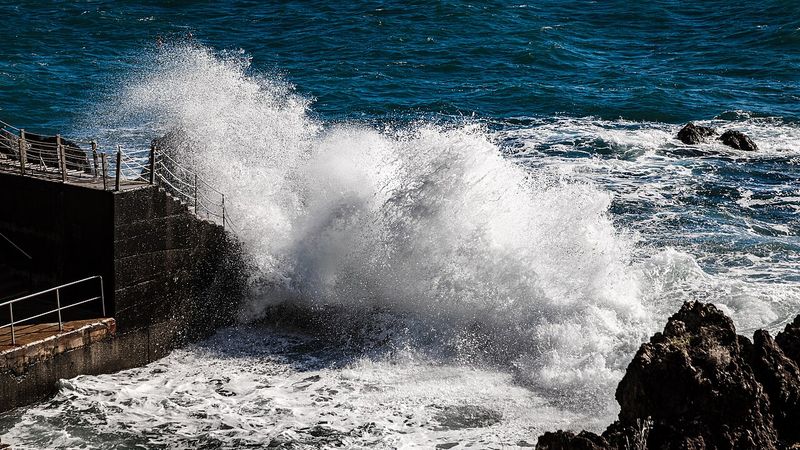
The storm’s closest call came in São Roque, a parish of Funchal, where a man in his late seventies — reported as 78 — was swept away when the São Roque stream burst its banks and flooded into his garage. He was found alive and rescued, according to Reuters and Portuguese media reporting carried by Orbis Weather, and by Euronews Portugal via MediaPavilion. It is the incident that will anchor every official account of this storm, because it is the one that so easily reads the other way. A stream that runs through a parish, a garage at the wrong level, a man of 78 alone in it at night: Madeira has buried people in exactly those circumstances in past floods. This time the rescue services got there. The difference between a storm remembered for its statistics and a storm remembered for its funerals is, very often, that single paragraph.
Wednesday: Portugal closes itself before the storm arrives
What happened on the mainland on Wednesday is, institutionally, the most significant part of the Charles story. The Portuguese government ordered people to stay home. Schools closed nationwide. Non-essential public services closed nationwide. The national meteorological service, IPMA, issued red warnings across nine mainland districts. The Web Summit in Lisbon — one of the largest technology conferences in the world, and a fixture of the capital’s calendar — cancelled its second day. Governments have ordered closures during storms for as long as there have been storms. What is newer is the completeness and the timing: an entire country’s schools and public services shut pre-emptively, on a forecast, before the damage that would justify the shutdown had occurred.
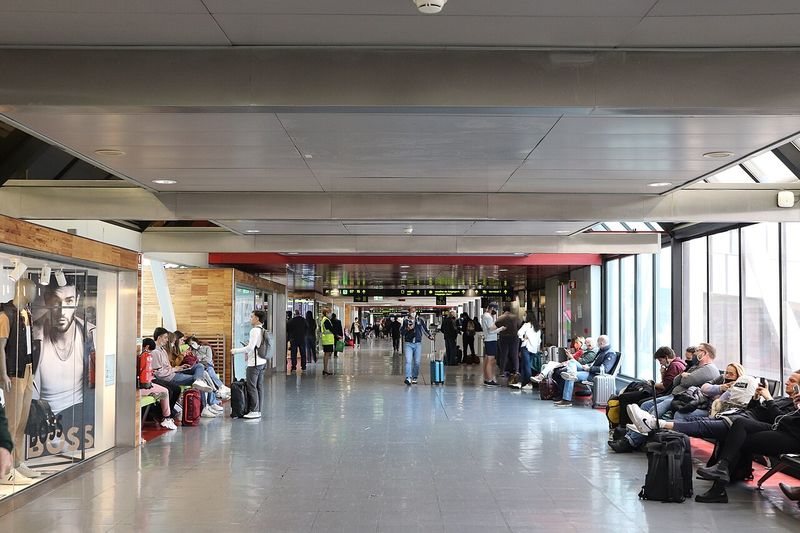
The aviation numbers show what that day looked like at the airports. Lisbon cancelled 183 flights on Wednesday — about a third of the capital’s normal traffic — and Madrid Barajas cancelled 155, according to The Guardian. The Associated Press’s headline count put Portugal’s cancellations at more than 300 flights overall. On the ground, AccuWeather, via Orbis, put the nationwide total at roughly 2,500 weather-related incidents; mainland Civil Protection (ANEPC) reporting put mainland incidents at more than 1,800, mostly flooding, with Greater Lisbon, Setúbal and the Algarve hardest hit. The two figures are not necessarily in conflict — they count different geographies and different windows — and both are carried here as reported.
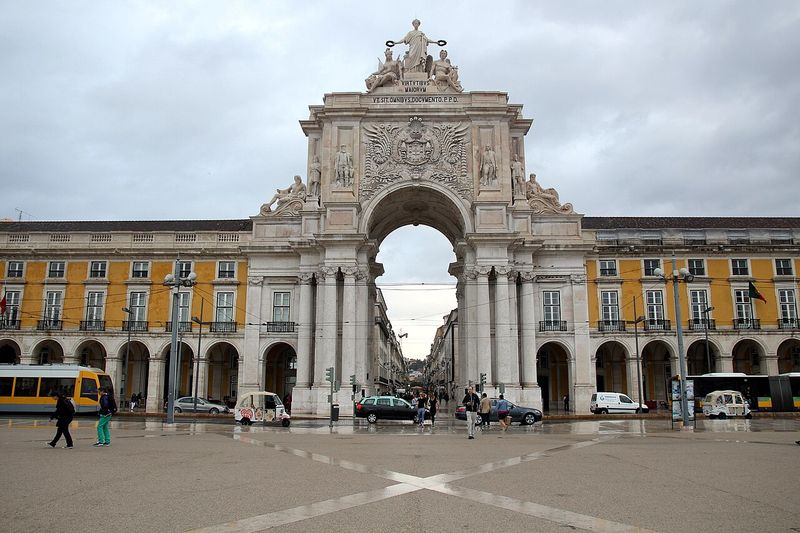
And then the mainland got away more lightly than the forecast had threatened. Charles split into two centres before landfall, IPMA reported, and a storm divided against itself is a storm diminished: the mainland impact was weaker than forecast. That sentence will be quoted in two opposite arguments for months. In one, it proves the shutdown was an overreaction. In the other, it is irrelevant to whether the shutdown was right — because the decision had to be made on the storm that was forecast, not the one that arrived, and the storm that was forecast had just finished dropping a third of a metre of rain on Madeira. The fact that no deaths were reported in Portugal or Spain as of Thursday, November 12 — the date qualifier matters, and this article keeps it — is the strongest evidence available for which of those arguments deserves to win.
There is a quieter ledger underneath the incident counts, and it belongs to Madeira. The levada trails that closed through November 12 are not a footnote to the island’s economy; they are one of its principal products, walked by visitors in every month of the year, and their closure on safety grounds — saturated paths above steep ground are precisely where landslides kill — is the tourism equivalent of the mainland’s school closures: revenue deliberately surrendered against a risk that could not be priced. The same logic closed the port before the red warning began and turned away the cruise ships across two storms in a single week. Madeira, which has the longest and hardest experience of Atlantic weather of any place Charles touched, behaved throughout like a place that has learned what the water can do — and the island’s one life-threatening incident, at São Roque, ended in a rescue rather than a recovery.
Spain, the Riviera and the Italian warning
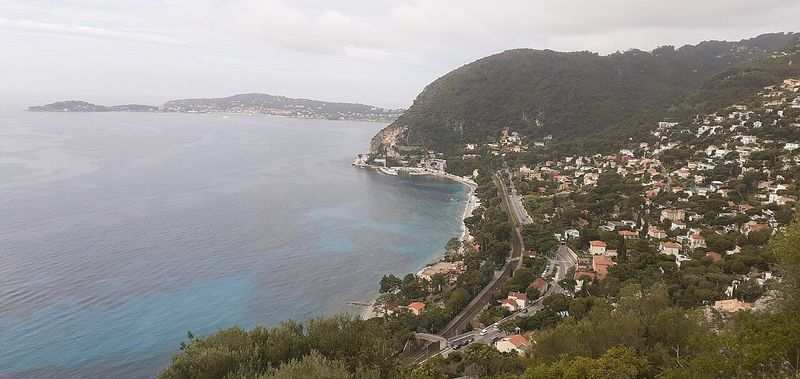
Southern Spain took strong winds and heavy rain on Wednesday, and Charles’s arrival there coincided with a general strike — a compounding of disruption that made it harder, in the Spanish case, to separate what the weather closed from what the strike closed. The storm’s centre of gravity then moved to the French Riviera on Thursday, and the Riviera’s experience was the most classically Mediterranean of the week: not wind, but water arriving faster than old drainage and steep coastal geology could handle. In Cannes, flooding lifted manhole covers. On the Lower Corniche — the RM6098, the low coastal road east of Nice — a major rockfall near Èze closed the road and damaged a retaining wall. In Menton, the Promenade du Soleil was closed as waves overtopped it. Roads flooded in Saint-Laurent-du-Var and Mougins. Météo-France carried yellow warnings for the region, as reported by Riviera Radio and The Guardian.
East of the Riviera, Italy’s weather service issued its highest red rainfall warning for the area from Tuscany to Venice, according to The Guardian — a warning band that takes in some of the most flood-scarred terrain in Europe. As of the reporting this article is built on, the Italian outcome was still developing, and it remains the storm’s largest open question: whether the red warning becomes the week’s second vindication of the close-early model, or its first refutation.
Why this matters: the close-before-landfall playbook
Charles was the third named storm of the season, and it did not arrive in an empty calendar. Bruna had hit Madeira on November 8, only days earlier, cancelling 53 flights there. Riviera Radio counted Charles as part of the sixth significant Mediterranean rain episode in under six weeks. Southern Europe is no longer experiencing these systems as isolated emergencies separated by quiet seasons; it is experiencing them as a drumbeat, in which the ground from one storm is still saturated when the next one is named. That context is what transforms Portugal’s Wednesday shutdown from a weather story into a governance story. A government that closes a country once, for an exceptional storm, is reacting. A government that builds the closure into its standard response — stay-home order, schools, services, the flagship conference, all of it announced ahead of landfall — is operating a playbook. Charles is the clearest test yet of that playbook, and on the evidence available, the playbook worked: hundreds of millimetres of rain, thousands of incidents, hundreds of cancelled flights, a marina wrecked and a man swept away in Funchal — and, as of Thursday, no one dead in either Portugal or Spain.
Who loses, who gains
The losers are concrete and countable. Airlines and airports absorbed hundreds of cancellations at Lisbon and Madrid on a single Wednesday, with the knock-on costs of aircraft and crews out of position for days afterward. Madeira’s tourism economy lost six cruise calls across Bruna and Charles, took significant damage to Funchal marina, and closed all 41 levada trails through November 12 at the height of the island’s walking season. The Web Summit lost a day. The gainers are institutional. Every civil-protection official in Europe who has ever argued for a pre-emptive closure against the charge of overreaction now has a case study with the best possible ending: maximum disruption, minimum loss of life. And the naming system itself — Adam, Bruna, Charles, a season barely begun — gains credibility each time a named storm is treated by the public as a reason to stay home rather than a headline to scroll past.
What happens next
The immediate risk is the ground itself. Orbis Weather’s Europe edition of November 15, prepared November 14, warned that flood and landslide risk would continue across Portugal, Spain, France and Italy through the weekend — the phase of a storm in which the rain has stopped making headlines and the hillsides start moving anyway. Madeira’s incident count, which rose from 285 to 328 during Wednesday even as conditions improved, is the template for that phase. Beyond the weekend, saturated catchments across the western Mediterranean mean the next Atlantic system — and the season’s naming list suggests there will be one soon — will fall on ground with no capacity left to absorb it. Italy’s red-warning outcome, still developing, is the first update this story will need. The second is whether Portugal’s shutdown, vindicated once, becomes the default setting for the next storm — in Lisbon, and in every other European capital that watched it work.
Related reading: California High Surf Warning Brings 30-Foot Waves, With Sets to 50 Feet at Mavericks · Gaza Winter Floods Hit 46,000 Displaced Families as WHO Warns of Disease Surge
Sources
The Guardian, November 13, 2026 — “Storm Charles causes floods and flight cancellations across southern Europe”: the Funchal airport gust of 136 km/h (MetDesk), the Lisbon and Madrid flight cancellations, the French Riviera flooding and rockfall, and Italy’s red warning from Tuscany to Venice. Associated Press, via the Trinidad Tribune — Madeira struck Tuesday with 130 km/h winds and more than 300 flights cancelled in Portugal overall; photographs by Armando Franca (AP, Lisbon) and Homem de Gouveia (EPA, Madeira). AccuWeather and MetDesk reporting via Orbis Weather, November 12–15 — the storm’s naming and season sequence, the Chão do Areeiro gust, the 355 mm rainfall figure, the nationwide incident count and the November 14–15 outlook. Lusa via Correio da Manhã (the 240 mm figure); Madeira Regional Civil Protection via Daily Context and Diário de Notícias via Orbis (incident counts); ANEPC mainland reporting; IPMA (red warnings; the storm’s split into two centres); APRAM via Cruise Hive and i-journey (cruise calls); Reuters and Euronews Portugal via Orbis and MediaPavilion (the São Roque rescue); Riviera Radio (Météo-France warnings). Where sources conflict — on rainfall totals and incident counts — this article carries both figures with their attributions. Photographs are file photos credited in their captions, via Wikimedia Commons; no photograph of Storm Charles itself was available at publication.