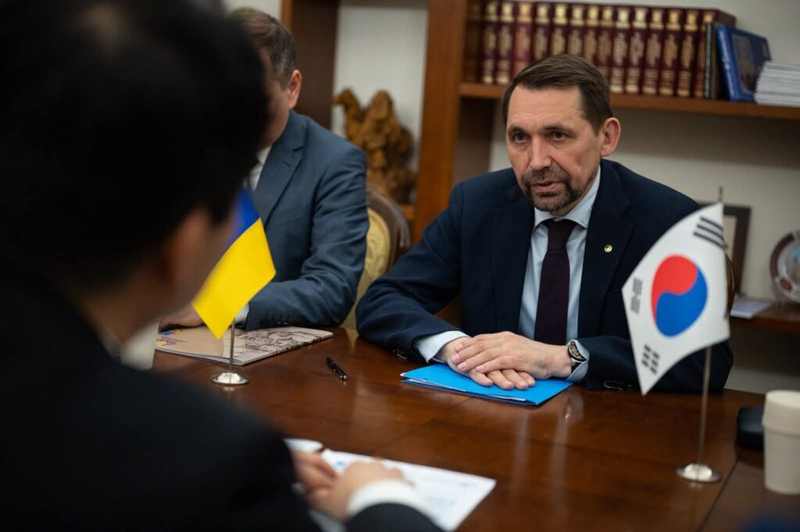
South Korea recalls ambassador Park Ki-chang from Ukraine in the sharpest step yet in a diplomatic dispute over two North Korean prisoners of war transferred to the South. The Foreign Ministry announced the recall on Thursday, October 8, after Seoul concluded that Kyiv had not adequately answered its complaint about President Volodymyr Zelenskyy's public disclosure of the transfer.
The ministry did not say when Park Ki-chang — rendered in some wire reports as Park Hee-chang — would return home. Its statement left the door open to de-escalation, saying South Korea would continue consultations with Ukraine and hoped the dispute could be resolved smoothly.
That combination matters. A recall is a public signal that ordinary diplomatic protest has not worked, but it is not the same as breaking relations. Seoul is raising the political cost for Kyiv while preserving a channel for a negotiated repair.
Park Ki-chang ambassador recall marks a rare escalation
The move stands out in South Korean diplomatic practice. Seoul Economic Daily reported that this is the first time in about 18 years that Seoul has recalled an ambassador posted overseas because of a diplomatic dispute. The previous case was the 2008 recall of South Korea's ambassador to Japan during a sovereignty dispute over Dokdo, the islets Japan calls Takeshima.
That history gives the latest action significance beyond staffing. Governments routinely summon another country's envoy to register a complaint. Bringing home their own ambassador is a higher rung on the ladder because it reduces the seniority of day-to-day representation and tells the other government that the relationship itself is under review.
This is also a separate development from the September episode in which Seoul summoned Ukraine's acting ambassador in South Korea. That earlier move targeted Kyiv's representative in Seoul; the new decision concerns South Korea's own ambassador in Kyiv. Signal Post News covered the earlier step in South Korea Summons Ukraine Envoy Over Secret North Korean POW Transfer.
Ukraine North Korean POW transfer disclosure started the row
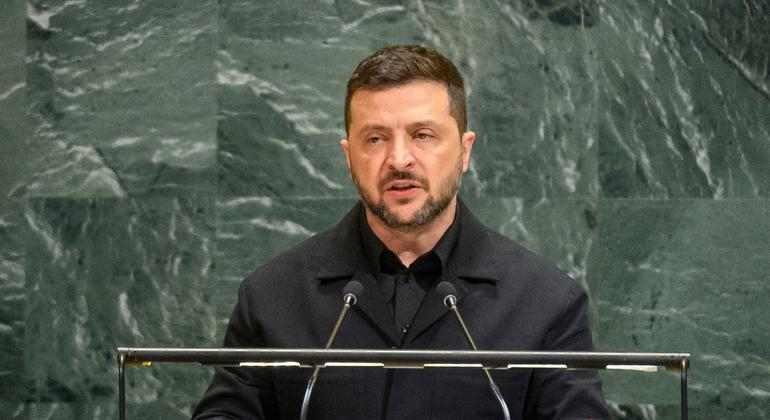
The dispute traces back to Zelenskyy's September 23 speech to the United Nations General Assembly. During that address, he revealed that two captured North Korean soldiers had been transferred to South Korea in mid-September.
Seoul says the transfer was covered by a nondisclosure agreement. Kyiv denies agreeing to that condition. Ukraine's Foreign Ministry said on October 7 that the two governments had interpreted their confidential understanding differently, an explanation South Korea considered insufficient.
The disagreement is therefore not simply about whether the transfer occurred; both governments accept that it did. The conflict is over the rules surrounding disclosure, whether those rules were mutually understood, and whether a head-of-state speech breached them.
Zelenskyy POW disclosure meets Seoul's security argument
South Korea says secrecy was intended to protect the soldiers and their relatives in North Korea. That concern is concrete: the two men had expressed a desire to resettle in the South and feared persecution if they were sent back to the North. Public confirmation could increase risks for family members still living under Pyongyang's control.
Kyiv's position, as described publicly, is that the confidential arrangement was understood differently. That leaves room for a genuine diplomatic mismatch as well as for competing political priorities. Ukraine had reason to show that North Korean troops were participating in Russia's war and that some had chosen a future outside the North. Seoul had reason to minimize information that could expose vulnerable people or complicate its own Korean Peninsula policy.
The central unanswered question is what the two sides actually recorded, in what language, and with what limits on later public statements. Neither government has released the underlying confidential text. Without it, outside observers can evaluate the consequences of the disclosure but cannot independently settle which interpretation is correct.
Lee Jae Myung Ukraine apology demand raised the stakes
President Lee Jae Myung had already threatened unspecified punitive steps if Ukraine refused to apologize. The warning changed the dispute from a technical disagreement between ministries into a test of political authority for both governments.
Foreign Minister Cho Hyun told a parliamentary audit on October 6 that Seoul had received a Ukrainian message containing an expression of apology, but said it “falls short of the level we had in mind.” He also said the government was considering recalling the ambassador. Two days later, the ministry announced that decision.
The sequence suggests Seoul wanted more than conciliatory language. It wanted Ukraine to accept South Korea's account of the confidentiality obligation. Kyiv's statement about differing interpretations did not provide that, leaving each side able to maintain that it had acted consistently with its understanding.
Why this matters
The dispute is unusually sensitive because it sits at the intersection of three conflicts: Russia's war against Ukraine, North Korea's military support for Moscow, and the unresolved division of the Korean Peninsula. An action that looks like disclosure policy in Kyiv can look like personal-security policy in Seoul and propaganda vulnerability in Pyongyang.
South Korea legally regards the North as part of its territory and generally accepts North Koreans who seek to settle in the South. The two soldiers' wishes therefore engage Seoul's defector-acceptance policy as well as international questions about prisoners of war, repatriation and consent.
The recall also tests how resilient the South Korea–Ukraine relationship is when their interests diverge. Both countries have reasons to coordinate against deepening Russia–North Korea military ties, but shared strategic concerns do not erase disagreements about intelligence, confidentiality and the treatment of individuals whose families may remain exposed.
North Korean soldiers in Ukraine carry risks beyond the battlefield
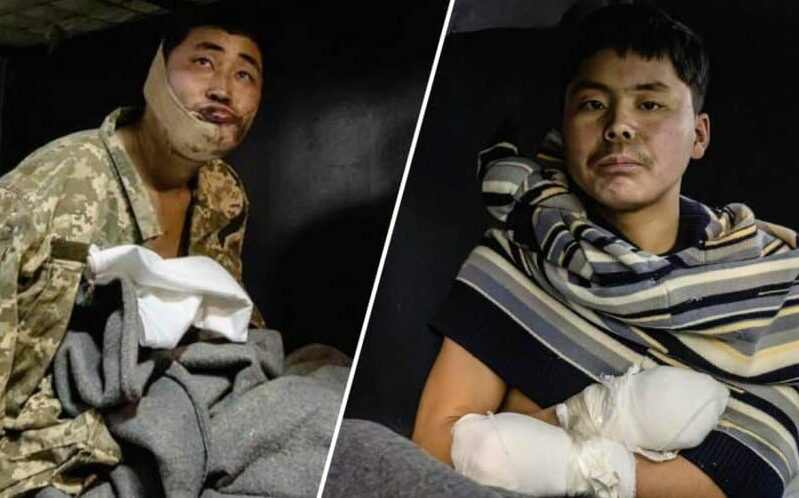
The two soldiers were among thousands of North Korean troops deployed to support Russia's war effort. Captured in early 2025, they later said they wanted to go to South Korea rather than face repatriation and possible persecution.
Their case offered Ukraine evidence of North Korean involvement in the war and gave South Korea a rare opportunity to receive soldiers with direct knowledge of that deployment. But the same facts made their identities, movements and relatives especially sensitive. What serves one government's public case can endanger another government's protective plan.
Experts cited in coverage of the dispute also point to domestic strategy in Seoul. Lee's liberal government has sought room to improve relations with North Korea. A highly publicized transfer of captured North Korean troops could make that outreach harder by giving Pyongyang another reason to portray Seoul as participating directly in Ukraine's war narrative.
Who benefits — and who loses
Seoul gains leverage but accepts diplomatic cost. Recalling the ambassador shows that its confidentiality rules are not symbolic and may deter future partners from publicizing sensitive transfers. Yet it also reduces South Korea's senior diplomatic presence in Kyiv at a time when coordination over North Korean military activity remains valuable.
Kyiv keeps its public argument but risks an important relationship. Zelenskyy's disclosure reinforced Ukraine's claim that North Korea is materially involved in Russia's war. The cost is a widening dispute with a technologically advanced U.S. ally whose intelligence and political support matter.
The two soldiers gain a path to their chosen destination but lose privacy. Their transfer to South Korea responds to their stated fear of repatriation. Public disclosure, however, may increase attention on them and on relatives who could remain in the North.
Pyongyang and Moscow can exploit the split. Any visible friction between Ukraine and South Korea weakens the appearance of a unified response to North Korean troop deployments. Neither government needs to create the dispute to benefit from amplifying it.
Other diplomatic partners receive a warning. The episode shows that even close partners can define confidentiality differently. Future transfers involving defectors, prisoners or intelligence sources are likely to require more explicit written rules about who may disclose what, when and for what purpose.
What the history and data imply
Two soldiers. The number is small, but their political value is large because they can speak directly to North Korea's overseas deployment and because their resettlement touches South Korea's constitutional and humanitarian policy.
Thousands deployed. The broader North Korean troop presence means the issue will not disappear with one transfer. More captures, defections or repatriation requests could force Seoul and Kyiv to build a durable protocol rather than improvise case by case.
About 18 years. Seoul Economic Daily's comparison with the 2008 Japan recall shows how rarely South Korea uses this instrument. That rarity increases its signaling power, but it also raises expectations that Seoul will explain what would be required for the ambassador to return.
September 23 to October 8. The dispute escalated from Zelenskyy's UN speech to an ambassadorial recall in just over two weeks. The rapid sequence — public complaint, demand for apology, exchange of messages, disagreement over wording, recall — indicates that both governments treated the matter as a test of credibility rather than a minor protocol error.
Seoul–Kyiv diplomatic row leaves room for repair
The recall does not close the embassy or suspend diplomatic relations. South Korea's statement explicitly promised continued consultations. That language gives both sides space to agree on wording without forcing either president to abandon his public position.
A practical settlement could separate intent from effect: Ukraine could acknowledge that disclosure created safety and political consequences even while maintaining that it did not understand itself to be violating an agreement. Seoul could accept a clarification and new confidentiality protocol without endorsing Kyiv's original interpretation.
Whether that is enough will depend on the political threshold set by Lee's government. Cho's remark that the earlier message fell short suggests the form of any apology matters almost as much as its existence.
What happens next
Watch the recall timetable. The ministry did not announce when Park Ki-chang would return. The speed and duration of his absence will show whether Seoul intends a temporary protest or a sustained downgrading of contact.
Watch the language of a second Ukrainian response. Acknowledgment of harm, acceptance of Seoul's confidentiality claim and a direct apology are not the same thing. South Korea's next move will reveal which formulation it requires.
Watch protection arrangements for the soldiers. The dispute began because Seoul says safety was at stake. Any further public information about their identities, location or relatives will test whether the two governments can restore operational trust even before the political argument is fully resolved.
Watch military and intelligence cooperation. If the row remains contained to diplomatic protocol, both sides may continue exchanging information about North Korean troops. If it spills into aid, intelligence or defense policy, the strategic consequences will be wider.
Watch for an agreed confidentiality framework. The most durable outcome would be a written process for future prisoner transfers and public statements. With North Korean troops still tied to Russia's war effort, similar cases are plausible.
The immediate story is a rare ambassadorial recall. The deeper issue is whether two governments facing the same Russia–North Korea alignment can rebuild trust when they disagree over who controlled the most sensitive fact in the relationship.