IMF global economy warning
Business / Global economySINGAPORE — The IMF global economy warning delivered by Managing Director Kristalina Georgieva on Wednesday was not a routine pre-meeting plea for discipline. It was an admission that the assumptions beneath the fund's last forecast are being overtaken from opposite directions: war is constricting energy supply while an immense artificial-intelligence buildout is creating demand, investment and inflation of its own.
Speaking in Singapore on October 7 ahead of next week's IMF–World Bank Annual Meetings in Bangkok, Georgieva said the world is being pulled in two directions
. The negative force is a Middle East energy shock. The positive force is an AI investment boom that could raise productivity, but which is concentrating gains in a small set of economies and pushing up demand before its benefits are broadly shared.
The tension matters because finance ministers and central bankers are arriving in Bangkok with little spare room. Growth is soft, borrowing costs are high, public debt is heading beyond the size of annual world output, and the energy assumptions used in July already look obsolete. The meeting will therefore be less about naming risks than deciding who can absorb them.
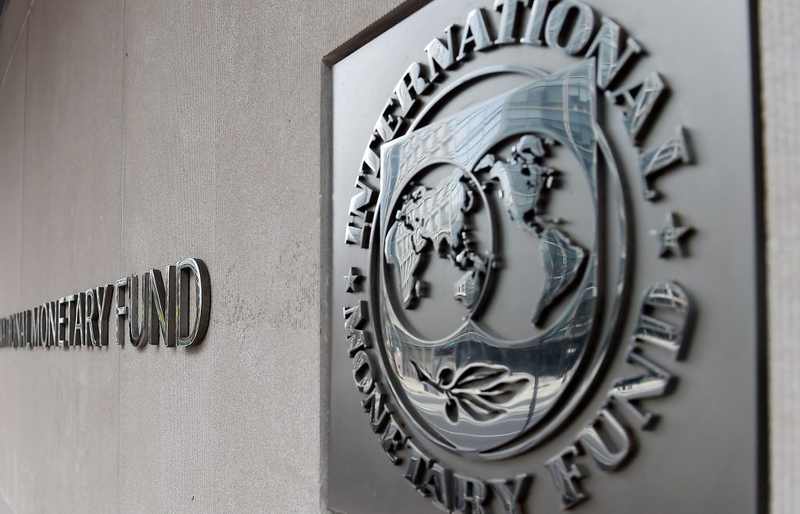
The three crosscurrents the IMF says cannot be separated
Georgieva energy supply shock
The first current begins at the Strait of Hormuz and reaches almost every household budget. Middle East conflicts have damaged production and refining capacity, cut exports from Gulf economies and threatened liquefied-natural-gas shipping. Crude near $100 a barrel is only the first layer. The loss of refining capacity has blown out margins on diesel and other essential products, turning an oil shock into a transport, food and manufacturing shock.
Energy-importing countries must send more income abroad for the same fuel. Exporters with damaged infrastructure cannot fully benefit from higher prices. That is why the largest growth downgrades in the October forecasts are expected in war-ravaged economies, including Ukraine and Gulf countries struck by Iran and hit by sharply reduced energy exports.
Global public debt at 100 percent of GDP
The second current is the accumulated cost of years of emergency budgets, slower growth and expensive money. Global public debt is on course to exceed 100% of gross domestic product soon. The ratio is not a cliff by itself; governments do not all borrow in the same currency or face the same investor base. But the aggregate tells us that the next rescue will begin from a weaker fiscal position than the last one.
The danger is the interaction with rates. Ten-year U.S. Treasury yields have reached a fresh 19-year high, lifting the benchmark against which governments and companies borrow around the world. When old low-rate debt rolls into new high-rate debt, interest bills consume revenue that could have cushioned fuel costs or financed investment.
AI boom inflation risk, IMF opportunity
The third current looks like the answer and part of the problem. Georgieva said AI investment relative to world output is likely to match or exceed the great infrastructure waves that built railways, electricity grids and telecommunications networks. AI hardware and related technology products already account for more than 10% of world goods trade. The United States, China and India are net importers of that hardware, showing that even the largest technology powers depend on international supply chains to build the new capacity.
If productivity follows, AI could add as much as half a percentage point to annual world growth, Georgieva said, if done right
. Yet the spending comes first: data centers, chips, cooling systems, power generation and transmission all require capital and energy now. The productivity dividend arrives later and may bypass countries that lack grids, skills, finance or access to advanced hardware.
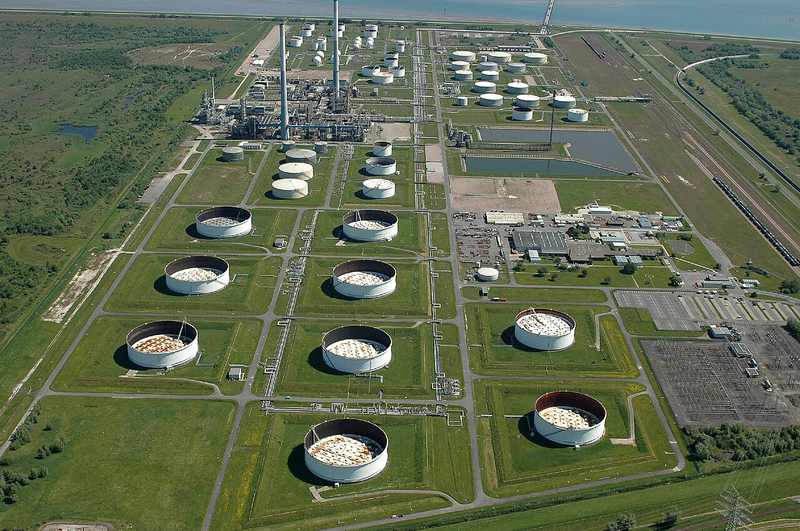
Why this matters: one boom does not cancel one shock
The neat version of the story says AI investment can offset expensive energy. The actual distribution is harsher. A chip-producing economy with deep capital markets may gain from orders, construction and productivity. A low-income fuel importer with dollar debt pays more for energy and refinancing while receiving little of the AI investment. Averaged together, those outcomes can produce a stable global headline while millions experience a recession.
War-hit economies are the most exposed because output and infrastructure are damaged at the same time. Import-dependent manufacturers lose competitiveness as electricity and shipping costs rise. Debt-heavy governments face a three-way choice among subsidizing fuel, protecting essential services and reassuring bondholders. Countries hosting data centers, chip plants and abundant generation may instead ride the demand shock.
This is what Georgieva means when she says the effect will be highly uneven and the AI boom is bypassing many countries. The distinction is not merely between rich and poor. Some advanced economies are energy importers with aging grids and large deficits. Some emerging markets have minerals, young technical workforces or surplus power that let them capture a larger part of the AI buildout. Policy, infrastructure and financing determine which side of the divide they occupy.
The July forecast was built on a Strait of Hormuz reopening
The IMF's July World Economic Outlook projected sluggish global growth of 3.0% in 2026 followed by 3.4% in 2027. Its energy path assumed the Strait of Hormuz would begin reopening in mid-July and conditions would return to their prewar state by March 2027. Oil was expected to average $89 a barrel this year and $78 next year.
Those assumptions are now broken. Brent's December contract settled at $100.58 on October 6. Winter heating demand is approaching, while threats to LNG traffic through Hormuz keep natural-gas supply constrained. Georgieva did not say whether the new World Economic Outlook will cut the 3.0% headline. She did say the largest downgrades would fall on Ukraine and Gulf states damaged by war and reduced exports.
The distinction is important. The fund can keep the global number unchanged if stronger AI-related investment in the United States, China or India offsets concentrated collapses elsewhere. Such a result would not disprove the warning. It would demonstrate why a global average can hide widening damage.
The arithmetic behind oil prices at 100 dollars a barrel
Crude near $100 is roughly $11 above the IMF's July assumption for 2026, a difference of about 12%. But motorists and freight operators do not buy crude. They buy refined products. Impaired refining has added margins of roughly another $100 per barrel for diesel and other key fuels in the crack spread — the difference between the value of finished fuel and its crude input.
That does not mean every retail barrel costs exactly $200; product mix, taxes, transport and timing differ. It means the squeeze after the refinery can rival the cost of the feedstock itself. The result is record diesel prices and a U.S. gasoline average of $4.34 a gallon, according to GasBuddy. Higher freight costs then travel through grocery aisles, construction bids and factory invoices.
The $89-to-$100 forecast miss also compounds over time. A short spike can be absorbed through inventories and hedges. A winter-long disruption resets wage demands, inflation expectations and central-bank decisions. A one-year oil assumption becomes a policy error if governments spend as though the shock is temporary and then must borrow to extend relief.
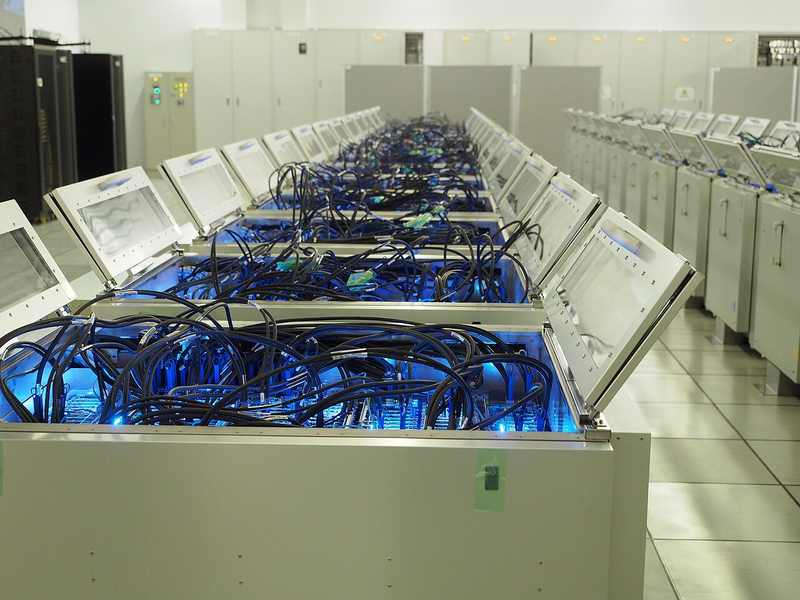
Three policy views competing in Bangkok
Georgieva's case for protective fiscal and monetary measures
The IMF chief is urging governments to use protective fiscal and monetary measures. Properly read, that does not mean universal subsidies and easy money. Targeted support can protect low-income households from a temporary fuel shock while preserving the price signal to conserve energy. Strategic reserves can bridge disruption. Credible medium-term budgets can keep emergency relief from becoming a permanent deficit.
Monetary policy is more difficult. Central banks can look through a brief energy spike if expectations remain anchored. They cannot ignore second-round inflation if fuel prices reshape wages and services. The room to cut rates is narrower when bonds are already selling off and public borrowing needs are large.
The counter-case: AI as the escape hatch
Optimists see the AI capital cycle as the rare demand source powerful enough to carry growth through an energy shock. A half-point annual boost would be enormous in a world growing near 3%. Better forecasting, logistics, industrial design and energy management could also reduce costs beyond the technology sector.
But productivity is not automatic. Infrastructure booms can overbuild, misallocate capital and create financial losses even while leaving useful assets behind. The more immediate beneficiaries are equipment suppliers, power producers and countries with deep financing. For the rest, imported servers and electricity demand may widen trade deficits before software raises output.
The skeptics: debt and inflation leave little room
Skeptics ask what protection is available when governments owe more, bonds yield more and energy is pushing inflation upward. Broad fuel subsidies can increase demand for the very commodity in shortage. Deficit-financed relief can raise bond yields further. Rate cuts can weaken currencies and make imported energy more expensive. Rate increases can suppress the investment needed to expand supply.
That is the policy trap behind the warning. Every tool solves one part of the problem while aggravating another. The credible response therefore depends on targeting, sequencing and cooperation rather than a single large intervention.
What the numbers say about the next World Economic Outlook
Energy: A roughly 12% gap between the IMF's $89 oil assumption and a market around $100 understates the consumer shock when refining margins are also near $100 a barrel for important products. The October forecast must revise not only crude prices but the transmission into transport and food.
Debt: Public liabilities above 100% of global GDP become more expensive as 10-year Treasury yields reach a 19-year high. Even a stable debt ratio can consume more tax revenue when the interest rate exceeds nominal growth.
AI trade: Hardware and related technology above 10% of goods trade make the boom globally significant, but net-importer status for the United States, China and India shows that the investment surge can lift imports and external imbalances before productivity appears.
Growth: A potential 0.5-percentage-point annual AI gain is large enough to protect the 3.0% headline in some scenarios. It is not evenly distributed enough to rescue every country below that average.
Bangkok scenarios: three ways the outlook can break
Scenario one — concentrated downgrades, unchanged headline: The IMF keeps global growth near July's 3.0% because AI investment and resilient demand in large economies offset severe cuts for Ukraine and Gulf exporters. Markets may initially treat that as relief, but the regional distribution would remain politically explosive.
Scenario two — a broad downgrade: Hormuz remains impaired through winter, LNG supply stays threatened and high refined-product margins persist. Energy inflation spreads into services, central banks delay easing and the shock moves from war zones into major importing economies. The global headline falls.
Scenario three — coordinated protection without a fiscal blowout: Governments release strategic reserves where effective, diversify fuels and shipping routes, target aid at vulnerable households and accelerate grid investment. Central banks communicate that they will tolerate first-round energy inflation but resist persistent wage-price effects. Coordination lowers the risk premium without pretending damaged supply can be replaced overnight.
What to watch at the IMF World Bank annual meetings Bangkok 2026
First, watch whether the World Economic Outlook October 2026 changes the 3.0% global forecast or merely reallocates growth among countries. Second, look for the oil and Hormuz assumptions buried beneath the headline. A forecast built on rapid reopening would carry less credibility after July's miss.
Third, listen to central-bank guidance on the boundary between looking through energy inflation and preventing a second round. Fourth, watch winter heating demand and LNG shipping through Hormuz. Finally, look for concrete financing that lets countries outside the main technology centers participate in AI infrastructure rather than merely import it.
The IMF global economy warning is ultimately about timing. The energy loss is immediate, the debt bill is already accruing, and the AI payoff is uncertain and delayed. Bangkok cannot make those forces disappear. It can reveal whether policymakers understand that the world average is no longer the whole story.