The Trump Corinth Mississippi rally on Monday night was supposed to be insurance. President Donald Trump flew to the Crossroads Arena in Corinth, in the far northeast corner of a state he carried by nearly 23 points in 2024, to protect Senator Cindy Hyde-Smith in a re-election race that Republican strategists once filed under "safe" — and that recent polls now show her Democratic challenger, district attorney Scott Colom, contesting within the margin of error. Over more than ninety minutes, in front of about 5,500 supporters, Trump did the job he came to do. But the lines that will travel farthest from Corinth were not about Mississippi at all: defending the war with Iran, the president said he had expected the price of oil to go "much, much higher" when he ordered it, that he was "fully prepared" for that cost — and that the war, in his words, "will be over soon."
Track it live: the Iran war — the Signal Post News live tracker
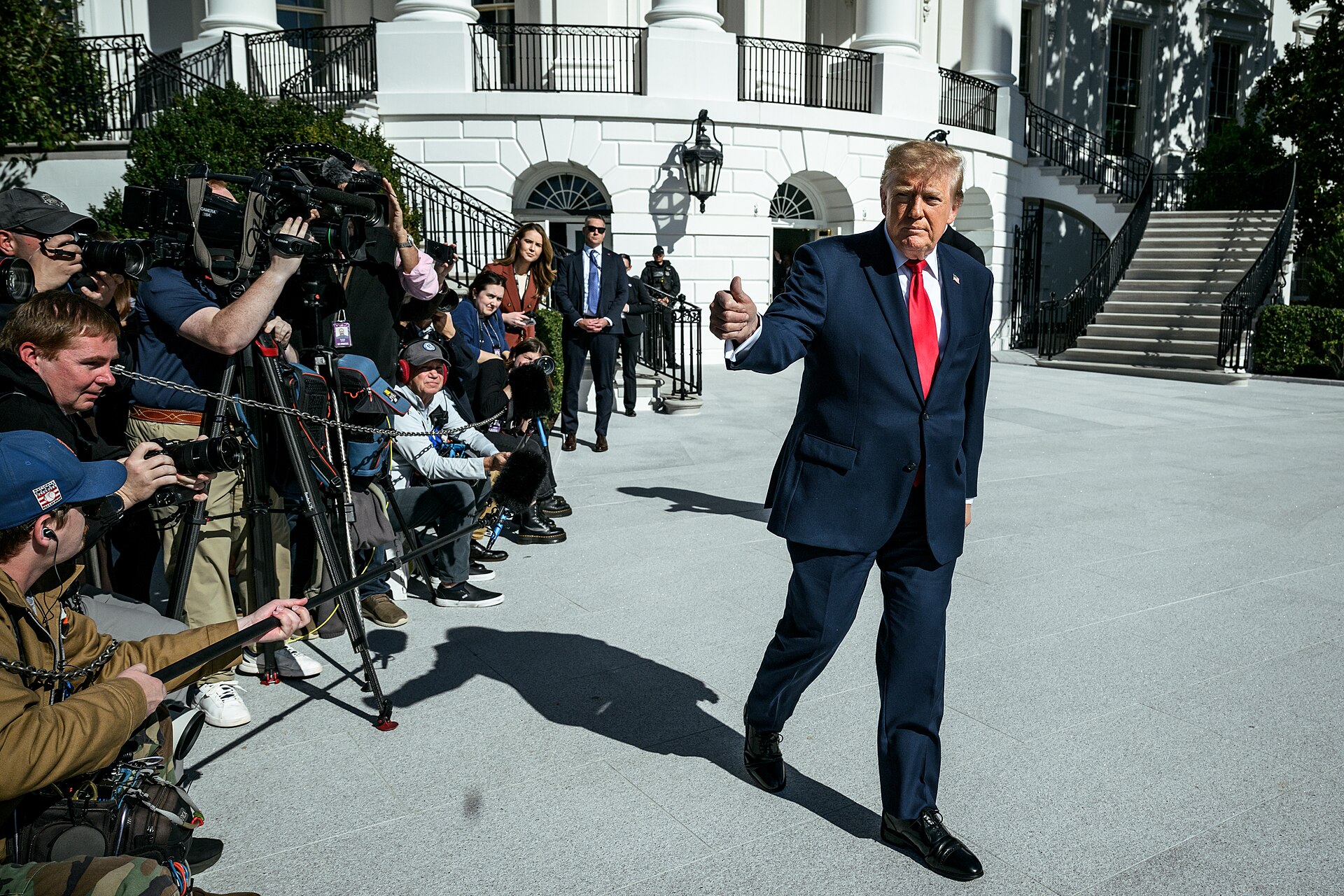
What Trump said about Iran — and about oil
The Iran passage came late in the speech, and it was the most substantive policy defence Trump offered all night. According to the Clarion Ledger's live updates from inside the arena, Trump called the war a necessary action, said he plans to adopt a line used earlier in the evening by Representative Trent Kelly — that Iran started the conflict in 1979 — and argued that Iran-funded terrorism has killed and injured people around the world, including Americans. "They make great weapons. They're very smart people. But we've beat the shit out of them," the president said, to standing applause, as reported by the Clarion Ledger. He repeated his claim that Iran was "two weeks" away from a nuclear bomb — a claim the Clarion Ledger noted is not backed up by experts — and said Iran had the potential to strike American cities or hit Europe with a long-range missile. "This should have been done by other presidents a long time ago," he said.
Al Jazeera reported that Trump also echoed Representative Trent Kelly's argument that Iran, not the United States, started the war — “We didn't start the war with Iran. Iran started the war with us” — and dismissed an earlier ceasefire as “a waste of time.” Al Jazeera also reported Trump claiming Iran had developed missiles capable of reaching Europe and American cities. The claim that Iran started the 2026 war is contested: the current conflict began on February 28, 2026, with coordinated U.S. and Israeli strikes on Iran, and a MEAWW fact-check rated the “Iran started the war” claim misleading, noting no reported Iranian first strike immediately preceding it.
On the cost, Trump was blunt in a way presidents defending an unpopular war rarely are. "I expected the price of oil to go much, much higher, and I was fully prepared to do it," he told the crowd. Reuters, in its national wrap of the rally, carried the same admission in slightly different words: Trump acknowledged the war in Iran has pushed up oil prices, called that a small price to pay to stop Iran from acquiring a nuclear weapon, repeated his claim that oil prices would soon plummet, and said of the war: "It's worked out fine and it'll be over soon." That timeline is itself a moving target. In February, Trump said the war would take about six weeks; he has said for months that it will end soon, or around the election. The Clarion Ledger's live blog added the context the crowd did not hear: the conflict has not been approved by Congress, it has been unpopular with Americans, and polls show voters concerned about the loss of American lives and about the gas and fuel costs driven by reduced oil flow from the Middle East — the same cost-of-living squeeze our reporting on Iran-war gas prices has tracked through the autumn.
The race he flew in to save
None of that explains why a president spends one of the last eight evenings before a midterm election in Corinth, Mississippi. The explanation is the race itself. Hyde-Smith, first sent to the Senate in 2018 with Trump's help, faces Colom, a district attorney from the Columbus area, and independent Ty Pinkins, a military veteran and attorney. Democrats last won a Senate seat in Mississippi in 1982, and Trump won the northeastern Mississippi county around Corinth by 68 percentage points in 2024. Yet, as Reuters reported, several election analysts no longer regard Hyde-Smith's re-election as a sure bet: the Senate Majority PAC announced a $1.2 million advertising campaign for Colom last week, and Democrats have sent former Vice President Kamala Harris and Pete Buttigieg to campaign beside him. Colom came to Corinth on Monday and worked the line of voters outside the arena, posting on X: "Walking the line outside the Trump rally in Corinth, I was reminded that more unites us than divides us here in Mississippi. When I'm elected to the U.S. Senate, I'll represent every Mississippian — whether you voted for me or not."
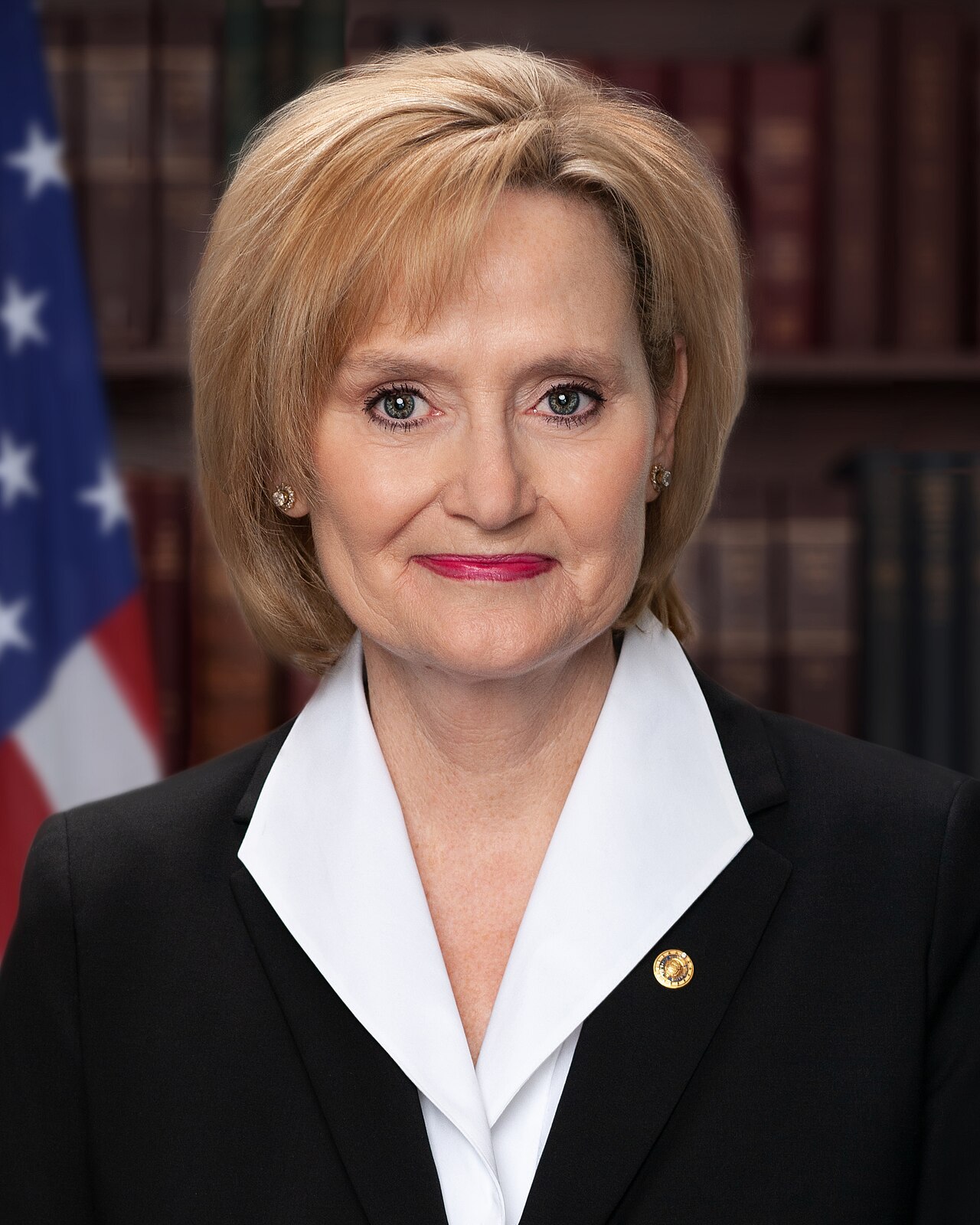
Hyde-Smith did not perform concern. "My opponent Scott Colom is the most radical candidate to run in Mississippi for literally our entire lives," she told the crowd, pointing to the tax cuts and the Laken Riley Act she passed with Trump and to Colom's October 22 rally with Harris. "You kill a gnat with a sledgehammer," she said. "And you're about to meet my sledgehammer." Governor Tate Reeves, who received his own last-minute Trump visit in 2019, called Colom a "radical socialist" who does not represent Mississippi values. Trump, for his part, insisted the trip was precaution, not rescue: "I'm here because Cindy's doing great, but I just have to make sure," he said — adding, in Reuters' account, "I can't take a chance." He reminded the crowd, "Pretend that I'm on the ballot," joked that he was hoarse — "God didn't make your vocal cords to do a rally every day" — and closed the economic pitch with a line aimed squarely at retirees and workers watching their balances: "If you have any doubt, before you go vote, pick up your 401(k) and check it out. You've made more money than you've ever made in your life."
The $5,000 checks, the early-vote problem, and the Omar claim
Trump ended the speech the way he has ended several recent rallies: by dangling the promise of $5,000 checks for all adult citizens if Republicans win majorities in both chambers of Congress on November 3. It is a promise, not a programme — experts have debated the legality of the measure, and Trump himself noted it would cost the country $1 trillion. How that pledge compares with the smaller payments his administration has actually sent this autumn is the subject of our side-by-side comparison of the $500 and $5,000 checks. Earlier the same day, before boarding Air Force One for Mississippi, Trump had also announced on Truth Social that his administration would pay a $1 million reward to anyone whose report of voter fraud leads to an arrest and conviction — his latest financial offer heading into the midterms, as USA Today reported.
Two other passages deserve a careful read. Trump doubled down on his October 22 directive urging Mississippians to vote early — despite Mississippi being one of only two states in the country with no early voting at all, a policy its legislature declined to introduce this session, as the Clarion Ledger pointed out. And he repeated his claim that Representative Ilhan Omar of Minnesota should be removed from Congress, telling the crowd, in the Clarion Ledger's account, that documents from an investigation showed she had previously used another name and that she should resign. That is Trump's claim, and it needs to be labelled as one every time it is repeated: Omar has repeatedly called the claim baseless, she has not admitted fraud, she has not resigned, and a president has no power to remove a member of the House — only the House itself, or Minnesota's voters, can do that. Midway through the evening, a heckler shouting "release the Epstein files" was removed, and Trump dismissed him as a paid protester, the Clarion Ledger's live updates reported.
Why this matters
Start with the map, because the map is the story. With eight days left before the November 3 midterms, the president of the United States is spending his evenings in Mississippi, Texas, Ohio, South Carolina, Florida and Iowa — Reuters reports those are the stops still to come — and party strategists told Reuters they are on edge about races from Alaska to South Carolina, in part because of voter discontent over how Trump's tariffs and the Iran war have fuelled inflation. Presidents do not defend Senate seats in states they won by 23 points unless their own polling tells them the seat needs defending. All 435 House seats and 35 of the 100 Senate seats are on the ballot; current polling, as Reuters summarised it, suggests Democrats will regain the House and have a chance to retake the Senate. Corinth is what that arithmetic looks like on the ground: a "safe" Republican state where the Democratic challenger is close enough that the president himself is the closing argument. Our coverage of the Reuters/Ipsos enthusiasm gap explains the turnout problem underneath it.
The Iran passage matters for a different reason. A president who tells a rally crowd he expected oil to go "much, much higher" and was "fully prepared" for it is making a concession and a bet at the same time: conceding that the war's cost at the pump was foreseeable and accepted, and betting that voters will reward the stated purpose — stopping an Iranian nuclear weapon — more than they punish the price. That bet is being placed against difficult numbers. Polling published in the Clarion Ledger's rally preview put Trump's approval at 42 percent in Mississippi itself, against 52 percent disapproval — a record low for him in the state across both his terms — while national surveys put him at 34 percent (New York Times/Siena), 32 percent (CNN/SSRS) and 36 percent (Fox News, October 9–12). If the war does end "soon," as Trump promised again on Monday, the Corinth line becomes a footnote. If it does not, Monday night is the moment the president personally accepted ownership of every cent it adds to a gallon of gas.
Both sides
Republicans in the arena heard a president doing exactly what a president should do in the final week: showing up. Hyde-Smith's camp frames Colom as a career prosecutor who, in Trump's words at the rally, does "the bidding of the radical left" and has slashed sentences for "serial offenders and savage murderers" — charges Colom disputes — and frames the race as a referendum on the tax cuts, border enforcement and the Laken Riley Act. From that side of the room, the polling is noise: Trump won this county by 68 points, Mississippi has not sent a Democrat to the Senate since 1982, and a presidential visit in the final week is how you turn a lean into a landslide. Democrats hear something else: a White House that has to spend its scarcest resource — the president's time — in Mississippi at all. Senate Majority PAC would not spend $1.2 million, and Harris and Buttigieg would not fly in, for a race their data said was hopeless; and Colom's own answer to the rally was to stand outside it, shaking hands with the people in line, a small visual argument that the contest is real. On the war, the divide is just as clean: supporters hear deterrence finally enforced after decades of Iranian aggression; critics hear an unapproved war, an oil shock the president admits he accepted in advance, and a nuclear claim — "two weeks" — that the hometown paper itself flagged as unsupported by experts.
What happens next
Trump's closing swing runs through Texas, Ohio, South Carolina, Florida and Iowa before November 3, and every stop will be read the same way Corinth should be: not by the size of the crowd, but by why the state needed a visit at all. In Mississippi, watch the margin, not just the winner. If Hyde-Smith wins comfortably, the Corinth trip becomes a story about a president who takes nothing for granted. If Colom holds her anywhere near the margin of error in a state this red, the result will be cited for years as the night the map moved — and the $1.2 million, the Harris and Buttigieg trips, and Colom's handshake line outside the arena will look like the early evidence. On Iran, "it'll be over soon" now has a date attached to it whether Trump wants one or not: he said it eight days before an election he has explicitly tied to the war's costs. Oil prices between now and November 3 are, in effect, a daily referendum on the sentence he delivered in Corinth.
Sources
Clarion Ledger (USA Today Network), "Trump in Mississippi live updates: What president said at Corinth rally," October 26, 2026 — clarionledger.com (the 21:00 ET Iran entry: the war "necessary," the oil quote, the weapons quote, the "two weeks" claim and the paper's own note that experts do not back it, the Congress and polling context; the 20:02 ET Omar entry and Trump's quoted words, with the paper's note that Omar has not admitted fraud; the heckler entry). Clarion Ledger, "Trump boosts Hyde-Smith at Corinth, MS, rally before Nov. 3 midterms," October 26, 2026 — clarionledger.com (Hyde-Smith's "sledgehammer" and "most radical candidate" lines, Reeves, the 90-minute speech, the 401(k) line, the $5,000 checks close and its $1 trillion cost, the early-voting contradiction). Reuters, "Trump, ignoring polls, predicts economy to help Republicans in midterms," October 26, 2026, via DevDiscourse syndication — devdiscourse.com (the "small price to pay" framing, "It's worked out fine and it'll be over soon," strategists on edge from Alaska to South Carolina, the 1982 and 23-point/68-point figures, the $1.2 million Senate Majority PAC buy, the Harris and Buttigieg trips, Colom outside the venue and his X post, the remaining campaign stops, the 435/35 seat counts). USA Today, "Trump offers $1M rewards for reporting voter fraud in midterms," October 26, 2026 — usatoday.com (the Truth Social announcement made before boarding Air Force One for Corinth). Clarion Ledger rally preview, October 22, 2026 (Civiqs Mississippi approval figures and the national polling roundup). File photographs: The White House, the U.S. Senate and Skye Marthaler, via Wikimedia Commons.