Russian Tu-95 bomber crash
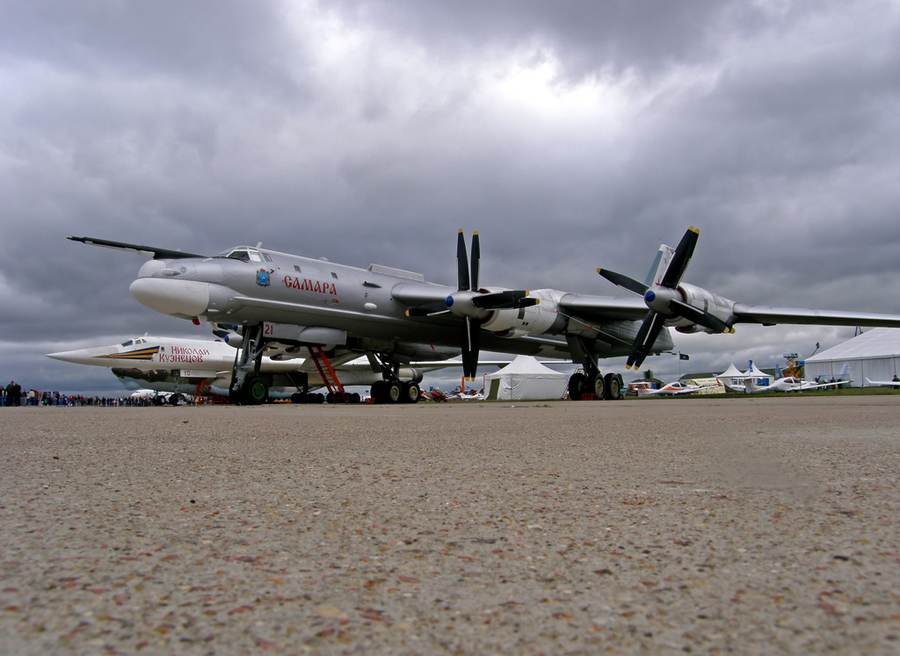
A Russian Tu-95MS strategic bomber crashed during a training flight in the country's far-eastern Amur region on Tuesday, killing six of the seven crew members aboard, Russia's Defence Ministry said. The ministry said the aircraft went down in an uninhabited area, was flying without any weapons on board, and that the surviving crew member was hospitalized. An Aerospace Forces commission has been dispatched to the crash site to establish the circumstances.
What is confirmed — and what is not
Russia's Defence Ministry said the aircraft crashed on September 29 in the Amur region, which borders China, near the village of Krasnoyarovo north of Ukrainka air base. Six crew members were killed, one was injured and evacuated to a medical facility, the bomber was unarmed, and its wreckage burned in a remote area. A military investigation is underway. The statement was carried by TASS and Interfax and is summarized in this report on the ministry's account.
The aircraft type was initially misreported: early accounts said a Tu-154 transport had gone down. Open-source analysts then matched imagery of the wreckage to a Tu-95MS, and the ministry subsequently identified the bomber type. Video showing the burning wreckage was shared by the NEXTA monitoring account, according to a summary of the emerging reports.
Claims circulating on social media that three of the bomber's four engines failed shortly after takeoff, that a fuel explosion occurred, or that sabotage was involved remain unconfirmed. The ministry has announced no cause. Those claims should not be treated as established facts.
Why this matters
The Tu-95MS is the workhorse of Russia's long-range strike fleet and a launch platform for cruise missiles fired at Ukraine throughout the war. The loss matters on three levels.
First, the airframes are effectively irreplaceable. The basic Tu-95 design first flew in 1952 and entered service in 1956; the production era of the original design ended decades ago, leaving modernization rather than new mass production as the fleet's path forward. Every destroyed hull therefore narrows the pool available for patrols, training and combat missions. Open-source estimates put the full fleet at roughly 47 airframes, with about 38 operationally available before a Ukrainian drone attack reportedly damaged another Tu-95MS in late August 2026, according to National Security Journal's August 28 assessment.
Second, the timing is consequential. The crash comes amid Russia's most intense air campaign of the year, including September 28 daytime strikes on Kyiv with new jet-propelled drones and a declared focus on Ukrainian data centers and communications infrastructure. Reuters reported at least seven people killed in Kyiv on September 28. Signal Post News has separately examined Russia's fresh ballistic-missile and jet-drone strike on Kyiv and the deadly strike on Kyiv's Academy of Sciences.
Third, the accident renews scrutiny of a 70-year-old design flown at wartime tempo. It comes weeks before the winter campaign against Ukraine's energy grid that both sides expect, when long-range aviation readiness will matter most.
Background: the Bear that won't retire
Andrei Tupolev's intercontinental bomber remains the world's only turboprop-powered strategic bomber in operational use. Known to NATO as the Bear, it entered Soviet service in 1956 and remains part of Russia's nuclear triad. The modernized Tu-95MS is configured as a long-range cruise-missile carrier. The aircraft's design history and role are detailed in the Tu-95 reference history.
In 2026 the type has been used both for strikes on Ukraine and long-range signaling patrols near NATO airspace that drew allied fighter intercepts. The September crash also fits a grim pattern for Russian military aviation this year: an An-26 transport crash in Crimea on March 31 that killed all 30 aboard, an Su-30 crash on April 3, a Tu-22M3 crash in Irkutsk Oblast on June 15 and an Su-57 crash in Moscow Oblast on July 23, according to the open chronology of Russian military accidents. The sequence is consistent with the pressures an aging fleet faces under sustained use, although each accident requires its own investigation.
Who loses, who gains, what the critics say
Russia loses a scarce strategic asset and six trained aircrew — a human cost described tersely in the ministry statement. Ukraine-aligned commentators are likely to read the crash as evidence of decay and overstretch in Russia's strike arm; Russian officials have framed it as a training accident in a remote area with no civilian risk.
Airframe age, high operational tempo, maintenance demands and the sanctions-era spare-parts environment are all risk factors investigators and aviation-safety analysts will examine. The uncertainty remains central: nothing in the public record links this crash to sabotage or combat action, and the crash site is thousands of kilometers from the front line. Sabotage remains speculation, not a finding.
What happens next
The Aerospace Forces commission will examine the wreckage, maintenance record, crew actions, weather and flight data. A temporary restriction or pause on Tu-95MS training flights would be a standard precaution after such a loss, though the ministry had not announced one at publication time.
The more strategic question is whether Russia's strike tempo on Ukraine changes in the coming weeks. The bomber fleet is central to the winter energy-grid campaign Moscow has telegraphed. The diplomatic backdrop adds a stark contrast: on Monday, Putin envoy Kirill Dmitriev was in Washington discussing an energy-infrastructure ceasefire and postwar energy deals with U.S. officials, Reuters reported. Signal Post News analyzed what the Dmitriev talks mean for the war and energy security.
One training accident will not change the war's trajectory. But each irreplaceable hull lost narrows Moscow's long-range options and feeds the attrition narrative both sides are now fighting over.
Sources
- Russian Defence Ministry statement, as reported by TASS and Interfax — Bahamas Spectator
- Crash details and early open-source identification — Particle
- Aircraft history and capabilities — Wikipedia
- Russian military aviation accident chronology — Wikipedia
- Tu-95MS fleet assessment after August drone damage — National Security Journal
- Kyiv strike context — Reuters
- Washington diplomacy context — Reuters