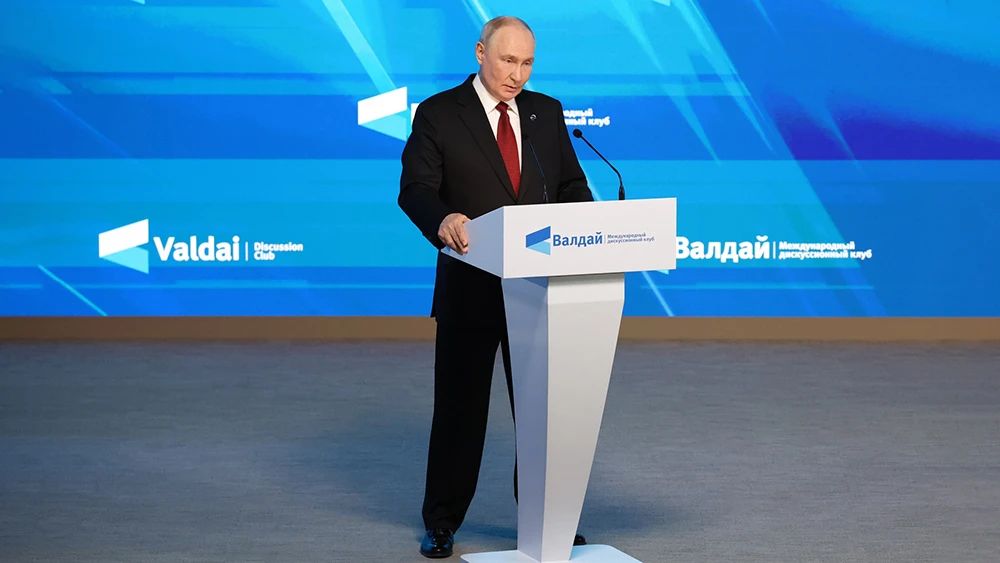
Vladimir Putin has given the clearest public blessing yet to India's role as a would-be peacemaker in the Ukraine war. Speaking at the Valdai Discussion Club in Moscow on Thursday, the Russian president praised Prime Minister Narendra Modi for “constantly” raising the need to end the conflict at their meetings, saying the Indian leader has “very good ideas aimed at finding mutually acceptable solutions.” Modi's Ukraine peace plan has never been published in any detail, but Putin's remarks — thanking New Delhi for its commitment to ending the war “through peaceful means and as soon as possible” — are the strongest signal yet that Moscow views India as a credible channel for dialogue.
What Putin Actually Said
Putin spoke unprompted, in response to a question at the Valdai forum, the annual gathering of Russia-watchers where the Kremlin leader road-tests his big foreign-policy lines. His full remarks, as reported by the IANS and ANI news agencies:
“Prime Minister Narendra Modi is one of those world leaders who, despite our very good and even friendly relations, personal good relations, constantly raises the question and asks the question about putting an end to the conflict in Ukraine,” Putin said. “He has an avid interest and very good ideas aimed at finding mutually acceptable solutions. In that sense, naturally, the Prime Minister takes a neutral position but with an interest in the end of the conflict. I think it's my duty to say that directly. And we are thankful to the Prime Minister for his ideas.”
Putin added that he would not “go into details now” about Modi's ideas, but said India deserved thanks for its desire “to put an end to this conflict through peaceful means and as soon as possible.”
Why This Matters
Putin almost never credits a foreign leader with peace ideas in public. The compliment is deliberate, and it does three things at once. First, it anoints India — publicly, by name — as Moscow's preferred mediator. That is not a small thing. For two years the world's would-be peacemakers have formed a queue: China has its twelve-point paper, Brazil has talked up a “friends of peace” group, Turkey hosted the early rounds, and the Vatican has floated moral diplomacy. Putin just picked his favorite. He did it at Valdai, on the record, in front of the international experts whose job is to parse exactly this kind of signal.
Second, it buys Russia diplomatic cover at a moment when the battlefield news is ugly. At the very same Valdai session, Putin warned the West he would defend the Kaliningrad exclave with “all the weapons” at Russia's disposal, including nuclear ones, and rejected any ceasefire on long-range strikes against Ukraine. Praising Modi's peace ideas while refusing to stop the bombing is not a contradiction from the Kremlin's point of view — it is the strategy: look reasonable on diplomacy, stay maximalist on the battlefield. The praise costs Putin nothing and hands him the talking point he needs when the next wave of criticism arrives.
Third, it lands at a moment when the war's economics are turning brutal for both sides. Ukraine's drone campaign has knocked out a large share of Russia's refining capacity, triggering fuel queues inside Russia itself — a humiliation Putin publicly acknowledged at Valdai. Russia, in turn, has opened a winter campaign against Ukraine's power grid that Kyiv warns could take 15 gigawatts offline. Both capitals are paying. When both capitals are paying, third-party diplomacy stops being background noise and starts being the main story.
Background: How India Got Here
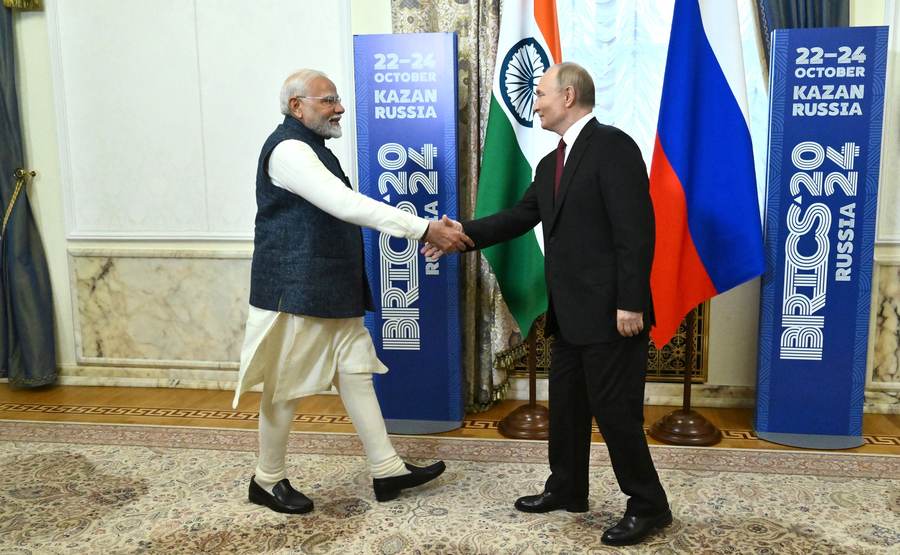
Modi's line on the war has been consistent since the invasion: India is neutral, opposed to the war, and insistent on dialogue. His most quoted sentence on the subject came in September 2022, when he told Putin face to face at the Shanghai Cooperation Organisation summit in Samarkand that “today's era is not an era of war.” He has repeated variants of it at nearly every meeting since — which is precisely what Putin acknowledged on Thursday.
India has walked a careful line that few other powers could manage. New Delhi has abstained on UN votes condemning the invasion, kept buying discounted Russian crude — becoming one of Moscow's largest oil customers — and simultaneously maintained open lines to Kyiv. Modi visited Moscow in July 2024 and Kyiv the following month, one of very few leaders to do both in a single summer. India's national security adviser carried a message from Modi to Moscow in September 2024. At last month's 18th BRICS Summit in New Delhi, Modi and Putin met again and discussed Ukraine, West Asia and the Black Sea alongside maritime trade — with Modi once more reiterating that “dialogue and diplomacy” were the way forward. That history is why Putin's praise is not empty flattery. India is genuinely one of the only capitals that can pick up the phone to both sides and be answered.
Who Benefits, Who Loses, What Critics Say
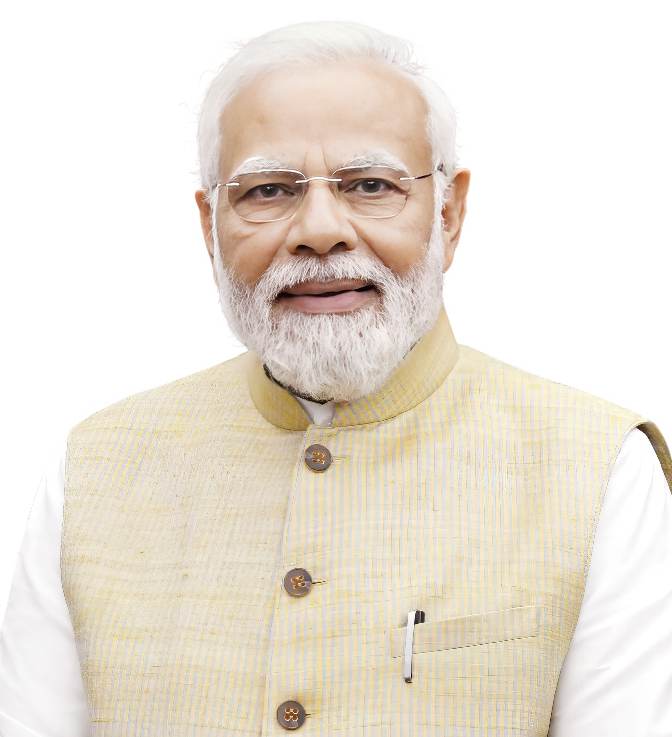
The winners are obvious. India gets elevated — again — as the Global South's mediator-in-chief, a role that burnishes Modi's statesman image at home and gives New Delhi leverage with Washington, which has been pressing Delhi over its Russian oil purchases. Russia gets to show it is not isolated: a major democracy, a QUAD member, is publicly vouching for Moscow's openness to peace.
The skeptics start in Kyiv. Ukraine's position has never changed: nothing about Ukraine without Ukraine. No Indian peace framework has been shared with Kyiv publicly, and Zelenskyy has endorsed none. A plan built on “mutually acceptable solutions” sounds reasonable until you ask what Moscow considers acceptable — which, after Valdai, includes keeping every inch of occupied territory and no ceasefire on the strikes hitting Ukrainian cities. Analysts in Western capitals will read Putin's praise as a familiar maneuver: outsource the optics of peacemaking to a friendly capital while the terms on offer remain a victor's peace.
There is also the oil problem. India's discounted Russian crude imports are the quiet engine of the relationship — they give Delhi leverage in Moscow and headaches in Washington. Any Indian mediation will be read through that lens: is New Delhi a neutral broker, or a customer protecting its supplier? The honest answer is that it is both, and Putin knows it.
What the Numbers Say
The Valdai remarks are best read against two pressures that are both measurable. Ukraine's refinery campaign has, by Kyiv's account, taken out more than 45 percent of Russian refining capacity — and the fuel lines forming at Russian petrol stations are visible even in state media. On the other side, Russia's grid campaign is aimed at a country that has already lost vast amounts of generation; Kyiv is warning Europe that up to 15 gigawatts could go this winter. When both economies are visibly straining, the incentive structure shifts: neither side is winning outright, and both have reasons to keep a diplomatic door cracked. Putin's Modi praise is what a cracked door sounds like.
What Happens Next: Three Scenarios
Scenario 1: Symbolism Without Substance
The most likely near term — Putin pockets the headline, Modi pockets the compliment, and nothing concrete follows, because none of the preconditions for a settlement exist: Kyiv has not endorsed an Indian plan, Moscow has not offered one, and Washington is consumed by its own crises. The praise remains what it was designed to be: a signal.
Scenario 2: A Slow Build
Watch for the tells — a Modi–Zelenskyy call, a shuttle mission by India's national security adviser, or an Indian envoy turning up in a “friends of peace” format with Brazil and others. If Delhi starts publishing specifics — even a vague framework — the story graduates from compliment to diplomacy.
Scenario 3: India as Venue or Co-Sponsor
The long shot that matters most. That requires something neither side has shown — Russian willingness to trade land for peace and Ukrainian willingness to accept anything less than full restoration. Nothing at Valdai suggested either. But mediator status, once granted publicly by one belligerent, is hard to take back — and Putin just granted it.
The Bottom Line
Treat Thursday's remarks as a diplomatic signal, not a breakthrough. Putin praised Modi because it serves Moscow to have a respected, neutral power vouching for its reasonableness — at the same forum where he threatened nuclear escalation over Kaliningrad. That is not peacemaking; it is positioning. But positioning matters in long wars. The compliment puts India formally in the game, and in a war entering its fifth year with both economies bleeding, the player holding the phone lines to both capitals is worth watching.
Sources
- IANS (ianslive.in)
- ANI via News Ei Samay (newseisamay.com)
- Times Now World (timesnowworld.com)
- The Daily Jagran (thedailyjagran.com)
Related Signal Post News coverage: Putin's Valdai nuclear warning on Kaliningrad; Putin on lifted diesel sanctions at Valdai; Putin rejects long-range-strike ceasefire at Valdai.