Russia military budget 2027
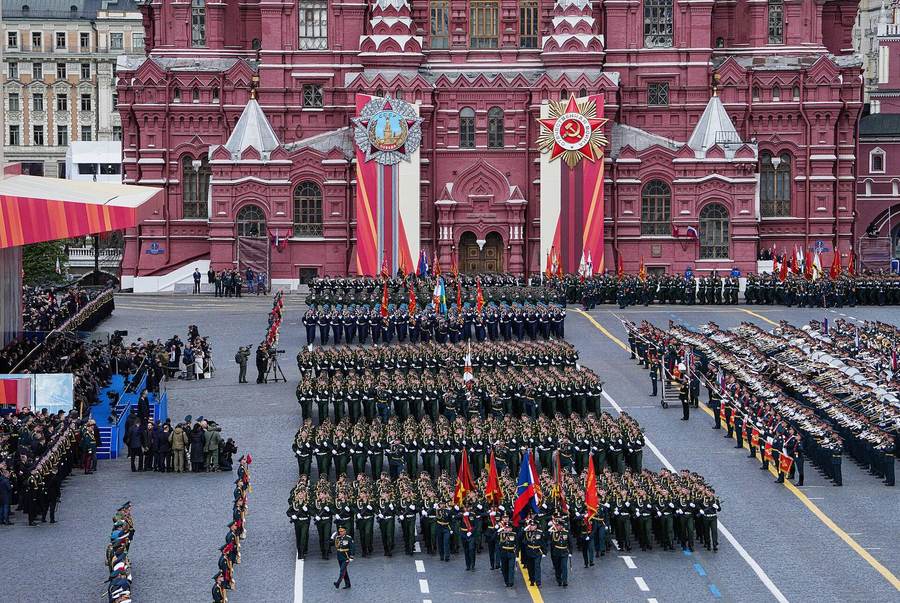
Russia military budget 2027 — Russia plans to spend 17.1 trillion roubles on defence next year — roughly $202.6 billion — a 27% increase on the 13.5 trillion roubles originally budgeted, according to draft government documents seen by Reuters. The figure is the highest since Moscow launched its full-scale invasion of Ukraine in 2022 and anchors a three-year military spending programme of about 50 trillion roubles (roughly $592 billion) covering 2027 to 2029. The draft budget is due before parliament by October 1.
The documents, reported by Reuters on September 28 and 29, sketch an economy being rebuilt around a single priority. Finance minister Anton Siluanov has said spending will concentrate “on the front,” while conceding that economic constraints mean Moscow must “dig around somewhere” to balance the books. Reuters’ September 29 reporting shows where the digging lands: welfare and social-policy funding cut by 7%, education by 6%, healthcare by 6.8%, and “national economy” spending — roads, infrastructure, agriculture subsidies — down 7.4% in 2027 against the initial plan. The authorities’ position, as Reuters summarised it, is that winning the war takes priority.
Why this matters
A national budget is the most honest strategy document a government ever publishes — more revealing than any speech, because the numbers have to add up. The 27% jump tells Kyiv, Washington and Brussels that the Kremlin’s planning horizon runs through 2027 and beyond. That aligns with the assessment of the Institute for the Study of War — cited in europajournalnews’s day-1679 war coverage — that Russia’s mass drone campaign aims at Ukraine’s capitulation by spring 2027, and that Vladimir Putin is unlikely to soften his demands or enter serious ceasefire talks before that effort plays out. The budget and the battlefield analysis are pointing the same way: Moscow is not planning for this war to end soon. Signal Post News has examined how Russia’s jet-powered drones are straining Ukraine’s air defences — the campaign this budget is built to sustain.
Second, the draft makes the guns-versus-butter choice explicit in a way the Kremlin usually avoids. For four years Moscow insisted that war spending and living standards could rise together; the 2027 numbers end that pretence on paper. When a government cuts schools and hospitals to buy shells, it is telling its own citizens — and its adversaries — exactly how long it intends to fight.
How we got here
Four and a half years into the war, 2026 was the year Russia’s fiscal shock absorbers started to go. The original plan earmarked 12.1 trillion roubles for defence — the actual outlay remains classified, a reminder that every figure here comes from draft documents and official statements rather than audited accounts. The deficit forecast doubled from 1.6% to 3.2% of GDP. Total state spending rose 13.2% to 48.6 trillion roubles, or 20.9% of GDP. Net borrowing was raised 26% to 5 trillion roubles, and 459 billion roubles — about 11% of the liquid portion of the National Wealth Fund — was burned covering the hole. The oil-and-gas revenue estimate was cut from 8.9 to 7.6 trillion roubles as energy income sagged under sanctions and weaker prices. The European Union, meanwhile, keeps tightening the sanctions vise (see the latest EU sanctions renewal).
The military machine, meanwhile, only grew: presidential decrees have repeatedly expanded the armed forces’ authorised strength, most recently the September order adding thousands more troops. Factories run around the clock, contract soldiers draw premium pay, and the state has absorbed the cost — until now — by leaning on reserves and borrowing. The 2027 draft is the moment the bill starts arriving at households.
Who benefits, who loses
The military-industrial complex benefits. Siluanov’s “on the front” means sustained orders for tank plants, drone factories and munitions works, plus the wages of a wartime military now sized for a multi-year fight. In the short term this is also a jobs programme for industrial regions — one reason the Kremlin has been able to sustain the war economy politically.
Ordinary Russians lose. Welfare, education and healthcare face cuts of 6 to 7% against plan, “national economy” spending falls 7.4%, and 2027 brings a new windfall tax on metals and mining worth about 200 billion roubles a year plus larger-than-expected utility tariff increases. The measures are unpopular enough to anger even some Kremlin supporters — a rare crack in the domestic consensus the war economy has enjoyed.
Ukraine loses the hope of Russian exhaustion. Kyiv faces an adversary openly budgeting for escalation, not retrenchment. The West, in turn, gets a clarified planning assumption — and a bill: NATO members arguing over their own spending targets now face an adversary devoting more than a third of its state budget to defence. Critics will note the uncertainty — classified actuals, draft-stage figures — but the direction of travel is not in doubt.
What the numbers say
Start with shares, because they are what make this budget historic. At least 35% of the entire Russian state budget is earmarked for defence, and about 43% once national security — police, the national guard, the security services — is added, according to The Times’ analysis: a record since the Soviet collapse in 1991. In cash terms The Times puts the defence figure at £154 billion — roughly twice what Britain spends on defence. NATO members agonise over reaching 2 to 3% of GDP on defence; Russia is committing a share of its state budget that no NATO member approaches.
The industrial logic behind it is the artillery-shell arithmetic NATO’s Mark Rutte laid out in July 2025: Russia, he said, was producing three times more artillery shells per month than all NATO members managed in a year — though he added that by November NATO output had overtaken Moscow’s. The 2027 budget is Russia’s answer to that race: out-produce, out-last.
Then the debt line Moscow once treated as sacred: state debt is set to reach 21.7% of GDP in 2027, breaching the 20% level the authorities themselves consider safe, with total borrowing up 43% to 7.7 trillion roubles. And the asymmetry across the front line is brutal in its simplicity — Moscow’s single-year $202.6 billion plan against Kyiv’s reported $27 billion defence funding gap. One side is debating how to close a hole; the other is deciding how fast to widen its lead.
What happens next
First, October 1. The draft goes to parliament. Watch whether the Duma trims anything or waves it through — and whether the still-classified 2026 actuals leak in the debate, which would reveal how far this year’s spending already overshot the plan.
Second, the spring-2027 test. If the ISW assessment is right, Russia will spend the next six months trying to break Ukraine with massed drone and missile strikes before entertaining serious talks. This budget funds exactly that campaign. If the capitulation push fails, Moscow will own a war economy with no exit ramp built into it — and a deficit, debt load and tax burden that keep compounding.
Third, the domestic bill. Welfare cuts, new taxes and utility bills land on households while the National Wealth Fund’s liquid cushion shrinks. The Kremlin has bet for four years that Russians will accept guns over butter indefinitely. The 2027 budget raises the stake — and for the first time, some of its own supporters are saying so out loud.
Sources
- Reuters, “Russia raises 2027 military spending by 27%, budget documents show” (September 28, 2026) — reuters.com
- Reuters, “Russia to cut welfare, education funding in 2027 as war spending soars” (September 29, 2026) — reuters.com
- The Times, “The cost of war for Putin’s Russia” (September 29, 2026) — thetimes.com