War · Ukraine · Zaporizhzhia
For the second day running, Russian strikes hit the city of Zaporizhzhia on Saturday. By the State Emergency Service’s afternoon update, 22 people had been injured inside the city, among them a six-month-old baby, a two-year-old girl and a 12-year-old boy — and one of the districts hit in the morning was hit again in the evening.
Track it live: Ukraine war map · Wars tracker
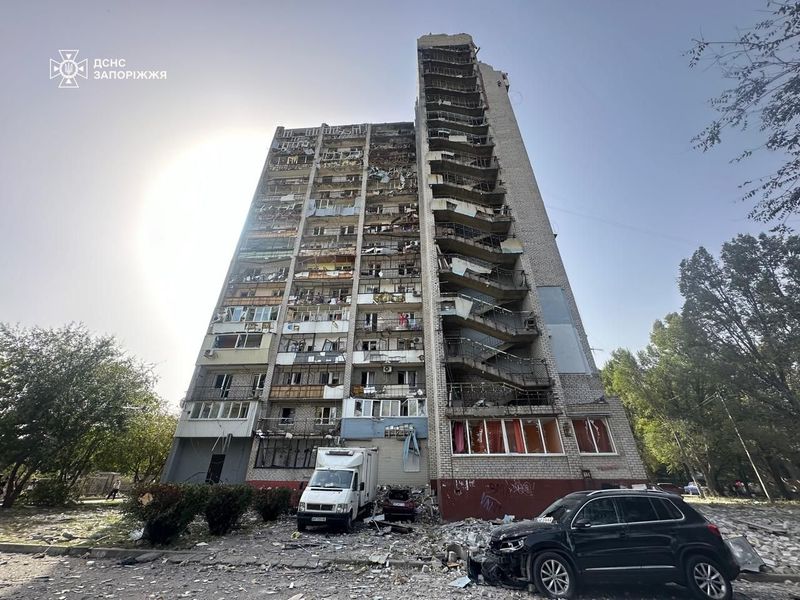
ZAPORIZHZHIA, Ukraine, November 15, 2026 — Russia strikes Zaporizhzhia again: on Saturday, November 14, Russian forces hit the city of Zaporizhzhia for the second consecutive day, injuring 22 people inside the city, including three children, according to Mykhailo Semikin, acting head of the Zaporizhzhia Regional Military Administration, and the State Emergency Service of Ukraine (SES). The Zaporizhzhia strike November 2026 toll for the city — 22 injured, no deaths reported inside the city itself — is a daytime, city-limits figure, and this article keeps it separate throughout from the much larger toll for Zaporizhzhia Oblast as a whole, where Governor Ivan Fedorov reported 3 people killed and 62 injured over 24 hours. An apartment building and a school were damaged in the city, three districts were hit, and road traffic across the Dnipro hydroelectric dam was closed in both directions. Russia had not commented on these specific Saturday strikes in the sources available at publication.
Saturday’s attack came one day after Friday’s strike on apartment buildings in the city’s Kosmichnyi district, which injured 50 people and killed a rescue worker clearing the rubble — a different attack, on a different day, in a different district, which Signal Post News reported separately in our coverage of the Friday Kosmichnyi apartment strike. The two stories belong together only as a pattern: a frontline city struck on Friday morning, struck again on Saturday, and struck again in one district on Saturday evening. What follows keeps the days, the districts and the tolls apart, because on a weekend like this one, the distinctions are where the accuracy lives.
What happened in the city on Saturday
The strikes on the city fell across three districts — Zavodskyi, Khortytskyi and Voznesenivskyi — according to Semikin and the SES. The emergency service’s running count rose through the day, as it had on Friday, and by its 4:30 p.m. update the total injured in the city stood at 22, including three children: a six-month-old infant, a two-year-old girl and a 12-year-old boy. Officials reported damage to an apartment building and to a school. No deaths inside the city were reported in the Saturday city count given by Semikin and the SES, and that absence is part of the figure’s meaning: Saturday in Zaporizhzhia city was, on the officials’ account, a day of mass injury rather than mass killing — which is a statement about the city count only, not about the region around it, where people did die, as the oblast figures below record.
The district detail shows how the day was layered. Voznesenivskyi district was hit more than once. In an earlier strike there, three people were injured — two women and a boy under one year old, officials said. Then, late in the evening, Voznesenivskyi was struck again, with a preliminary count of five more people injured in that latest attack. A district struck twice in a day experiences the second strike differently from the first: residents who spent the morning clearing glass and checking on neighbours were sent back to shelters and stairwells after dark, and emergency crews who had worked one impact site had to work another in the same streets. The preliminary evening figure also means the city’s count may not be final; preliminary counts in this war are floors, and Saturday’s reporting was still being updated late into the evening.
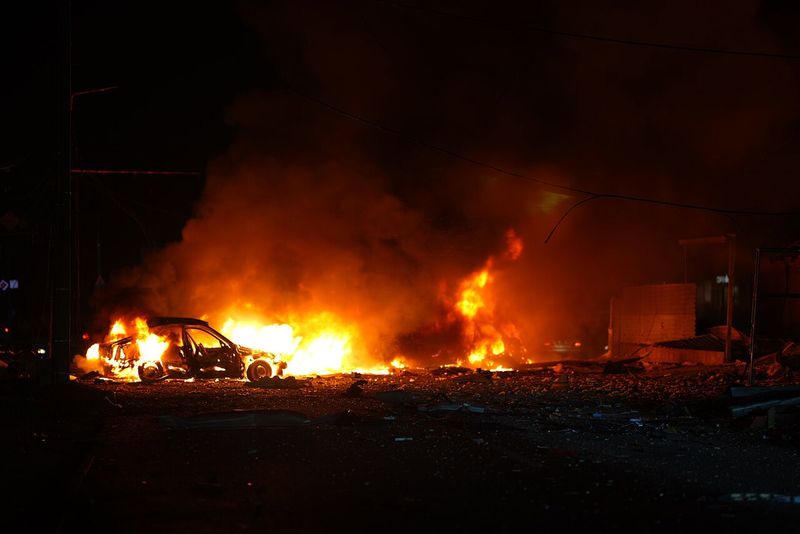
Three children among the city’s 22
The ages in the city count are worth pausing on, because they describe who lives in the districts being struck. The three injured children were a six-month-old, a two-year-old and a 12-year-old, per the SES update — a baby, a toddler and a school-age child, injured on a Saturday in their own city, in strikes that damaged, among other things, a school. Officials did not, in the reporting available, give the children’s conditions, and this article does not guess at them. What the ages establish on their own is the ordinary demography of a residential city on a weekend: families at home, infants in flats, children in the buildings and streets of three districts that are, in the geography of this war, close enough to the front to be reached by the weapons Russia is using against the region every day.
That ordinariness is also why the school matters in the damage list. A damaged school on a Saturday is an empty building; the same strike on a weekday morning is a different event, and officials reported no casualties there in the available reporting. Taken together — homes, a school, three districts, a baby among the injured — Saturday’s city strikes landed in the civilian fabric of Zaporizhzhia, and the officials reporting them described them in exactly those terms.
The oblast toll is a different number: 3 killed, 62 injured, 884 strikes
Alongside the city figure, Governor Ivan Fedorov reported the 24-hour toll for Zaporizhzhia Oblast as a whole: 3 people killed and 62 injured, including 8 children, across the region. That is a wider scope and a longer window than the city’s daytime count — the whole oblast, frontline towns and villages included, over a full day — and the two numbers must not be merged, averaged or substituted for one another. The city’s 22 injured are not a rival count to the oblast’s 62; they are a count of a smaller place over part of the same period, and a reader who adds them, or who reports the oblast’s 3 dead as deaths in the city, would be manufacturing facts neither Semikin, the SES nor Fedorov stated.
Fedorov’s strike tally explains how a region accumulates such a toll. Over the same 24 hours, he reported 884 strikes on 48 settlements in the oblast: 40 airstrikes, 661 drone attacks — most of them first-person-view drones of the kind used against frontline villages street by street — 163 artillery strikes and 20 multiple-launch rocket system strikes. Officials logged 554 reports of damage. Read as a distribution rather than a headline, the tally describes two wars running at once inside one region: the war of missiles and guided bombs against the regional capital, which produces the city count, and the war of drones and artillery against the 48 settlements along and behind the front, which produces most of the oblast count. Both are Zaporizhzhia Oblast. Only one of them is the city of Zaporizhzhia, and conflating them misleads in both directions — it inflates the city’s toll with deaths that happened elsewhere, and it erases the villages whose dead disappear into a headline about the capital.
The national frame was heavier still. The Kyiv Independent, reporting regional authorities across Ukraine, put the countrywide toll for the past day at at least 7 civilians killed and 80 injured, with Zaporizhzhia Oblast among the worst-hit regions. Elsewhere in that same 24 hours, officials reported 2 people killed and 5 injured in Kherson Oblast, 1 killed in Donetsk Oblast, and 1 killed and 3 injured in Kharkiv Oblast, with 7 injured in Sumy Oblast across more than 40 attacks. Every one of those figures is a Ukrainian official or regional-authority figure, attributed here as it was reported; Russia had not commented on the specific Saturday strikes on Zaporizhzhia in the sources checked, and no Russian account of the city attacks is presented in this article because none was available to present.
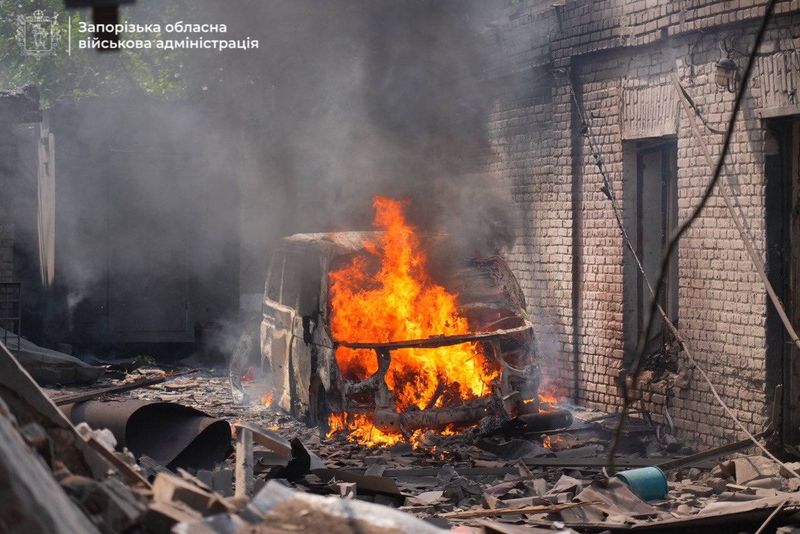
Pavlohrad: one killed, and two injured figures that must both be carried
Saturday’s strikes were not confined to Zaporizhzhia. In Pavlohrad, in Dnipropetrovsk Oblast to the north-east, a Russian missile strike on Saturday killed one person, according to Ukrainian regional authorities. Nine residential buildings were damaged, the regional reporting said, and a drone was also reported to have hit near a residential area of the city. The injured figure for Pavlohrad is reported two ways, and both are carried here with their sources rather than resolved into a single number neither source gave: regional authorities reported 10 people injured, including a seven-year-old boy who was hospitalised; the World Today Journal reported 13 people hospitalised. “At least 10 injured” is the conservative summary the two accounts jointly support. The gap between an injured count and a hospitalised count is a familiar one in strike reporting — the numbers are compiled at different hours, by different desks, against slightly different definitions — and the honest treatment is the one that keeps both figures attached to the officials and the outlet that published them.
Two smaller reports from the same day belong in the record at exactly the strength of their sourcing, no more. In Kushuhum, just outside Zaporizhzhia city, a drone killed a 45-year-old man, according to a single local report summarised in a roundup by Lev Parnas; that account is single-track and uncorroborated by a second official source in the reporting available, and it is presented here as an attributed local report, not as a confirmed toll. In Hlukhiv, in Sumy Oblast near the Russian border, a drone hit a family home early on Saturday morning, hurting a grandmother and her nine-year-old grandson, with the boy in intensive care, according to local reports carried in roundups. Neither report changes the official city or oblast counts above, and neither is folded into them; they are part of the day as reported, at the weight their sourcing can bear.
The dam crossing closed — and what was not claimed about the dam
One consequence of Saturday’s strikes reached beyond the impact sites. Road traffic across the Dnipro hydroelectric dam — the DniproHES crossing that carries one of the city’s principal road links over the river — was closed in both directions, according to the regional roundup of the day’s attacks. Precision matters here in the opposite direction from the casualty counts: no source in the reporting available claimed that the dam itself was damaged, and this article does not claim it either. What was reported is a closure — a traffic decision taken on a day of strikes against the city the dam stands in — and a closure is not a breach, a crack or a hit. Analysts cited in the roundups consider the destruction of a dam of this scale by conventional missiles highly unlikely, and that assessment, attributed as it is, is the correct frame: the dam is a massive Soviet-era concrete structure, and Saturday’s documented effect on it was to the road over it, not, on any available evidence, to the structure itself.
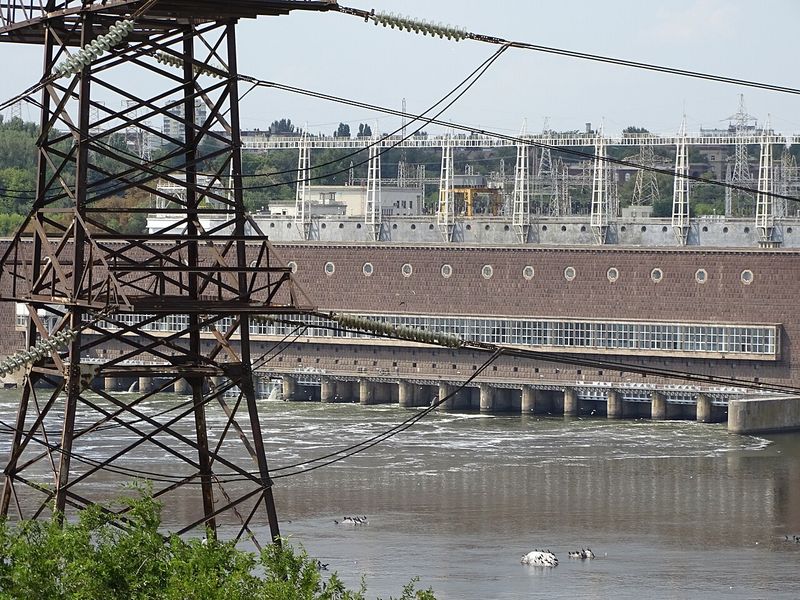
Even as a traffic measure, the closure is not a footnote. A river city organises itself around a small number of crossings, and the dam road is one of them: it links districts on opposite banks and, on a strike day, carries ambulances, repair crews and the displaced. Closing it in both directions pushes all of that onto the remaining bridges at exactly the moment the city’s hospitals are receiving the day’s injured — damage measured not in buildings hit, but in connections suspended while the city absorbs the hit.
Second day running: the pattern behind the weekend
Saturday cannot be understood without Friday, and the two days should be read as a sequence even though their tolls must not be merged. On Friday, November 13, a strike on apartment buildings in the Kosmichnyi district injured 50 people, including children, and killed a Cobra rescue worker when a concrete slab fell as he cleared debris — the attack reported in Friday’s Kosmichnyi apartment strike coverage. On Saturday, the city was hit again, across three different districts, and one of those districts was hit twice. Between the two days ran the overnight exchange in which Russia sent 96 drones against Ukraine on the night of November 13–14, by Ukraine’s Air Force account, while Ukraine’s long-range campaign struck deep inside Russia — the same cycle of action and answer that Signal Post News documented in Ukraine’s strikes on the Samara oil hub at Prosvet and the Lipetsk-2 airbase. The layers are distinct events, separately reported; the tempo they form together is the context in which Zaporizhzhia’s residents have now spent a weekend.
Why Zaporizhzhia, and why repeatedly? The city is the largest Ukrainian centre close to the southern front — a regional capital within range of the glide bombs, missiles, rockets and drones Russia fires from and over the occupied south, and the administrative heart of an oblast whose southern districts are occupied and whose frontline settlements absorb, on Fedorov’s Saturday tally, hundreds of strikes a day. A city in that position is not struck occasionally; it is struck as a condition of its geography. Consecutive-day strikes add a specific cruelty to that condition, and a specific operational logic. Striking again the next day catches a city mid-recovery: buildings unboarded, utilities half-repaired, residents returned to flats they had fled, rescuers and medics already spent from the day before. Whether Saturday’s timing was chosen for that effect is not something the available reporting establishes, and this article does not claim it; what can be said is that the effect exists regardless of the intent, and that two-day sequences against the same city have become a recurring feature of the campaign against Ukraine’s frontline capitals.
Why this matters
Analysis, labelled as such. The first reason this weekend matters is what it shows about where the air war’s weight now falls. The numbers that define Saturday are not the numbers of a single spectacular attack; they are the numbers of accumulation — 884 strikes in one oblast in one day, 48 settlements hit, a capital injured in three districts, a neighbouring region’s city burying one dead and counting its injured two different ways. Wars of attrition are usually described in terms of soldiers and shells. Saturday in Zaporizhzhia Oblast describes the civilian version of the same arithmetic: no single blow decisive, every blow absorbed by the same hospitals, the same emergency service, the same school districts and the same river crossings, day after day, with the counts kept by officials who have become, by necessity, meticulous bookkeepers of their own region’s injuries.
Second, the day is a case study in why casualty literacy matters, and this article has been built around it deliberately. Three numbers circulated for Zaporizhzhia on Saturday — 22, 62, and Friday’s 50 still echoing from the day before — and every careless use of them produces a different false story: the city’s dead invented by borrowing the oblast’s, the villages erased by reporting only the capital, Friday’s rescuer silently re-killed on Saturday by merging the days. None of those errors requires bad faith; all of them require only haste. The discipline that prevents them is unglamorous — attach every figure to its scope, its window and its source, and refuse to blend — but on days when the same city name carries three different tolls, that discipline is the difference between reporting the war and merely repeating its noise.
Third, the civilian-infrastructure picture deserves to be read whole. An apartment building, a school, nine residential buildings in Pavlohrad, a family home in Hlukhiv, and a dam road closed in both directions: the list describes a weekend in which the objects struck or shut were the objects of ordinary life. Both sides in this war state, as a standing position, that they do not target civilians; the physical record of Saturday, as reported by Ukrainian officials and the emergency services, is a list of civilian addresses. Readers are entitled to hold those two facts side by side and to weigh them for themselves. What the record does not contain, at publication, is a Russian comment on these specific strikes — an absence that is itself part of the record, and one this article notes rather than fills.
What happens next
The first thing to watch is the city count itself. Saturday’s figure of 22 injured was the SES position at its 4:30 p.m. update, and Voznesenivskyi district was struck again late in the evening with a preliminary five injured; reconciled totals published on Sunday may move the city’s number, and if they do, the scope discipline of this article should be applied to the new figure too — city or oblast, daytime or 24 hours, and according to whom. The condition of the three injured children, and of the seven-year-old hospitalised in Pavlohrad, had not been detailed in the reporting available at publication; updates from the regional administrations and the emergency service are the sources that will carry them.
Second, watch the dam crossing. Whether the closure of the DniproHES road is lifted on Sunday, extended, or repeated on future strike days will say something concrete about how the city’s authorities now rate the risk to its river links — and any claim about the dam itself should be held to the standard this article has used: at publication, the reported effect is a traffic closure, and nothing in the available sourcing describes damage to the structure. Third, watch the tempo. A third consecutive day of strikes on the city would confirm the weekend as a sequence rather than a pair of incidents; a pause would return Zaporizhzhia to its baseline, which, on Fedorov’s tally of 884 strikes across the oblast in a single day, is not peace but a lower setting of the same campaign. The diplomacy that runs in parallel with this war will be judged, in Zaporizhzhia at least, by whether it ever reaches the city’s weekends. What do you think — should consecutive-day strikes on the same city change how negotiators sequence a ceasefire? Follow Signal Post News and the Ukraine war map tracker for Sunday’s reconciled tolls, and share your thoughts in the comments below.
Sources
- State Emergency Service of Ukraine (SES) updates and Mykhailo Semikin, acting head of the Zaporizhzhia Regional Military Administration, as reported November 14, 2026 (English-language reporting via Antikor) — the city of Zaporizhzhia’s Saturday total of 22 injured, including three children (a six-month-old, a two-year-old and a 12-year-old), as of the SES 4:30 p.m. update; the Zavodskyi, Khortytskyi and Voznesenivskyi districts hit; the earlier Voznesenivskyi strike injuring two women and a boy under one year old; the late-evening second strike on Voznesenivskyi with a preliminary five injured; the damaged apartment building and school.
- Governor Ivan Fedorov’s 24-hour oblast tally, November 14, 2026, as reported via Antikor and roundups — Zaporizhzhia Oblast: 3 killed and 62 injured, including 8 children; 884 strikes on 48 settlements (40 airstrikes, 661 drone attacks, 163 artillery strikes, 20 MLRS strikes); 554 damage reports.
- Kyiv Independent, November 14, 2026 daily roundup, reporting regional authorities — at least 7 civilians killed and 80 injured across Ukraine over the past day; Zaporizhzhia Oblast among the worst hit (3 killed, 62 injured); Kherson Oblast 2 killed and 5 injured; Donetsk Oblast 1 killed; Kharkiv Oblast 1 killed and 3 injured; Sumy Oblast 7 injured in more than 40 attacks.
- World Today Journal, November 15, 2026 — Saturday framing of the Zaporizhzhia city toll (22 wounded, including 3 children) and of Pavlohrad (1 killed; 13 hospitalised), carried in this article alongside the regional authorities’ Pavlohrad figure of 10 injured, including a hospitalised seven-year-old boy, and the reported damage to nine residential buildings.
- Regional roundups, November 14, 2026 — road traffic across the Dnipro hydroelectric dam closed in both directions (no source claimed damage to the dam itself); the Kushuhum drone death of a 45-year-old man rests on a single local report summarised in a roundup by Lev Parnas and is attributed as such in this article; the Hlukhiv family-home strike (grandmother and nine-year-old grandson hurt, the boy in intensive care) is attributed to local reports carried in roundups. Russia had not commented on these specific Saturday strikes in the sources checked.
- Photos: file photos from October 2024, December 2024 and July 2025, State Emergency Service of Ukraine, Zaporizhzhia Regional State Administration and Adam Jones via Wikimedia Commons, as credited in the captions. No photographs of the November 14, 2026 strikes were available on Wikimedia Commons at publication, and every image is captioned as a file photo.