War · Ukraine · Russia
The Russia drone strike Dnipro headline is the human edge of a much larger night: 158 drones launched at Ukraine between Sunday and Monday, 77 of them jet-powered, with impacts recorded at 19 locations. One person was killed and 10 injured in Dnipro. It was the same night Ukraine sent the largest drone barrage of the war in the other direction — two air forces, one sky, and a winter campaign against each other’s infrastructure now running at full tempo.
Track it live: Ukraine war map tracker
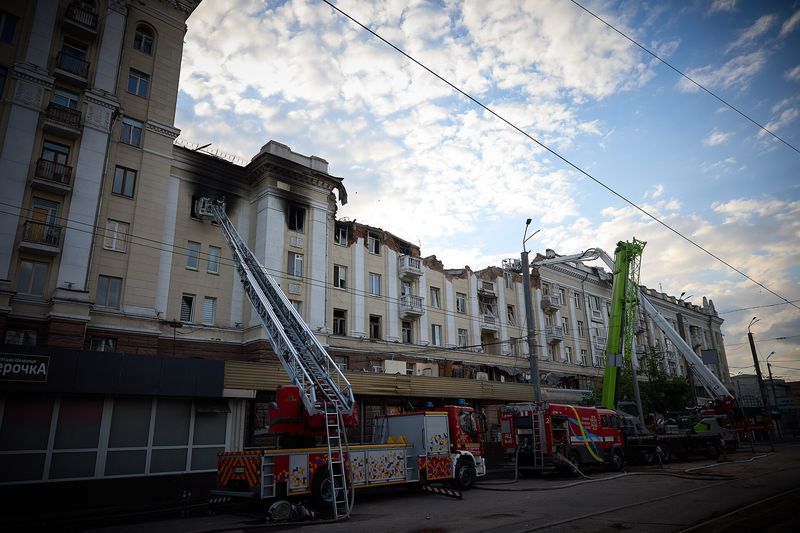
DNIPRO, November 16, 2026 — The numbers arrived, as they now do most mornings, from the Ukrainian Air Force: Russia launched 158 drones at Ukraine overnight, from Sunday into Monday, and 77 of them — just under half the wave — were jet-powered, according to the air force’s account carried by ABC News. Ukrainian defenders downed or suppressed 131 of the 158, including 55 of the jet-powered aircraft. The remainder, and the debris of the intercepted, produced impacts at 19 locations. In Dnipro, Ukraine’s great industrial city on the river of the same name, the State Emergency Service reported one person killed and 10 injured, in its update via ABC News and its own Telegram channel. Those are the verified bones of the night, each figure attributed to the institution that published it, and the rest of this article will be careful to keep them in those clothes — because on a night when both capitals were launching record-scale drone operations at each other, the claims are the story as much as the wreckage.
One discrepancy in the record deserves to be shown rather than smoothed over, because how it is handled is a small test of honest war reporting. RFE/RL’s earlier account on Monday put the Dnipro toll at one killed and three injured. The State Emergency Service’s later figure — one killed, 10 injured — superseded it, as casualty counts from a night attack routinely do while hospitals report and rubble is cleared. This article uses the later SES figure as the current toll and notes the earlier one as what it was: an earlier count, not an error and not a contradiction. Readers who follow this war daily will see the same pattern in almost every major strike; the first number is a floor, not a lie, and the discipline is in saying which number you are using and when it was true.
The targets: a city, a factory, a grid
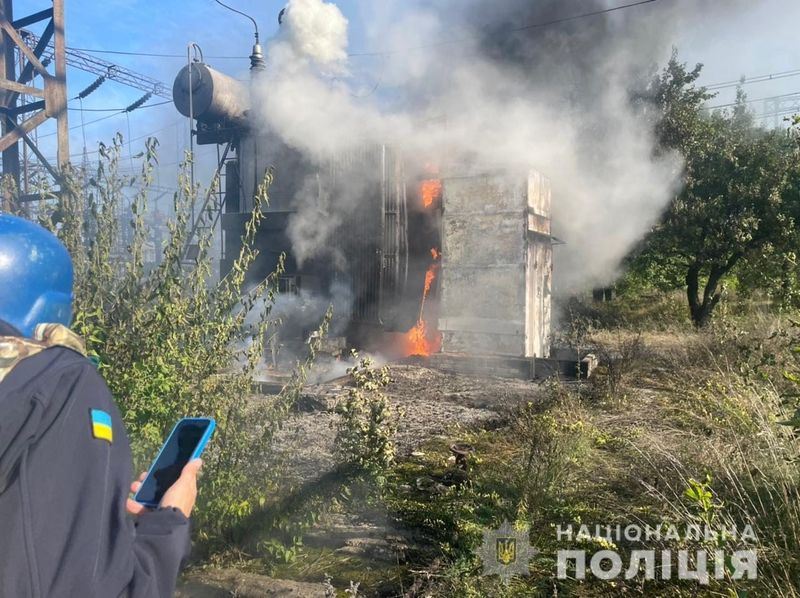
Beyond Dnipro, the night’s geography followed the pattern of Russia’s autumn campaign. In Vinnytsia region, in west-central Ukraine, a critical industrial facility was hit, RFE/RL reported. In Cherkasy region, south-east of Kyiv, energy facilities were targeted and some consumers were left without power. And in the wider reporting carried by the Associated Press on Monday, Russian strikes on power lines and substations in Zaporizhzhia and Dnipropetrovsk regions cut electricity to hundreds of thousands of people. First Deputy Energy Minister Artem Nekrasov supplied the context that turns a night’s incidents into a campaign statistic: in the preceding week alone, he said, there had been 116 deliberate Russian attacks on Ukraine’s energy and oil-and-gas sector, and 161 damaging incidents. Those are Ukrainian government figures, attributed as such; but their direction is consistent with everything observable about this autumn — a systematic, repeated effort against generation, transmission and distribution, timed for the cold.
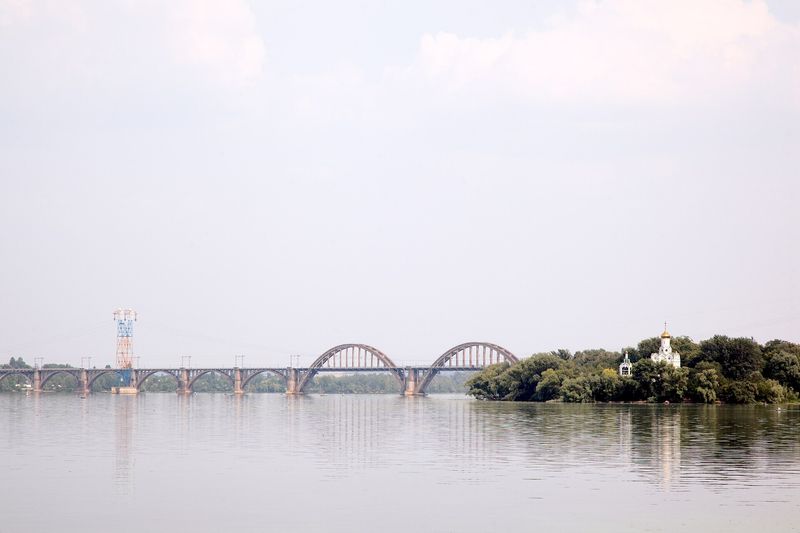
Dnipro’s place in that pattern is not accidental. The city is one of Ukraine’s principal industrial centres, a hub of metallurgy, machinery and the defence-adjacent manufacturing that a long war pulls into its orbit, sitting on the main east-west arteries of the country’s centre. It has been struck repeatedly across the war, and its region — Dnipropetrovsk — appears in the power-outage reporting as often as in the casualty reporting, because the two are the same target set viewed from different ends: the substation and the city it feeds. Sunday night’s single death and ten injuries, set against 158 incoming drones, will be read in Kyiv as a night the defences largely worked. It should also be read as what it is for the family of the one person killed: the statistic’s irreducible remainder, the part of the arithmetic that no interception percentage refunds.
The jet-powered shift
The most technically significant figure in the air force’s account is not 158. It is 77. Nearly half the wave was jet-powered — drones of the class derived from the Shahed design but driven by small jet engines rather than propellers, flying substantially faster than the propeller-driven aircraft that defined the first years of this campaign. Speed is not a detail. A propeller-driven drone crossing Ukraine at under 200 kilometres an hour gives defenders time: time to track, to cue mobile fire groups, to engage with guns and cheap interceptors in sequence. A jet-powered aircraft compresses every one of those timelines, demands faster sensors and faster effectors, and raises the cost of each interception toward the missile end of the inventory. Ukraine’s claimed figures contain the shift’s signature: of 77 jet-powered drones, 55 were downed or suppressed — an interception rate of about 71 per cent, against about 94 per cent for the propeller-driven remainder implied by the totals. The jets are getting through more often. That gap, more than any single night’s total, is the trend line Ukrainian air-defence planners will be staring at this winter.
It should be said, in the same breath, what these numbers are. They are the Ukrainian Air Force’s claims, carried by ABC News, and they have not been independently verified — as, on the same night, Russia’s claim to have downed 1,336 Ukrainian drones has not been independently verified either. Wartime air forces count generously, count debris and electronic suppression alongside kills, and count in the fog of a night their own sensors only partly saw. The honest reader holds the figures as the best available official account, directionally informative and individually unprovable — which is precisely how this site reported the mirror-image claims from Moscow in Ukraine’s record 1,336-drone barrage and the Crimea bridge strike. One standard, both directions.
A mirrored night
For that is the night’s defining structure: it was mirrored. While Russia’s 158 drones were crossing Ukraine, Ukraine was conducting the largest drone operation of the war against Russia — 1,336 drones by Moscow’s own count, across 16 regions, with the Kerch Strait bridge struck for a fourth time. The temptation to connect the two operations as action and retaliation should be resisted, and this article resists it explicitly: nothing in the verified reporting establishes that either wave was launched in response to the other, and operations of this scale are planned days to weeks ahead, not improvised overnight in answer to an enemy’s move. What the simultaneity does establish is something colder and more structural. Both states now possess the industrial capacity to generate mass drone operations as routine, repeatable instruments — Russia in the hundreds nightly against Ukraine’s grid and cities, Ukraine in the thousands on its record nights against Russia’s refineries, airfields and symbols. The drone war has ceased to be a series of raids. It is a standing exchange, a second front made of factories, and Sunday night was simply the first night both sides fired their largest guns in the dark at the same time.
Why this matters
The arithmetic of 131 out of 158
Do the arithmetic the air force’s figures invite, and then do the second arithmetic they conceal. Claimed interception: 131 of 158, about 83 per cent. Impact locations: 19. The two numbers together describe the modern geometry of this war better than either alone. An 83 per cent interception rate is, by historical air-defence standards, excellent — and it still produced impacts at nineteen places, a dead civilian in Dnipro, a burning industrial facility in Vinnytsia and dark districts in Cherkasy. Mass is the strategy precisely because percentages fail gracefully for the attacker: at 158 drones a night, the defender’s excellence still leaks a city’s worth of consequences. Scale that to Nekrasov’s weekly figures — 116 deliberate energy attacks in seven days — and the campaign’s logic stands bare: not to win any single night, but to make every night cost repairs, reserves and sleep that Ukraine cannot replace as fast as Russia can replace drones.
The energy campaign meets winter
The strikes on power lines and substations in Zaporizhzhia and Dnipropetrovsk that cut power to hundreds of thousands on Monday are the campaign’s real centre of gravity, and Dnipro’s region sits inside it. This site’s recent reporting on Russia’s strikes on Zaporizhzhia and Pavlohrad traced the same geography. November is when the grid war stops being an inconvenience and becomes a humanitarian instrument: every substation destroyed now is heat, water pressure, hospital load and railway capacity subtracted from the coldest months, and every repair crew is working against the next night’s wave. President Volodymyr Zelenskyy, in his nightly address on November 15 — hours before this wave arrived — had warned, via RFE/RL’s reporting, that the ballistic threat was very serious and that Ukrainian intelligence saw new Russian strikes being prepared. The warning and the wave belong in the same paragraph: Kyiv knew the night was coming, said so publicly, and still buried a civilian in Dnipro by morning. Foreknowledge is not defence. It is only the removal of surprise from the list of things that failed.
What the claims can and cannot carry
A balanced account has to end its analysis where the evidence ends. Russia had not commented on this specific wave in the reporting available on Monday, and this article will not invent a Kremlin position to balance the page; Moscow’s silence about a routine night of its own offensive operations is itself unremarkable. Ukraine’s figures are official claims, unverified independently. The casualty toll is the emergency service’s, updated once already and liable to update again. What is solid is the pattern all three sources — ABC News carrying the air force, RFE/RL on the ground, and AP on the power cuts — describe from different angles and without coordination: a mass drone night, a jet-powered share approaching half, a dead civilian in Dnipro, an industrial facility hit in Vinnytsia, energy targets in Cherkasy, and hundreds of thousands without power further south and east. On the facts that matter most, the independent accounts converge. On the numbers that matter least — the exact interception count — they rest on one air force’s word, and are labelled accordingly.
What happens next
The diplomatic calendar now runs directly into the military one. The Ramstein-format Ukraine Defense Contact Group meets in Brussels on Tuesday, November 17, and the Coalition of the Willing convenes this week as well — two rooms in which Sunday night’s arithmetic will be the unspoken agenda. Ukraine’s asks write themselves from the air force’s own figures: more interceptors suited to jet-powered targets, more of the cheap effectors that keep the propeller-driven rate near 94 per cent, and above all protection for the substations whose loss AP documented on Monday. Zelenskyy’s November 15 warning of further prepared strikes sets the expectation for the nights ahead: this was presented by Kyiv not as a culmination but as a tempo. Winter is six weeks from its coldest point. The factories on both sides are running. And in Dnipro, where the river bends past the city’s long embankment, one family is arranging a funeral that began, as so many now do, with a number in an air force statement — one of 158, the one that was not among the 131.
Sources
ABC News, November 16, 2026, reporting the Ukrainian Air Force: Russia launched 158 drones overnight, 77 of them jet-powered; defenders downed or suppressed 131, including 55 jet-powered; impacts at 19 locations; and the State Emergency Service of Ukraine (via ABC News and its Telegram channel): Dnipro hit, one killed and 10 injured. RFE/RL, November 16, 2026: the earlier Dnipro count of one killed and three injured (later updated by the State Emergency Service to 10 injured, as noted in the text); a critical industrial facility hit in Vinnytsia region; energy facilities targeted in Cherkasy region with some consumers without power; and President Zelenskyy’s November 15 nightly address warning of a very serious ballistic threat and newly prepared Russian strikes, ahead of the November 17 Ramstein-format meeting in Brussels and the Coalition of the Willing. Associated Press, November 16, 2026: strikes on power lines and substations in Zaporizhzhia and Dnipropetrovsk regions cut power to hundreds of thousands; First Deputy Energy Minister Artem Nekrasov’s figures of 116 deliberate attacks on the energy and oil-and-gas sector and 161 damaging incidents in the preceding week. All interception and launch figures are Ukrainian official claims and are not independently verified; Moscow had not commented on this specific wave in the reporting available on Monday. Photographs are file photos via Wikimedia Commons and do not depict Sunday night’s strikes.