War · Ukraine · Kyiv
Russia strikes Kyiv hospital wards in the small hours: at about 3 a.m. on November 13, a drone incident tore into the second floor of the National Institute of Traumatology and Orthopedics, injuring three patients, driving an evacuation through smoke and broken glass, and shutting one of Ukraine’s best-known surgical hospitals — while two official accounts of how it happened pointed in different directions.
Track it live: Ukraine war map
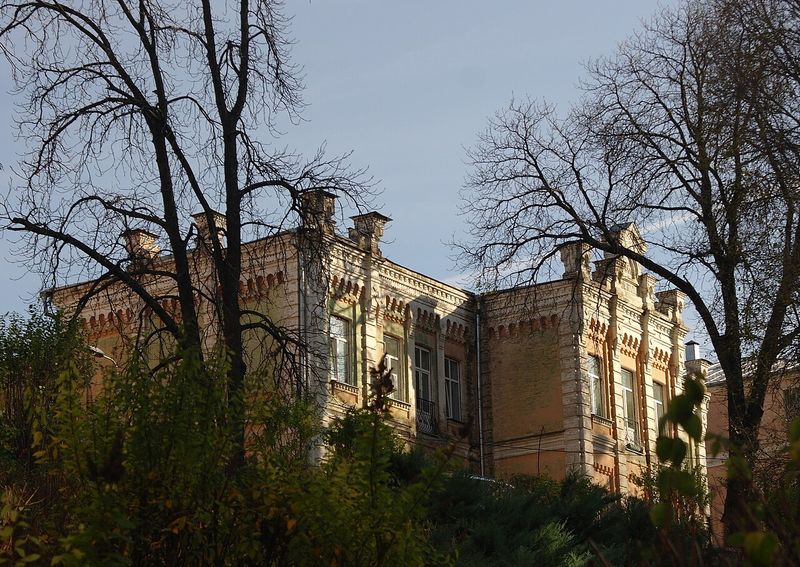
KYIV, Ukraine, November 13, 2026 — Russia strikes Kyiv hospital patients in their beds became, in the early hours of Friday, the defining fact of another night of war over the Ukrainian capital. At about 3 a.m. on November 13, a Russian drone incident hit the National Institute of Traumatology and Orthopedics in Kyiv’s Shevchenkivskyi district, damaging the second floor of the six-storey hospital, starting a fire and injuring three patients, according to Ukrainian officials and on-the-scene reporting. Hospital staff evacuated 30 patients, and emergency services rescued seven more people, the State Emergency Service of Ukraine said. No medical staff were injured. Medical services at the institute were temporarily suspended, patients were moved to undamaged wards or discharged, and the hospital’s director, Roman Derkach, confirmed that care had been halted while the damage was assessed and cleared. What exactly struck the building — a drone itself, or the debris of one brought down by air defences — is disputed between two accounts carried in this article in full, because that distinction, and the evidence for it, matter.
Direct hit or debris? Two accounts, both carried
The Guardian, reporting from the scene on November 13, described a direct impact: a drone smashed into the second floor of the hospital at about 3 a.m., its reporter wrote, in an account that included a witness named Oleksandr and comments from Director Roman Derkach. On that telling, the aircraft itself reached the building — a strike on the hospital in the plain sense of the words.
Ukraine’s State Emergency Service, in its account carried by the Kyiv Independent, described a different mechanism: debris from a downed drone caused a fire that partially destroyed the second floor. On that telling, Ukrainian air defences intercepted the drone, and it was the falling wreckage — travelling at speed, still capable of fire and destruction — that did the damage.
This article does not settle the difference, because the reporting available on November 13 does not settle it. The two accounts agree on the outcome — a damaged second floor, a fire, three injured patients, an evacuation — and disagree on the mechanism. Both mechanisms are familiar features of this war: drones do reach buildings in Kyiv, and intercepted drones and missiles do rain debris onto the city beneath them, which is one reason falling wreckage has become one of the leading causes of damage in the capital even on nights when air defences claim high interception rates. Which of the two happened at the traumatology institute is a question investigators with access to the wreckage can answer; journalists working from published accounts cannot, and any report that collapses the two versions into one unqualified claim is saying more than the sources support.
What is not in dispute
Strip away the mechanism and the agreed record is substantial. The hospital was hit at about 3 a.m. Three patients were injured — with minor injuries from glass and fragments, per the emergency service’s reporting. Thirty patients were evacuated by hospital staff and seven more people were rescued by emergency services. The second floor was damaged, in the emergency service’s words partially destroyed, and a fire burned on site. No member of the medical staff was injured. And the institute — a national referral centre for bone, joint and trauma surgery, the kind of hospital other hospitals send their hardest cases to — stopped providing medical services while the building was made safe.
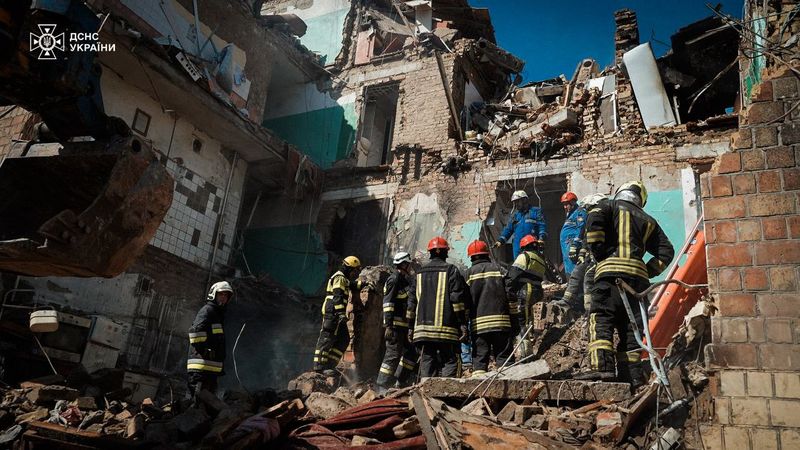
Inside the evacuation: a trauma hospital empties at 3 a.m.
Consider what an evacuation means in this particular building. A traumatology and orthopedics institute is not a general ward block: its patients are, by definition, people whose bones and joints are broken, pinned, plated or freshly operated on. Many cannot walk. Moving 30 of them in the middle of the night — down from damaged floors, away from fire and broken glass, in the middle of an air attack — is a clinical operation as much as a rescue one, and it was done, on the official account, by the hospital’s own staff before and alongside the emergency services who rescued seven more people from the building.
Director Roman Derkach confirmed the suspension of medical services and the cleanup that followed. Patients who could be moved within the building were transferred to undamaged wards; others were discharged. For a national institute, a suspension is not a pause in a diary — it is operations cancelled, waiting lists lengthened, and patients from across Ukraine, including wounded soldiers and civilians injured in earlier attacks, told that the specialist care they were scheduled for is not happening until the building is repaired and certified safe. Ukraine’s Ministry of Health, in its account of the strike, likewise reported the fire, the partial destruction of the second floor and the suspension of services.
The blast did not respect the hospital’s boundary fence. The institute stands close to the Danish and Romanian embassies, and across the road from the National Academy of Arts, where windows were blown out, the Guardian reported. An adjoining 19th-century building was also hit and damaged. Shevchenkivskyi is central Kyiv — government quarter, university, embassies, theatres — and a 3 a.m. explosion there is a reminder that the capital’s most protected district is protected only in relative terms.
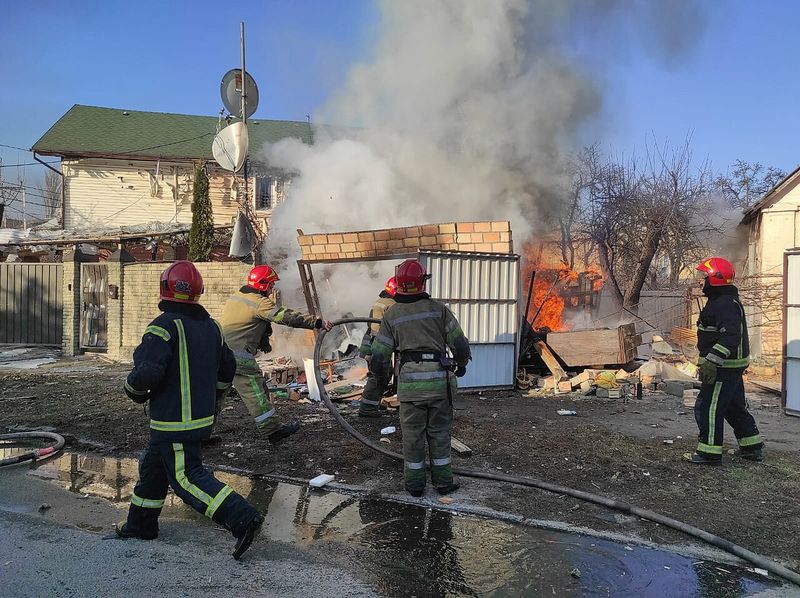
The night in numbers: 117 drones, and a countrywide toll
The hospital was one incident in a countrywide night. Ukraine’s Air Force said Russia launched 117 long-range attack drones overnight on November 12–13, including 63 jet-powered drones, alongside Gerbera and other simulator drones designed to soak up air-defence attention. By 7:30 a.m. on November 13, the Air Force said, air defences had intercepted or suppressed 80 of them, including 39 of the jet-powered drones. Those figures are the Air Force’s, stated as it gave them: they are the standard morning accounting of a nightly exchange in which the attacker’s launch count and the defender’s interception count are both, inevitably, claims by a belligerent — broadly consistent with the physical evidence of strikes and debris across the country, and not independently audited drone by drone.
The human accounting for the day was grimmer than the hospital’s three injured. In its tally of the past day’s attacks for November 13, the Kyiv Independent reported that Russian attacks across Ukraine killed nine people and injured 61, including the hospital casualties in Kyiv. The tally is a compilation from regional authorities and officials, attributed here as the Kyiv Independent presented it. Nine dead and 61 injured is, by the standards of this autumn, an unexceptional day — which is itself the point worth sitting with: a strike on a national hospital, three injured patients and a suspended surgical institute were components of a daily total that no longer leads news bulletins outside Ukraine.
The same week had already shown what these nights do to civilian buildings. On November 13, Signal Post News reported, a Russian strike on apartment buildings in Zaporizhzhia injured 50 people and killed a rescue worker clearing the rubble — the other face of the drone-and-missile campaign, in which the buildings underneath the flight paths are homes and hospitals rather than the military targets both sides describe.
The Starshield claim: Zelenskyy, SpaceX and the speed of drones
One day before the hospital strike, President Volodymyr Zelenskyy offered an explanation for why shooting down Russia’s drones has become harder — and it reached, unusually, for a satellite system. Zelenskyy said on November 12 that speed restrictions placed on SpaceX’s Starshield system — the military counterpart of Starlink, reported at a limit of about 161 kilometres per hour — had made it more difficult to shoot down enemy drones. The claim is reported here as Zelenskyy’s claim, attributed to him: the restriction, its exact parameters and its operational effect are matters asserted by the Ukrainian president in a public argument about air defence, not facts independently established by this newsroom.
The context, stated carefully, is this. Ukraine’s drone-on-drone defence — interceptor drones guided and coordinated with satellite communications — depends on links and positioning services of exactly the kind Starshield provides to governments. If terminal-velocity or user-speed restrictions limit how fast a connected platform can move while keeping its link, fast jet-powered drones of the kind the Air Force counted 63 of on November 12–13 are precisely the targets that strain the system. Whether the restriction Zelenskyy described is the binding constraint, one constraint among many, or a lever in a negotiation with an American supplier is not something the November 12 statement itself establishes. What it establishes is that Kyiv is now arguing publicly, at presidential level, about the terms on which a private American company’s military network operates over Ukrainian battlefields — and that it chose to do so the day before a hospital in the capital was hit in a drone attack its defences did not fully stop.
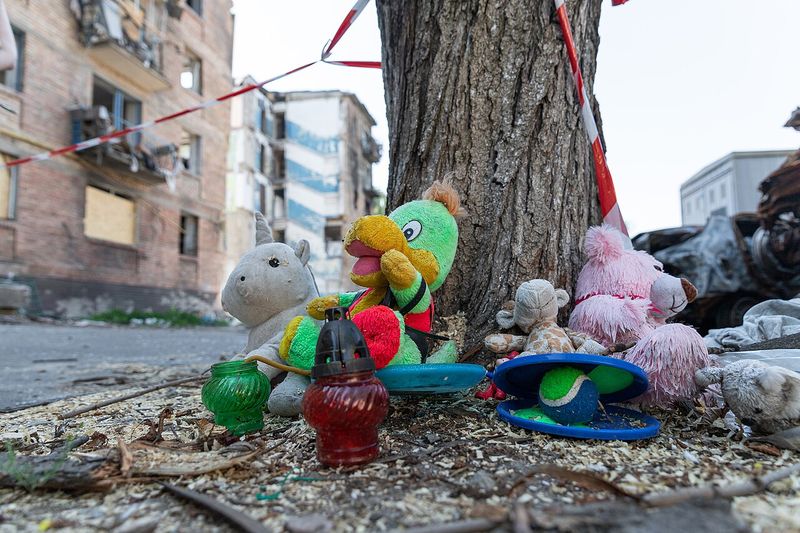
Why this matters
Analysis, labelled as such. Hospitals occupy a specific place in the law of war, and it is worth stating plainly rather than assuming. Medical facilities are specially protected under the Geneva Conventions and their Additional Protocols: they must not be attacked, and they lose that protection only in narrow circumstances — if they are used, outside their humanitarian function, to commit acts harmful to the enemy, and then only after a warning that goes unheeded. Nothing in any account of November 13 suggests the traumatology institute was anything other than a working hospital full of orthopedic patients. On the facts as reported by every source in this article, a protected medical facility was damaged, its patients injured and its work stopped.
The direct-hit-versus-debris question matters — but it does not matter in the simple way either side’s partisans assume. If a drone was aimed at or struck the hospital directly, that is one kind of legal and moral fact. If the damage was done by the debris of an intercepted drone, the hospital was still hit by the foreseeable consequence of flying explosive aircraft over a dense capital city at night: interception does not make a drone vanish, it makes it fall, and everyone who plans and orders such attacks knows the arithmetic of where the wreckage lands. The distinction bears on intent and on the allocation of responsibility, and investigators and lawyers will treat it as significant. It does not change the protected status of the building, the injuries of the three patients, or the fact that the attack wave of November 12–13 — whoever’s fragment did the damage — put a national surgical institute out of action.
Nor is November 13 an isolated entry. The World Health Organization’s surveillance of attacks on health care has documented a sustained pattern of strikes on Ukrainian medical facilities, ambulances, health workers and patients throughout the full-scale war — a pattern in which hospitals have been hit in Kyiv before, most notoriously the Okhmatdyt children’s hospital in July 2024, and in which the cumulative effect is measured not only in casualties but in capacity: wards closed, specialists displaced, and a health system entering another winter of mass drone attacks with less slack than it had the winter before. Ukraine’s health and energy systems now absorb the same nightly waves, and damage to either compounds the other: a hospital without power is a building with patients in it, and a hospital with a destroyed second floor is a queue of the injured that must be absorbed by facilities already running their own air-raid routines. That is the strategic weight of a single night’s incident at a single institute, and it is why the mechanism dispute, however it is resolved, should not be allowed to shrink the story to a quarrel about a fragment.
The wider campaign, in both directions
The night of November 12–13 sat inside an exchange that runs both ways across the front. Ukraine’s own long-range drone campaign against Russian depth targets — the campaign Signal Post News traced in its report on Ukraine’s 1,198-drone wave and the strike on Volgograd — is Kyiv’s answer in kind: mass, cheap, long-range aircraft flown at the other side’s infrastructure. Neither campaign excuses the other, and the legal questions each raises are distinct; but a reader trying to understand why 117 drones were over Ukraine on a single November night, and why a hospital’s second floor burned, should hold both halves of the picture at once. This is what the war’s air dimension has become: nightly mass drone operations by both armies, air defences that intercept most and cannot intercept all, and cities — homes, power stations, and on November 13 a trauma hospital — underneath.
What Russia said
Plainly: nothing specific. In the sources reporting this strike that were checked for this article — the Guardian’s on-the-scene report, the Kyiv Independent’s account drawing on the State Emergency Service and the Air Force, and the Ukrainian Ministry of Health’s statement via news agency reporting — Russia had not commented on the strike on the National Institute of Traumatology and Orthopedics. There was no Russian Defence Ministry statement addressing this hospital, no denial, no claim that the building was a military target, and no Russian account of the mechanism. That absence is reported here as an absence, not filled in: Moscow’s general positions on its air campaign are well known, but a general position is not a comment on this strike, and this article does not present it as one. If Russia comments on the hospital strike, that comment belongs in an update to this report, attributed like everything else in it.
What happens next
The immediate questions are practical. A damage assessment will establish what the second floor’s destruction means structurally for the six-storey building, how long the suspension of medical services lasts, and where the institute’s patients — including those evacuated to undamaged wards and those discharged into a city still under nightly attack — are treated in the meantime. Director Roman Derkach’s cleanup, already under way on November 13, is the first phase; certification, repair and the rescheduling of a national waiting list are the longer ones, and they will be measured in weeks at best.
The investigative question runs in parallel: what the wreckage at the scene establishes about the mechanism — direct impact or falling debris — and whether that finding is published with evidence that lets it be checked. Given that the two accounts in circulation on November 13 came from a newspaper’s scene reporting and from the emergency service itself, a documented finding either way would be a genuine addition to the record, and this report will be updated if one appears.
And then there is the rhythm that produced the story. The night after the hospital strike brought its own wave — the following day’s countrywide accounting, in which Russian attacks were tallied as killing seven people and injuring 80 across Ukraine, belongs in this newsroom’s continuing coverage as an update line rather than a separate event, because that is what it is: the same campaign, the next night. Winter is the season when the drone waves, the strain on air defence that Zelenskyy described on November 12, and the load on hospitals and power grids all peak together. The traumatology institute’s empty second floor — three injured patients, thirty evacuated, seven rescued, and a national surgical service paused — is November’s early entry in that ledger. How long the ledger runs, and what is in it by spring, depends on interception rates, satellite links, repair crews and decisions in capitals far from Shevchenkivskyi district — none of which will be visible from the hospital’s windows, and all of which will be felt there first.
Sources
- The Guardian, November 13, 2026 — on-the-scene reporting of the strike on the National Institute of Traumatology and Orthopedics: a drone smashed into the second floor at about 3 a.m.; the witness Oleksandr; Director Roman Derkach on the suspension of services and cleanup; the hospital’s proximity to the Danish and Romanian embassies; windows blown out at the National Academy of Arts across the road; an adjoining 19th-century building also hit; and the Starshield context reported from President Zelenskyy’s November 12 remarks. Syndicated via BytesEU/EuropeSays, November 13–14, 2026.
- The Kyiv Independent, November 13, 2026, via DailyFlare/Newsy Today syndication — the State Emergency Service account (debris from a downed drone caused the fire that partially destroyed the second floor; three patients with minor glass and fragment injuries; 30 patients evacuated by staff; seven people rescued; no medical staff injured; patients moved to undamaged wards or discharged) and Ukraine’s Air Force figures for the night of November 12–13 (117 long-range attack drones launched, including 63 jet-powered drones plus Gerbera and simulator drones; 80 intercepted or suppressed by 7:30 a.m., including 39 jet-powered); and the Kyiv Independent’s past-day tally for November 13 of nine killed and 61 injured in Russian attacks across Ukraine, compiled from regional authorities.
- Ukraine Ministry of Health, November 13, 2026, via Democrata/EFE reporting — the fire at the institute, the partial damage to the second floor and the temporary suspension of medical services.
- Signal Post News, November 2026 — Russia Strike on Zaporizhzhia Apartments Injures 50, Kills Rescuer Clearing the Rubble; Ukraine’s 1,198-drone wave and the Volgograd strike.
- Photos: file photos via Wikimedia Commons, as credited in the captions — the Olexander Hospital building in Kyiv (Haidamac, CC BY-SA 4.0); State Emergency Service rescuers in a destroyed Kyiv building, August 28, 2025 (State Emergency Service of Ukraine, CC BY 4.0); firefighters in Kyiv’s Shevchenkivskyi district after shelling, March 23, 2022 (State Emergency Service of Ukraine, CC BY 4.0); and a memorial at a damaged Shevchenkivskyi residential building, July 8, 2024 (Kyiv City State Administration, CC BY 4.0). No photograph of the November 13, 2026 strike on the traumatology institute is published, because none was licensable at publication.