World · Ukraine · Black Sea · G20
No ceasefire was agreed in Atlanta — but Washington is publicly reviewing Turkish and Indian plans to stop the shooting at sea long enough for grain and energy to move, and warning the alternative threatens food security worldwide.
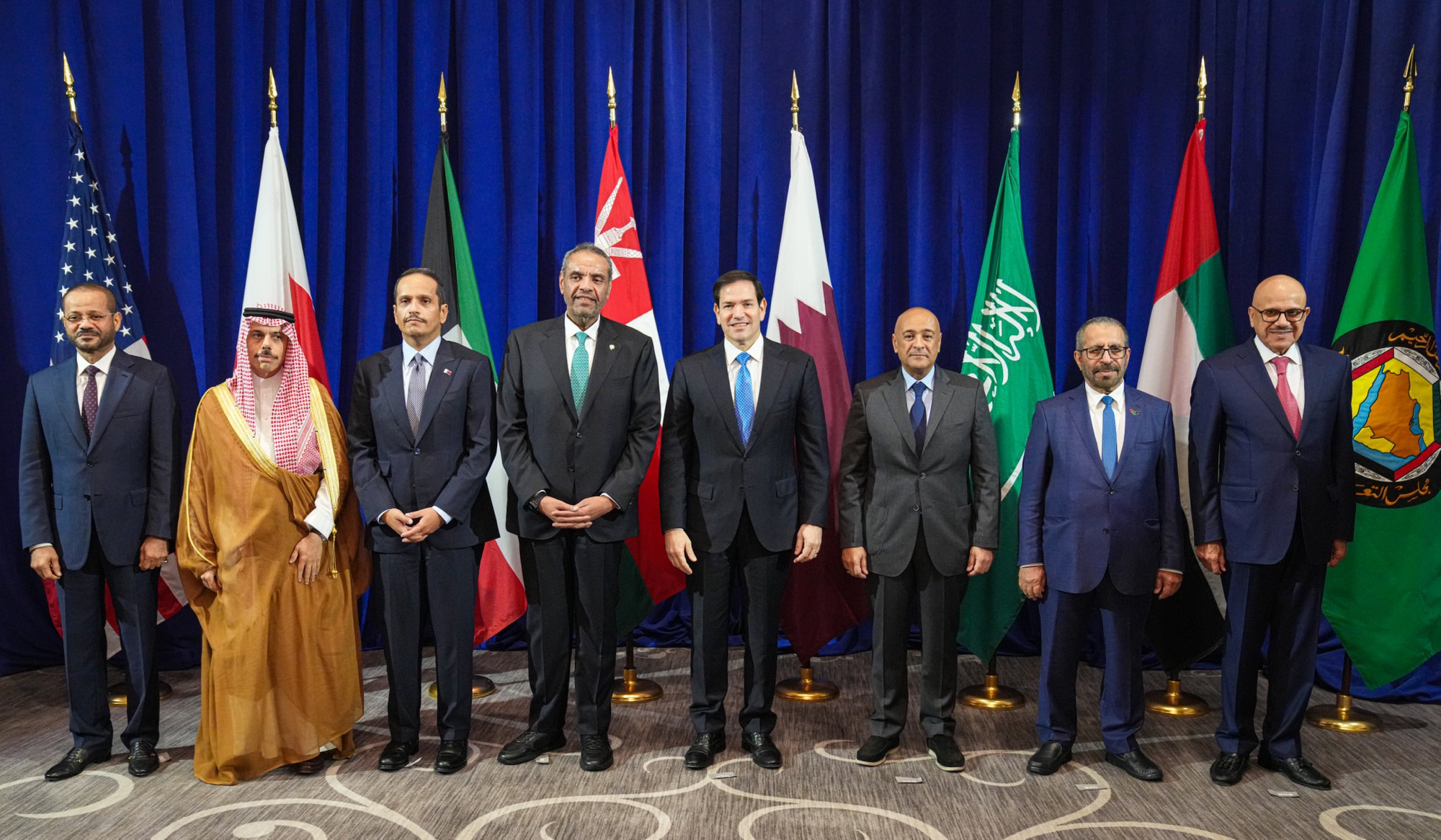
The Rubio Black Sea ceasefire idea moved from background diplomacy to the public agenda in Atlanta on Saturday, October 31, when U.S. Secretary of State Marco Rubio told reporters at the news conference concluding the G20 foreign ministers' meeting that interest is growing internationally in facilitating a limited Black Sea ceasefire — one narrow in scope, confined to the water, and designed to ensure the unfettered shipment of energy and grain by both Russia and Ukraine.
Rubio said the United States is reviewing proposals from Turkey and India aimed at stopping attacks on shipping long enough for cargo to move safely, and he framed the case in explicitly global terms: every vessel hit in the Black Sea, he argued, is a threat that reaches far beyond the war's front lines, into food prices and energy markets on every continent. No ceasefire was agreed in Atlanta, and Rubio was careful not to suggest otherwise. What changed on Saturday was not the state of the war but the state of the conversation — Washington is now publicly attached to an idea that, until this weekend, had mostly been discussed in Ankara and New Delhi.
Track it live: Wars — live tracker
What Rubio said
Rubio's case rested on the worldwide consequences of a regional shooting war at sea: “This is threatening the world for food security and some energy security as well.” Attacks on commercial vessels, he argued, have become routine enough to reprice the movement of basic goods worldwide. The proposed ceasefire, in his telling, is deliberately modest — a pause limited to the Black Sea itself rather than a halt to the war: “We'd like to achieve it. It doesn't solve the war, but at least it solves a unique aspect of it.”
He was equally deliberate about what his remarks did not mean. Growing interest, he cautioned, should not be mistaken for progress toward an agreement, and he declined to assess the chances of the proposals he described actually becoming one. Washington, he said, remains open to proposals from partners while it continues to pursue a negotiated end to the war as a whole — the broader diplomatic effort that brought foreign ministers to Atlanta in the first place, and whose frictions with Moscow are covered in Signal Post News' report on the G20 foreign ministers' meeting in Atlanta. The distinction matters for how Saturday's remarks should be read: a statement of interest and intent, on the record — not a deal, a timetable or even formal talks on the proposal itself.
Turkey, India and the Istanbul connection
The two proposals Rubio said Washington is reviewing come from very different capitals, and together they show how wide the concern about Black Sea shipping has spread. India has offered ideas on how to keep Black Sea shipments moving, according to IANS reporting of Rubio's remarks — a notable intervention from a country that is not a Black Sea state but is a major buyer in the grain and energy markets the attacks keep disrupting, and a fellow member, with the United States, of the Quad.
The Turkish track is older and, as of Saturday, further advanced in public. Hours before Rubio spoke in Atlanta, Turkish President Recep Tayyip Erdoğan stood beside Ukrainian President Volodymyr Zelenskyy at a joint press conference in Istanbul and called attacks on commercial vessels “unacceptable” whoever carries them out — language he pointedly aimed at no one, naming neither Russia nor Ukraine, in remarks covered in Signal Post News' report on Erdoğan's condemnation of Black Sea attacks after the Zelenskyy talks. Ankara is awaiting replies from Moscow and Kyiv to its own proposal to stop attacks at sea and secure grain shipments — the Turkish proposal Rubio referenced in Atlanta. The Istanbul meeting itself is covered in Signal Post News' report on the Zelenskyy-Erdoğan talks in Istanbul. Saturday's sequence is the story in miniature: Ankara tables a proposal and waits for two capitals to answer, and Washington — within hours — says it is studying that proposal and a parallel Indian one.
Why it matters
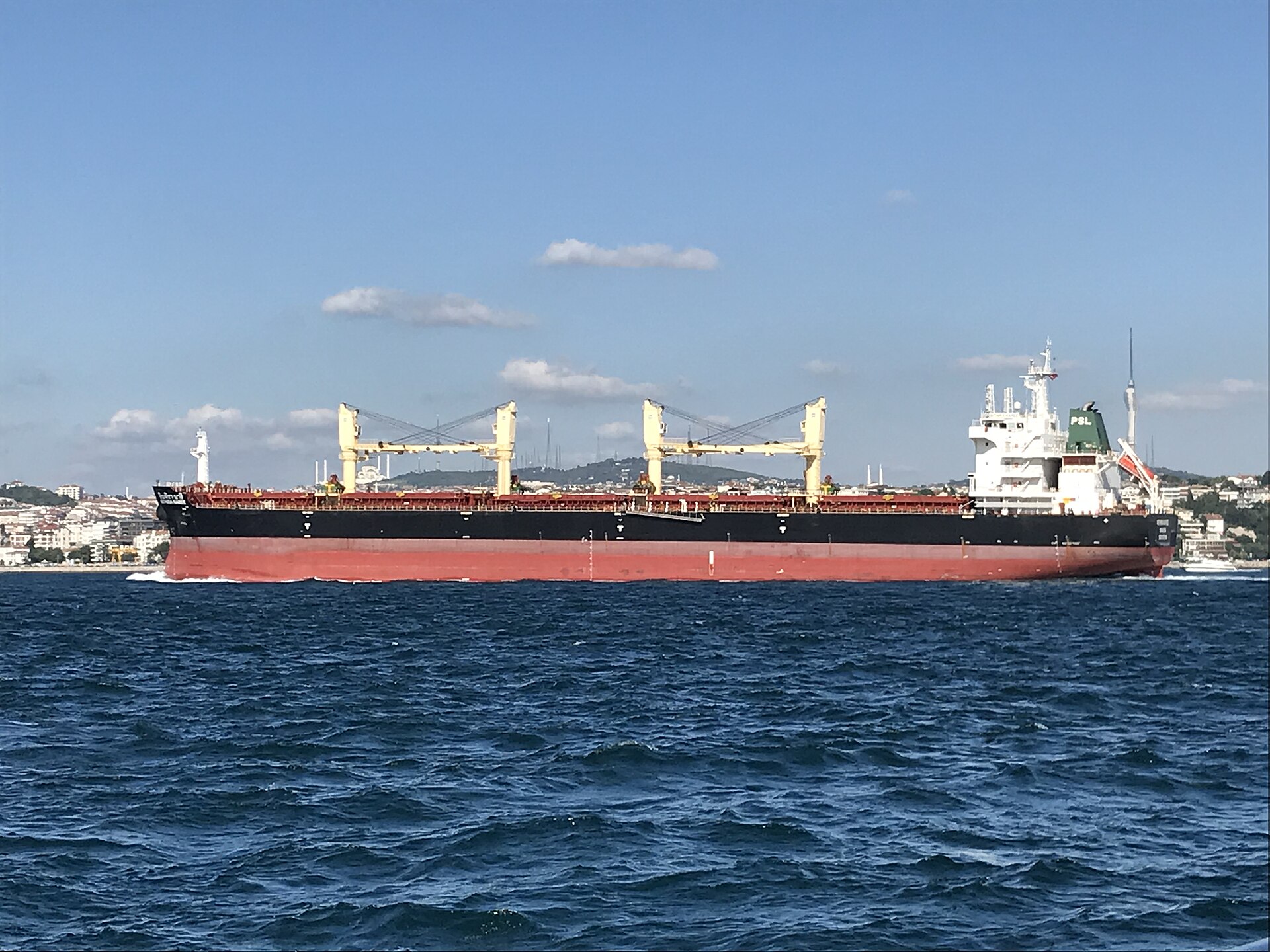
The numbers explain why a shipping question has become a foreign ministers' question. More than 570 vessels have been hit in the Black Sea this year, according to Financial Times reporting drawing on analysis by Ambrey and International Maritime Organization data — a tempo of attacks that has sunk Turkish-linked ships and killed seafarers. Each attack reprices war-risk insurance for every hull in the region, and those costs do not stay in the region: they land in the price of wheat, cooking oil and fuel in import-dependent countries thousands of miles away. That is the mechanism behind Rubio's food-security warning, and behind India's interest in a file that geography alone would not predict.
There is also a precedent, and it cuts both ways. The Black Sea Grain Initiative, brokered by Turkey and the United Nations in 2022, kept Ukrainian grain moving past the blockade for a year before Moscow withdrew in 2023 and the arrangement collapsed. It proved a maritime arrangement can work even while a land war rages — and it proved such arrangements live and die on the consent of the side that can end them with a statement. Ukraine has since run its own maritime export corridor, but under constant attack and at constant insurance cost. A limited ceasefire would restore predictability to that corridor and to Russian energy shipments alike; the precedent warns that predictability granted can be predictability revoked.
Rubio defends Russia's seat at the table
Rubio also used the Atlanta news conference to defend the decision that shadowed the whole meeting: Russia's presence at it. His argument was procedural rather than warm. A negotiated end to the war cannot be reached without talking to Moscow, he said, and President Donald Trump views engagement with Russia as a practical necessity rather than an endorsement of its conduct. The defence was necessary because the meeting had made the opposite view visible — European ministers' refusal to join a family photograph with Russian Foreign Minister Sergei Lavrov defined the Atlanta gathering, and no breakthrough emerged from it.
The limits of the engagement Rubio defended were on display in his own account. He spoke briefly with Lavrov in Atlanta, but there was no formal meeting between them. Looking ahead, he offered no confirmation that Russian President Vladimir Putin will attend the G20 leaders' summit in Florida in December: Putin's attendance is unconfirmed, and Russia has not confirmed it. Rubio described the war itself as destructive and costly for both sides, and paired the shipping proposal with wider spillover warnings — disruption in the Black Sea, sabotage attributed to Russia inside allied countries, and drones entering NATO airspace. The ceasefire idea was presented not as a favour to Moscow but as one element of a policy that still describes Russia's war as a danger spreading well beyond Ukraine's borders.
What a limited ceasefire would — and would not — do
Precision about scope is essential, because the word ceasefire invites misunderstanding. What is being discussed is a sea-only arrangement: a halt to attacks on shipping and maritime traffic in the Black Sea, sufficient to let grain and energy cargoes move with something like normal safety and normal insurance. It would not stop the land war, the missile and drone campaigns inland, or the fighting on any front, and it would not constitute a settlement of the war or a step that, by itself, resolves territory, security guarantees or any of the questions the wider negotiation exists to answer. Rubio said as much in Atlanta: it does not solve the war.
What it would leave unresolved is almost as long a list. Nobody has publicly described how a maritime pause would be verified — who watches the sea, with what authority, and whose finding counts when a vessel is hit. Nobody has described enforcement: what follows a violation, and whether a single strike collapses the arrangement or triggers a process. Nor has anyone described duration, boundaries or the treatment of naval as opposed to commercial forces. Those gaps are not footnotes; the 2022 initiative's collapse is the standing lesson in what happens to maritime arrangements whose politics outrun their mechanics. Until Ankara's replies arrive, the proposals remain exactly that — proposals.
Multiple angles
Kyiv: the corridor is the economy
For Ukraine, the Black Sea corridor is not one policy file among many; it is the sea lane through which farm exports earn the revenue that keeps the state functioning. Zelenskyy went to Istanbul seeking Turkish weight behind shipping security, and Erdoğan's “unacceptable” formulation — even unnamed — gives Kyiv language it can carry into the next round. What Kyiv has not received, from Istanbul or Atlanta, is any Russian answer.
Moscow: silence, so far
Russia had made no public response to Rubio's ceasefire remarks by the time of publication, and Ankara's proposal still awaits the Moscow reply Erdoğan's government says it is expecting. The last full statement of the Russian position came from Lavrov in Atlanta, where he maintained that Russia's position is unchanged. Silence is neither acceptance nor rejection; it is the posture of a capital asked a question in two cities on the same day that has chosen, so far, not to answer in either.
Washington: food security as the frame
The Trump administration framed its interest through consequences rather than blame: food security, energy security and the costs imposed on countries with no part in the war. That framing gives undecided capitals a self-interested reason to support the idea, and sits alongside Rubio's defence of talking to Moscow. Washington's position, as stated Saturday, is openness to others' proposals in parallel with its own pursuit of a negotiated end to the war.
Ankara: the indispensable intermediary, again
Turkey is the only capital holding working channels to Kyiv, Moscow and Washington at once, controls the straits every Black Sea cargo must transit, and authored the proposal now under American review. Erdoğan's refusal in Istanbul to name either side was not evasion but method: a mediator who assigns blame in the morning cannot convene the blamed in the afternoon. Ankara's reward, if replies come, is credit as the war's indispensable intermediary; its risk is another well-built Turkish initiative expiring unanswered.
What happens next
The immediate clock is Ankara's. Turkey is awaiting replies from Moscow and Kyiv to its proposal, and their arrival — or continued absence — will determine whether the idea Rubio described acquires a negotiating format or remains a commendation of other people's paper. Rubio added two dates to watch. He said he hoped the leaders of the Quad — the United States, India, Japan and Australia — would meet in Manila in November and announce further steps, a forum in which India's Black Sea ideas would have an obvious sponsor. Beyond November sits December's G20 leaders' summit in Florida, where the question Rubio left open — whether Putin attends — must be answered by Moscow one way or the other. Until then, the tests are simple: a Russian response, a named format, a date. None exists yet.
Conclusion
Saturday's news, stated precisely, is this: interest in a limited Black Sea ceasefire is growing, two concrete proposals — Turkey's and India's — are under American review, and the United States has said on the record that it would like to achieve one, while warning that the alternative threatens food and energy security worldwide. Nothing has been agreed, signed or scheduled, and the secretary of state who made the case declined to rate its chances. But ideas in wartime diplomacy have a sequence — floated, studied, answered, negotiated — and in Atlanta this one visibly moved a step along it. Whether it moves further depends on two replies Ankara is still waiting for.
Sources
- Reuters (October 31, 2026) — reporting by Andrea Shalal of Secretary of State Marco Rubio's news conference concluding the G20 foreign ministers' meeting in Atlanta: growing support for a limited Black Sea ceasefire, the Turkish and Indian proposals under review, the food and energy security warnings, the defence of Russia's G20 seat and the unconfirmed status of Putin's attendance at the December leaders' summit in Florida.
- IANS (October 31, 2026) — reporting of Rubio's Atlanta remarks, including India's offer of ideas to keep Black Sea shipments moving and his hope that Quad leaders meet in Manila in November.
- New Kerala / IANS (October 31, 2026) — reporting of the Atlanta news conference and the Black Sea ceasefire discussion.
- Signal Post News (October 31, 2026) — Zelenskyy-Erdoğan Istanbul talks coverage and Erdoğan's condemnation of Black Sea attacks: the Istanbul joint press conference, the “unacceptable” formulation naming neither side, and Ankara's awaited replies from Moscow and Kyiv.
This article is based on Reuters reporting of October 31, 2026 by Andrea Shalal, IANS reporting of October 31, 2026, and Signal Post News' Istanbul coverage of October 31, 2026. Quotations from Secretary Rubio and President Erdoğan are as published by those sources. No Black Sea ceasefire has been agreed: interest in a limited ceasefire and proposals under review are reported as such, and President Putin's attendance at the December G20 leaders' summit in Florida remains unconfirmed. Analysis is by Signal Post News.