Business · Markets · Technology · Intel
A forecast miss, a PC market in retreat and a fatal explosion at its Israeli fab combined to wipe roughly $140 billion off Intel in a single session — and to cut the value of the US government's 10% stake by about $12 billion.
Track it live: Live markets tracker
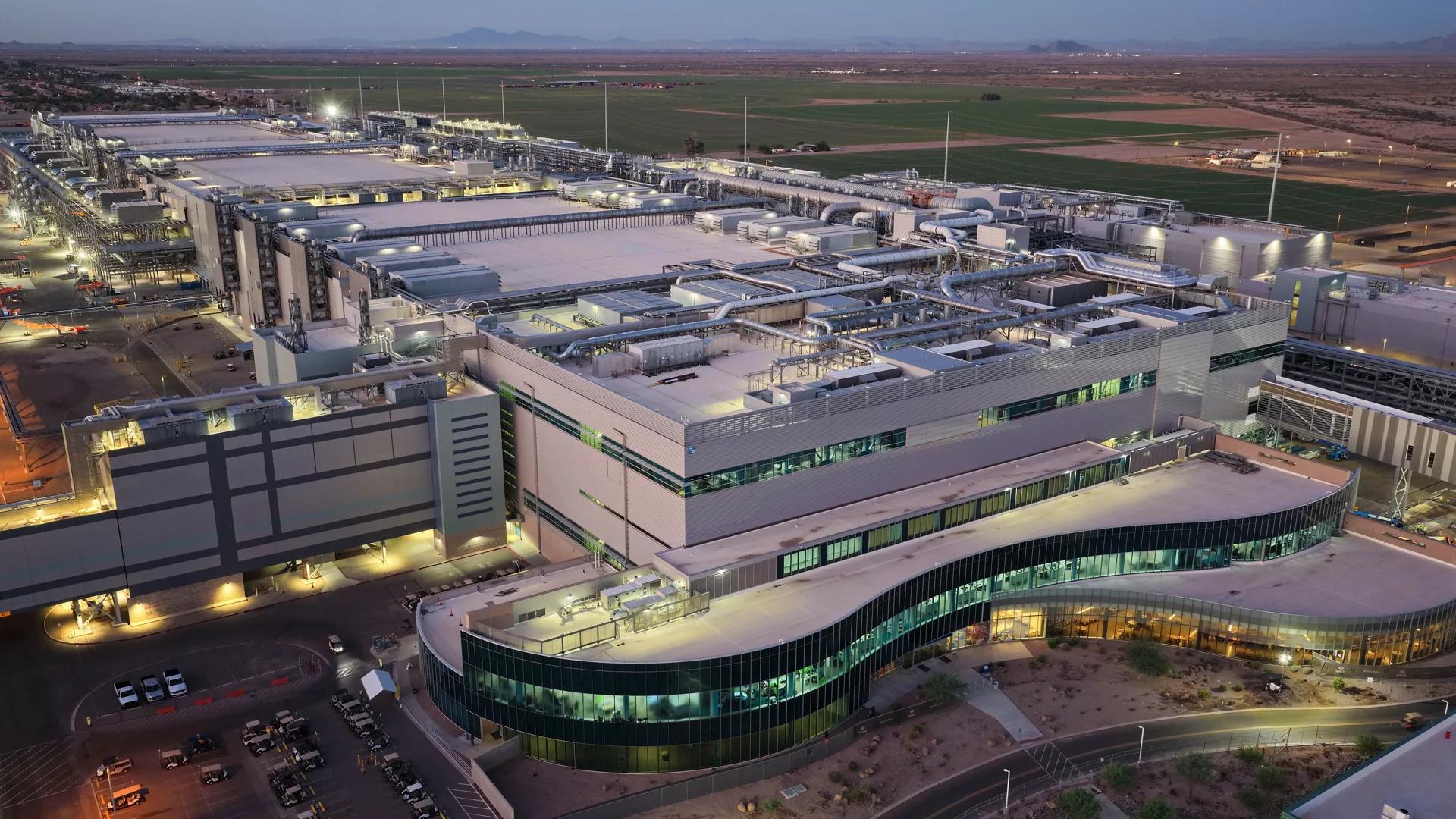
NEW YORK, October 31, 2026 — The Intel stock plunge 29 percent on Friday was the chipmaker's worst single day since the 1970s, a collapse that erased roughly $140 billion in market value, dragged the S&P 500 to its worst session since June and repriced one of the most unusual investments in American industrial policy: the US government's 10% stake in Intel, which lost about $12 billion in value in a day. The stock closed down almost 29% at $65.76. Only one day in Intel's history as a public company was worse — a nearly 30% slide in July 1974, by Yahoo Finance's count of closing prices back to 1973.
What Intel actually forecast
The trigger was guidance, not the quarter just reported. Intel told investors to expect adjusted earnings of 25 cents a share in the current quarter on revenue of $15 billion to $16 billion. Analysts polled by LSEG had expected 43 cents and $17.1 billion. The gap ran through the personal-computer business, still Intel's volume engine: finance chief David Zinsner said the company sees “the PC slowdown continuing at least through the first half of next year,” and Intel now expects the PC market to contract about 12% this year and 10% in 2027. The mechanism is the AI boom itself — data centers are buying so much of the world's memory that component prices have pushed PC prices beyond what buyers will pay. Global PC shipments fell 4% year over year in the second quarter, according to Counterpoint Research. Buried in the same report was the part bulls pointed to: data-center and AI revenue up 78% year over year, to about $7.3 billion, on demand for CPUs in agentic AI workloads.
The Israel fab shutdown
The second driver was a tragedy, not a market. An explosion earlier this month at Intel's fab in Kiryat Gat, Israel, killed two workers and seriously injured a third. Chief executive Lip-Bu Tan, who took over in March 2025, called it an “unfortunate and tragic accident” that caused an extended shutdown of the plant, disrupting shipments of 10-nanometre chips. Intel estimates the shutdown will reduce revenue by about $600 million over two quarters. The human cost stands apart from the financial one, and the company also cited a shortage of organic substrates — the base material chips are built on — saying capacity relief will not arrive until the second half of next year. D.A. Davidson downgraded the stock from buy to neutral in a note titled “Not fixed yet.”
Why this matters
Intel is not an ordinary chip stock. It is the only US-based manufacturer of advanced logic chips, the centrepiece of Washington's effort to rebuild domestic semiconductor production — and, since last year, a company in which the US government itself holds 10%. Friday's plunge therefore landed in three places at once: in portfolios, where shares had risen roughly 150% this year (and nearly quadrupled from January to a record high in late June) on the agentic-AI CPU story; in industrial policy, where a $12 billion one-day mark-down on the taxpayer's stake invites scrutiny of the state-as-shareholder experiment; and in the turnaround narrative of Lip-Bu Tan, whose revival plan rests on the 18A process now in high-volume production at the new Arizona fab, a second Arizona fab due by the end of 2028, progress on 14A, and two foundry customers Intel says it will announce over the next two quarters. A 29% fall does not disprove any of that. It reprices how much of it investors are willing to pay for in advance.
Context: Intel's worst days, and the rivals who gained
Intel's place in the record books is a study in boom and reset. The July 1974 collapse came in a brutal bear market for a young chip industry; the dot-com era delivered its own double-digit routs; and the stock's modern history includes the August 2024 plunge of about 26% after a disastrous quarter and dividend suspension — until Friday, the benchmark for a modern Intel disaster. Friday's 29% exceeded it. The contrast across the chip sector is the deeper story: while Intel guided down on PCs, Nvidia and TSMC sit on the AI accelerator demand Intel largely missed in the boom's early years, and AMD competes for the same server CPU recovery Intel is counting on. Intel's bulls answer that agentic AI is reviving the CPU — every AI agent still needs a host processor — and that a 78% jump in data-center revenue is the turnaround arriving, one segment at a time. Friday's sellers were, in effect, ruling that the PC business pays the bills until that arrival is complete. This newsroom's market wrap captured the index damage in its stock market today coverage of the Nasdaq's worst day since June.
Multiple angles: who loses, who is vindicated
The immediate losers are momentum holders who bought the 150% run, and the US Treasury's paper position. The vindicated are the sceptics who argued Intel's valuation had priced a foundry renaissance years before its proof points. PC makers lose too: Intel's forecast tells them the memory-driven price spiral squeezing their customers lasts into 2027, with some forecasts seeing no real memory relief until 2028 — meaning no cheap laptops soon. Intel's defenders make a fair counterpoint: the two biggest drivers of the miss, a fatal industrial accident and an industry-wide memory shortage, are not execution failures, and the segment that matters most for the next decade grew 78%. Both things can be true; Friday's price says investors had stopped paying for the second until the first two are fixed.
What happens next
Three tests follow. First, the foundry customer announcements Intel promised within two quarters — named external customers for 18A or 14A would do more for the stock than any cost programme. Second, the Kiryat Gat restart timeline and whether the $600 million revenue hit stays contained. Third, the PC market itself: if memory prices keep climbing, Intel's 12%-then-10% contraction forecast could prove optimistic, and the first half of 2027 becomes the next cliff edge. For the government's stake, expect political questions that Intel's private shareholders never had to ask — what the state does with a volatile 10% of a national champion is now a live policy debate, not a hypothetical.
Related coverage: Stock Market Today, October 30, 2026: Nasdaq Drops 2.9% in Worst Day Since June as Intel Plunges 29% · Iran Claims Four Tankers Hit Mines and Caught Fire in the Strait of Hormuz
Sources
- The Wall Street Journal (October 30, 2026) — Intel's worst trading day wiped more than $140 billion from its market value; guidance of $15–16 billion against expectations north of $17 billion; PC market contraction forecasts; data-center and AI revenue up 78%.
- TechSpot (October 31, 2026) — Shares closed down almost 29% at $65.76, the worst day since 1974 by Yahoo Finance's count; the Kiryat Gat fab shutdown; memory-driven PC price pressure and relief forecasts out to 2028.
- Business Insider (October 30, 2026) — The US government's 10% stake lost about $12 billion in value on Friday; shares were up about 150% this year before the plunge; D.A. Davidson's downgrade to neutral.
- The American Star News (October 30, 2026) — The Israel fab explosion killed two workers and seriously injured a third; an estimated $600 million revenue impact over two quarters; Zinsner's PC slowdown comments.