War / Middle East / Iran
Twelve hours in Tehran, a delegation in Doha, a foreign minister saying no meeting exists, and a supreme leader promising an answer without geographic limits — the Iran war's diplomatic track and its war track are now running on the same three-day clock to the US midterms.
Track it live: Iran war tracker, live — Signal Post News Live Global Trackers
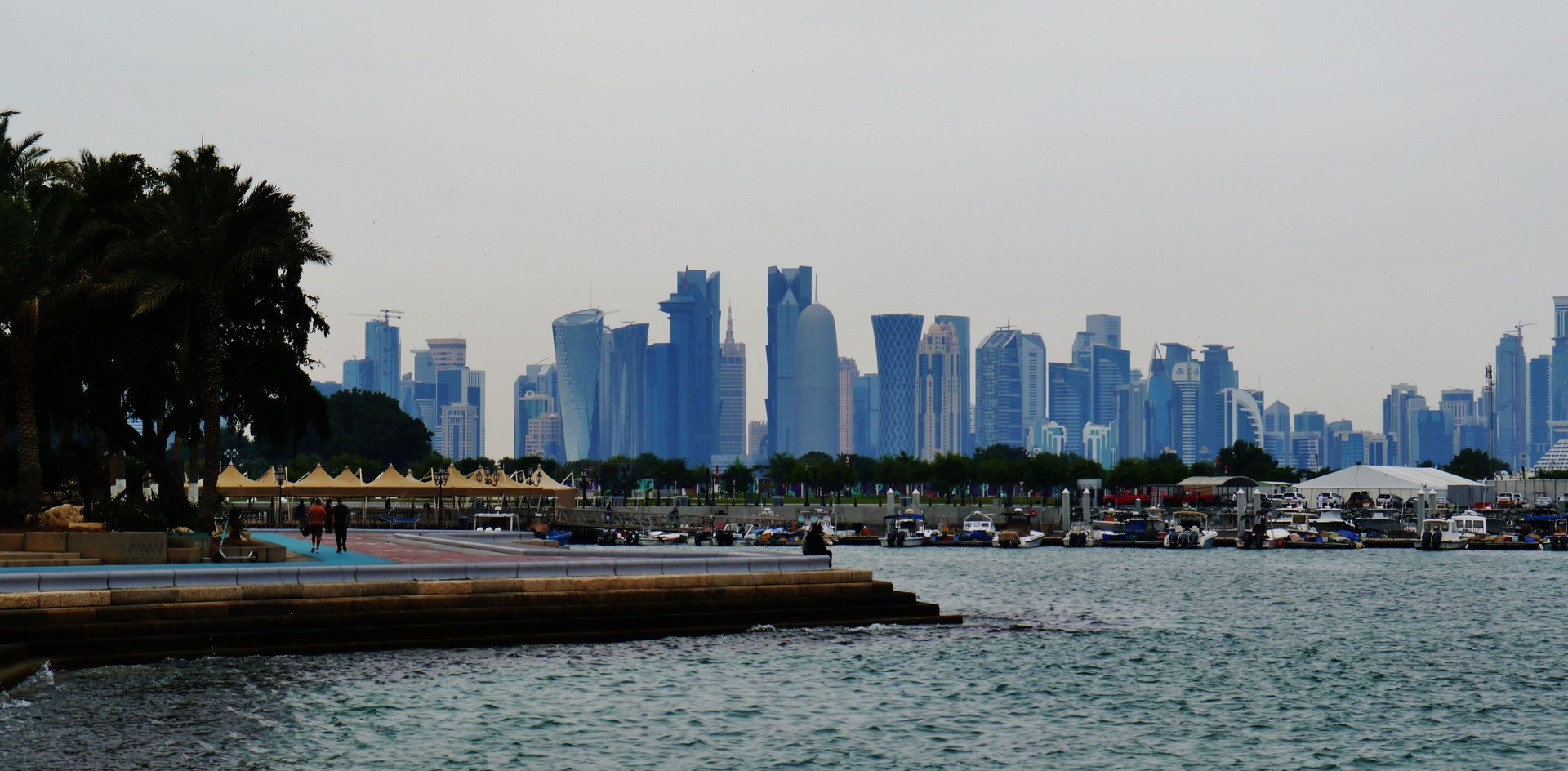
DOHA, October 31, 2026 — Qatari mediators spent more than 12 hours in talks with Iranian officials in Tehran on Friday in a push to restart direct negotiations between Washington and Tehran and head off a possible resumption of American-led attacks on Iran after Tuesday’s US midterm elections, a source familiar with the discussions told CNBC on Saturday. The effort did not end in Tehran: the talks were set to continue in Doha on Saturday, and an Iranian delegation travelled to the Qatari capital for meetings with the mediators. By Saturday afternoon, however, Iran’s foreign minister was publicly insisting that no meeting with US officials is planned at all — a denial delivered while the mediation he was describing was still under way.
That contradiction is the real state of the US Iran talks Doha track tonight. The machinery of diplomacy is moving faster than it has in weeks: a marathon session in Tehran, a delegation on the ground in Doha, the White House in regular contact with the mediators throughout, according to Axios. Yet the two steps that would turn mediation into negotiation — an agreed date for Americans and Iranians to sit in the same room, and an agreed order in which concessions would be exchanged — remain, on the public record of both capitals, entirely unsettled. Layered over the diplomacy is a threat: a statement posted on Saturday on Supreme Leader Mojtaba Khamenei’s Telegram account warned that any new attack on Iran would be answered without geographic limits. Diplomacy and deterrence are not taking turns this weekend. They are running simultaneously, on the same clock, toward the same Tuesday deadline.
What actually happened in Tehran and Doha
The Friday session in Tehran ran for more than 12 hours, according to the source who spoke to CNBC on condition of anonymity. Its purpose, as CNBC reported it, was specific and urgent: to reach a deal that would avoid a possible resumption of American-led attacks on Iran after the November 3 midterm elections. Axios, which first reported the Qatari effort, said the Qatari mediators were in regular contact with the White House during Friday’s talks, shuttling positions between Tehran and Washington in something close to real time. Reuters, reporting on Saturday, likewise described Qatari mediators returning to Tehran on Friday in a renewed effort to broker a deal between the two sides.
What the marathon produced depends on which official account is read. A diplomatic source cited by Axios said there had been “positive progress” and that “talks are still ongoing in an effort to unlock a deal.” A US official cited in the same Axios reporting gave the opposite assessment: competing demands from the two sides have stagnated progress. Both characterisations come from the same round of reporting, and this article presents them together because both are part of the record — a mediation can be moving and stuck at the same time when the movement is procedural and the sticking point is substantive. On Saturday the venue shifted. Iran sent a delegation to Doha, including a deputy foreign minister, to meet the Qatari mediators there; Axios reporter Barak Ravid identified the Qatari mediator in those meetings as Ali Al-Thawadi. Tasnim, the Iranian news agency, also reported the delegation’s presence in Doha — and, like the foreign minister, reported that no negotiations with the United States were planned there.
It is at this point that the weekend’s most consequential claim has to be handled with care. Al-Araby Al-Jadeed, a Qatari newspaper, reported — in coverage carried by the Times of Israel — that a US delegation was expected in Doha for direct talks with Iran, following what it described as preliminary understandings on the nuclear programme, navigation in the Strait of Hormuz and economic incentives, with Qatar and Pakistan mediating and China and Russia possibly acting as guarantors. That report is a claim, and it is contradicted on the record assembled Saturday: a diplomatic source cited by Ravid said there is no agreement on direct talks and no date for a US delegation, and neither Washington nor Tehran has officially confirmed direct talks or any framework. Readers should hold the Al-Araby Al-Jadeed report as exactly what it is — one newspaper’s account, disputed by a diplomatic source speaking the same day — and not as an agreed breakthrough.
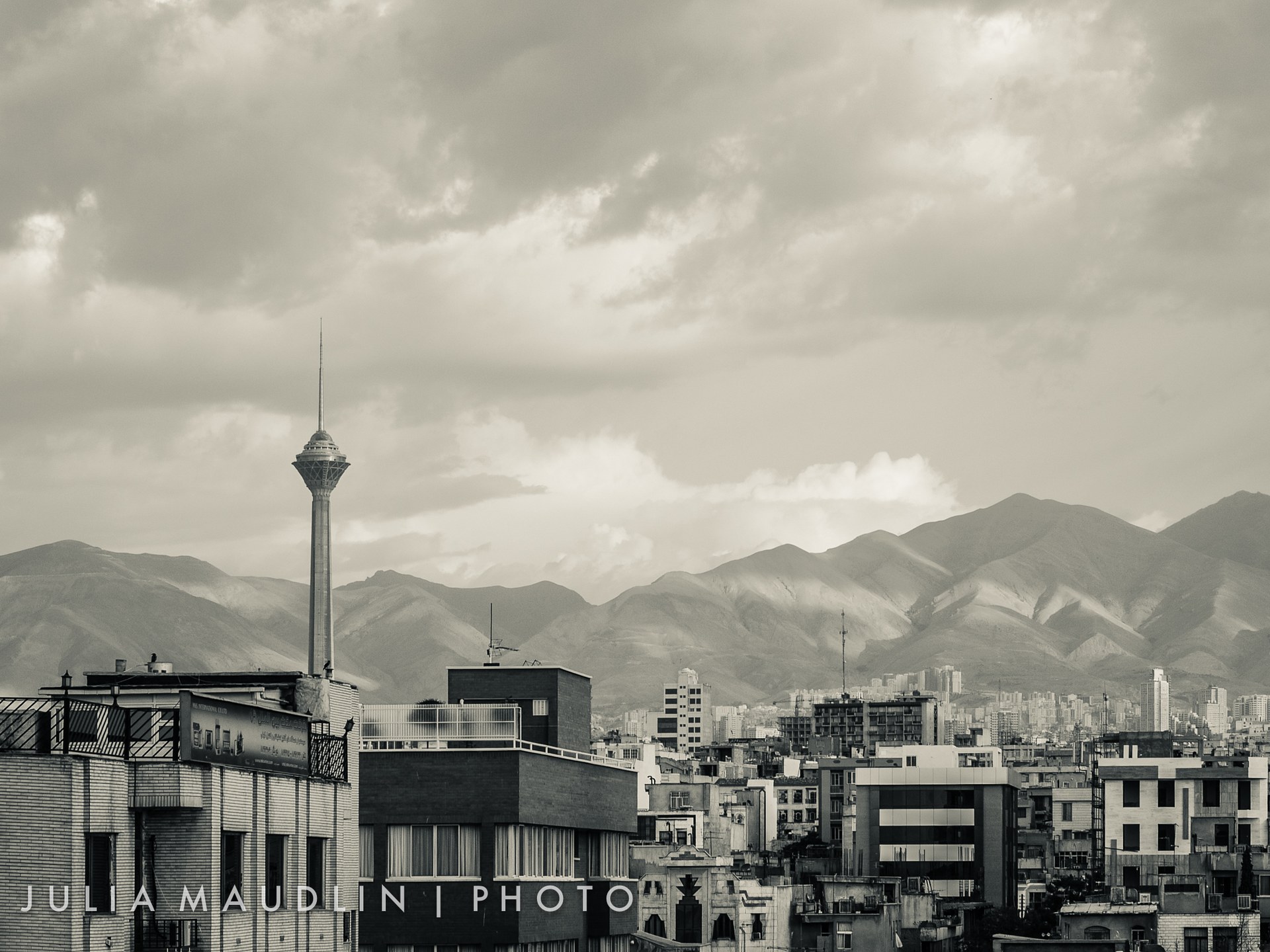
Tehran’s answer, on the record
The clearest Iranian statement of the weekend came not from a leak but from the foreign minister himself. Abbas Araghchi told Al Jazeera on Saturday that there are no plans to meet US officials and that reports of such a meeting are “merely media speculation.” He confirmed the shape of the channel while denying its destination: an Iranian delegation has travelled to Doha for talks with the mediators, he said — with the mediators, not with the Americans. Iran, Araghchi said, sees no need for direct talks under the current circumstances. If the United States accepts Iran’s conditions, Tehran will then decide whether any talks are direct or indirect. The sequencing of the format itself, in other words, is one of the things Tehran is holding back until Washington moves first on substance.
Araghchi also confirmed that Iran has received a message from US Vice President JD Vance, and that the message was reviewed at high-level meetings in Tehran, according to Al Jazeera’s account of the interview. He did not disclose its contents. The disclosure matters for what it signals about the channel’s seniority: messages are passing at vice-presidential level on the American side and being considered at the top of the Iranian system, even as the Iranian foreign minister tells the public that no meeting exists. Between Araghchi’s denial and the mediators’ 12 hours sits the actual negotiation — over conditions, conducted through intermediaries, with the format of any eventual talks still treated by Tehran as a concession to be granted rather than a courtesy to be assumed.
Above the foreign minister, the weekend’s other Iranian voice spoke in a different register entirely. A statement posted on Saturday on Supreme Leader Mojtaba Khamenei’s Telegram account said that “any level or type of threat must be met with an immediate, impactful, and geographically unrestricted response,” and that if enemies attack again, Iran’s armed forces and nation will determine the time and conditions for ending it, as reported by CNBC. Khamenei has not been seen publicly since the first US-Israeli strikes that opened the war. The statement’s wording reaches beyond the battlefield geography of the war so far: “geographically unrestricted” is a deliberate signal that a second round of American strikes would not necessarily be answered only inside Iran or only against the forces that launched them. Issued on the same day his foreign minister was denying that any meeting was planned, the supreme leader’s post reads as the deterrent half of a two-track message — negotiate through Doha if Washington accepts Tehran’s terms, and expect a wider war if it chooses strikes instead.
The sequencing fight at the centre of it
Strip away the weekend’s atmospherics and one dispute explains why 12 hours of talks can be described as both progress and stagnation: the two sides do not agree on what happens first. According to the US official cited by Axios, Washington insists that nuclear concessions come before talks resume. Tehran’s position, as described in the same reporting and in Reuters’ account, runs in precisely the opposite order: the United States must first lift its naval blockade of Iranian ports, release Iran’s frozen funds and ease the oil sanctions that have throttled its exports. Each side is demanding that the other surrender its principal leverage before the bargaining the leverage was accumulated for has even begun.
Qatar’s mediators are trying to cut the knot with a confidence-building step small enough to precede the larger argument. According to Axios, Qatar is pressing Iran to allow United Nations inspectors to visit its bombed nuclear sites — a gesture that would give Washington something verifiable on the nuclear file without requiring Tehran to concede the file itself, and that might let the White House describe a resumed process as beginning with a nuclear step. Whether Tehran is willing to open damaged, sensitive facilities to inspectors while a blockade is still in force is, on Saturday’s record, unanswered. It is the single most concrete proposal attached to this weekend’s diplomacy, and the one whose acceptance or refusal will most quickly reveal whether the Doha track is real.
The Hormuz piece of the sequence is the one part on which Iran has already tabled a public formula. As Reuters reported on Saturday, Iran has proposed that Washington lift its blockade of Iranian ports in exchange for Tehran reopening the Strait of Hormuz within seven days — the same seven-day structure Tehran offered in September, as we reported in our coverage of Iran’s offer to reopen the Strait of Hormuz in seven days and the phased-deal diplomacy that surrounded it. A draft framework reported by Al Arabiya would go further, transferring or diluting Iran’s stockpile of highly enriched uranium and reopening Hormuz within the same seven-day window. That framework, like the Al-Araby Al-Jadeed direct-talks report it accompanies, remains unconfirmed by either capital, and is presented here as a reported draft, not an agreed text. What is confirmed is narrower and more stubborn: a blockade Tehran wants lifted before it concedes, a nuclear file Washington wants conceded before it lifts, and a strait whose reopening both sides claim to want on terms the other has not accepted.
Why this matters
The reason mediators are working weekends is that this process has already failed once, recently, in public. The war began on February 28, when the United States and Israel launched strikes on Iran. A preliminary agreement reached on June 17 halted the fighting — and then, as CNBC recounted in its Saturday reporting, broke down within weeks. The last confirmed US strikes on Iran were on September 1. What has held since is not peace but a pause with a blockade attached: no large-scale American bombing, and no Iranian oil economy either. A second collapse — a Doha track that raises expectations and then dies the way the June agreement died — would not return the region to that uneasy pause. It would return it, on the stated positions of both capitals, to a war each side has spent the autumn preparing to resume: Washington with strike planning reported around the midterm date, Tehran with a supreme leader publicly promising a response without geographic limits.
The region’s fear of that second round was put on the record on Saturday in Bahrain, at the IISS Manama Dialogue. Egypt’s foreign minister, Badr Abdelatty, said he was “extremely worried” that a new escalation would be more destructive than the first, Reuters reported. “The second round will be more dangerous, more destructive, and it will lead to nowhere. We have to draw lessons from the past,” Abdelatty said. Saudi Arabia’s vice foreign minister, Waleed ElKhereiji, used the same summit to call for de-escalation. Egypt is not a bystander offering commentary: according to Axios, Egypt, Turkey, Iraq, Pakistan and Saudi Arabia have all pushed Iran to keep negotiating before the midterms — a five-capital regional lobby for the Doha track that reflects how completely a second round would be a regional event, fought over Gulf shipping lanes, Gulf airspace and Gulf infrastructure, whatever Washington and Tehran intend.
The clock governing all of it is electoral. The mediation push is explicitly aimed at the period after Tuesday’s November 3 midterm elections, when, on CNBC’s reporting, American-led attacks might resume. President Trump on Tuesday reiterated that the Iran war will end “whenever I want it to,” and demanded a “total statement” from Iran that it will never have a nuclear weapon. Axios reported a sharper version of the electoral logic: a US official’s belief that a poor Republican result could make a major operation more likely. That belief is attributed here to Axios’s reporting, and it is countered on the record by a White House official who said election results will not factor into Trump’s decisions. Inside the president’s own team, Axios reported, the argument is live and split: Defense Secretary Pete Hegseth and Secretary of State Marco Rubio are sceptical of a deal and favour pressure, while Vice President Vance, envoy Steve Witkoff and Jared Kushner favour reviving talks. It is Vance’s name, notably, on the message Tehran says it has received and reviewed.
Context and background
This weekend’s marathon is the second Qatari push in four days, not the first. On October 28, Qatari mediators handed Tehran a new draft deal to end the war, built on a seven-day timeline of daily confidence-building steps under outside guarantors, with Iran’s answer due within the week — the immediate predecessor of the current round, which we reported in Qatar’s draft deal to end the war. Friday’s 12 hours in Tehran and Saturday’s move to Doha are what that process looks like after Tehran engaged with the draft rather than rejecting it outright — engagement, but on Tehran’s stated conditions, and short of the direct format Washington ultimately wants. The pattern across the autumn has been consistent: drafts move, deadlines approach, and the sequencing question survives every round intact. You can follow the military side of the standoff on our live war trackers.
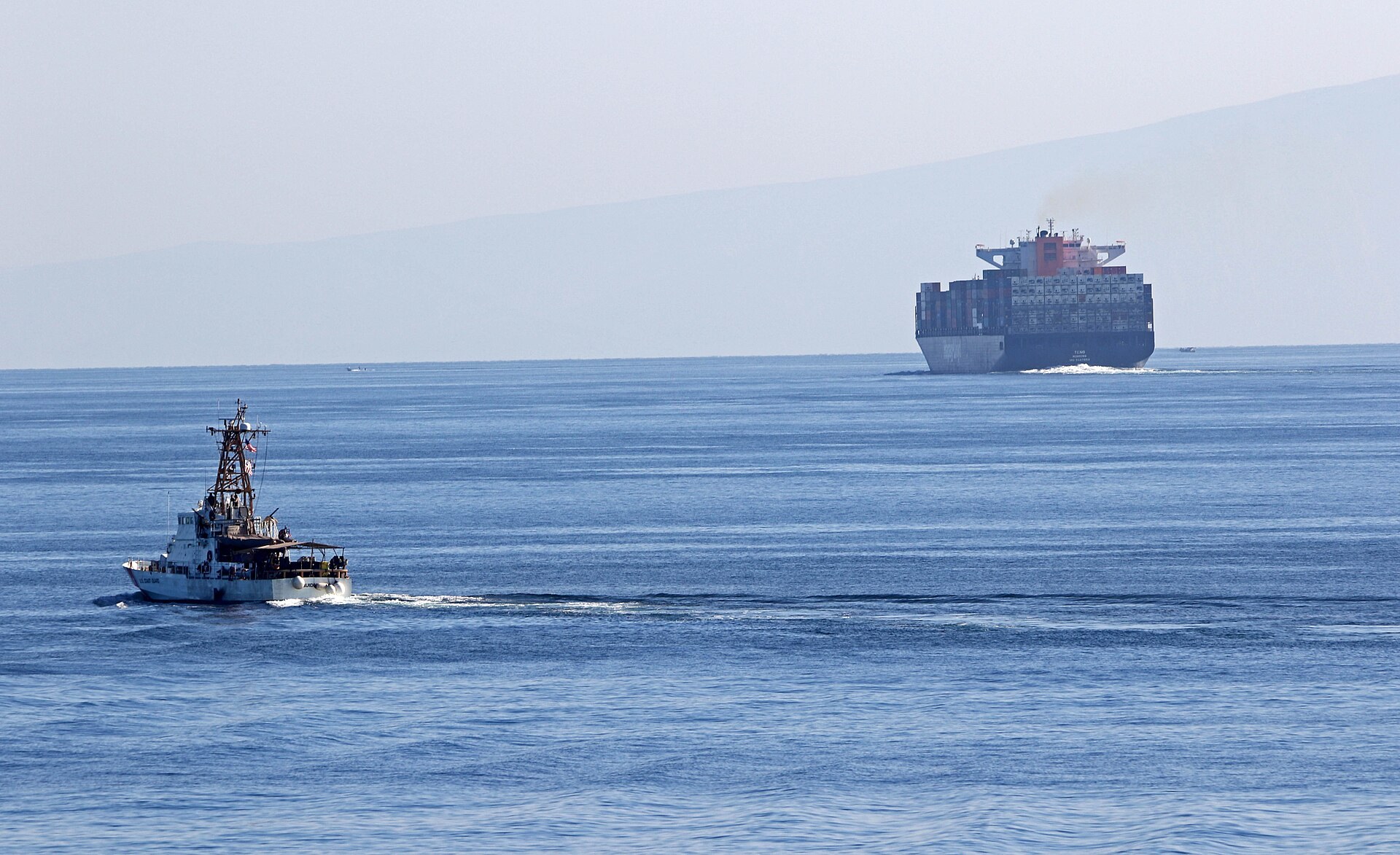
The strait is why a bilateral sequencing dispute commands five-capital lobbying and a mediator’s marathon. In normal times, roughly a fifth of global seaborne oil transits the Strait of Hormuz, the standard framing used by the US Energy Information Administration — a chokepoint narrow enough to close and too important to leave closed, as the war’s earlier shipping crises demonstrated when, as we reported, Hormuz closed again and ships came under attack. Every week the blockade-and-closure economy persists, the cost is carried by importers and insurers far beyond the Gulf, and the value of the concession Tehran is offering — a reopened strait within seven days — appreciates accordingly. That appreciation is precisely Tehran’s argument for trading it early and dearly, and Washington’s argument for refusing to pay for the same waterway twice: once in relief, and again in the nuclear concessions it wants sequenced first.
Doha keeps being the room for structural reasons as much as diplomatic ones. Qatar hosts the forward headquarters relationships of US air power in the region while maintaining a working channel to Tehran that Washington itself does not currently have — a combination no other capital in this crisis replicates, and the reason Qatari mediators, rather than American and Iranian officials, are the ones logging 12-hour days. Pakistan’s parallel mediation role, credited in both the June process and the reported new framework, gives the channel a second, Muslim-majority intermediary with its own lines into Tehran. None of that guarantees an outcome. It explains the venue: when the two principals will not sit together, the talks happen where the intermediaries are, and this weekend the intermediaries are in Doha.
Multiple angles: who needs this to move, and who needs it to look like it is moving
Every party to this weekend gains something from motion, which is itself a reason to read the motion carefully. For Doha, a visible mediation marathon reaffirms Qatar’s indispensability to Washington at the moment its security is most entangled with American decisions. For Tehran, engaging the mediators for 12 hours while its foreign minister denies any American meeting exists is not hypocrisy but method: it keeps the strike option’s political cost rising in Washington, keeps oil markets guessing, and concedes nothing that cannot be withdrawn, all while the supreme leader’s Telegram warning raises the price of calling the bluff. For Washington, a live diplomatic track before Tuesday steadies fuel prices and the electoral weather, whatever the president’s advisers privately expect the track to produce. Motion, in short, is cheap for everyone. The expensive things — inspectors inside bombed nuclear sites, a lifted blockade, a dated American delegation — are exactly the things that have not happened.
The critics on each side describe the same process in opposite moral terms, and both critiques are part of the record. In Washington, sceptics of the mediation — a camp Axios places inside the administration itself — argue that extended indirect talks are time Iran uses to rebuild air defences, disperse what remains of its nuclear programme and wait out American attention. In Tehran, the mirror critique holds that Washington’s conditions amount to surrender terms drafted as procedure: concede the nuclear file first, accept inspection of bombed facilities, and trust that relief follows from the government maintaining a blockade in the meantime. The shipping industry, whose stake is the least abstract of all, got its own reminder on Friday: the United Kingdom Maritime Trade Operations agency reported that a crude tanker was hit by an unknown projectile while leaving the strait, according to CNBC. CNBC also carried an Iranian broadcasting report that US forces had attacked two fishing boats off Masan, near Qeshm Island, on Saturday; that report has not been independently confirmed, US Central Command did not respond to CNBC, and it is recorded here as unconfirmed and nothing more. Even the weekend’s noise arrives in two versions — one attributed and checkable, one not — which is, in miniature, the condition of the whole story.
What happens next
The Doha consultations were continuing on Saturday with no announced end, and the honest forecast is a branching one. In the first scenario, the mediators assemble a narrow confidence-building package — UN inspectors admitted to bombed nuclear sites as the visible first step, matched by a limited, reversible American gesture on shipping or funds — and the package buys the one thing neither side has yet granted: a date for direct talks. In the second, the sequencing fight survives the weekend intact, indirect drift carries the process past November 3, and the strike question reopens immediately after the vote, with Trump’s advisers still split and the June agreement’s collapse as the template for how quickly a pause becomes a campaign. In the third, the track breaks down publicly — a walked-out delegation, a rejected draft, a projectile in the strait attributed to the wrong sender — and the second round Abdelatty warned about at Manama begins under the terms Khamenei’s statement laid down: immediate, impactful and without geographic restriction. Between tonight and any of those outcomes stands a single verifiable fact that would change this story’s headline: an on-record confirmation, from Washington or Tehran, of a date on which their officials will meet. Araghchi has said no such meeting is planned. The mediators are still in the room. Watch for the date.
Related coverage: Qatar Iran War Deal: Mediators Hand Tehran a New Draft Deal, With an Answer Due This Week · Hormuz Closed Again as Iran Defies Trump and Ships Are Attacked · Iran Offers to Reopen the Strait of Hormuz in Seven Days
Sources
- CNBC (October 31, 2026) — Qatari mediators held more than 12 hours of talks in Tehran on Friday to avert a resumption of US-led attacks after the midterms, per a source familiar with the discussions; talks continuing in Doha; the June 17 agreement and its collapse; Khamenei’s Telegram statement; the UKMTO tanker report and the unconfirmed Qeshm fishing-boats report, which CNBC noted was not independently confirmed.
- Axios (October 31, 2026, via CNBC, Jerusalem Post and Times of Israel summaries) — first reporting of the Qatari effort; White House contact during Friday’s talks; the “positive progress” diplomatic source and the US official saying competing demands have stagnated progress; the sequencing positions; the inspectors confidence-building proposal; the regional push to keep Iran negotiating; the split among Trump’s advisers; Barak Ravid’s diplomatic source saying there is no agreement on direct talks and no date for a US delegation.
- Al Jazeera (October 31, 2026) — Foreign Minister Abbas Araghchi’s interview: no plans to meet US officials, reports are “media speculation,” the Iranian delegation in Doha is meeting the mediators, the Vance message was received and reviewed at high level, and the direct-versus-indirect decision rests on US acceptance of Iran’s conditions.
- Reuters (October 31, 2026) — Qatari mediators’ renewed Tehran effort and the divide over sequencing; Iran’s proposal to trade a blockade lift for reopening Hormuz within seven days; Egypt’s Foreign Minister Badr Abdelatty at the IISS Manama Dialogue in Bahrain.
- Tasnim (October 31, 2026) — the Iranian delegation’s presence in Doha and Tehran’s position that no negotiations with the United States are planned.
- Times of Israel / Al-Araby Al-Jadeed (October 31, 2026) — the Al-Araby Al-Jadeed report of an expected US delegation and direct talks in Doha, presented in this article strictly as a claim and countered by the diplomatic source cited by Axios; the Al Arabiya-reported draft framework is likewise unconfirmed by either capital.