Strait of Hormuz closed again
War / Iran / Hormuz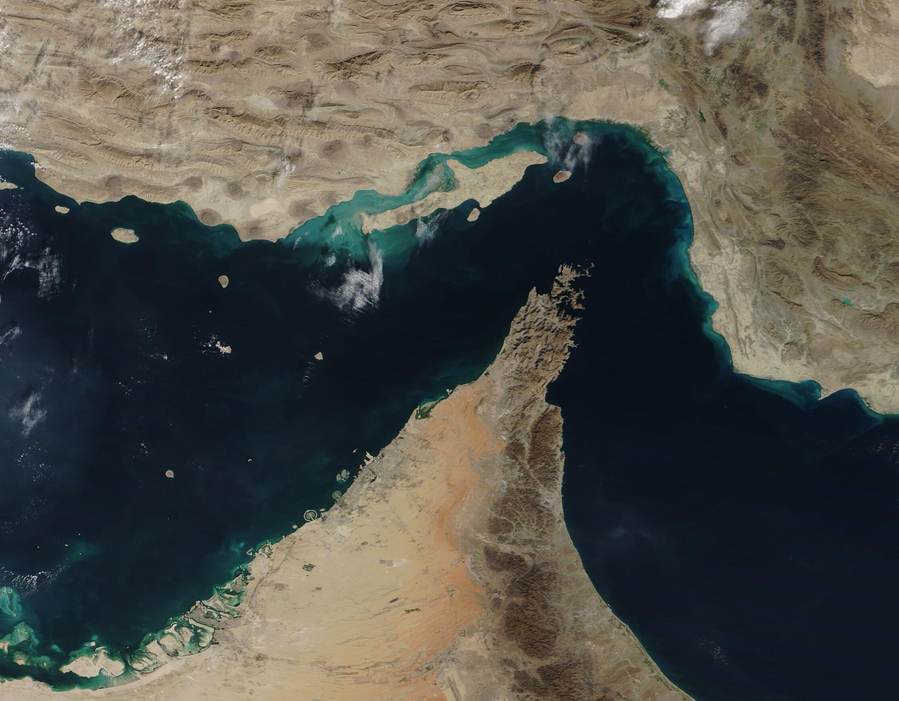
The Strait of Hormuz closed again on Wednesday, five days after Iran briefly allowed a convoy of tankers through the world's most important oil chokepoint. It was the first significant movement through the waterway since the U.S.-Israeli war began in February — and it lasted less than a week. The Islamic Revolutionary Guard Corps Navy now says the strait will stay closed until the United States lifts its naval blockade of Iranian ports, and Iran's Supreme National Security Council says it is "determined" to enforce control of the strait until the war ends. The reversal capped a violent day at sea: Iranian gunboats opened fire on a tanker inside the strait, a container ship was struck by a projectile off Oman, and a second container vessel was hit by a missile in the Gulf of Oman. In the Oval Office, President Donald Trump said "very good conversations" were happening with Iran — but that the United States would not be "blackmailed" over the waterway.
What happened: the door opens, then slams shut
Friday's opening was modest but symbolically large. Maritime trackers showed a convoy of eight tankers transiting the narrow passage — the first major movement of ships since the war began on February 28. For markets and mediators, it looked like the possible start of a managed de-escalation: limited, negotiated transits under a fragile understanding between the warring sides.
By Wednesday, that understanding had collapsed. Maritime security sources said merchant vessels began receiving radio messages from Iran's navy stating that no ships were allowed through the waterway — a direct reversal of Friday's signal. Iran's armed forces command said transit had reverted to strict Iranian military control, citing what it described as repeated American violations and acts of "piracy" carried out under the cover of the U.S. blockade.
The IRGC Navy's message was blunt: the strait stays closed until Washington lifts its blockade of Iranian ports. A senior IRGC adviser, Brigadier General Mohammad Reza Naqdi, told the semi-official Fars News Agency that the closure would continue until Iran's "legitimate demands" are met — and claimed Iran would soon block the improvised "unauthorised routes" near Oman's coast that small vessels have used to slip oil through.
That claim collided head-on with Washington's narrative. The U.S. position, voiced by Secretary of State Marco Rubio, is that Iran has "lost complete control" of the strait and that regional oil flows have nearly recovered to pre-war levels. Both accounts cannot be fully true — and the gap between them is itself a feature of the confrontation, with each side using its version of the waterway's status as leverage.
A violent day at sea
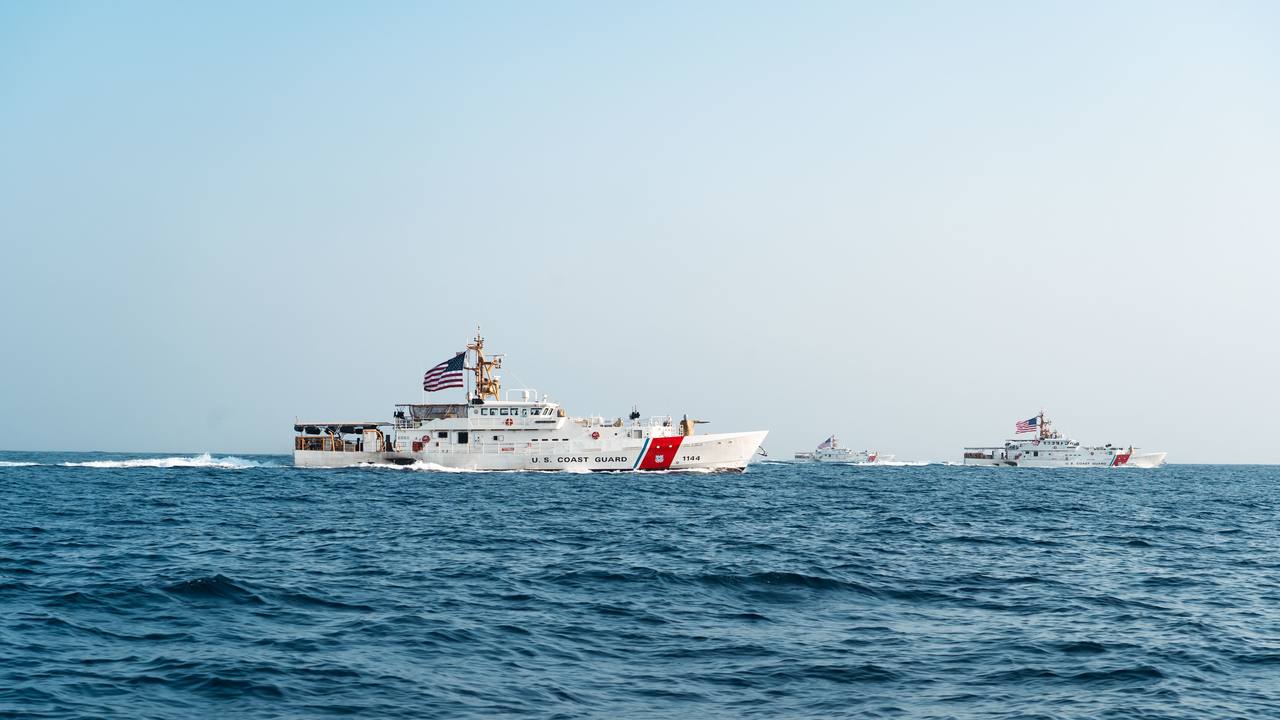
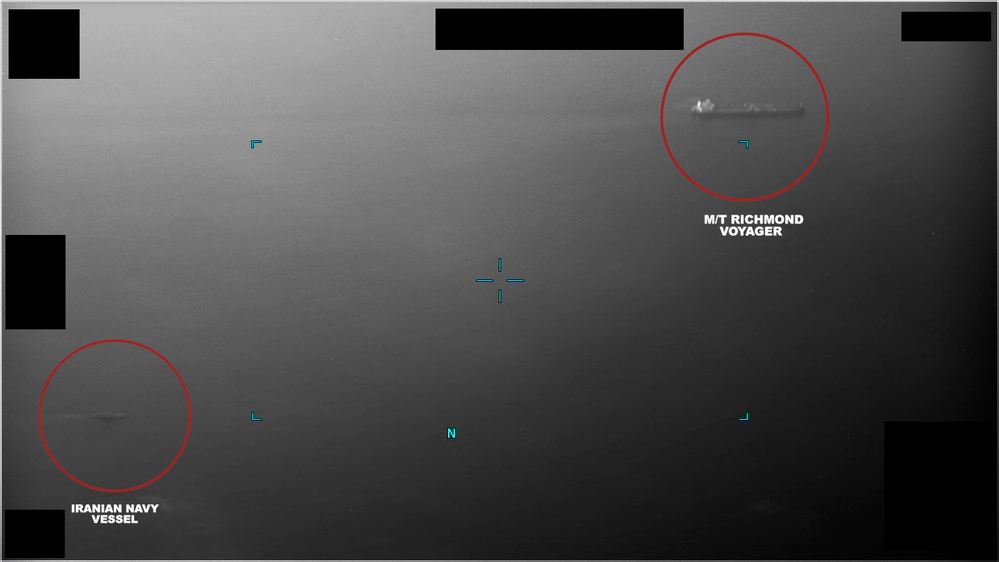
Wednesday's attacks were the first reported strikes on commercial shipping in the region in more than ten days — and they came in a cluster. According to the United Kingdom Maritime Trade Operations agency, two gunboats from Iran's Islamic Revolutionary Guard Corps opened fire on a tanker inside the Strait of Hormuz. The crew was reported safe. Separately, UKMTO said a container ship was hit by "an unknown projectile" about 25 nautical miles off north-eastern Oman, damaging several containers.
A third incident unfolded further east. The Panama-flagged container ship Vela Nova was believed to have been struck by a missile while sailing through the Gulf of Oman, roughly 71 nautical miles off Pakistan's coast, according to the British maritime risk group Vanguard and a maritime security source cited by Reuters. UKMTO initially classified the vessel as a tanker before correcting the record to a container ship.
No group claimed responsibility for the strikes, and the projectiles' origins remain unverified. That ambiguity matters: in a crowded battlespace with American, Iranian, and commercial traffic operating in close proximity, attribution is genuinely difficult — and premature certainty has a history of making maritime crises worse.
The attacks followed a bloody start to the week at sea. On Monday, the Panama-flagged tanker On Peace was hit by an unknown projectile in the strait, injuring 12 crew members — 11 of them Indian nationals — who were evacuated by Oman to a hospital in Khasab. Our report on the On Peace attack detailed how that strike moved the maritime campaign from damaged steel to a hospital ward.
Why this matters
The word Trump chose — "blackmailed" — is the whole story in miniature. Iran's strategy is to make the strait itself the negotiating table: hold the waterway hostage, and trade its reopening for sanctions relief, an end to the blockade, and the release of frozen funds. Washington's strategy is to refuse the trade, betting that the blockade and military pressure will force Tehran to yield the strait for nothing. Both sides are now publicly committed to a logic in which conceding first looks like surrender — which is why the waterway keeps opening just long enough to raise hopes before closing again.
The economic stakes explain why neither side can walk away. Before the war, roughly one-fifth of the world's oil and gas shipments passed through Hormuz — about 21 million barrels of oil a day, worth well over a billion dollars daily. Brent crude pushed back above $100 a barrel on the latest escalation, and every closure-reopening cycle whipsaws prices, shipping insurance, and fuel costs far beyond the Gulf.
There is also a clock running. Trump has tied the blockade's end to a peace deal, while warning that fighting could resume without one. Iran's Supreme National Security Council, meanwhile, says it is reviewing new American proposals — a signal that back-channel diplomacy is alive even as gunboats fire. The question is whether the diplomacy can outrun the violence: each attack hardens the politics of concession on both sides.
How we got here
The war began on February 28, when the United States and Israel launched a massive air campaign against Iran. Tehran responded by effectively closing the Strait of Hormuz; Washington answered with a naval blockade of Iranian ports, enforcement of which resumed in force on July 14 at Trump's direction. Since then the two sides have fought a war of blockades — America choking Iran's oil exports, Iran choking the world's oil artery.
Diplomacy has repeatedly flickered and died. On September 28, Trump rejected an Iranian offer to reopen the strait within seven days in exchange for lifting the blockade, waiving oil sanctions, and releasing frozen assets — judging the sequencing, which put American concessions first, unacceptable. Our coverage of that rejected proposal detailed why the order of operations mattered more than the calendar.
October brought escalation in weekly installments. On October 3, Trump issued a 48-hour ultimatum: open the strait "without threat" or the U.S. would "hit and obliterate" Iranian power plants. On October 4, U.S. Central Command announced it would enforce the blockade "impartially against vessels of all nations" entering or leaving Iranian ports, and Trump wrote on Truth Social that America would "begin the process of BLOCKADING any and all Ships" moving through Hormuz. Peace talks in Islamabad collapsed — Foreign Minister Abbas Araghchi wrote that Tehran had encountered "maximalism, shifting goalposts, and blockade." Our report on the blockade order and the talks' collapse covered that turning point.
On October 5, Trump postponed his deadline by five days, said Iran had "one more chance," and claimed the two sides had discussed a "complete and total resolution of hostilities." Tehran denied formal talks were underway — parliament speaker Mohammad-Bagher Ghalibaf called the reports "fake news" meant to manipulate markets — though a senior Iranian official told CBS News that American points received through mediators were "being reviewed." Friday's brief tanker convoy was the first tangible product of whatever channel produced it. Wednesday's re-closure is the latest verdict on its durability.
Who gains, who loses
Seafarers lose first and most directly. The crews transiting Hormuz — many of them Indian, Filipino, and other developing-world nationals — absorb the physical risk of a confrontation they did not choose. Twelve injured aboard the On Peace on Monday; gunfire on a tanker and missile strikes on container ships on Wednesday. Every incident forces thousands of mariners and their families to recalculate whether the next voyage is worth it.
Shipowners and insurers lose predictability, which is its own kind of loss. War-risk premiums for Hormuz transits have become a permanent tax on Gulf shipping, and each attack reprices the risk. Our explainer on why the Hormuz disruption reaches American gas pumps traced how those costs travel from insurers' ledgers to refineries to retail fuel.
Iran gains leverage but pays for it daily. The strait is Tehran's strongest card — the one asset that forces Washington to negotiate. But the blockade is strangling the oil revenue that funds the Iranian state: U.S. figures say 130 vessels have been redirected, three disabled, and 13 destroyed in twelve weeks of enforcement. Treasury Secretary Scott Bessent has said no more than 15 million barrels of Iranian oil remain at sea. Leverage that cannot be monetized is a wasting asset.
The United States gains pressure but inherits the oil price. Every escalation that strengthens Washington's coercive position also lifts the crude prices that American drivers pay — a tension that grows sharper with midterm elections less than a month away. China, the main buyer of Iran's shadow-fleet oil, loses cheap supply but gains a strategic distraction that consumes American naval resources.
What the numbers say
$103.69. That was Brent crude on Tuesday morning in Asia, up 3.75 percent — back above $100 after plunging more than 10 percent on Monday when Trump delayed fresh strikes. The two-day swing shows how completely the oil market has become a hostage of Hormuz headlines: a single presidential sentence now moves the global benchmark by double digits.
130 redirected, 3 disabled, 13 destroyed. Those are U.S. Central Command's figures for twelve weeks of blockade enforcement — the scale of the maritime campaign Washington is running against Iranian shipping. Tehran disputes the framing, calling the interdictions "piracy," but the numbers describe a blockade being enforced as a blockade.
21 million barrels a day. Roughly what passed through Hormuz before the war — about a fifth of global oil consumption and a quarter of seaborne LNG. The strait is 21 miles wide at its narrowest, with shipping lanes just two miles across. Those dimensions are why a single gunboat or missile can create a global economic event.
Eight tankers, then zero. Friday's convoy — eight ships, the first major movement in over seven months — shows how thin the margin is between "open" and "closed." A waterway that handles a fifth of the world's oil was, for a few hours, a waterway handling eight ships. Then it was shut again.
What happens next
The first scenario is a deal against the deadline. Trump's postponed ultimatum, Iran's acknowledgment that it is reviewing new American proposals, and the "very good conversations" Trump described all point to a live channel. If that channel produces a phased arrangement — limited transits in exchange for limited sanctions relief, with verification neither side has to trust the other to provide — the strait could reopen in stages. The obstacle is sequencing: each side wants the other to move first, and Wednesday's re-closure shows how little trust exists.
The second scenario is resumed American strikes. Trump has explicitly kept that option on the table, and the U.S. military has been postured for it — a third carrier and 10,000 additional troops moved into the region this month. Strikes on Iranian power plants or naval facilities would aim to break the stalemate by raising Tehran's costs, but they would also invite retaliation against Gulf shipping and American bases — the spiral both sides claim to want to avoid.
The third scenario is the one already underway: a grinding shadow war at sea, with deniable attacks, seizures, and counter-seizures continuing indefinitely while diplomats talk past each other. That is the cheapest option for both governments in the short run and the most expensive for everyone else — seafarers, shippers, insurers, and consumers — in the long run. It is also the scenario that makes miscalculation most likely, because deniable violence has a way of producing undeniable consequences.
The wider region: Lebanon
The Hormuz confrontation is not contained to the Gulf. In southern Lebanon, a French soldier serving with the UN peacekeeping mission was killed when his patrol came under small-arms fire from non-state actors while clearing explosive ordnance. President Emmanuel Macron suggested Hezbollah was responsible; the Iran-backed group denied involvement. The Israel Defense Forces said it had established a "yellow line" security perimeter in southern Lebanon and struck fighters it said violated ceasefire understandings by approaching its soldiers. The incidents underscore how the war's fronts — the strait, Lebanon, the Red Sea — are coupled: pressure applied in one theater reverberates in the others.
Sources
- BBC News live coverage, October 7, 2026 — Strait of Hormuz re-closure, IRGC Navy statement, Trump Oval Office remarks, Iran SNSC reviewing U.S. proposals, Lebanon developments.
- Reuters, October 2, 2026 — crude oil tanker struck by unknown projectile off Oman, UKMTO report.
- Reuters, October 6, 2026 — attack on the On Peace, 12 injured, Indian foreign ministry statement.
- Assafina / Reuters, October 7, 2026 — container ship Vela Nova believed hit by missile off Pakistan, UKMTO incident report.
- Ship & Bunker, October 2026 — UKMTO ship attack reports in the Strait of Hormuz.
- CENTCOM figures, via The American Diary — 13 commercial vessels destroyed, 130 redirected, 3 disabled in 12 weeks of blockade enforcement.
- Fars News Agency, via Nigeria 24 — IRGC adviser Naqdi: strait remains closed until Iran's "legitimate demands" are met.
- GoldSea — Iran tightens control of strait; Trump "very good conversations" remarks; maritime radio warnings to merchant vessels.
- TALi News, October 2026 — Trump rejects Iranian Hormuz reopening offer; blockade pressure and oil flow data.